Kemeraltı Mosque: An Ottoman Mosque in İzmir
Site at a Glance
- Country
- Turkey
- Primary era
- Early Modern
- Eras represented
- Early Modern
- Civilizations
- Ottoman
- Site type
- Religious
- Remains
- Mosque
On this page11 sections
History
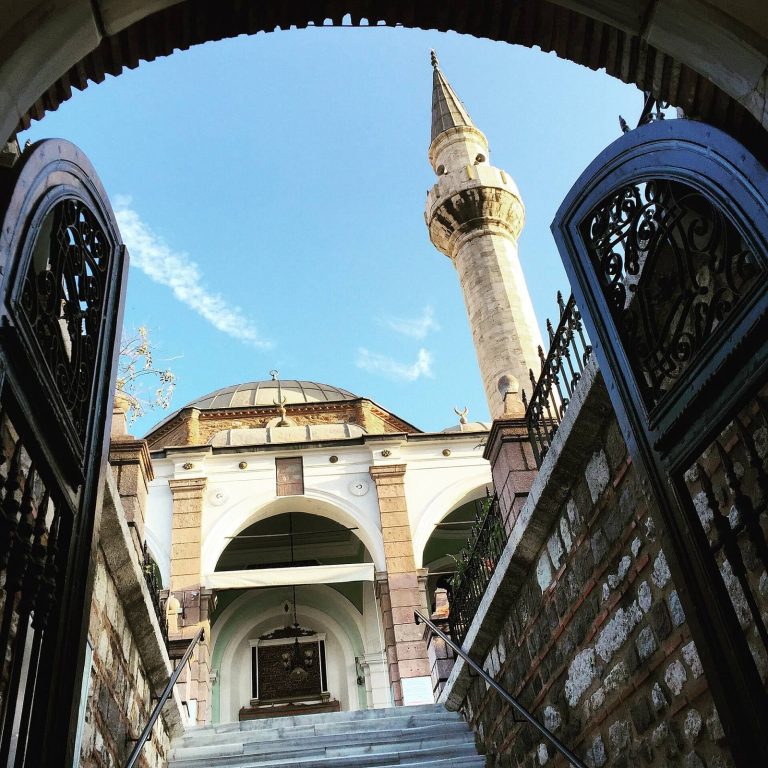
Kemeraltı Mosque is an Ottoman mosque in Konak, İzmir, Türkiye, listed as completed in 1671, although its exact construction date is uncertain. An endowment deed dated 3 November 1671 records that Yusuf Çavuşzade Ahmet Ağa, a prominent provincial notable, commissioned it. The mosque takes its name from Kemeraltı Bazaar and is also known as the Yusuf Çavuşzade Ahmet Ağa Mosque and the Mûsâ Bâlî Mosque. The area was once called Mûsâ Bâlî Yakası, and the mosque and its madrasa, an Islamic educational institution, were formerly known by that name. At the time of its construction, the mosque stood beside İzmir’s inner harbor.
Foundation and associated institutions
A library, a public fountain, and a madrasa were established alongside the mosque. The madrasa, like the mosque, was at one time known as Mûsâ Bâlî, linking the name to the religious complex as well as the surrounding area.
Repairs and continuing use
The mosque was repaired in 1774, 1812, and 1902. It remains an active place of worship.
Remains
Plan and courtyard
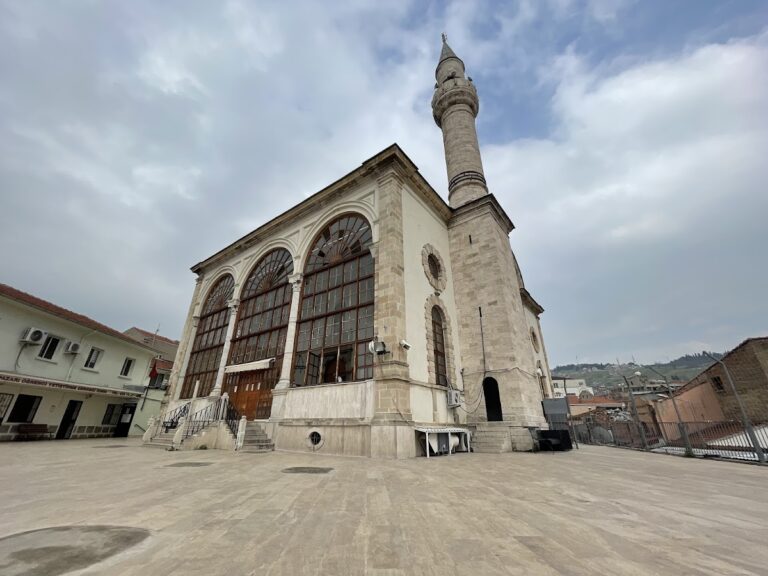
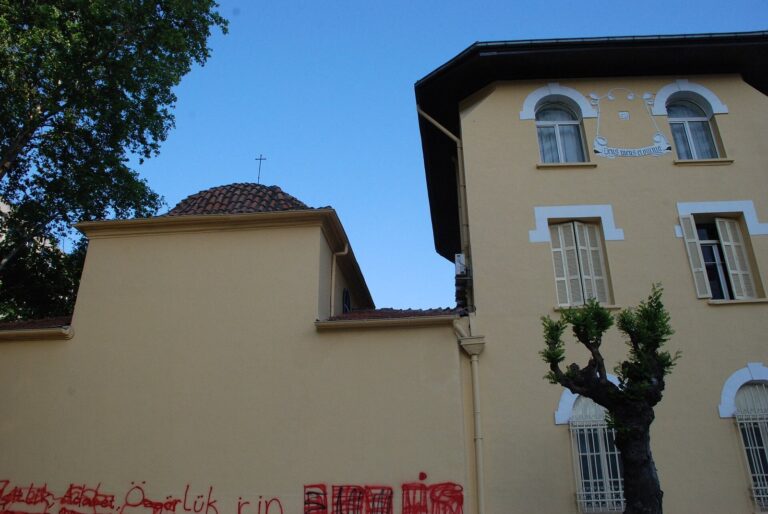
Built in Ottoman style, the mosque originally had a square prayer hall beneath a dome and a three-part outer prayer porch. Two sections were later added to the north, giving the building a rectangular plan; the northern porch has three sections, each covered by a dome. Older descriptions characterize the building as a raised structure combining a mosque and market. A courtyard borders it to the north and east. At the courtyard entrance, a library built by the Salepçioğlu family stands beside a madrasa unit of four rooms, now used by the mosque’s imam and muezzin.
Prayer hall and ornament
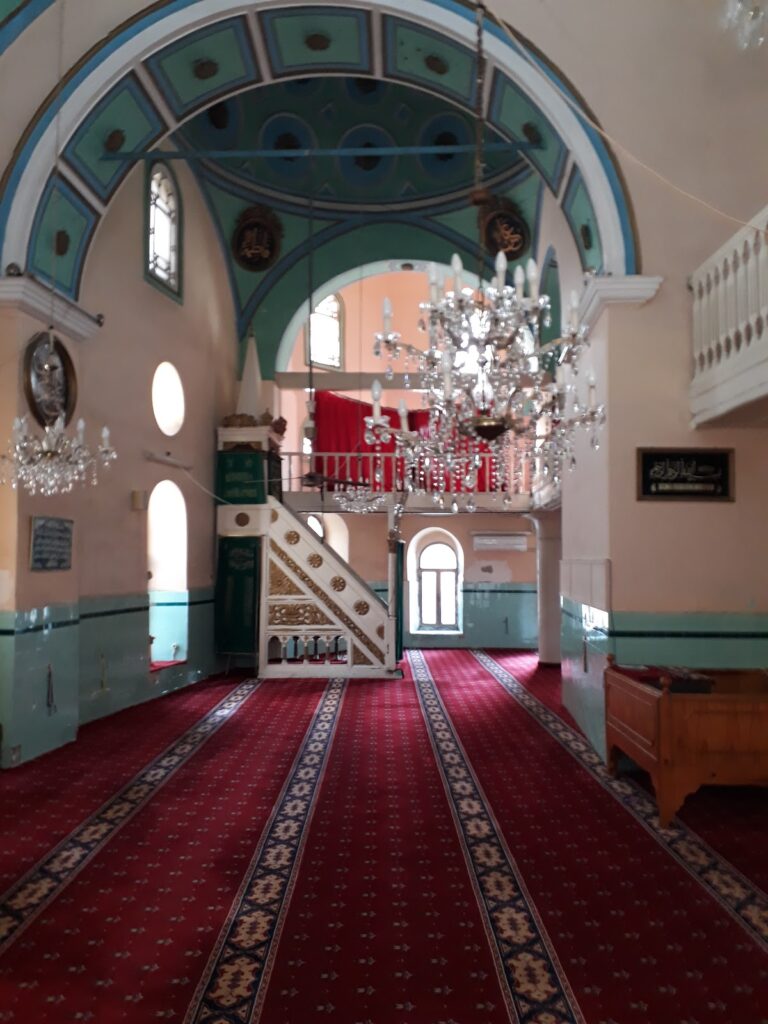
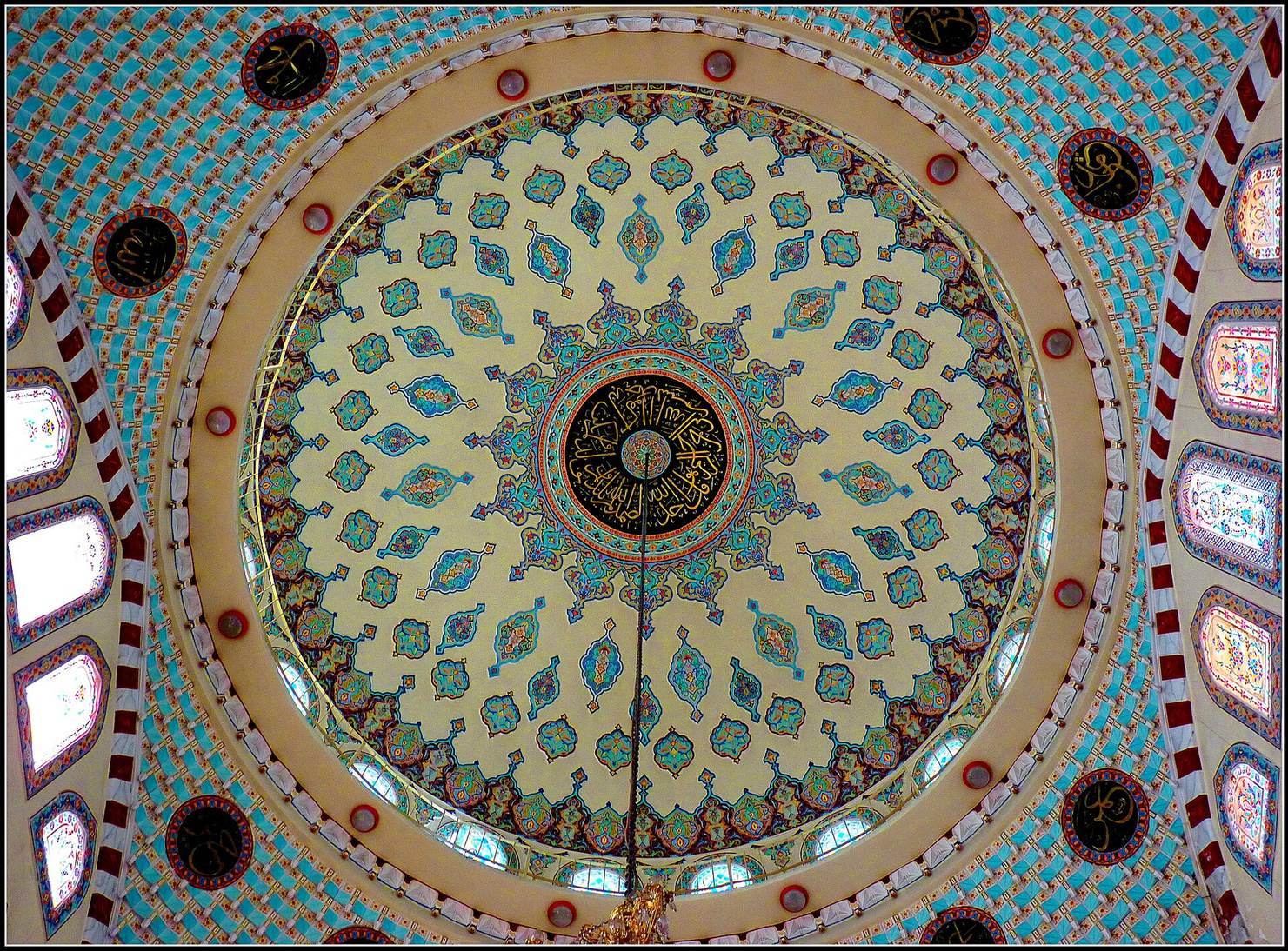
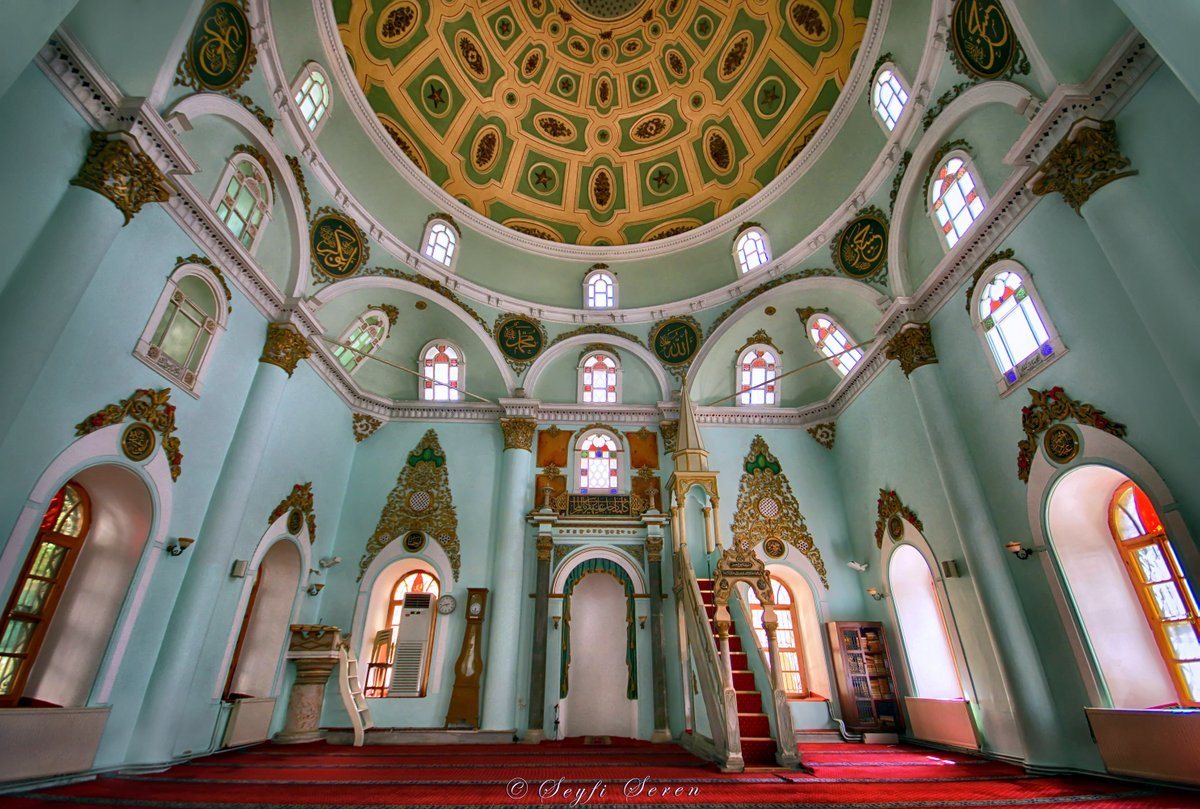
The exterior walls are yellow and pink, while the interior is turquoise. Two rows of windows light the prayer hall: those below have rounded arches, and the upper windows are circular. Gilded plasterwork decorates the column capitals, areas above the windows, arches, and panels, as well as the prayer niche and pulpit.
Prayer niche
The mihrab, the niche indicating the direction of prayer, is framed by paired curtain motifs drawn aside with tasseled bands. A similar design appears at Başdurak Mosque.
Pulpit
The minbar, the pulpit used for sermons, has detailed gilded leaf reliefs on its side panels. Its rounded arch is topped by an ornamental motif, with stylized leaf patterns in the spaces beside the arch. The canopy railings carry leaf designs inside recessed hexagons set within larger medallions. On the entrance face, a folded-curtain design sits above inscriptions meaning “What God has willed” and “In the name of God.” A crescent finishes the top, while the spaces beside the arch contain the Islamic declaration of faith within sunburst designs. A Quranic verse appears on the arch panel.
Minaret and public fountain
Minaret
The minaret stands at the mosque’s northeast corner. It has a cut-stone base, a round shaft, and one balcony.
Public fountain
An eighteenth-century public fountain was set into the façade facing Anafartalar Street. It continued to provide water until the late 1990s. The mosque stands on Anafartalar Street at the sharp turn toward Yemiş Bazaar, among shops and restaurants.