Tirana Mosaic: Remains of a Roman Rural Estate
Site at a Glance
- Popularity
- Medium
- Country
- Albania
- Primary era
- Classical
- Eras represented
- Classical, Medieval
- Civilizations
- Roman
- Site type
- Domestic
- Remains
- Villa
On this page12 sections
History
The Tirana Mosaic is an archaeological site preserving a Roman rural villa in Tirana, Albania, with its principal building broadly dated to the first through third centuries AD. It is considered Tirana’s oldest historical monument and the city’s only archaeological monument. The site predates Tirana’s founding in 1614; the town remained mainly a regional center until the twentieth century.
Roman settlement and rural villa
A rural settlement occupied the area in the first centuries AD. A Roman country villa, an estate rather than an urban residence, was established here during the first to third centuries AD and may have replaced that earlier settlement around the beginning of the third century. The villa was probably part of a larger building complex or settlement. Its central hall served as a reception room, entered from a vestibule to the west, while the apse may have functioned as a dining room.
Late Antique use and later dwelling
In Late Antiquity, the transition between the Roman world and the early Middle Ages, a church associated with early Christianity has been proposed for the site. A more likely interpretation is that the villa continued as the residence of a wealthy rural landowner involved in wine production. The mosaic floor was probably added in the fourth or fifth century AD.
Postholes cut into the mosaic show that a timber dwelling was built over the ancient structure after it had been destroyed or demolished, during Late Antiquity or the early Middle Ages. Burnt material among the debris from its collapsed roof may point to destruction during early Slavic incursions.
Discovery and protection
The ruins came to light in 1972 during foundation work for apartment blocks. Excavation exposed the building foundations, and the surviving mosaic was conserved and covered with sand for protection. Road and utility work in 2003–04 revealed further parts of the complex. The site received first-category Cultural Monument status in Albania on 10 June 1973.
Remains
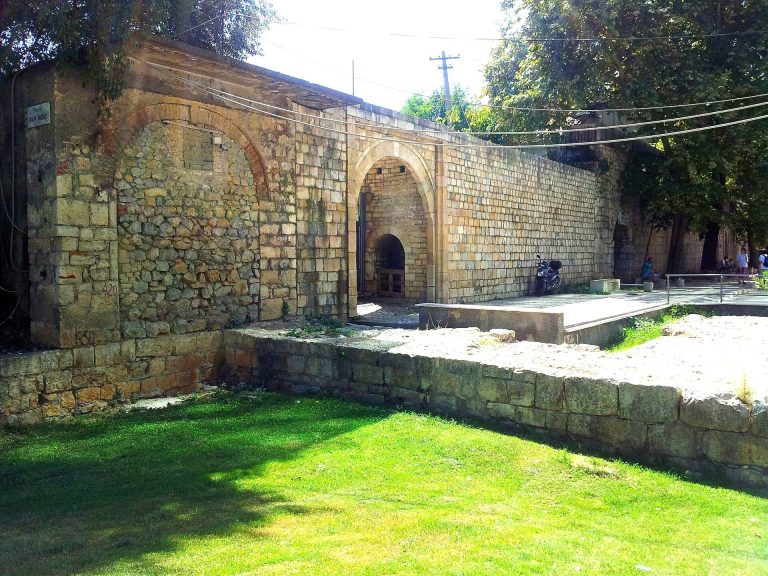
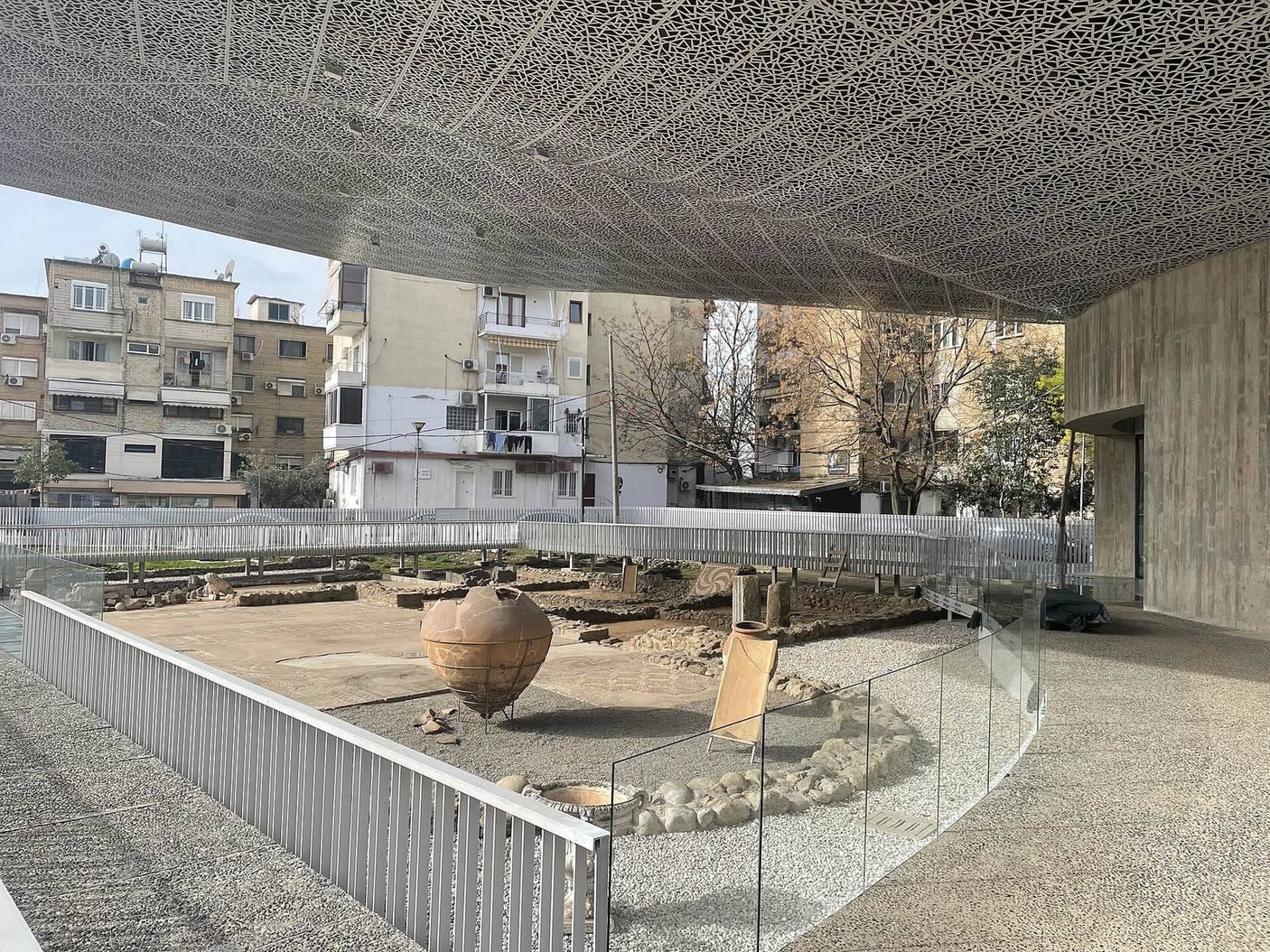
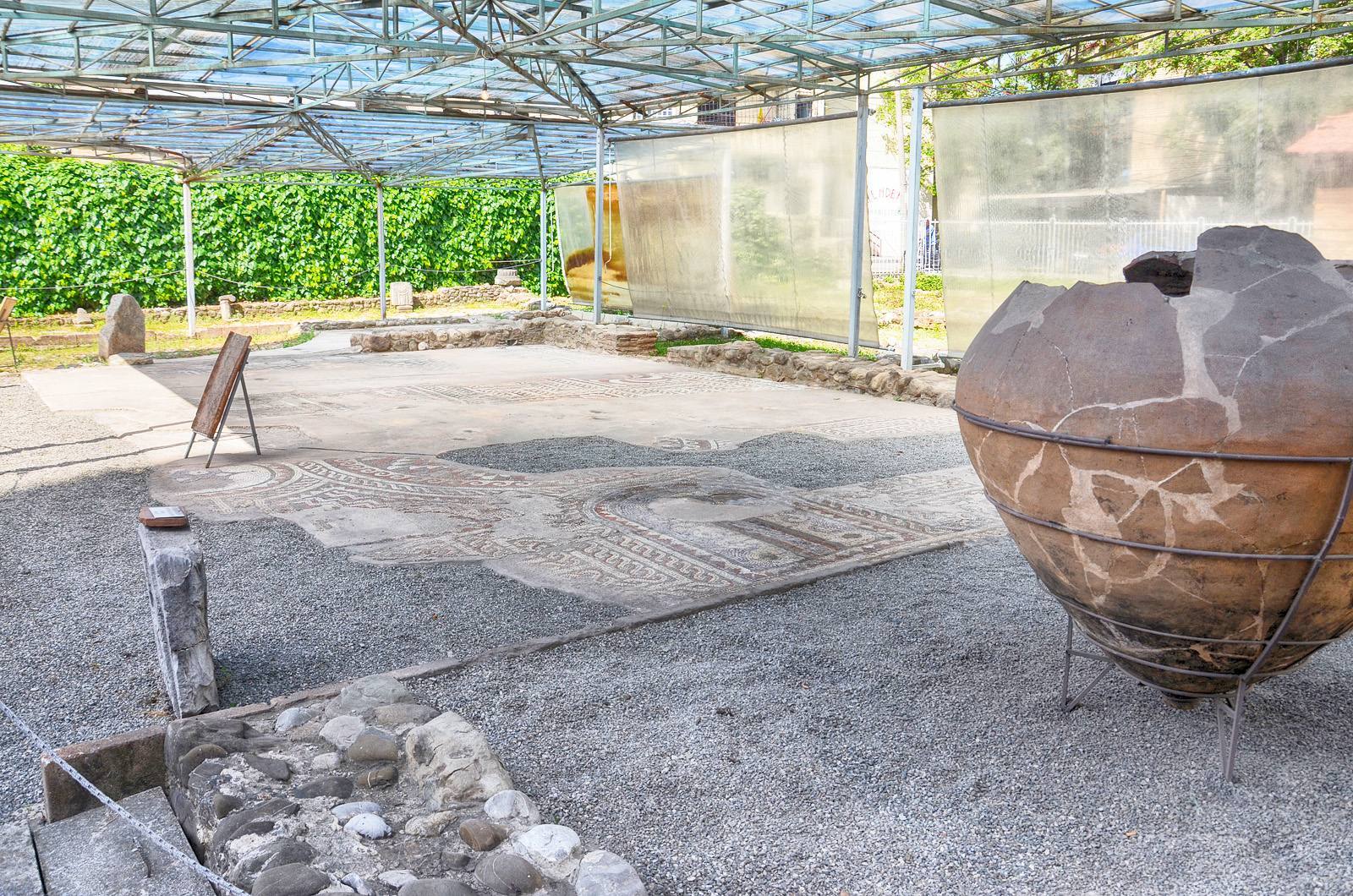
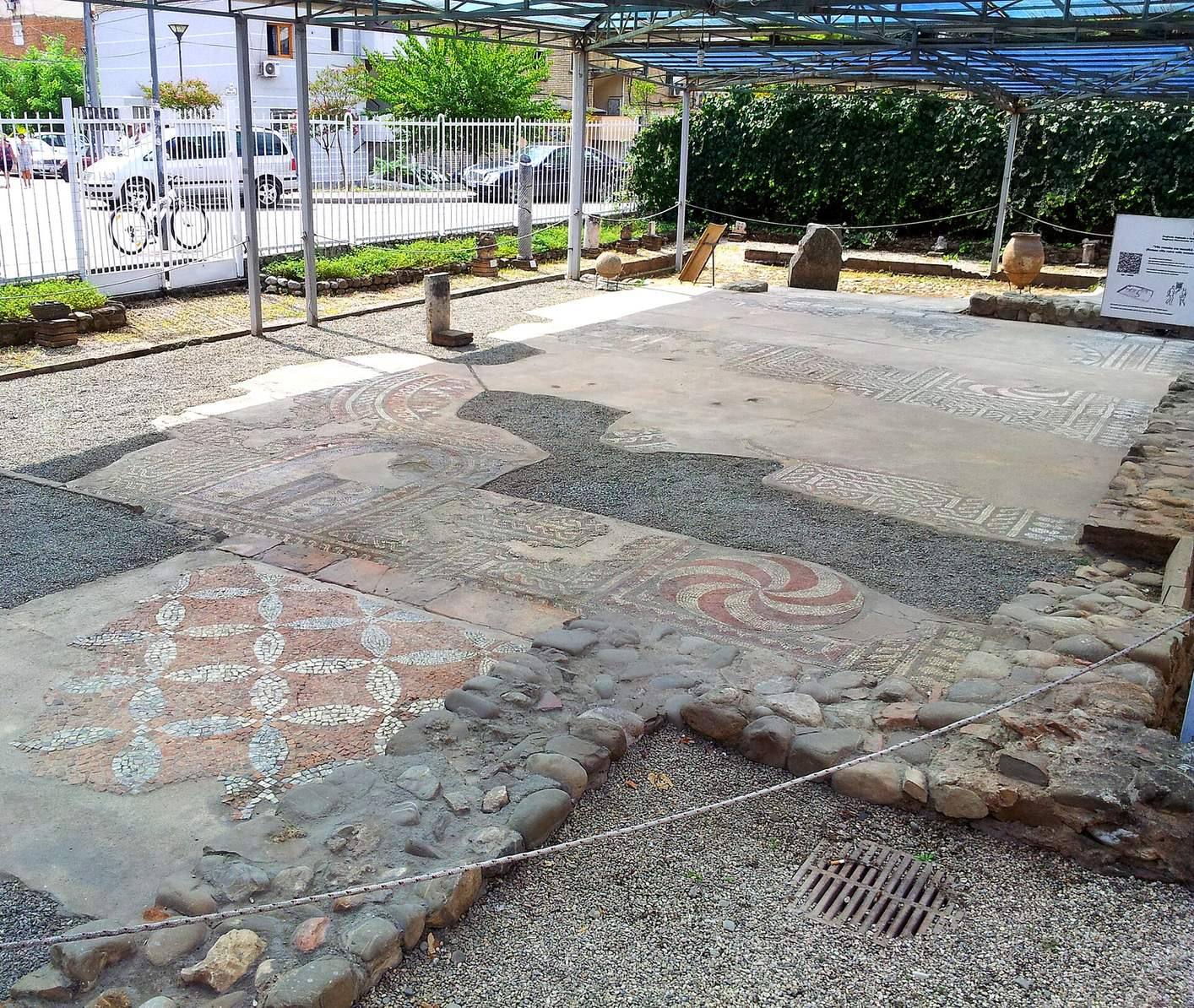
The remains lie on Mihal Ciko Street, at the western edge of central Tirana. The principal building is aligned east–west, and a protective roof over the main ruin was built in 2003.
Main building and floor
Rooms and arrangement
The rectangular central room measures 8 by 11.5 metres. A semicircular apse, a recessed space, adjoins it on the east and has a raised floor. To the west is an entrance vestibule measuring 12.9 by 5 metres.
Proposed southern courtyard
A courtyard bordered by a row of columns may have adjoined the building on the south. This arrangement is conjectural and has been suggested by comparison with other remains in Albania.
Mosaic floor
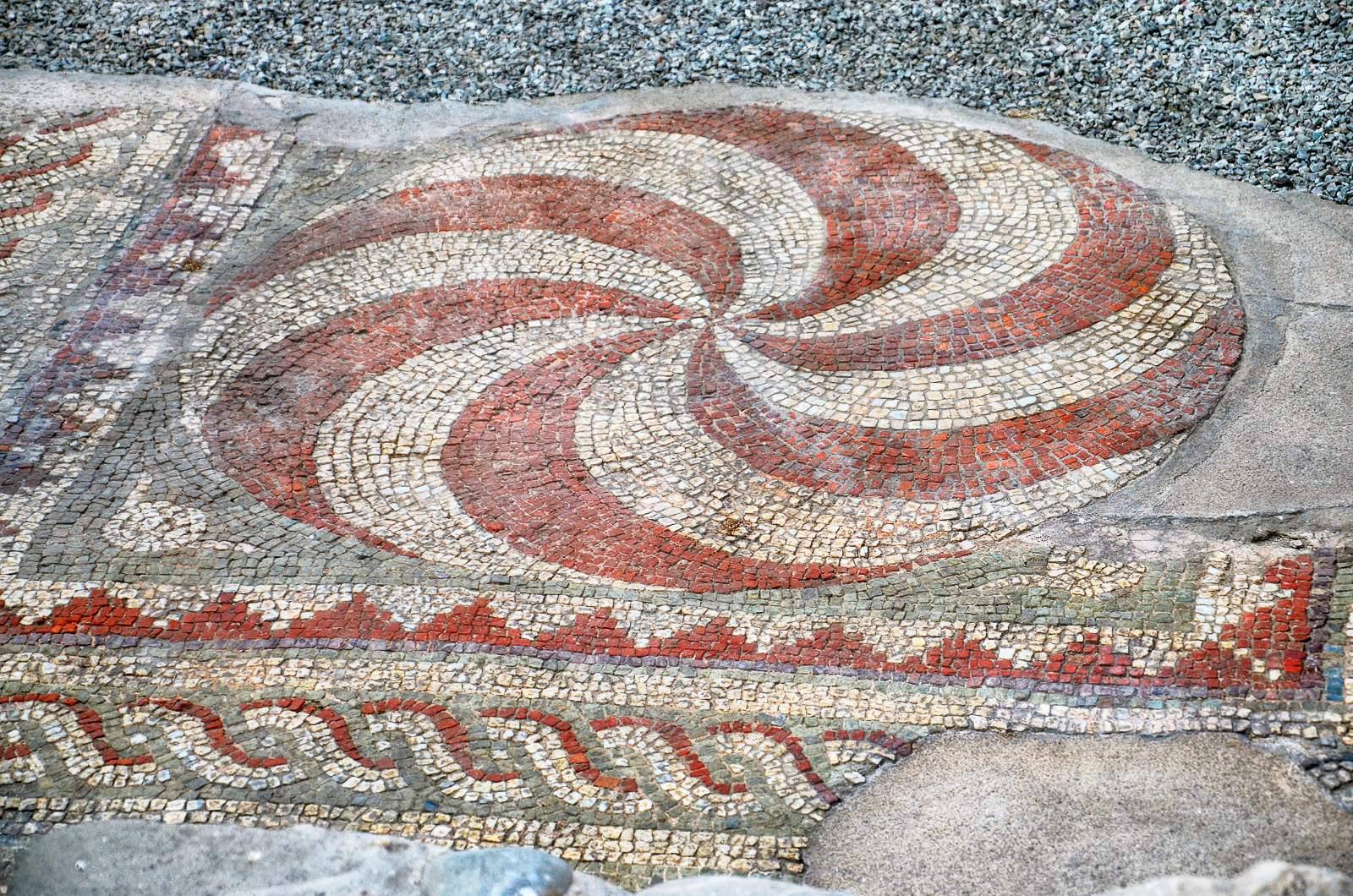
The floor’s decoration originally covered 164 square metres, of which 33 square metres survive. Its geometric patterns combine interlocking circles and spirals with vine, wave, and floral designs. A drinking vessel appears at the western edge of the central room, while a fish is shown in the vestibule. The style suggests that the decoration was completed in a single phase.
Northern installations and associated finds
Underground structures and wine-making features
North of the main building, excavated foundations outline smaller rooms and underground structures reached by short stairways. These installations may have been cisterns, which could imply a nearby bathhouse, but their use as wine cellars is considered more likely. Other remains include vats for fermenting crushed grapes and wall sections at two separate locations.
Storage vessels and stone fragments
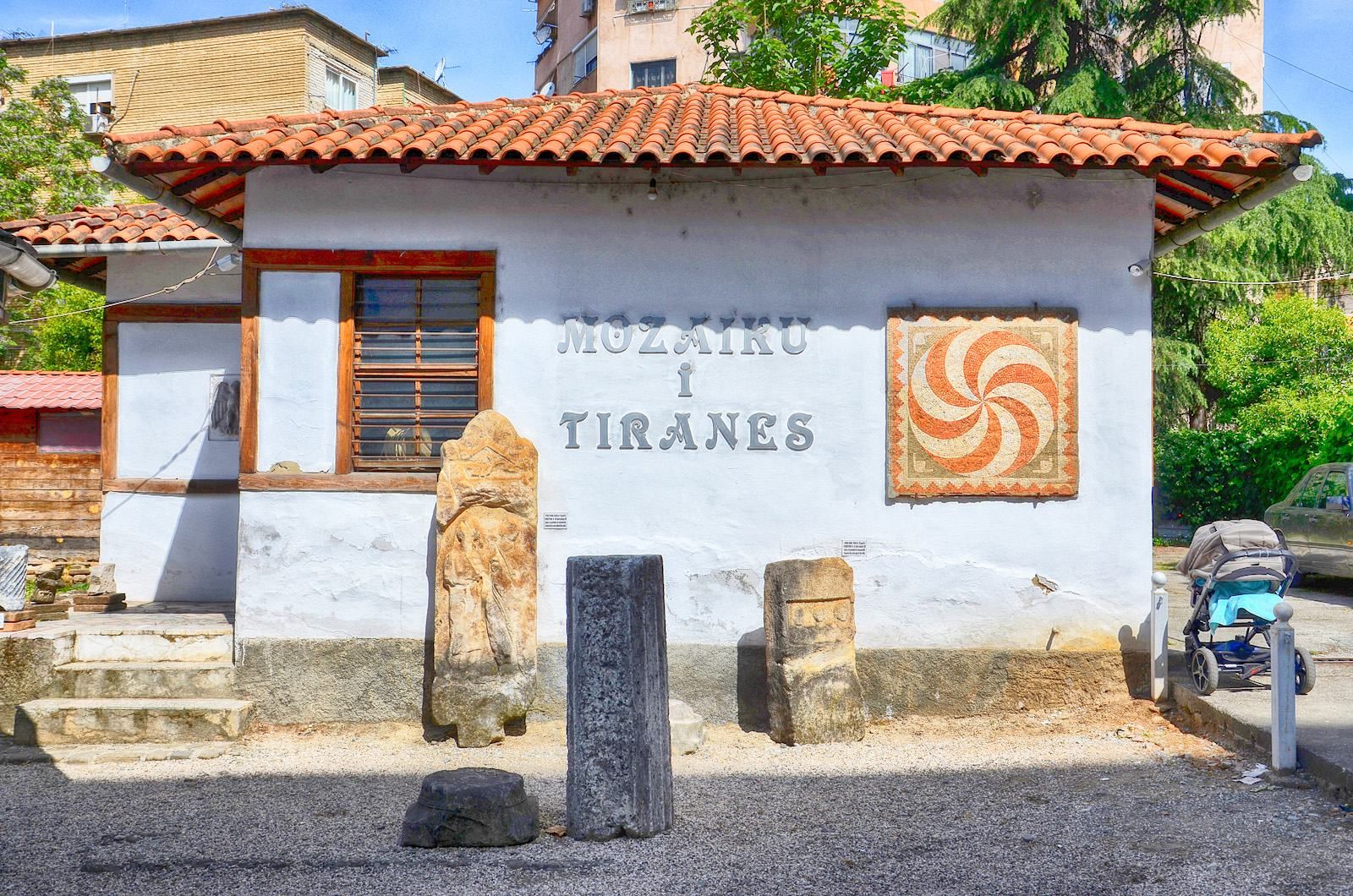
Fragments of storage vessels and one intact large storage jar were found in the area; the complete jar can be seen at the site. The surrounding garden displays stone remains brought from elsewhere, including column fragments and parts of stelae attributed to Dyrrachium or Apollonia. Three Roman funerary stelae once associated with the complex were found in a different building some distance away and transferred to the former Cultural Monuments Workshop in Tirana.