Dollma Tekke: A Bektashi Religious Lodge in Krujë, Albania
Site at a Glance
- Popularity
- Medium
- Country
- Albania
- Primary era
- Early Modern
- Eras represented
- Early Modern
- Civilizations
- Ottoman
- Site type
- Religious
- Remains
- Sufi Lodge
On this page8 sections
History
Dollma Tekke, a lodge of a Sufi religious order, stands in Krujë, Albania. Adem Aga Toptani, an Albanian nobleman, built it in 1779–1780 in the Ottoman architectural tradition, associated with the empire that ruled parts of the Balkans for centuries. The tekke became a center for the Bektashi, a Sufi order within Islam, offering religious teaching, training for practitioners, and charitable service.
Religious use and pilgrimage
The tekke is associated with Sunni Islam and the Bektashi order, though it may first have served as a mosque rather than a Sufi lodge. Pilgrims traditionally gathered there on August 11, the feast day associated with the site. Before religious suppression under communist rule, it was linked with 360 sacred graves and was known as “Little Khorasan.”
Suppression and renewal
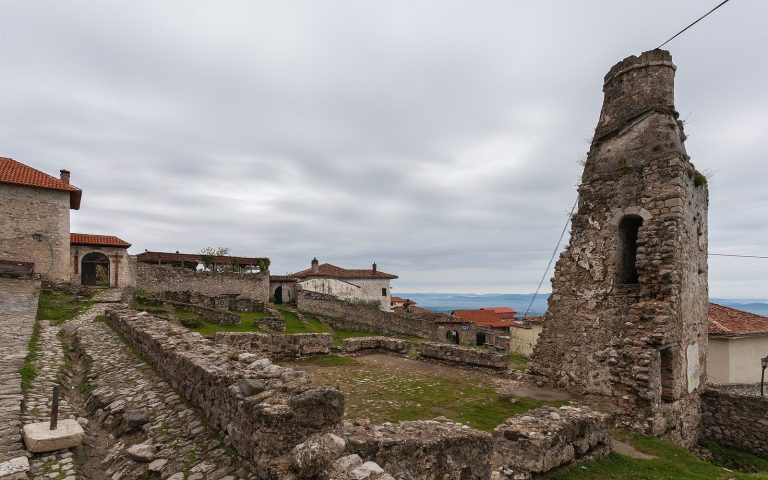
Albania designated Dollma Tekke a Cultural Monument in 1973. Under Enver Hoxha, Albania’s communist leader during the period of state-imposed religious suppression, the tekke was closed and badly damaged; most of the graves were destroyed. Restoration brought it back into public use in 1990, after the communist regime fell. It remains an active religious site, Krujë’s only tekke, and an important pilgrimage place for Bektashi devotees. It is also presented as a symbol of religious tolerance and peaceful coexistence in Albanian society.
Remains
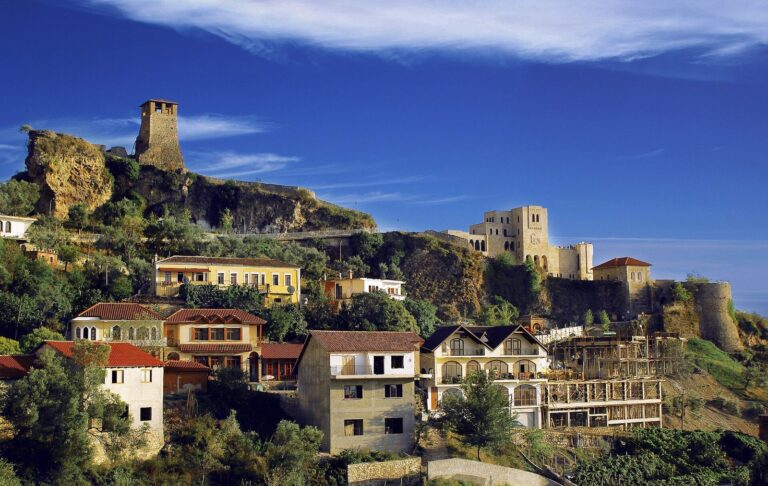
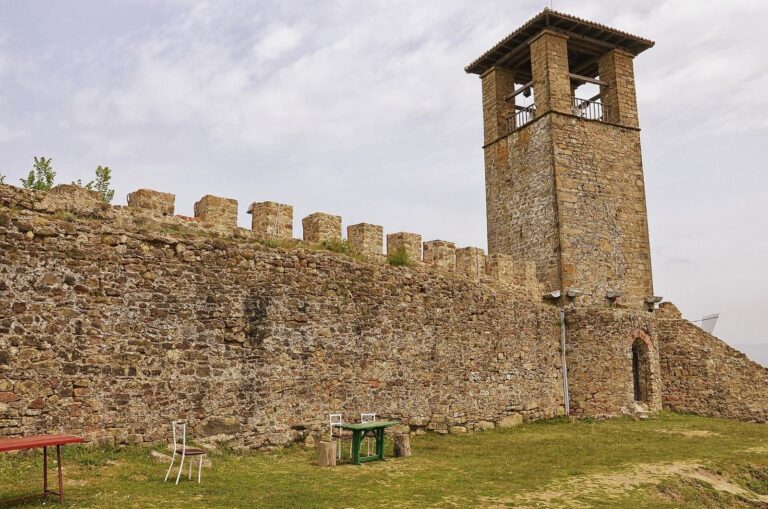
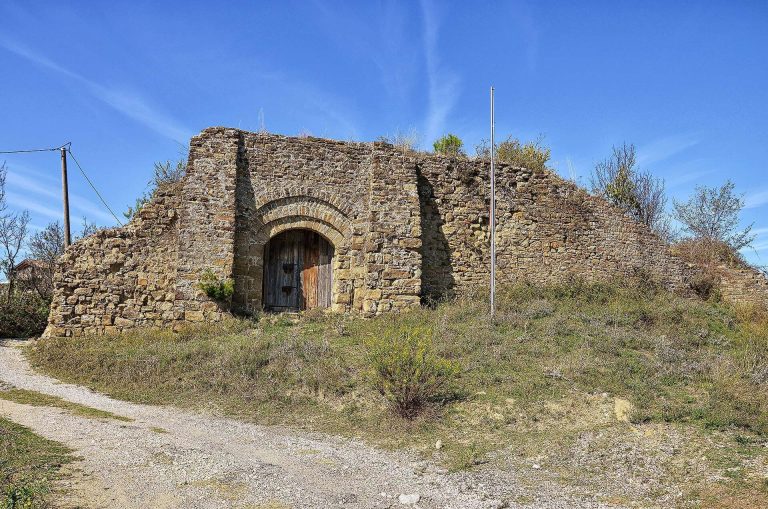
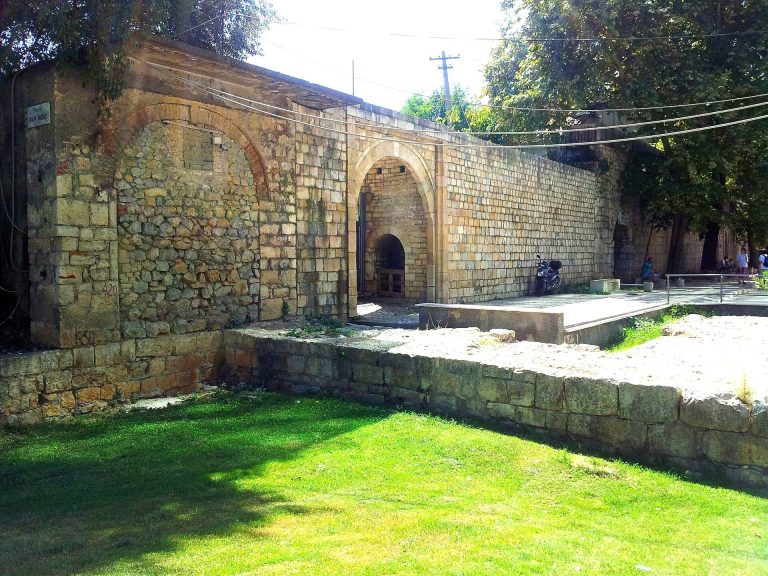
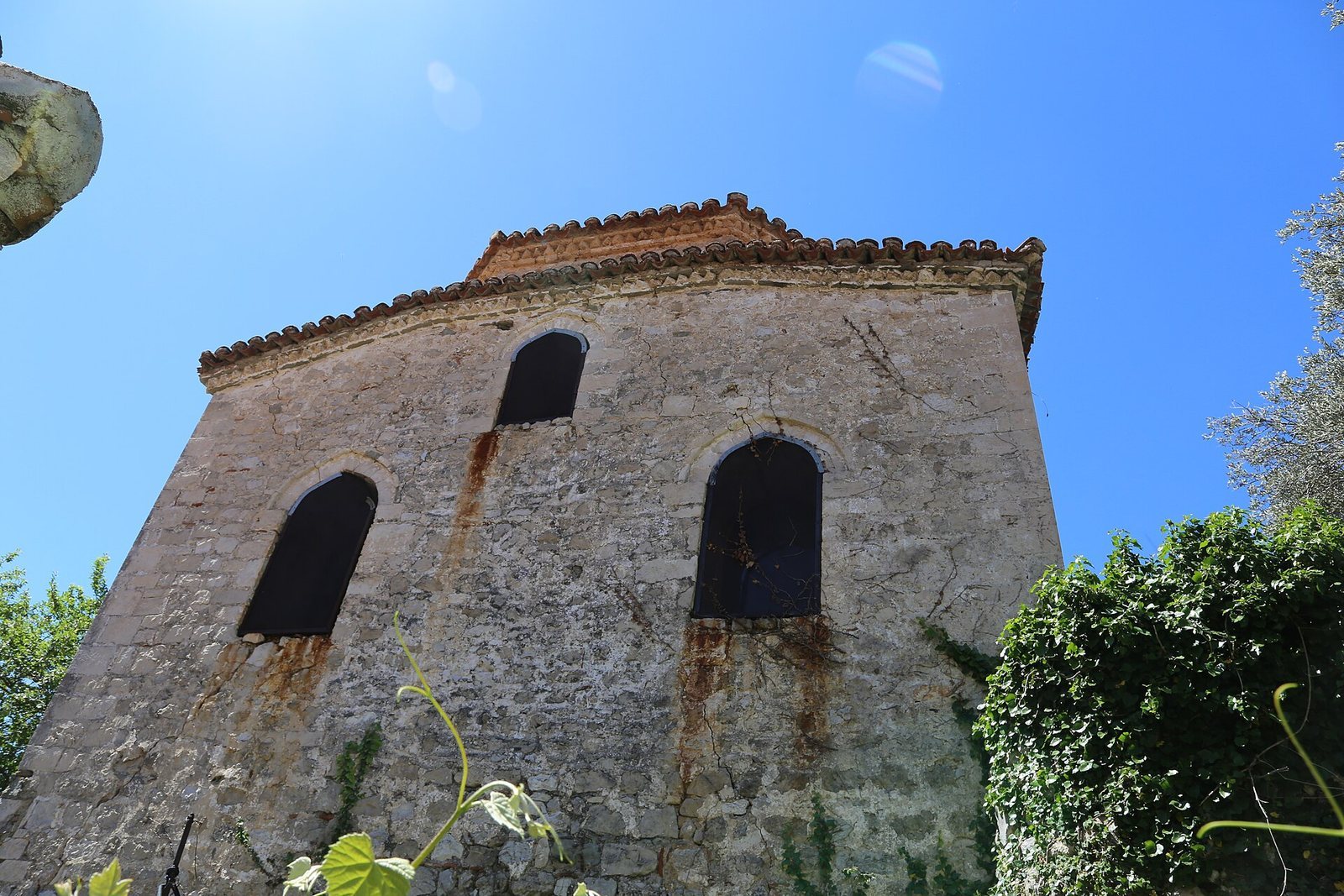
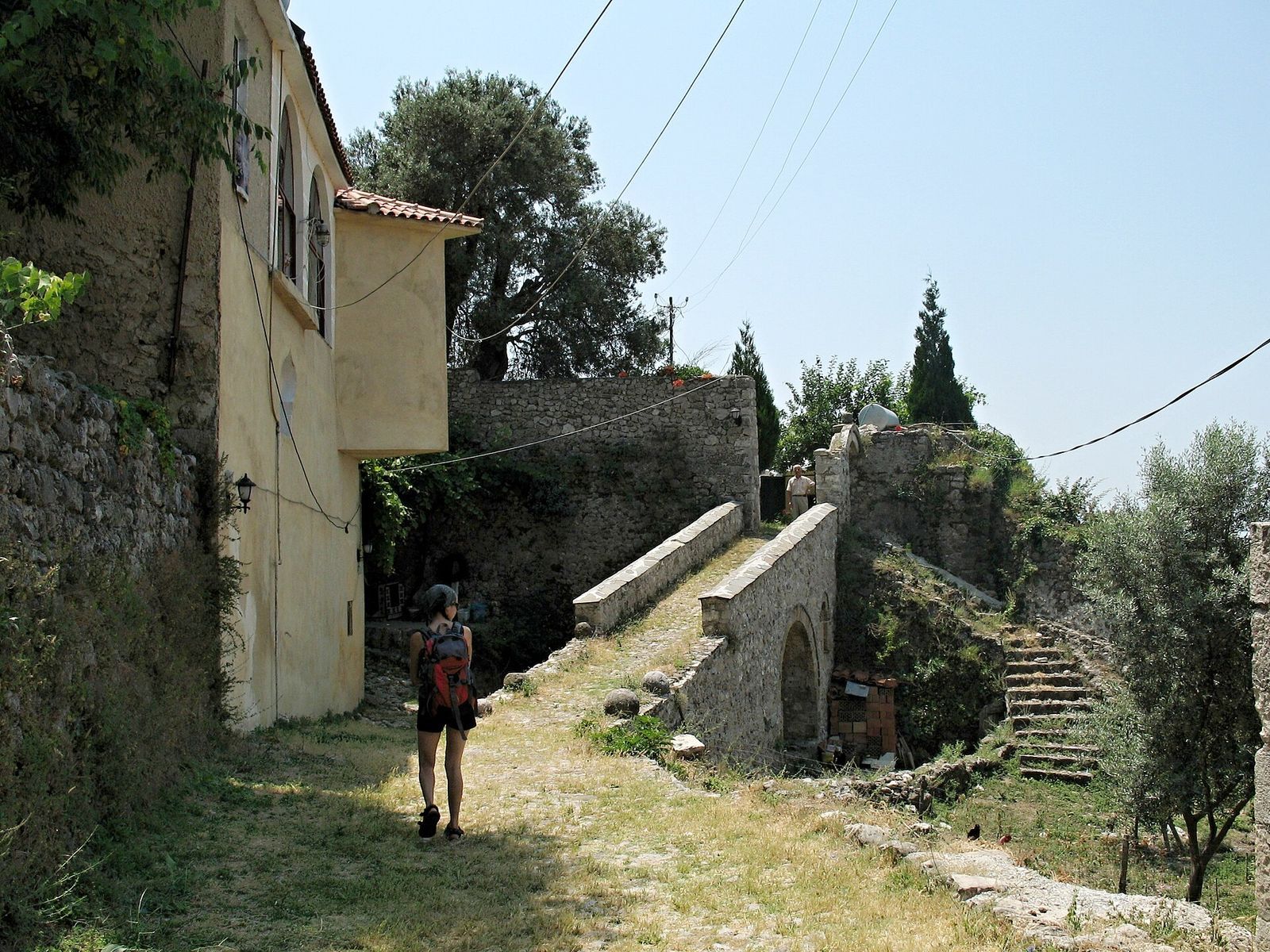
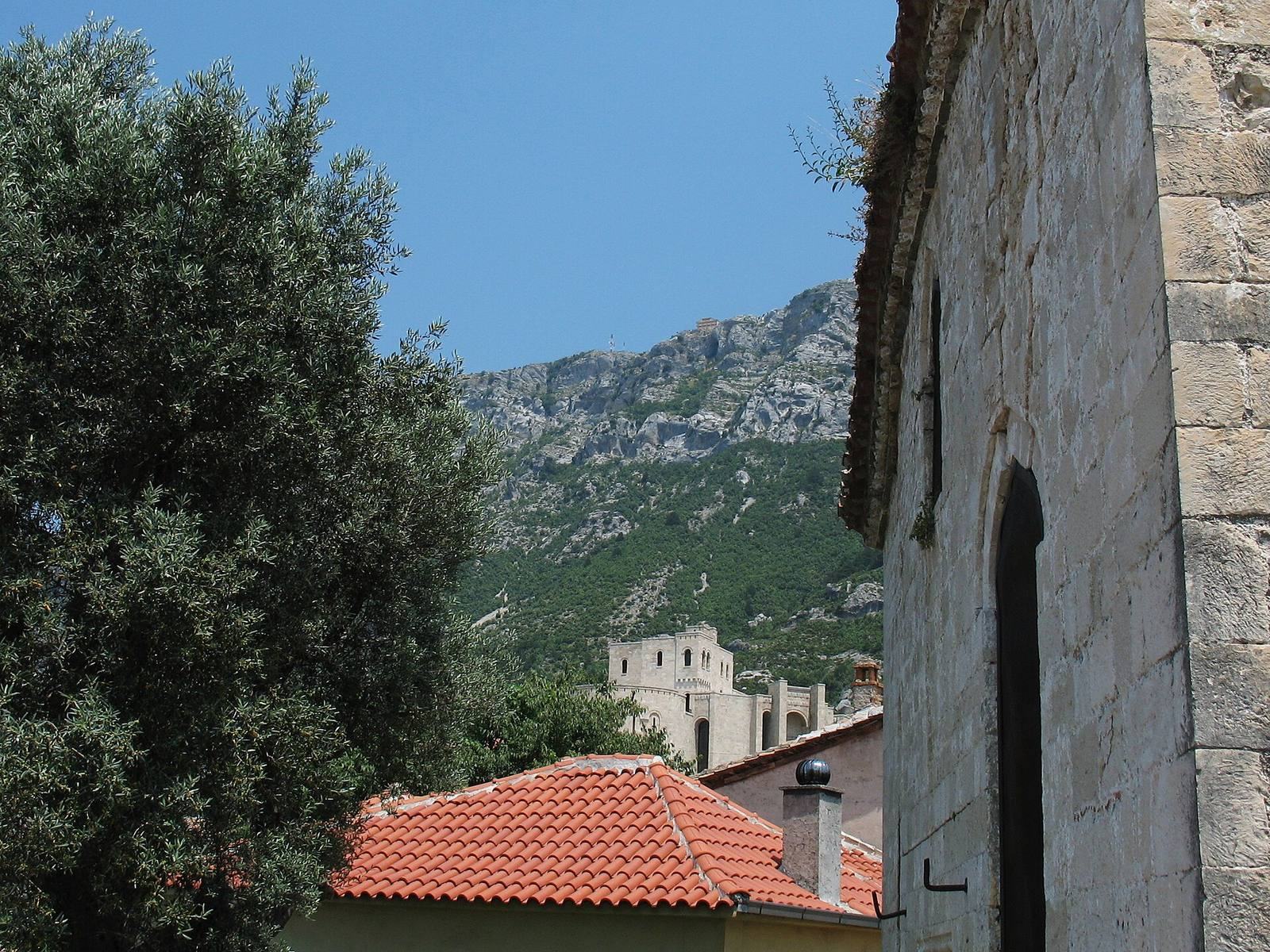
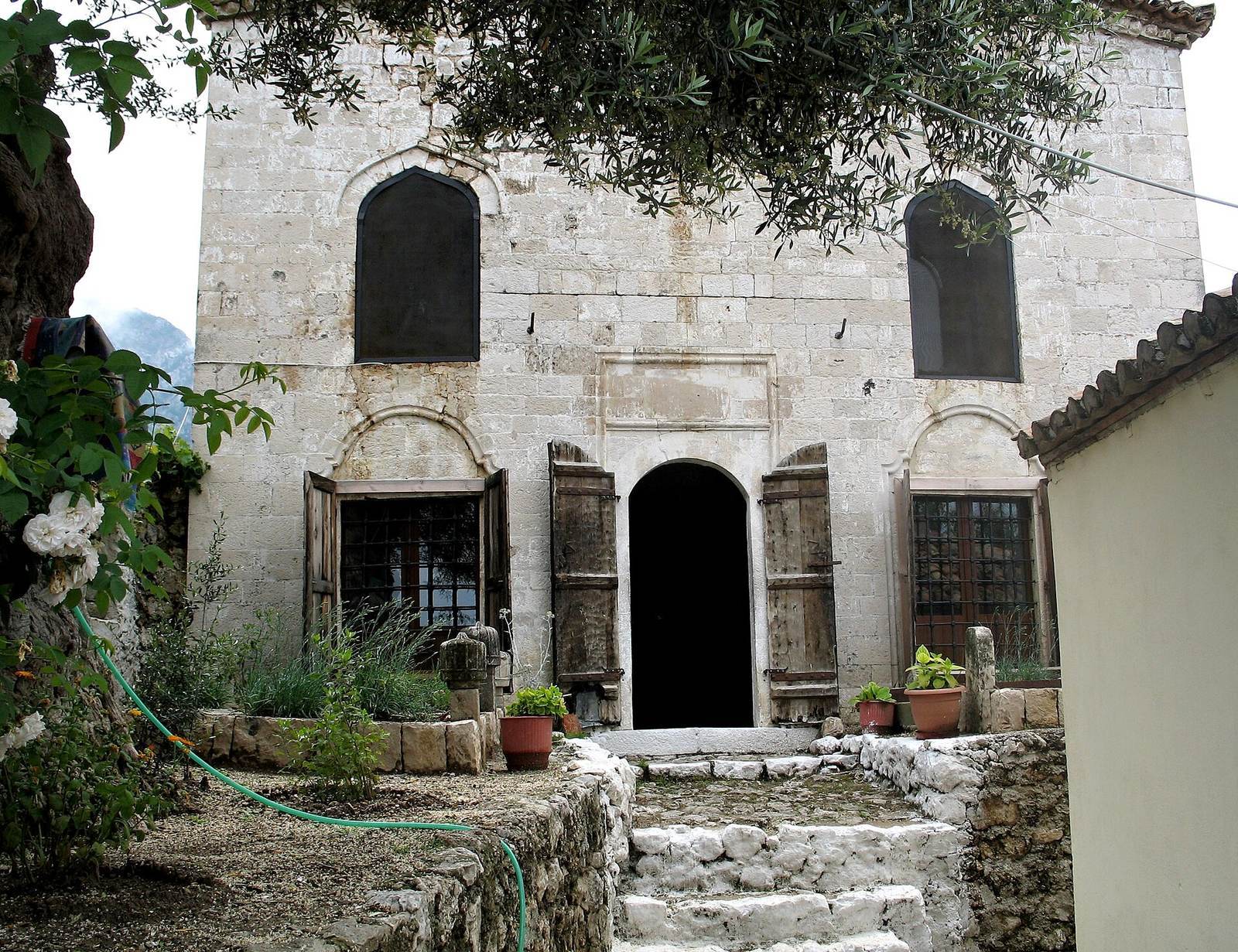
The stone building stands in the southern corner of Krujë Fortress, in Lagjja Kala, and follows Ottoman-style Islamic architecture.
Prayer hall and decoration
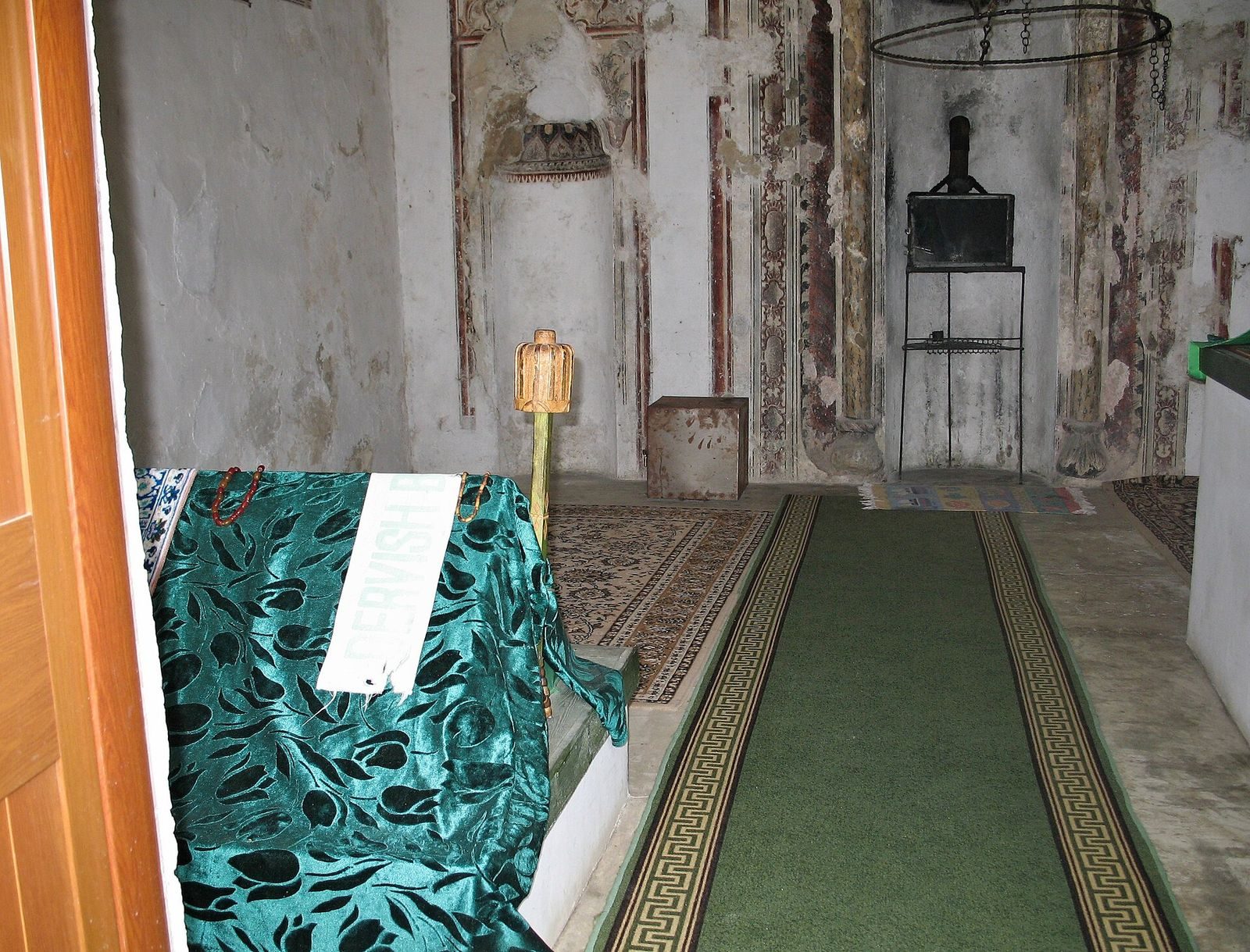
The central hall is rectangular and serves for prayer and communal dhikr (devotional remembrance or invocation of God). Its interior has carved wooden decoration and Quranic calligraphy on the walls. A mihrab, a niche indicating the direction of prayer, is part of the interior.
Burials and courtyard
Family graves
The interior contains graves of the Dollma family, including a marble tomb for founder Adem Aga Toptani. Two graves are revered as shrines: those of Baba Mustafa Dollma and Hysen Dollma, a religious practitioner.
Courtyard olive tree
A large, old olive tree grows in the courtyard. Local tradition associates it with Skanderbeg, the fifteenth-century Albanian military leader and national hero.