Donuktaş: A Roman Temple in Tarsus, Turkey
Site at a Glance
- Popularity
- Medium
- Country
- Turkey
- Primary era
- Classical
- Eras represented
- Classical
- Civilizations
- Roman
- Site type
- Religious
- Remains
- Temple
On this page5 sections
History
Roman temple
Donuktaş is a Roman temple in Tarsus, Turkey, built in the second century CE. It may have been dedicated to Sandon, an ancient Hittite deity later associated with Jupiter, or to Jupiter, a major Roman god.
Changing interpretations
The earliest written reference to Donuktaş dates to 1545, when a Venetian envoy from the Barbaro family considered the ruins to be a palace. In the nineteenth century, scholars instead proposed that the structure was a royal tomb. In 1853, British orientalist William Burckhardt Barker argued that it belonged to a king other than Sardanapalus, the name associated with an Assyrian king in the tomb theory. Barker believed Sardanapalus had been burned at Nineveh. French historian Victor Langlois identified the building as Sardanapalus’s tomb in 1861, and German archaeologist Robert Koldewey supported that identification in 1890.
Turkish archaeologist Nezahat Baydur led investigations in 1982 and annually from 1985 to 1992. The work identified Donuktaş as a second-century Roman temple rather than an Assyrian-period structure. Investigations resumed in 2007 under German archaeologist Winfried Held. A local legend says that a religious figure, after arguing with a king, kicked the king’s palace down and caused it to land upside down at the site.
Remains
Plan and construction
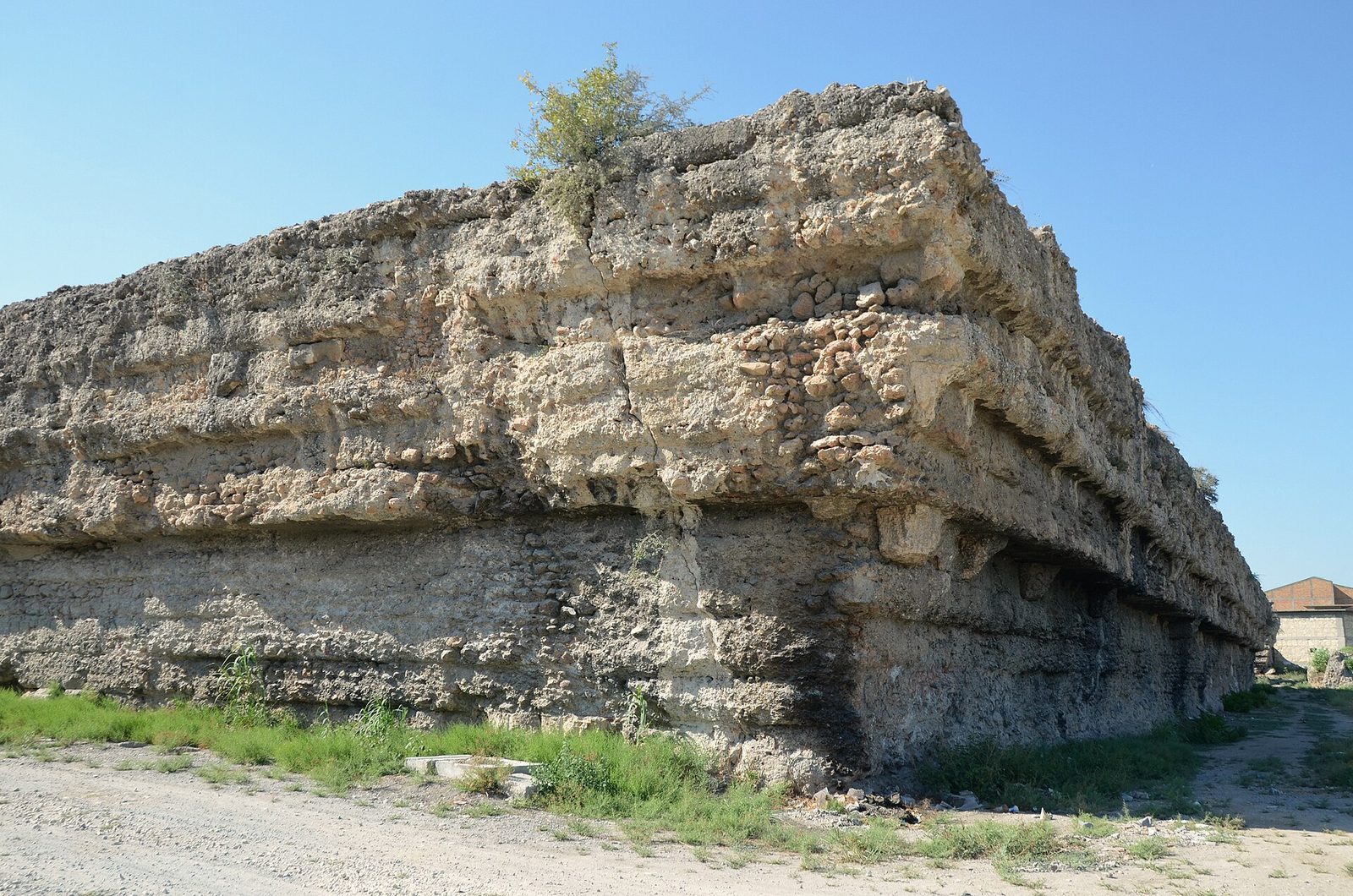
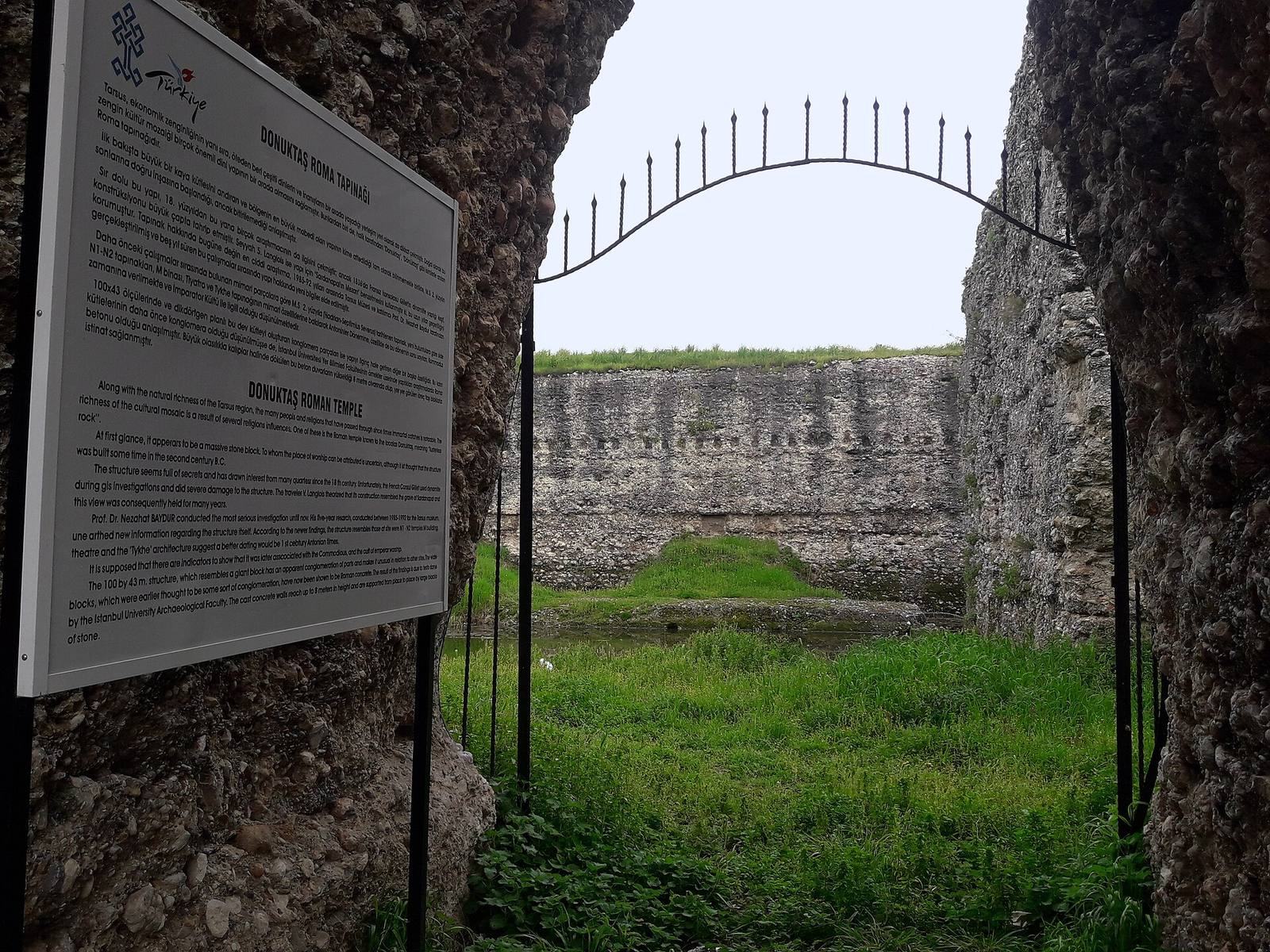
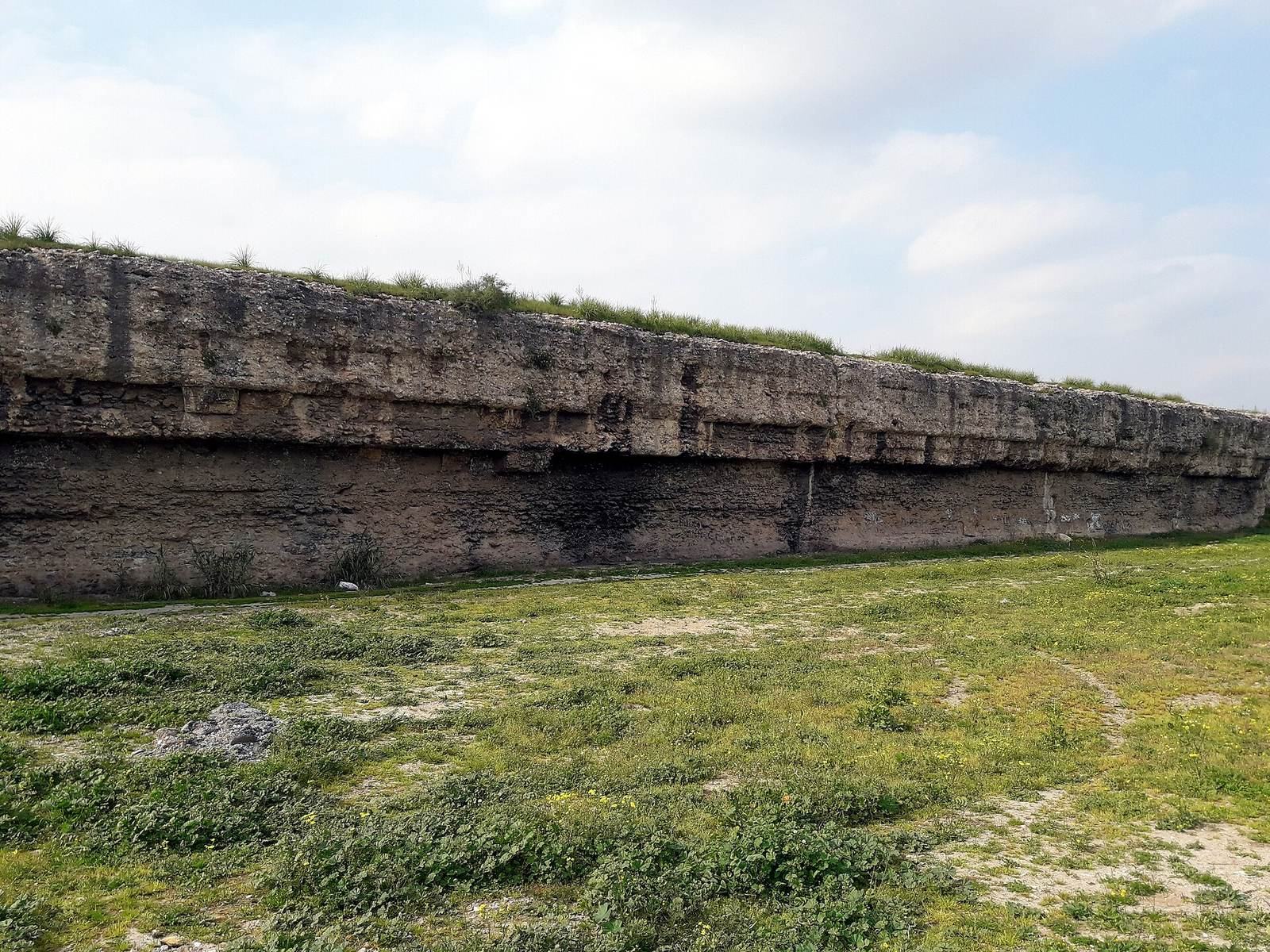
The roofless temple stands within Tarsus’s urban area, in Cumhuriyet neighborhood, about 700 metres northeast of Gözlükule and roughly 29 kilometres from Mersin. Its rectangular plan runs northeast to southwest and measures 98 metres long by 43 metres wide. The exterior walls, built from pebbles bound with Roman cement, rise about 8 metres and are approximately 6.5 metres thick. They are now bare, but material recovered during investigations indicates that their exterior was originally faced with marble. A gate is also identified among the site’s features.