Tarsus Mosque: An Ottoman-Era Sunni Muslim Mosque in Türkiye
Site at a Glance
- Rating
- 4.7
- Popularity
- Medium
- Country
- Turkey
- Primary era
- Early Modern
- Eras represented
- Early Modern
- Civilizations
- Ottoman
- Site type
- Religious
- Remains
- Mosque
On this page7 sections
History
Tarsus Mosque is an active Sunni Muslim mosque in Tarsus, Türkiye, completed in 1579 during the Ottoman period. It was commissioned by İbrahim Bey of the Ramadanid dynasty, a Turkmen ruling house based in Cilicia before the region became part of the Ottoman imperial system. The mosque stands in the center of Tarsus, in the Camii Nur neighborhood, and is described as the largest mosque in the city.
Earlier Religious Buildings
An earlier mosque stood on the same site during Abbasid rule in the ninth century. The Abbasid Caliphate was an Islamic dynasty that governed large parts of the Middle East from the eighth to the thirteenth century. After the Byzantine Empire, the medieval Roman Empire centered on Constantinople and predominantly Christian, captured Tarsus, the building was converted into a church.
The Ramazanoğlu, or Ramadanid, dynasty captured Tarsus in the fourteenth century and replaced the earlier building with another mosque. The present structure was rebuilt and completed in 1579 under Ottoman rule. The Kırkkaşık Bedesten, a covered market used for commerce and the safekeeping of valuable goods, was constructed in the same year to support the mosque.
Remains
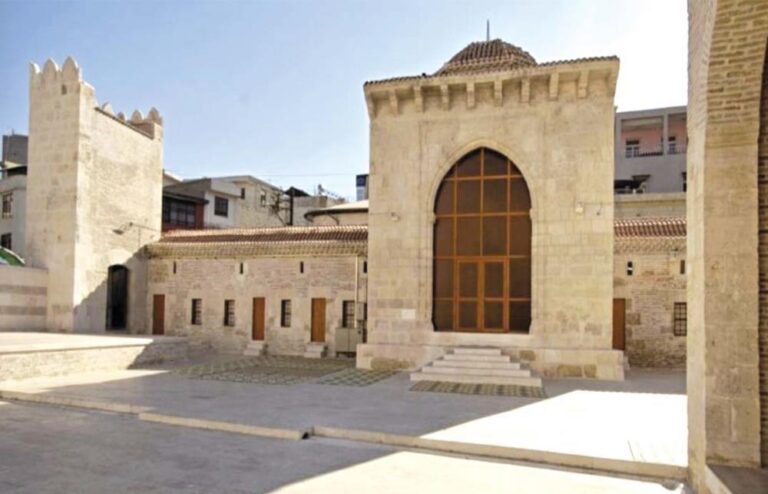
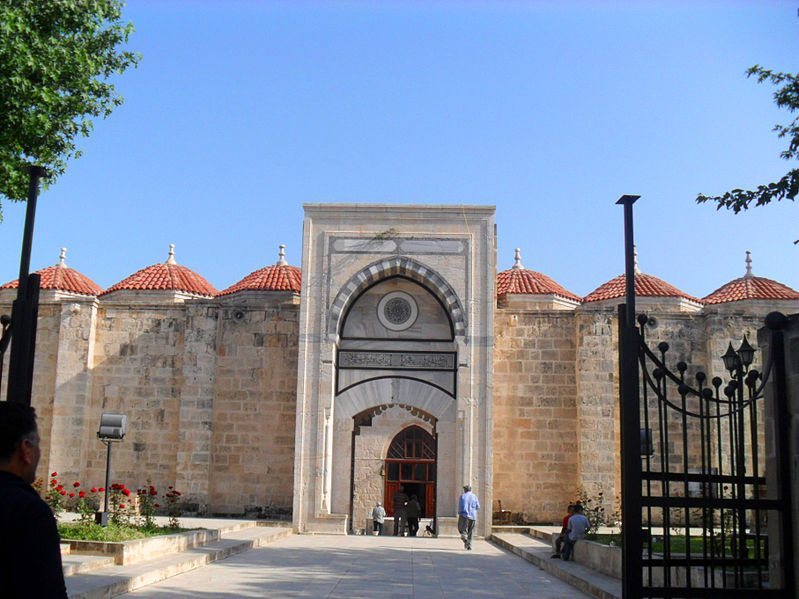
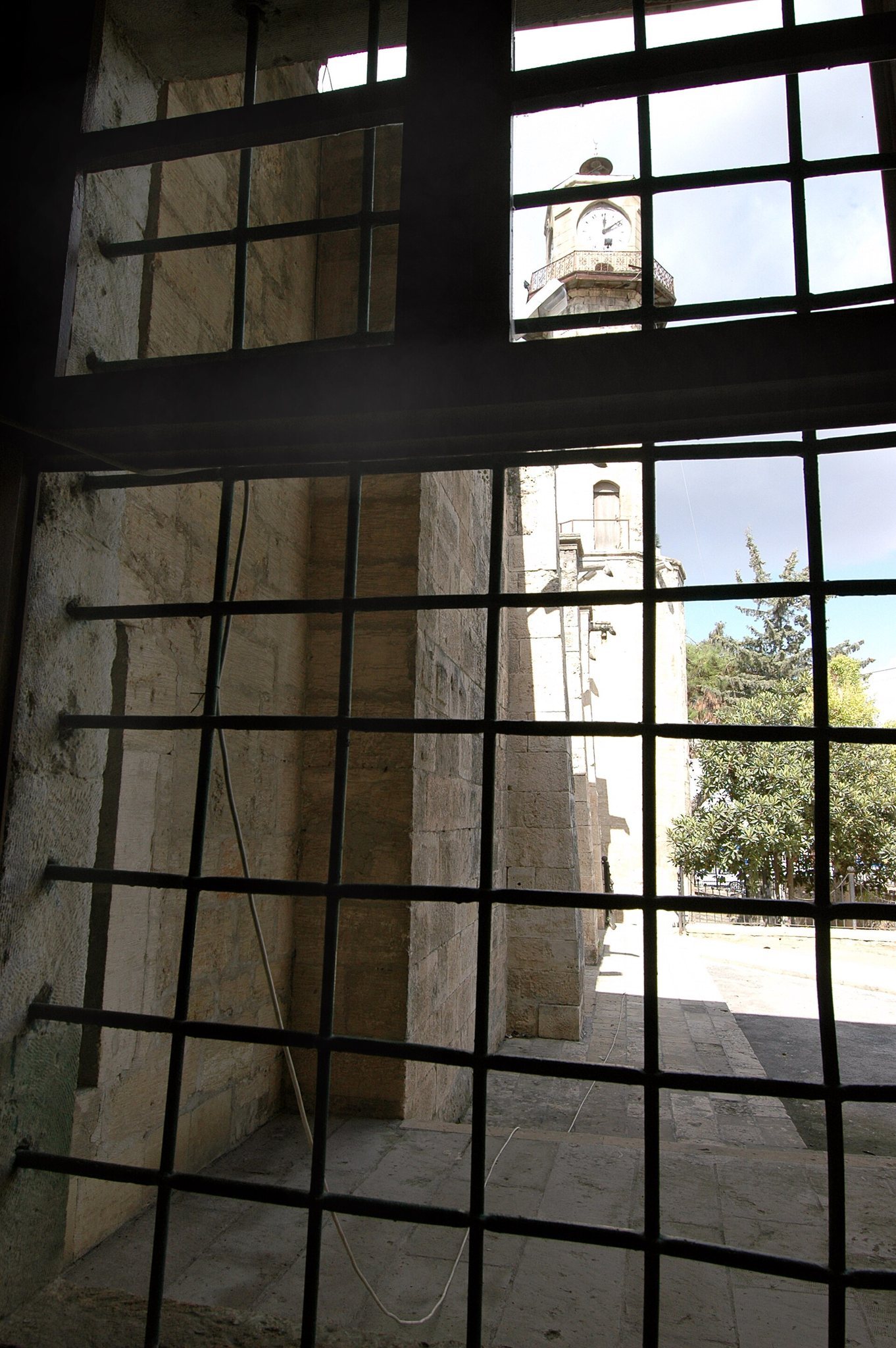
The mosque complex includes a courtyard entered from the north through a monumental marble gate. Its principal building is made of carved stone, while the covered entrance gallery and the interior prayer space contain the surviving architectural and devotional features of the complex.
Mosque Buildings
Courtyard and Entrance Gallery
The narthex, a covered entrance gallery adjoining the main prayer space, has 14 columns supporting 16 domes. Tiles decorate this part of the mosque, which is reached through the large marble entrance gate on the northern side of the courtyard.
Prayer Hall
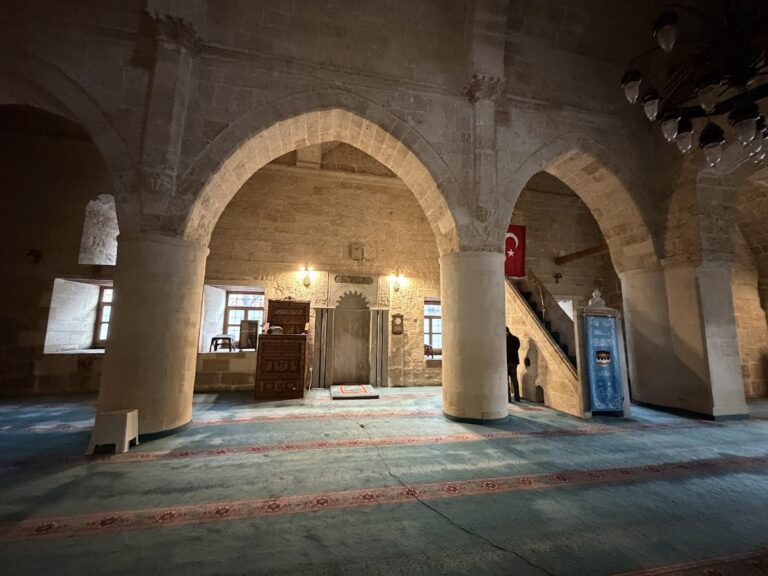
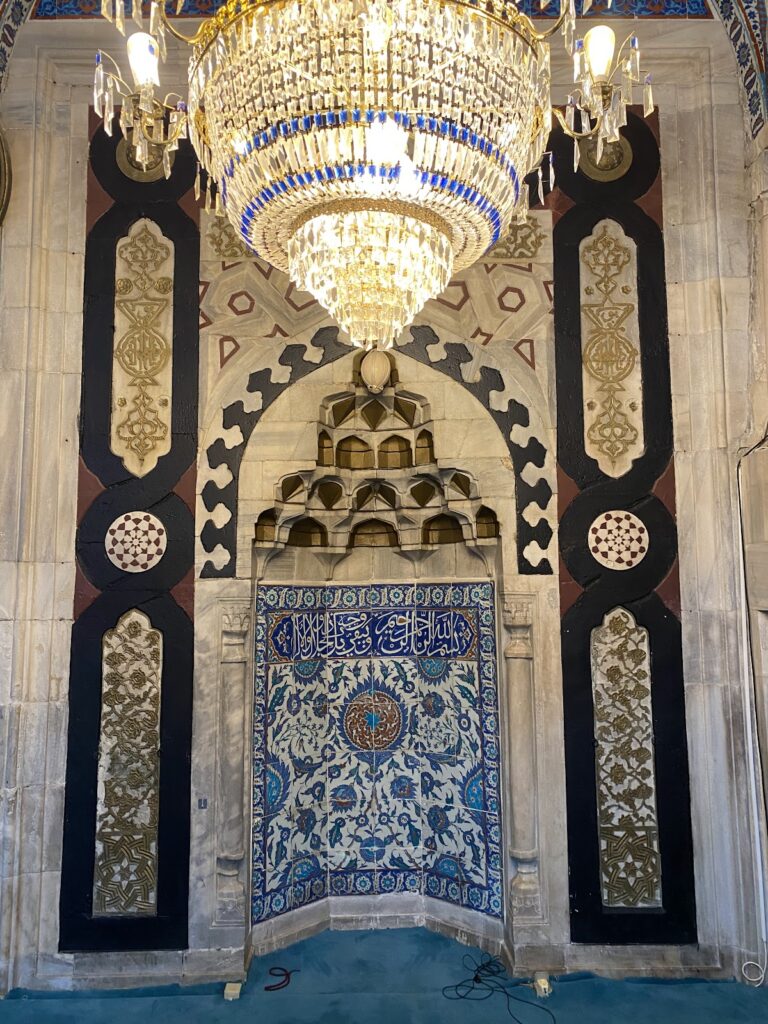
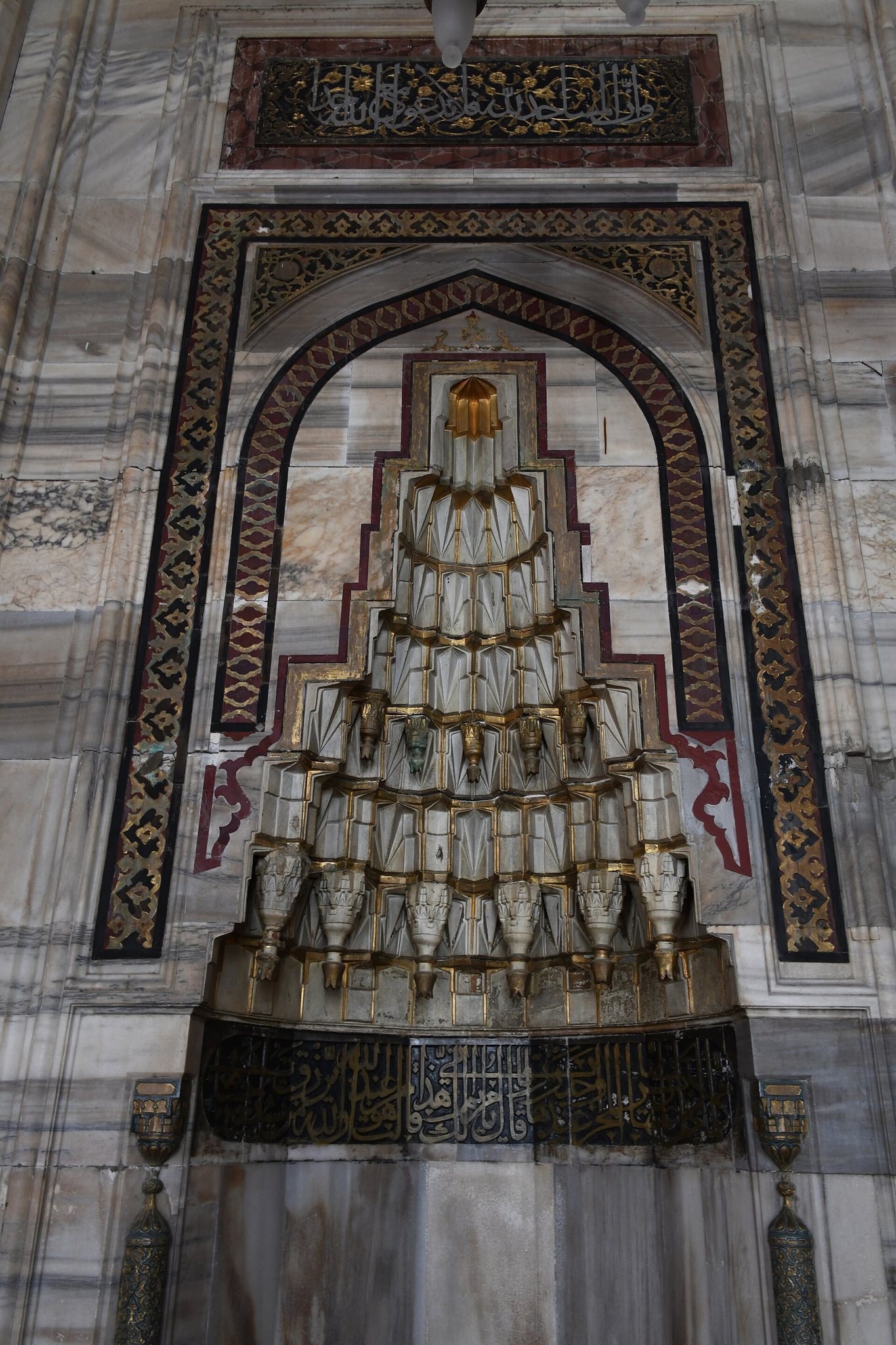
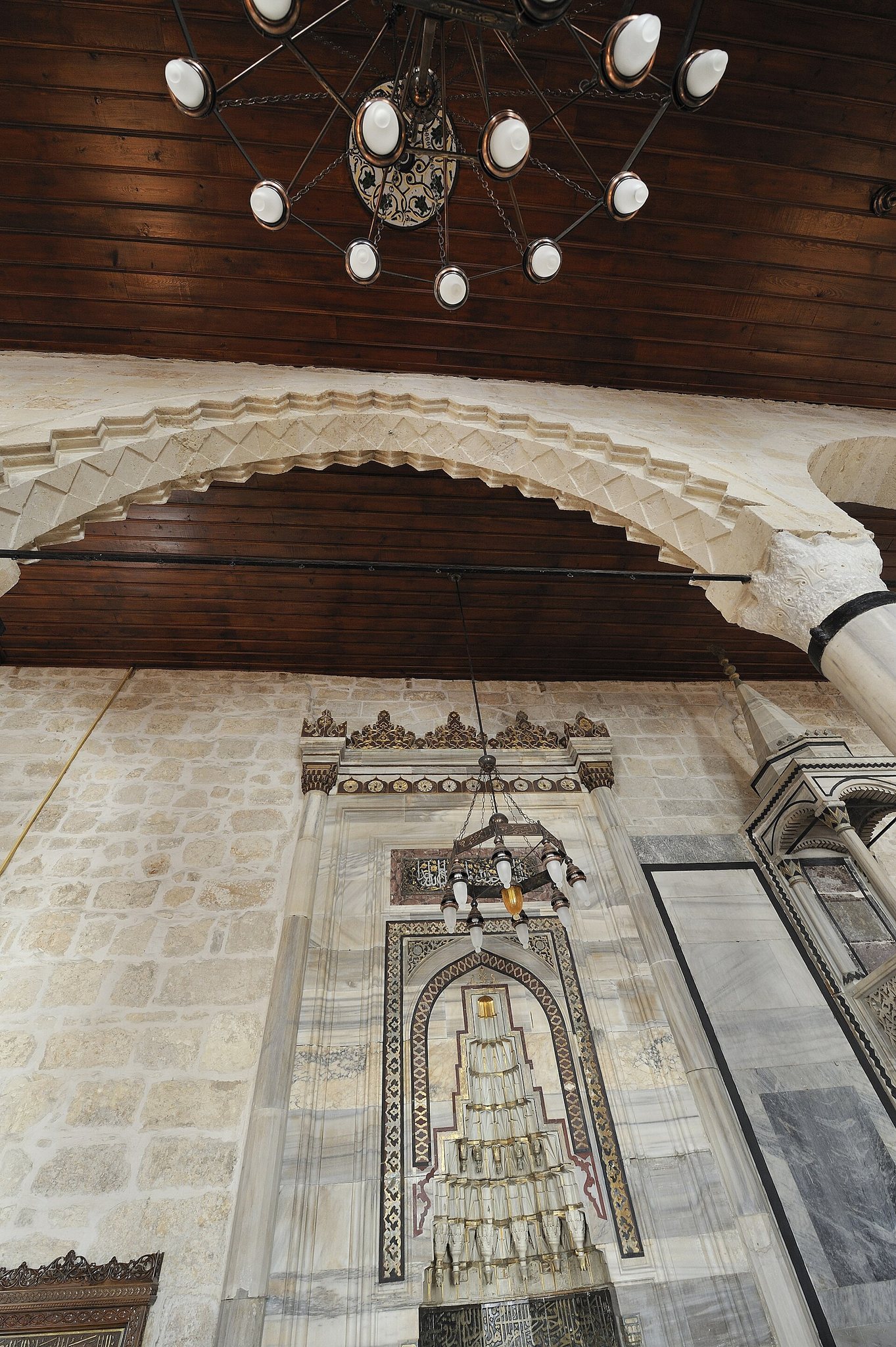
Inside the main building, the columns are joined by half-pointed arches known as Iranian arches. A marble pulpit stands within the mosque, while the marble mihrab, the niche indicating the direction of Mecca, is oriented toward that direction.
Tombs East of the Mosque
Tombs associated with Al-Ma’mun, Luqman, and Seth stand east of the mosque. Al-Ma’mun was an Abbasid caliph who ruled in the early ninth century, while Luqman is associated in Islamic tradition with wisdom. Seth, a biblical and Islamic figure, is traditionally regarded as a son of Adam.