Temple of Rome and Augustus: An Imperial Cult Temple on the Athenian Acropolis
Site at a Glance
- Popularity
- Medium
- Country
- Greece
- Primary era
- Classical
- Eras represented
- Classical
- Civilizations
- Roman
- Site type
- Religious
- Remains
- Temple
On this page8 sections
History
The Temple of Rome and Augustus is a Roman-period temple on the Acropolis in Athens, Greece, built in the late first century BCE after Octavian adopted the title Augustus in 27 BCE. It was the only Roman-period structure on the Acropolis and an early Roman example of Neo-Attic style, a classicizing approach drawing on Athenian artistic traditions.
Political Tension and Imperial Cult
Athens had sided with Mark Antony, a Roman general and politician, in the civil war between him and Octavian. The temple was erected amid strained relations with Rome and may have been intended to win imperial favor. Its construction probably coincided with Augustus’s second visit to Athens.
Dio Cassius, a Greek-language historian and Roman senator, relates that during Augustus’s visit in the winter of 22–21 BCE, the statue of Athena in the Parthenon turned west and spat blood toward Rome. The episode was understood as an omen of Athenian hostility. Relations appear to have improved by a later visit, after Augustus’s diplomatic success with Parthia, an ancient Iranian kingdom and eastern rival of Rome, and his participation in the Eleusinian rites, religious ceremonies associated with the sanctuary at Eleusis.
The temple promoted worship of Roma, the divine personification of Rome, and the imperial cult, religious honors paid to the emperor and Roman power. Its location has been interpreted in different ways. It may have set Roman authority against the history of Greek military achievements, perhaps subtly placing it beneath that tradition. Alternatively, it may have expressed Athens’s enthusiastic adoption of Roman customs alongside contemporary public works.
Civic Evidence and Later Identification
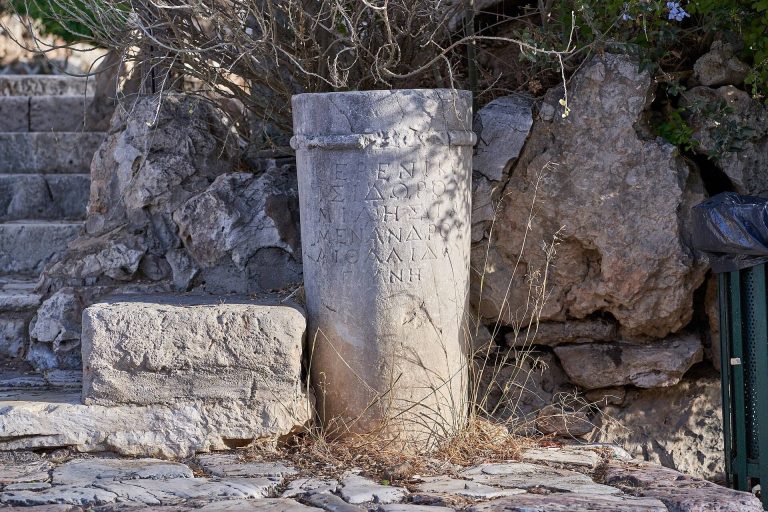
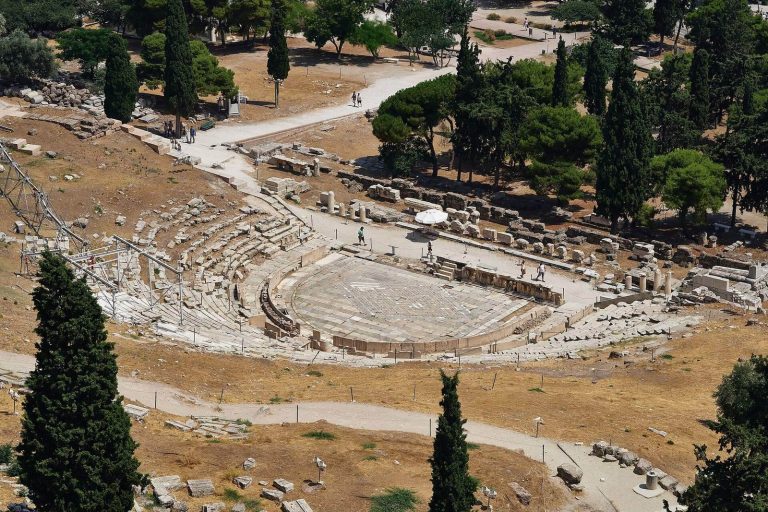
The dedication names the People as those who offered the temple to Roma and Augustus Caesar. It identifies Pammenes, son of Zenon of Marathon, as hoplite general, an Athenian military official, and priest of Roma and Augustus as Savior on the Acropolis. The same inscription names Megiste, daughter of Asklepiades of Halai, as priestess of Athena Polias, Athena as protector of the city, and Areios, son of Dorion of Paiania, as archon, a senior civic magistrate. A separate inscription on a seat in the Theatre of Dionysus names a priest of the Savior God on the Acropolis.
Excavations by Kavadias and Kawerau between 1885 and 1890 investigated a large square foundation that is now generally identified as the temple’s base. The Acropolis World Heritage property, which includes the temple, was inscribed in 1987.
Remains
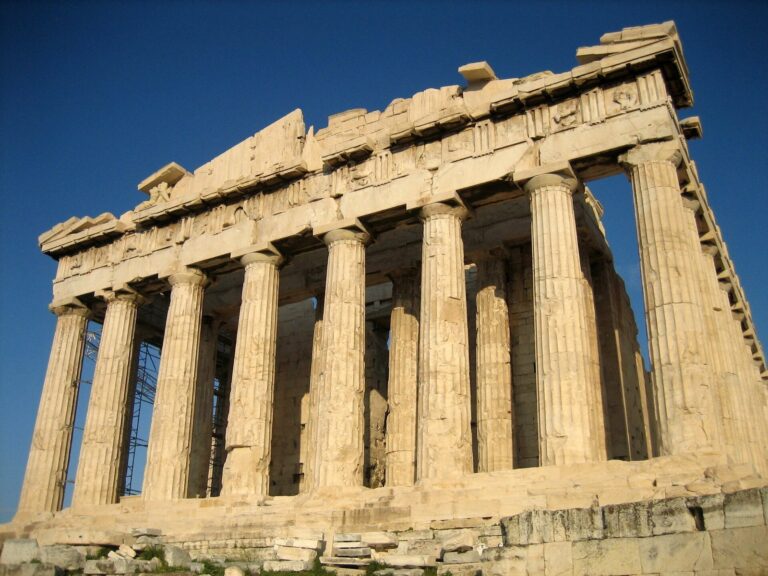
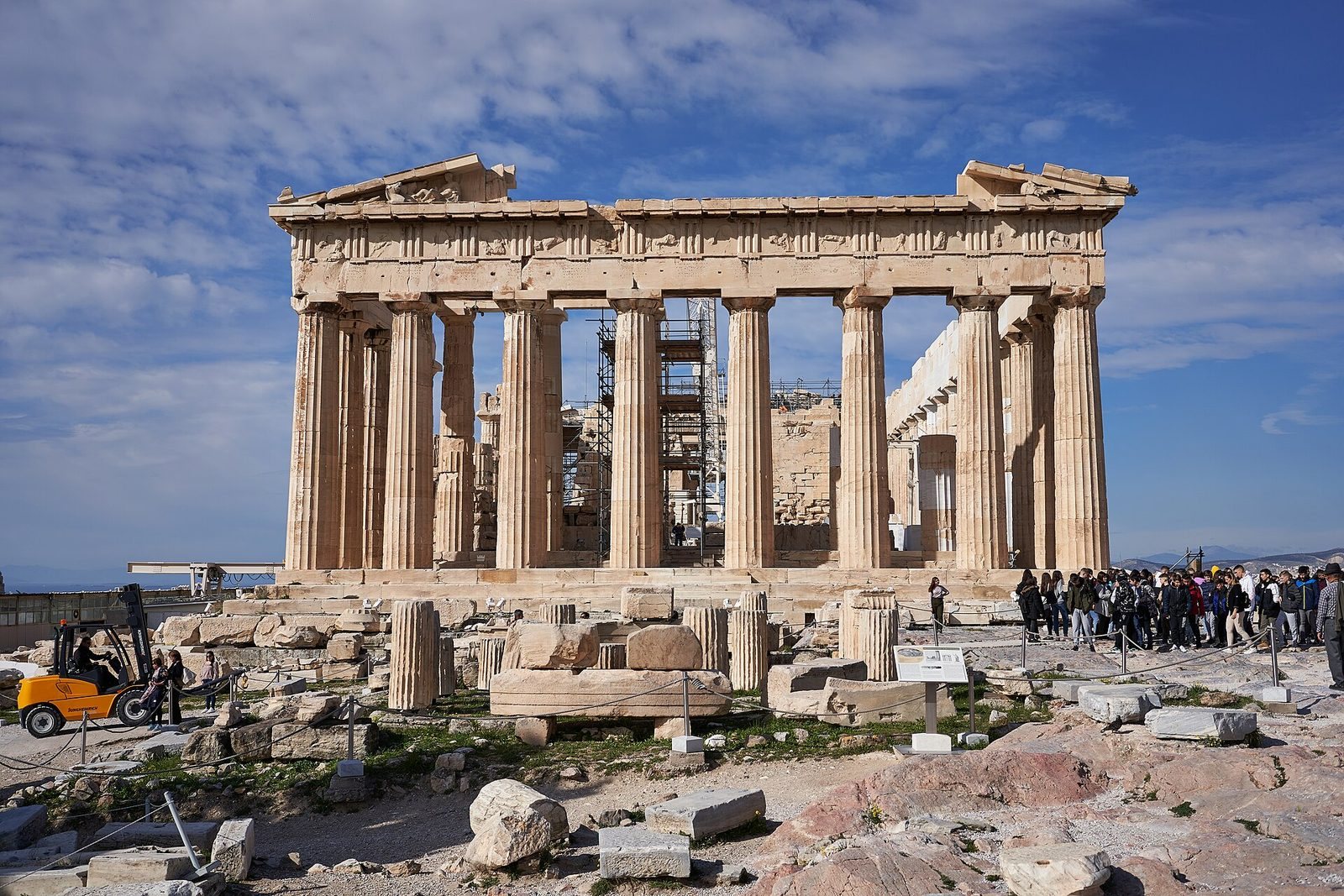
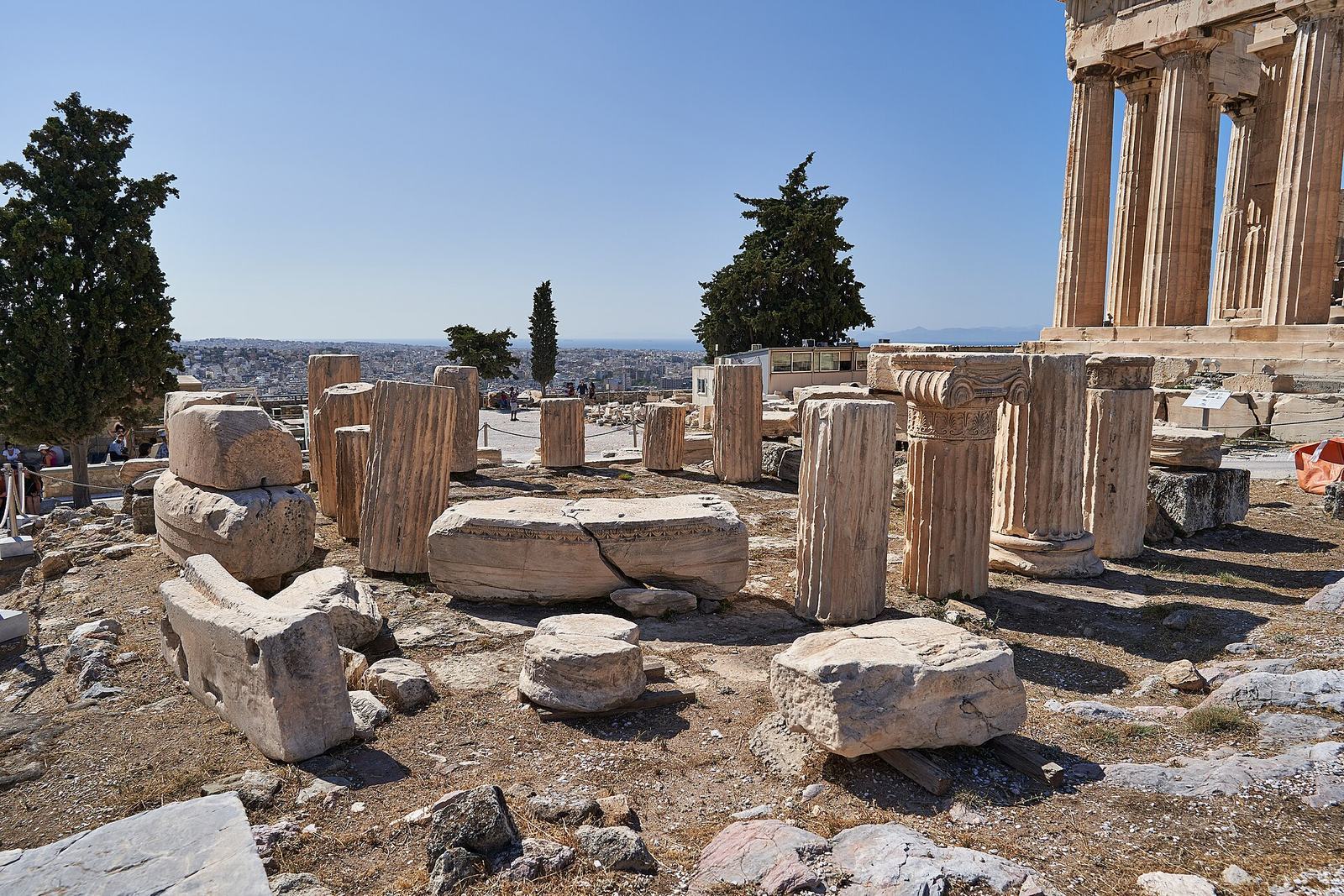
The temple stood about 23 m east of the Parthenon, aligned with its eastern entrance. Its circular, open-sided design was built in Pentelic marble, quarried near Athens.
Temple Architecture
Plan and Columns
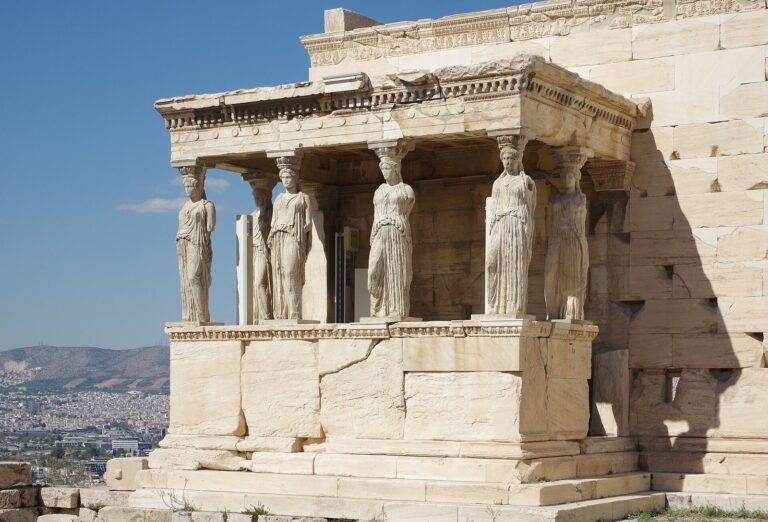
The building measured about 8.6 m across and probably stood around 7.36 m high. Nine columns rose from a single step and a stylobate, the upper platform supporting the columns. The structure had no enclosed inner room, making it a monopteros, a circular colonnade without an interior chamber. The columns recalled those of the Erechtheion, another temple on the Acropolis, and bore elaborate floral carvings near the tops of their shafts. The colonnade may have framed or sheltered a statue or another object used in worship.
Roof and Inscription
A sloping, conical roof of marble covered the structure. The opening between the columns on the east side was slightly wider than the others. Above it stood an inscribed architrave, the horizontal beam resting on the columns. Its lettering used an archaizing arrangement that imitated a regular grid.
Foundation and Reused Masonry
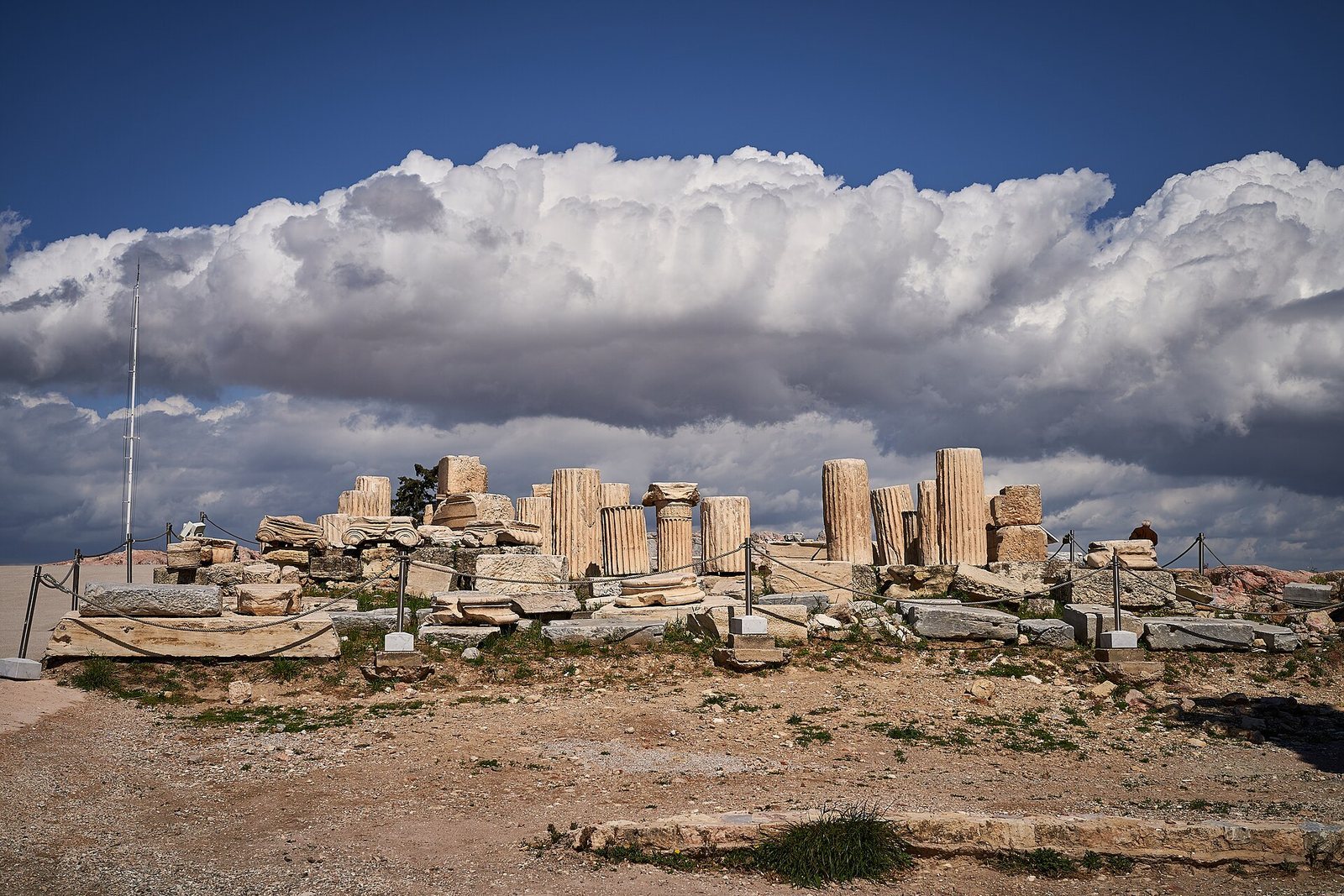
The preserved square foundation measures about 11–12 m on each side and consists of two courses of large tuff blocks, a rock formed from consolidated volcanic ash, reused from an earlier building. A cornice block from the western side of the Erechtheion was also incorporated. Its reuse has been linked to repairs to that temple that apparently took place around the time the Temple of Rome and Augustus was built. Numerous remains are scattered across the area once occupied by the temple.