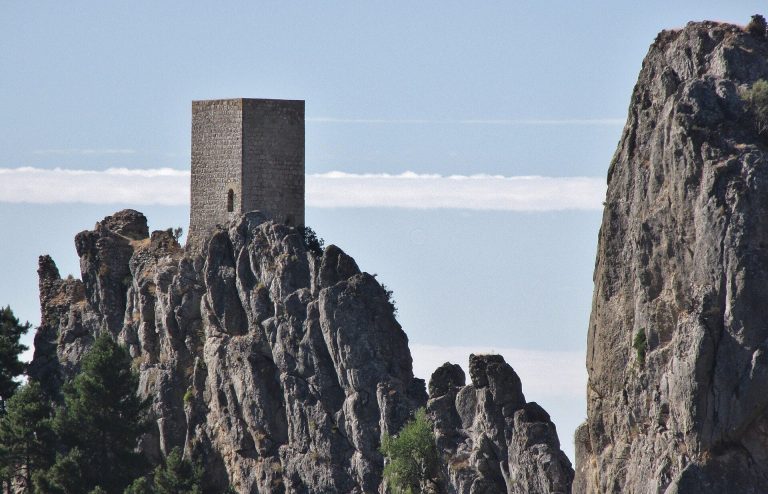
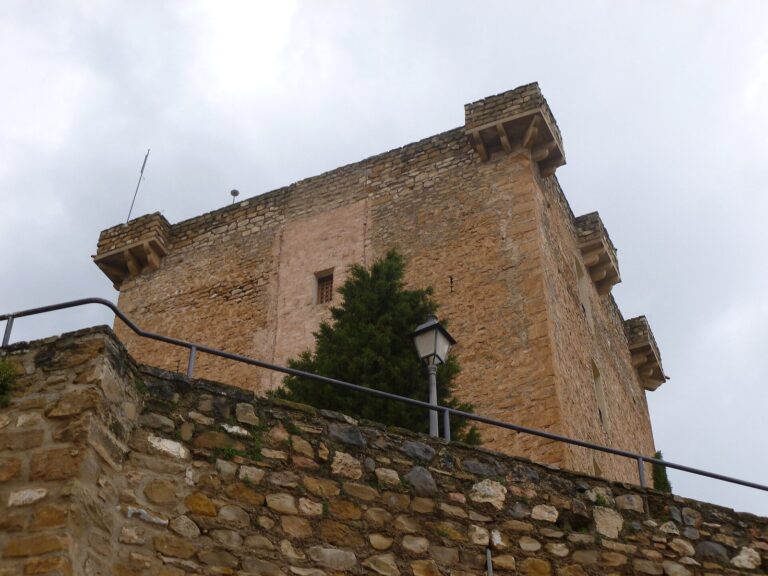
Bruñel Roman Villa: A Roman Estate in Jaén, Spain
Site at a Glance
- Popularity
- Medium
- Country
- Spain
- Primary era
- Classical
- Eras represented
- Iron Age, Classical
- Civilizations
- Iberian, Roman
- Site type
- Domestic
- Remains
- Villa
On this page10 sections
History
The Bruñel Roman Villa is a Roman estate near Quesada in Jaén Province, Spain, whose principal residential phase dates to the third century AD. The hill had an earlier Iberian burial ground, and Roman occupation continued from the second through the fourth centuries AD.
Iberian and early Roman occupation
An Iberian necropolis, or burial area, dates to the fourth century BC. Later, pottery from different parts of the hill indicates that Roman occupation developed in successive phases.
Roman villa and changing estate
The villa evolved through three phases. Evidence places its earliest phase in the second century AD, a subsequent phase probably in the third century, and a later phase in the fourth century. During the fourth century, the estate was substantially altered and became less elaborate, with a stronger focus on farming and livestock. This change reflects a broader socioeconomic shift in Roman society in Carthaginensis, a province of Roman Hispania.
Archaeology and heritage protection
Local residents brought the site to wider attention, and archaeological investigation began in 1965. Eight excavation campaigns followed, along with cleaning and consolidation of the structures. Spain declared the villa an Asset of Cultural Interest, a formal heritage designation, on 23 May 2005.
Remains
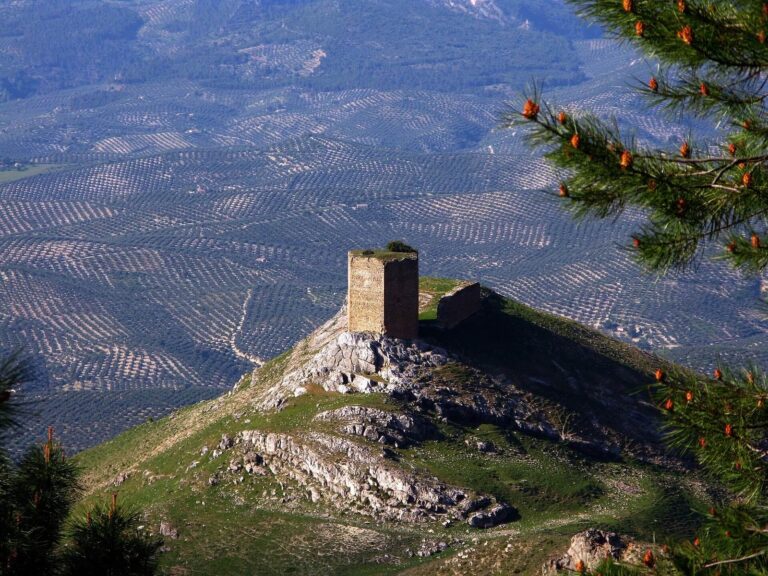
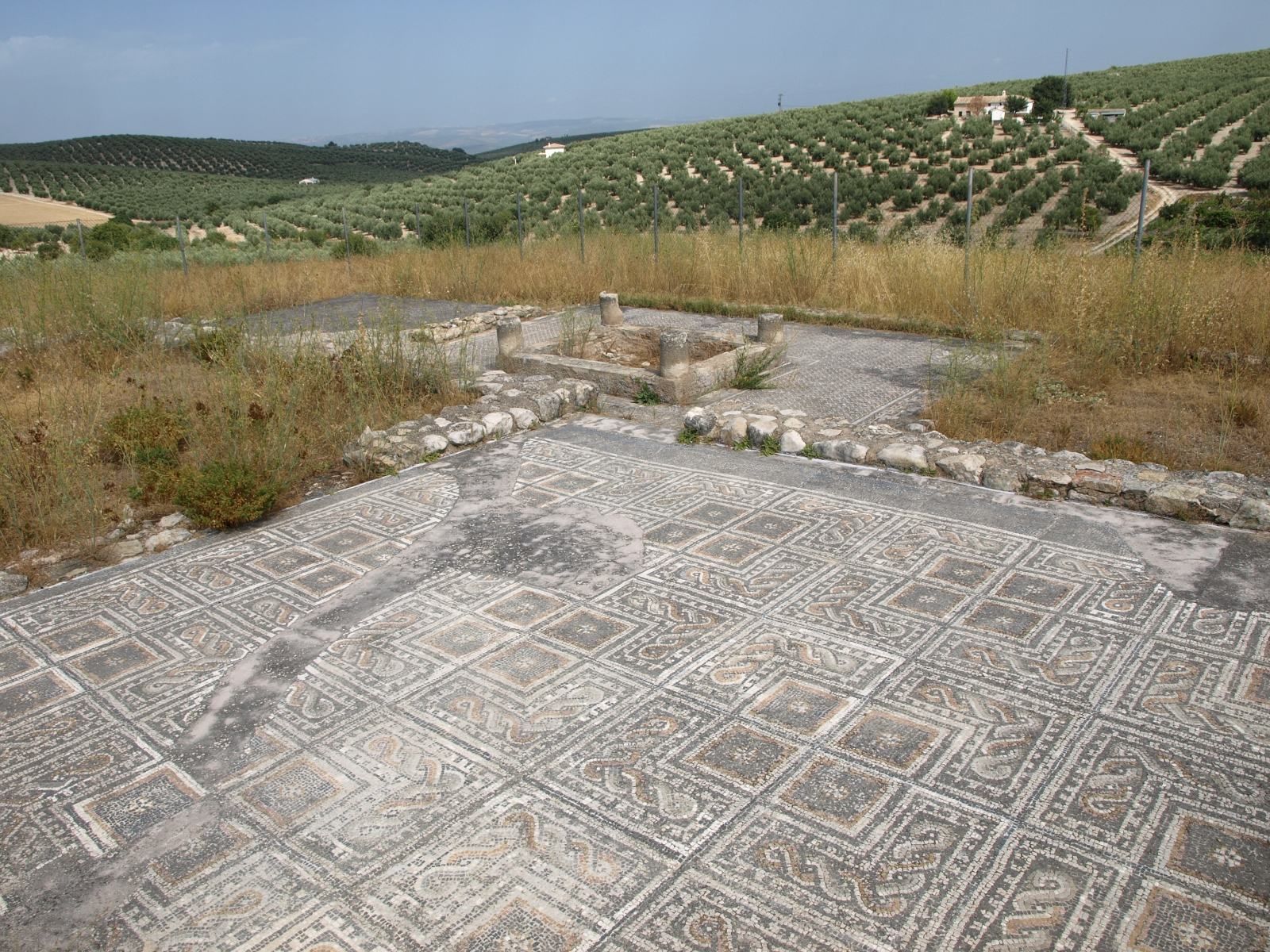
The remains occupy a gentle hill at 640 metres above sea level, south of the Bruñel stream on the eastern slope of the Sierra de Cazorla. Iberian structures and other traces lie in the northwest and northeast parts of the complex. The Roman villa developed through several architectural phases, with rooms and buildings reflecting changes in its layout and use.
Iberian remains
Iberian material and structural remains occur in the northwest of the complex, with further Iberian structures northeast of the villa. The construction of apses, or semicircular building ends, on the eastern side affected a late Iberian cremation necropolis. Two additional cremation graves were found beside the villa’s southern entrance.
Roman villa buildings
Early building
The earliest phase occupies the western part of the complex. It includes an irregular, cross-shaped building, supporting buttresses, a cistern, and an arch associated with a circular structure. Its substantial walls used opus caementicium, Roman concrete construction, and preserve marks left by the framework used to shape them. Stucco on the walls was arranged in large vermilion, dark-blue, or green panels separated by dark bands and columns.
Atrium and peristyle villa
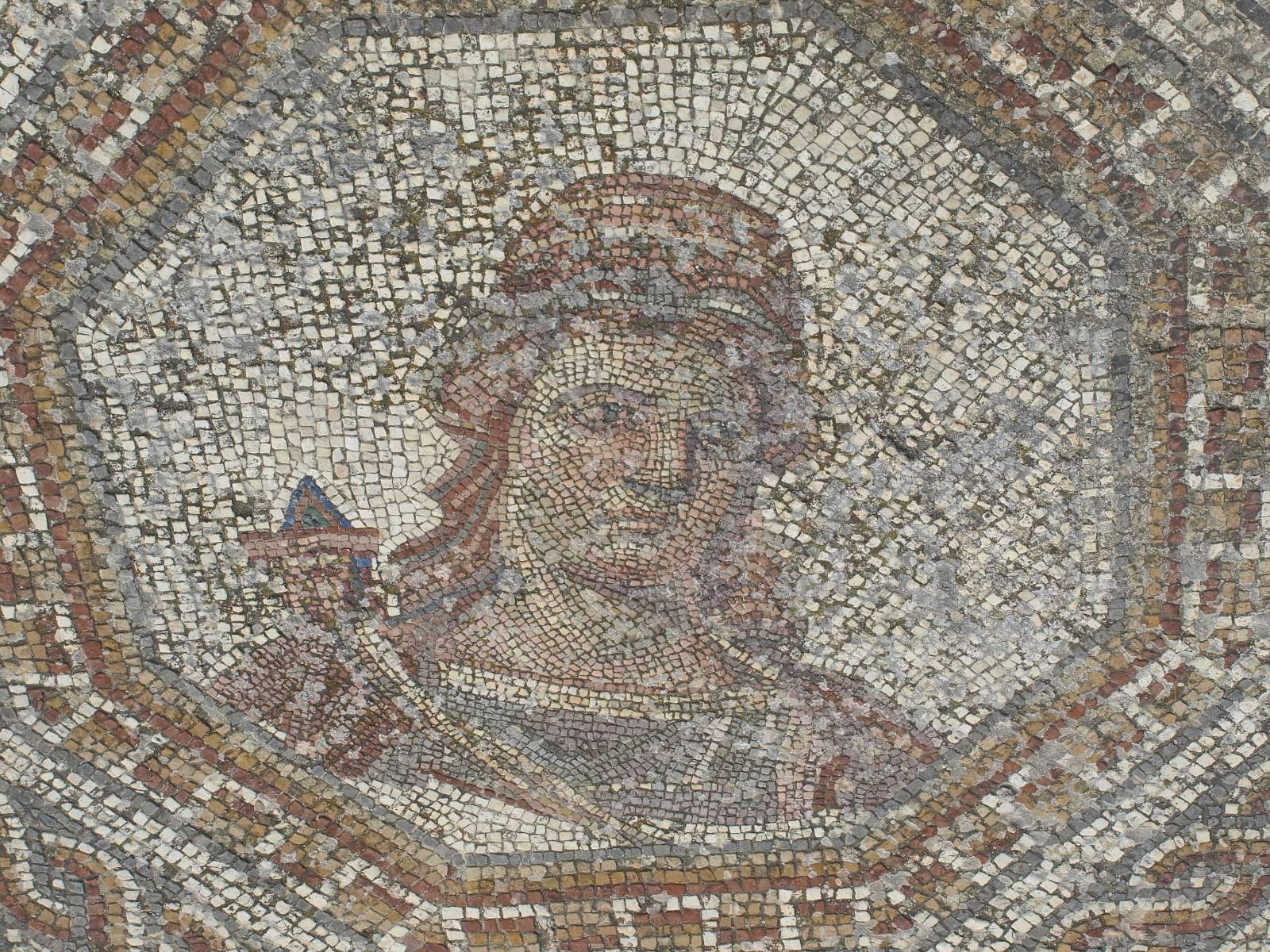
A later, well-preserved villa was arranged around an atrium, a central room or courtyard, with an impluvium, a basin for collecting rainwater. Most rooms were set around this space and a peristyle, a courtyard surrounded by columns. The floors included opus signinum, a mortar containing crushed tile, as well as mosaics. Their designs combine geometric patterns, bands of swastikas or plaitwork, and medallions with human figures.
In bedrooms in the eastern wing, paired mosaics used complementary designs. One had a geometric pattern and birds at the corners, marking the position of a bed; the other combined geometric and human figures and was intended to be viewed from the first. One mosaic may depict Thetis, a sea nymph in Greek mythology, and is now in the Jaén Museum. Decorated stucco traces survived in most of the rooms.
Fourth-century buildings
The later phase includes a rectangular building with apses at both short ends and a large courtyard bordered by rooms. Two corridors linked the courtyard with the house’s peristyle. Foundations beside the rectangular building’s walls, the spacing of recovered beams, and a keystone carved with a bull’s head indicate that it probably had an arched roof. The beams were charred in a fire that affected the building.