Atarneus: An Ancient Greek City near Dikili
Site at a Glance
- Popularity
- Medium
- Country
- Turkey
- Primary era
- Classical
- Eras represented
- Classical
- Civilizations
- Achaemenid, Ancient Greek
- Site type
- City
On this page6 sections
History
Founding and early conflicts
Atarneus was an ancient Greek city near modern Dikili, Türkiye, founded by settlers from Chios on territory granted by the Persian king Cyrus the Great in return for handing over Pactyes, a Lydian opponent of Persian rule. The city and its surrounding land shared the name Atarneus. Ancient writers placed it in Aeolis, a region of western Anatolia, while some also assigned it to Mysia. This reflected differing geographical classifications, including the view that Aeolis formed part of Mysia. Some writers identified Atarneus with Tarne in Homer’s Iliad, but that identification is uncertain.
The population’s ethnic makeup is unclear. People who were not Greek may have lived in the territory before the Chian settlement, but whether the newcomers expelled them is unknown. Himerius’s testimony suggests that the adoption of Greek language and culture was incomplete in Aristotle’s time. A Bithynian writer also called Atarneus a city of the Mysians without explaining the label.
Overcrowding on Chios led its inhabitants to harvest grain from Atarneus. In 493 BCE, Histiaeus, a political leader from Miletus, moved troops from Lesbos to the city and collected grain there. The Persian commander Harpagus confronted the expedition as it gathered provisions in the Caicus plain. Histiaeus was captured at Malene, within Atarneus’s territory, taken to Sardis, and impaled on Harpagus’s orders.
Chian exiles later used Atarneus as a base in disputes with their political opponents and raided Ionia. In 398 BCE, the Spartan general Dercylidas captured the city after an eight-month siege. Its inhabitants accepted his terms, and he placed Dracon of Pellene in charge.
Prosperity under Eubulus and Hermias
Atarneus prospered in the fourth century BCE, particularly around its middle, under Eubulus, a banker from Bithynia, and his successor Hermias, a former slave who had studied with Plato. The Peloponnesian War, a conflict that weakened Greece, and internal struggles in Persia helped Eubulus secure the city’s independence. Eubulus and Hermias later brought substantial parts of Aeolis under their control, although Chios still held some interests in Atarneus around 355 BCE.
Philip II, king of Macedon, regarded Hermias as a possible ally and Atarneus’s territory as a useful base for a campaign in Asia Minor. His ambitions there developed alongside plans in Thrace and, later, Persia. Hermias feared Persian intervention after Artaxerxes III took the throne in 358 BCE and began strengthening Persian authority. He considered an alliance with Macedon essential. Philip eventually abandoned his plans for Asia Minor and broke off contact with Hermias under pressure from Athens.
Aristotle and Hermias’s capture
Aristotle had an earlier connection with Atarneus: after his father died, Proxenus of Atarneus cared for and educated him, and may have been his uncle. Following Plato’s death in 347 BCE, Hermias invited Aristotle and the philosopher Xenocrates of Chalcedon to the city, where they received a warm welcome. Aristotle later married Pythia, Hermias’s niece. During his time in Asia Minor, Aristotle helped Hermias build ties with Philip and urged him to govern less autocratically, in keeping with Platonic ideas. The changes increased Hermias’s popularity and helped him extend his holdings into coastal rural districts.
After Philip withdrew, Hermias continued to resist cooperation with Persia. His captor may have been Memnon of Rhodes or Memnon’s brother Mentor, a Greek mercenary serving Artaxerxes III. Mentor is said to have pretended to change sides before arresting Hermias and sending him in chains to Susa, where Hermias died in 341 BCE. Aristotle had tried to persuade Mentor to leave Persian service.
Abandonment
The date when Atarneus was abandoned is unknown, though an epidemic may have contributed. Pausanias linked the city’s abandonment to a calamity that also depopulated Myus. Pliny the Elder later described Atarneus as no longer a city.
Remains
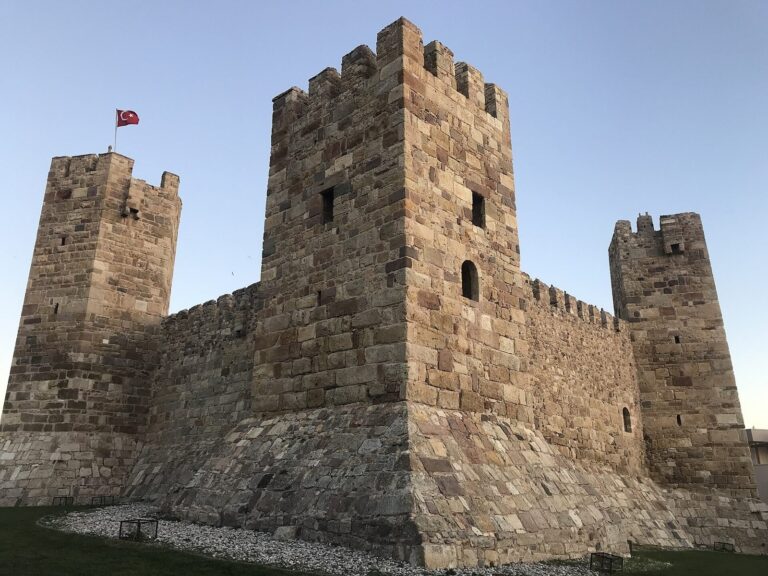
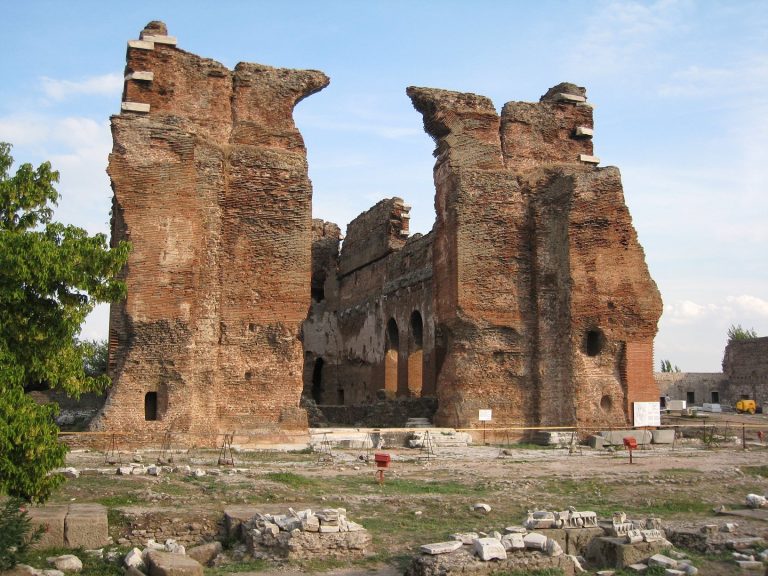
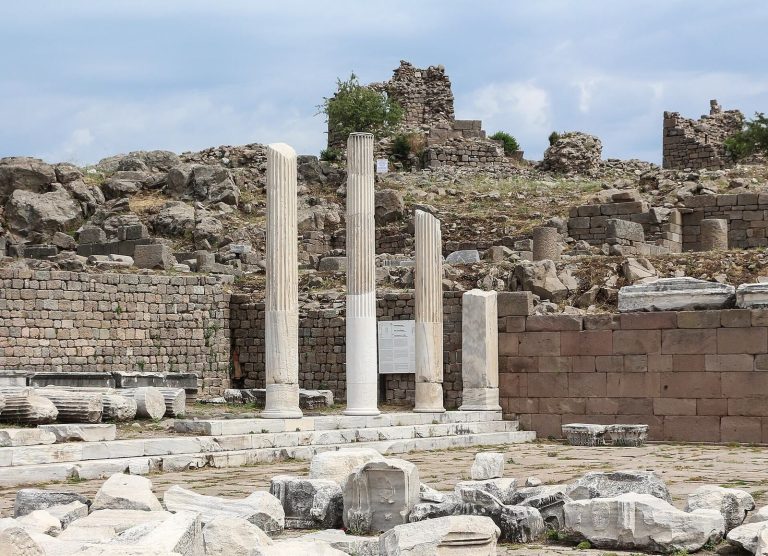
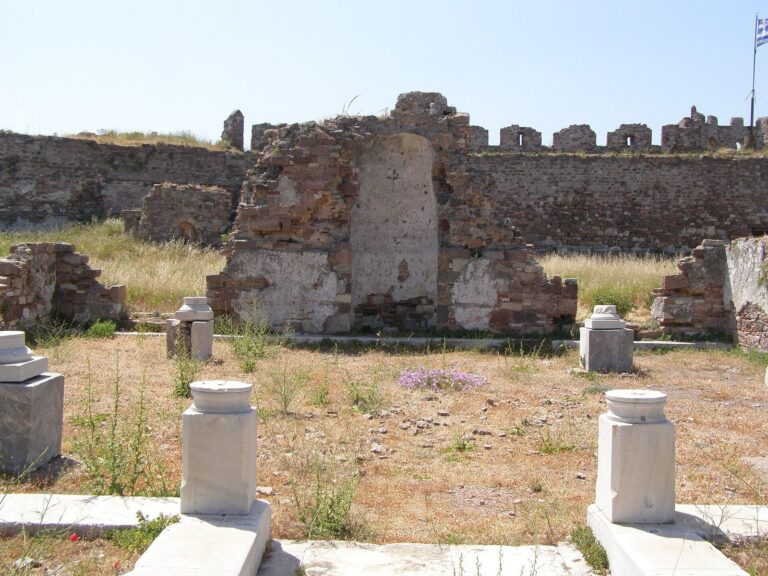
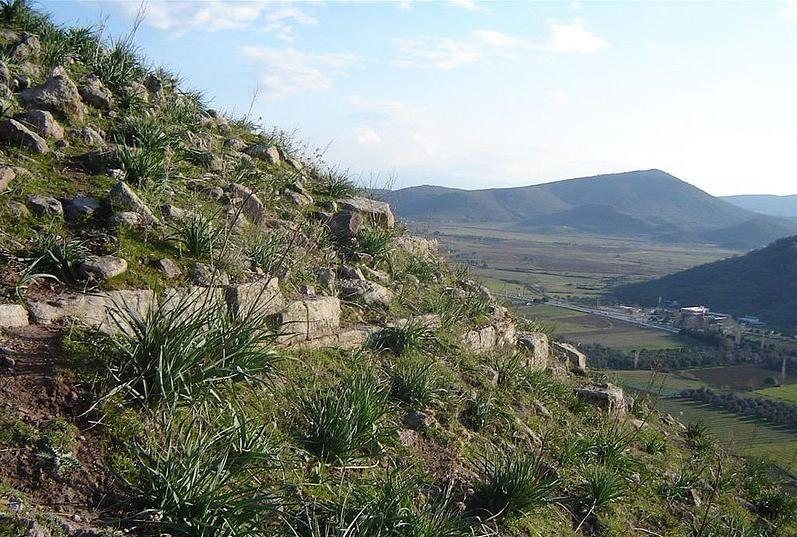
The archaeological site lies at Kale Tepe, northeast of modern Dikili on the western Anatolian coast, opposite Lesbos. Atarneus stood on the route between Adramyttium and the Caicus plain, about 20 kilometres to the south-southeast. The surrounding territory was a fertile coastal and agricultural region. Substantial building remains at Kale Tepe date to the fourth century BCE.
A long section of defensive wall survives at the site and is dated to the fifth or fourth century BCE. Atarneus also began minting silver and bronze coins around the fourth century BCE; their legends include “ATA” and “ATAR.”
The territory included the hot springs at Astyra, opposite Lesbos. A transparent, multicolored stone called Cetionis was also said to occur at Atarneus. Gold mines lay between Atarneus and Pergamon and were associated with the Lydian kings. Strabo connected part of Croesus’s wealth with mines in this district, including those of a deserted city; they were no longer operating in Strabo’s time.