Phanar Greek Orthodox College: A Greek Orthodox School in Istanbul
Site at a Glance
- Popularity
- Very High
- Country
- Turkey
- Primary era
- Modern
- Eras represented
- Modern
- Civilizations
- Ottoman
- Site type
- Civic
- Remains
- School
On this page10 sections
History
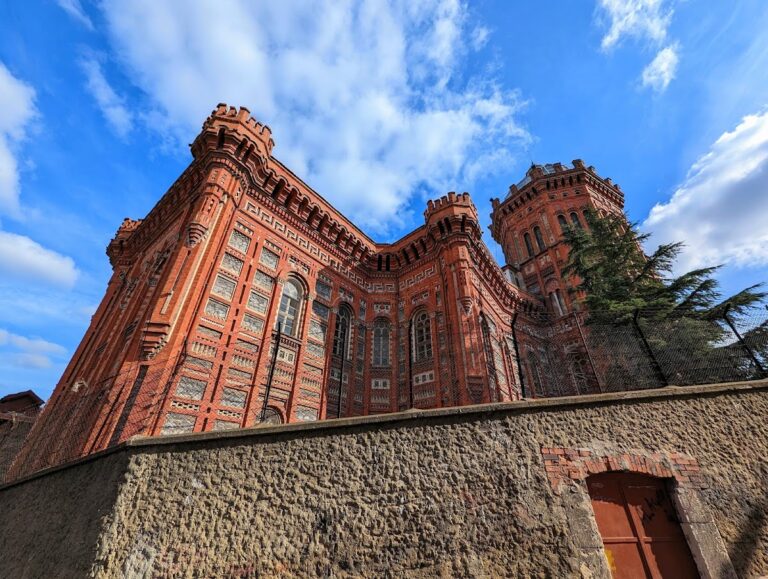
Phanar Greek Orthodox College is a Greek Orthodox school in Balat, Istanbul, Türkiye, whose present institutional form dates to 1454. Its institutional lineage is traditionally traced to earlier patriarchal schools, while the present building combines several architectural styles and was constructed between 1881 and 1883. The school trained Orthodox clergy and educated prominent families in the Ottoman Empire.
Early lineage and foundation
The school’s institutional tradition is traced to an Ecumenical Patriarchal School attributed to Constantine the Great in the fourth century. The stages associated with this lineage include the Ecumenical Patriarchal School from the fourth to sixth centuries, the Great Step from the sixth to eighth centuries, a Patriarchal Academy dated to the ninth to thirteenth centuries, and the Patriarchal School from the fourteenth century until 1804.
After Ottoman sultan Mehmed II captured Constantinople in 1453, he authorized the Orthodox community to return, worship, and educate its members in their own language. On 6 January 1454, Gennadius Scholarius, the theologian who became Ecumenical Patriarch of Constantinople, established the school in its present institutional form as a continuation of the earlier Patriarchal Academy. He appointed the Thessalonian philosopher Matthaios Kamariotis as its first director.
The school initially prepared clergy, while also teaching ancient and contemporary philosophy and literature. It became an educational institution for Phanariots, the Greek Orthodox elite associated with the Phanar district, and other Orthodox families. Its graduates included patriarchs, senior clergy, Ottoman officials, including some Turks, princes of Wallachia and Moldavia, and politicians in the modern Greek state.
Relocations and academic development
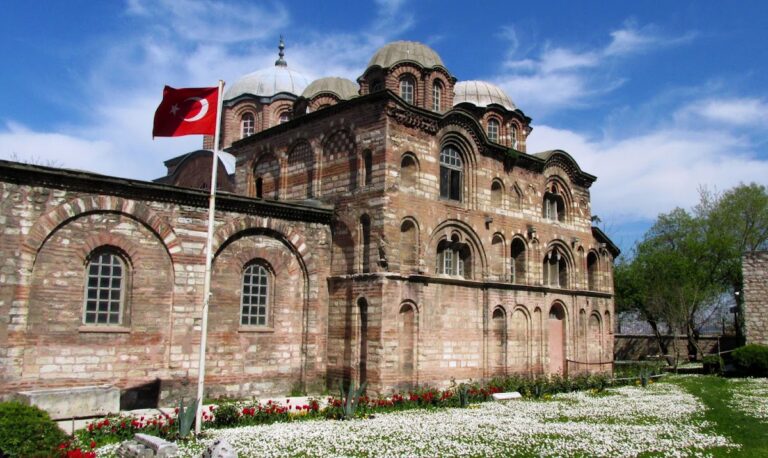
In its early centuries, the school used different buildings in Phanar and settlements along the Bosphorus. It was initially associated with the Patriarchate, which had been based at the Church of the Holy Apostles and later at Pammakaristos Church. Manolakis Kastorianos is credited with acquiring a building in Phanar and undertaking to support three teachers. This refoundation is traditionally dated to 1661, although the date is uncertain: the date in a letter used to support it was probably added later and may be inaccurate.
In 1804, the school moved to the mansion of Alexander Mavrokordatos at Ksirokrini, now called Kuruçeşme, and became known as the Patriarchal School of Ksirokrini. It closed in 1821 and resumed teaching in 1825 after returning to Phanar. In 1837 it moved back to Ksirokrini, then returned to Phanar in 1849. From that year it was known as the Great School of the Nation and continued in a house opposite the Patriarchate.
Philosophy remained central to its academic reputation, and the philosophical department helped establish the school’s standing as an academy in the seventeenth and eighteenth centuries. Newtonian theories may have been taught there for the first time in the Ottoman Empire. From 1861, the school developed into a classical secondary school; it also had a medical department for a short time. A proposal under Patriarch Joachim III to make it a university did not proceed. In 1903, the school added a teacher-training department in classical philology and pedagogy, preparing graduates to teach in Ottoman territories.
The nineteenth-century building
During Joachim III’s patriarchate, the cornerstone of a new school building was laid on 30 January 1880. Construction ran from 1881 to 1883, and the building opened on 12 September 1882. Designed by the Greek architect Konstantinos Dimadis, it gave the school a permanent home in Phanar.
The school in the Turkish Republic
After the Turkish Republic was established, the school took the name Fener Greek Boys’ High School. Girls began attending in 1989, when pupils from the adjacent Yuvakimion Girls’ High School moved into its building. The institution continues as a Greek minority middle and high school, with teaching in Turkish and Greek.
The school’s enrollment and standing declined as Istanbul’s Greek Orthodox community contracted. The 1923 population exchange, the 1942 wealth tax, the 1955 Istanbul pogrom, and other violence against the community contributed to this decline. Its population fell from about 206,000 before the First World War to between 3,000 and 4,000 in 2008.
Two properties acquired by the school in 1952 and 1958, one donated and the other purchased, became the subject of a legal dispute with the Turkish Treasury. The Treasury relied on a 1974 court ruling that minority foundations could not acquire property. After the school applied to the European Court of Human Rights in 1996, the court ruled in its favor on 9 January 2007. Turkey was required to return the properties and pay €890,000 in compensation and €20,000 in legal costs.
In October 2025, the Turkish Ministry of Education instructed the school to leave the building within 90 days because of structural-safety concerns. The building did not meet updated earthquake-reinforcement standards, and the estimated cost of the work exceeded €10 million. The principal said the school could not afford the improvements.
Remains
The school building
Exterior and plan
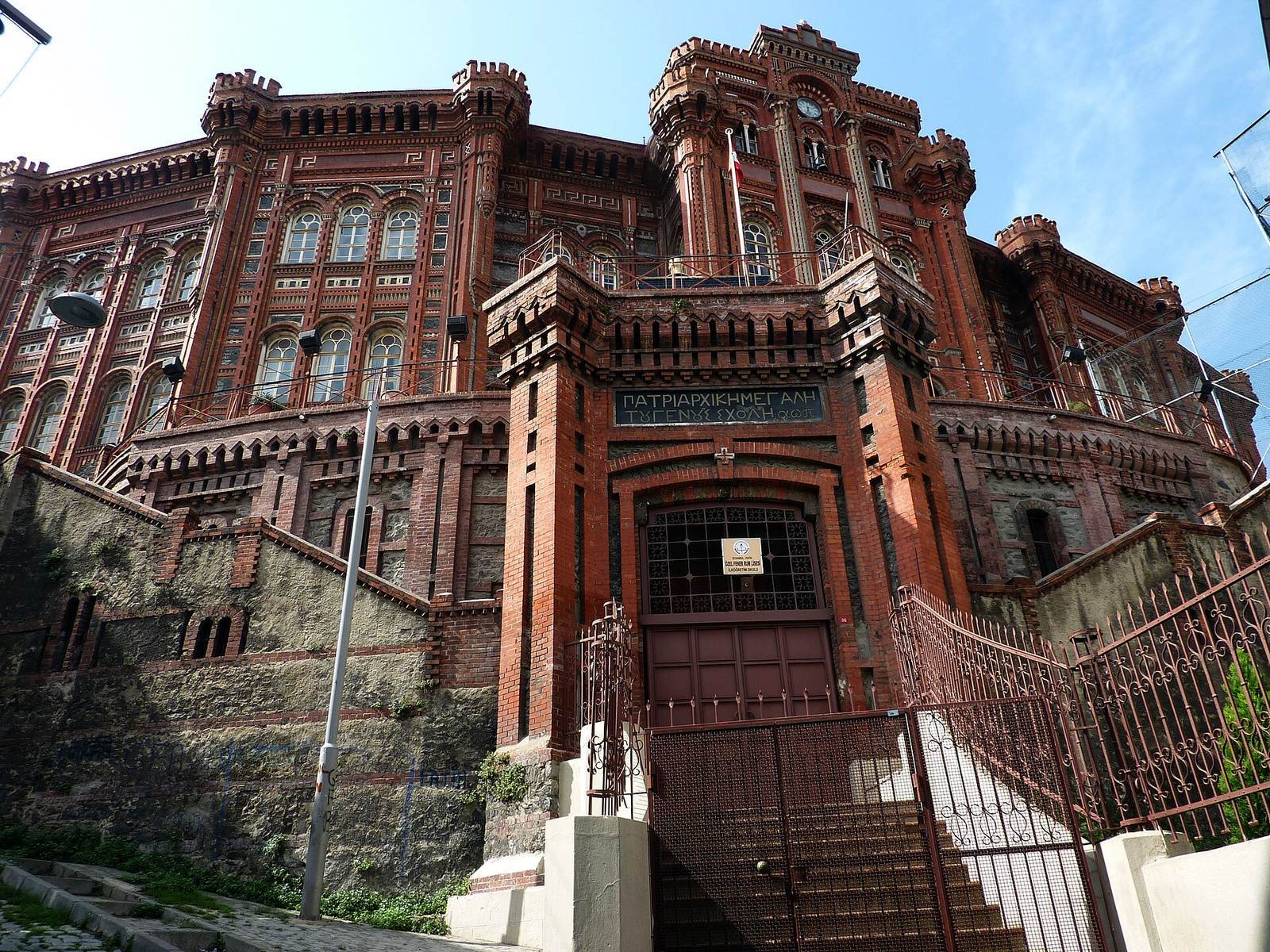
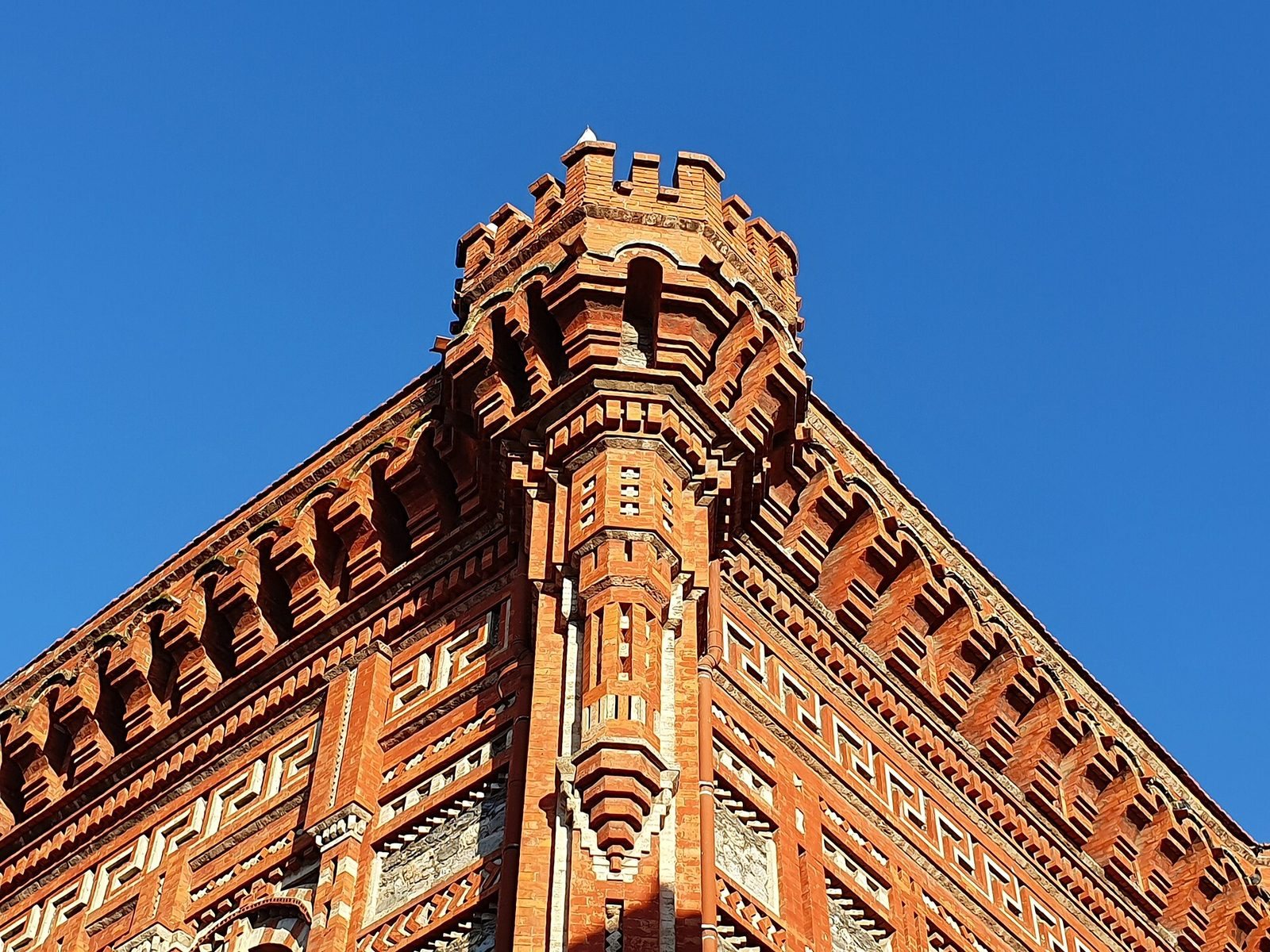
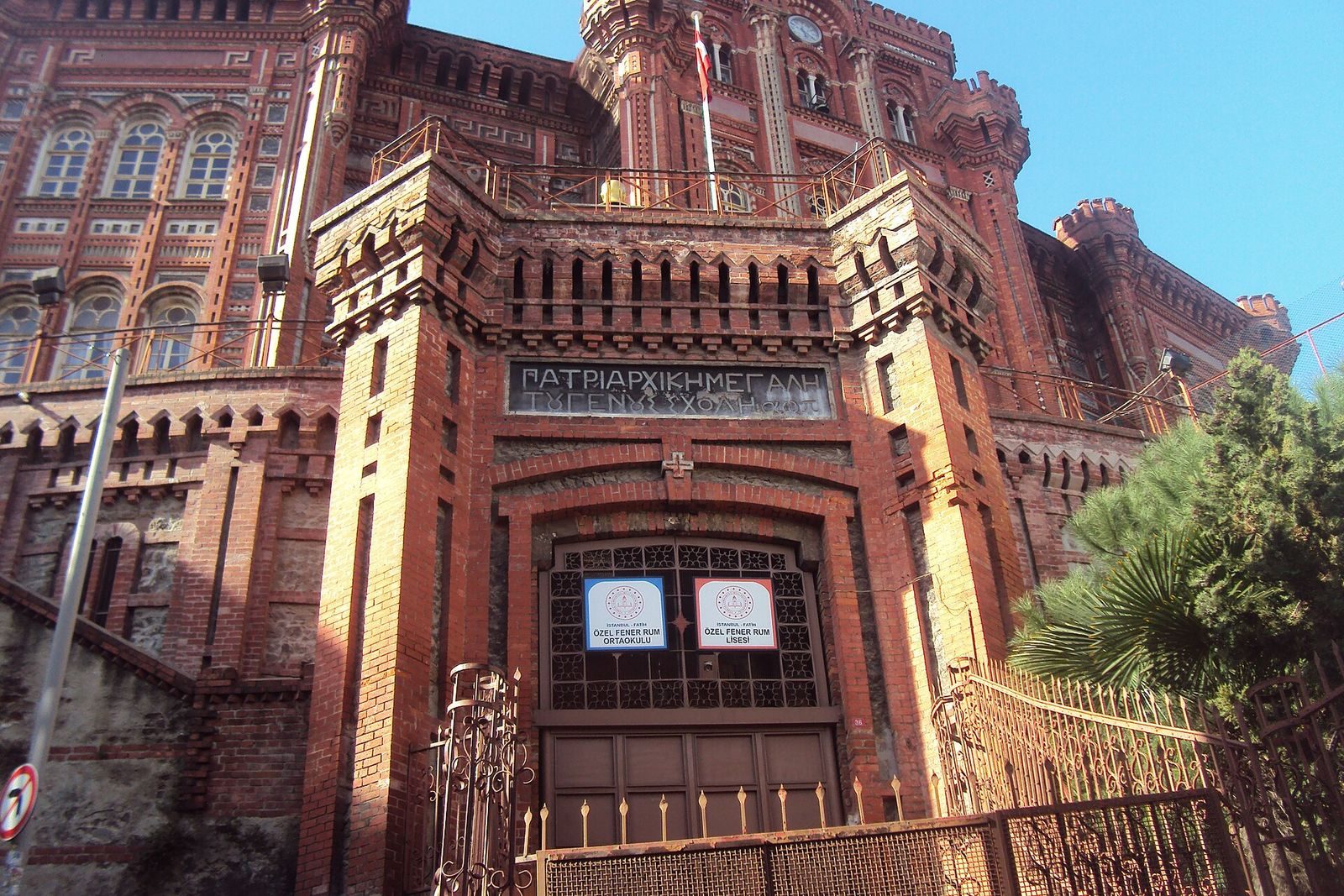
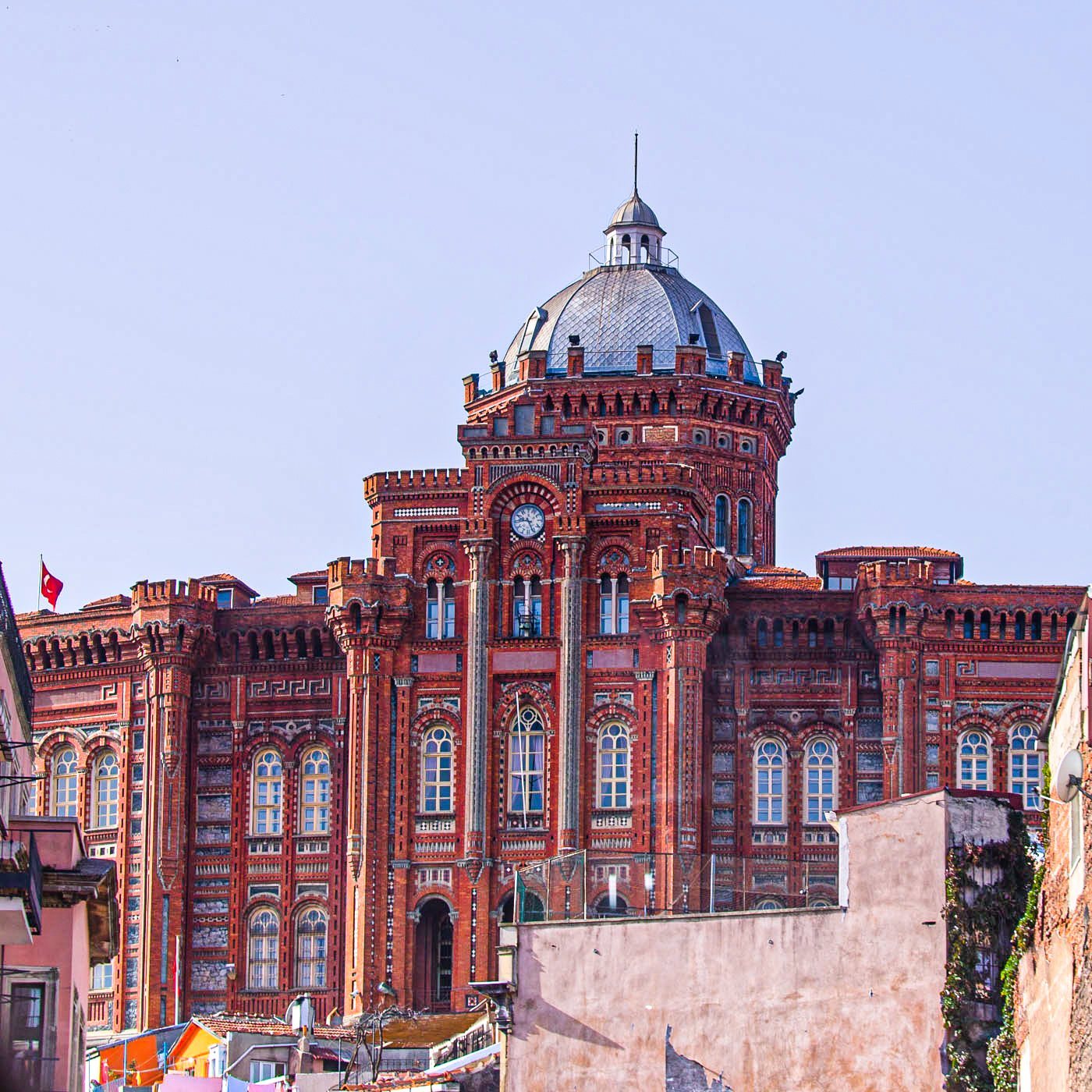
The school stands on Sancaktar Yokuşu in Istanbul’s Fener district, on land formerly belonging to Moldavian ruler and scholar Dimitrie Cantemir. It is near the Church of St. George and the Patriarchate, overlooks the Golden Horn, and lies in the Mouchlion quarter near the Church of the Virgin Mary. The stone structure is faced with red bricks brought from Marseille. Its combination of architectural styles and distinctive brickwork earned it the local nicknames Red Castle and Red School.
The building has four storeys, including the ground floor, and 3,020 square metres of usable floor area. Its symmetrical, curved plan, broad and high façade, and thick central tower give it a castle-like form. Seen from above, its outline has been compared to an eagle. The tower is about 40 metres high and rises above a small, amphitheatre-shaped classroom in the roof area.
Entrance and interior rooms
Two matching staircases at ground level lead to the central entrance. Columns surround the entrance hall, which connects to the other rooms. An inscription above the entrance identifies the building as the Patriarchal Great School of the Nation.
The ceremonial room on the second floor has ceiling frescoes depicting ancient Greek philosophers. Three saints regarded in Orthodox belief as protectors of education occupy the centre. The mechanism of the historic exterior clock is housed in a second-floor art classroom.
Tower and scientific instruments
The dome atop the tower serves as an observatory for astronomy classes and contains a telescope. The school also assembled scientific instruments, most made by French manufacturers in the last quarter of the nineteenth century or by German and Austrian makers in the early twentieth century. The collection led to alterations to the building.
Among the instruments is a Foucault pendulum, a device whose changing plane of swing demonstrates Earth’s rotation. Made by the German firm Max Kohl, it was purchased in 1912 and may have been the first pendulum of its kind in the Ottoman Empire.