Roman Baths of Ankara: A Third-Century Roman Bath Complex
Site at a Glance
- Popularity
- High
- Country
- Turkey
- Primary era
- Classical
- Eras represented
- Classical, Modern
- Civilizations
- Roman
- Site type
- Sanitation
- Remains
- Baths
On this page19 sections
History
The Roman Baths of Ankara are a Roman bath complex in Hacı Bayram, Ankara, Türkiye, generally dated to the third century and associated with Emperor Caracalla’s reign. The complex stands on a mound with signs of earlier occupation. Phrygian settlement material lies beneath Roman remains, alongside material from the Byzantine Empire, the eastern continuation of the Roman Empire, and the medieval Seljuk dynasty. Ancient Ancyra, as Ankara was then called, stood at an east–west crossroads and became the capital of the Roman province of Galatia in central Anatolia.
Roman foundation and imperial associations
The baths are usually linked to Caracalla, who ruled from 198 to 217. Coins recovered in excavations and inscriptions from the period support a third-century date. An alternative proposal places the complex in the reign of Hadrian, a second-century emperor. Under that theory, the exercise court may have belonged to an earlier gymnasium, a facility for athletic training, and the baths may have been formed by converting it. This interpretation has not been established.
Inscriptions found at several places in Ankara offer another possible connection. Twelve church inscriptions, five of which survive, say that the priest Tiberius Julius Justus Junianus built a bath in the city and provided other services. They do not establish whether he built this complex.
A dedication to Asclepius, the Greek and Roman god associated with medicine and healing, has been proposed but remains uncertain. The baths may also have been connected with celebrations of Caracalla’s recovery. He may have visited Ankara, and the complex may have been completed and opened in his honor. Titus Flavius Gaianus, the emperor’s regional representative and an official who organized contests, may have arranged health competitions for him. Ankara’s Megala Asklepia Soteria games celebrated Caracalla’s recovery, and inscriptions in the region wished the emperor a swift recovery.
Continued use and destruction
The baths remained in use until the eighth century. Coins indicate that they operated for about 500 years, with repairs made during that period. A fire in the eighth century destroyed the complex, leaving ruins of its basement and first floor.
Rediscovery and archaeological work
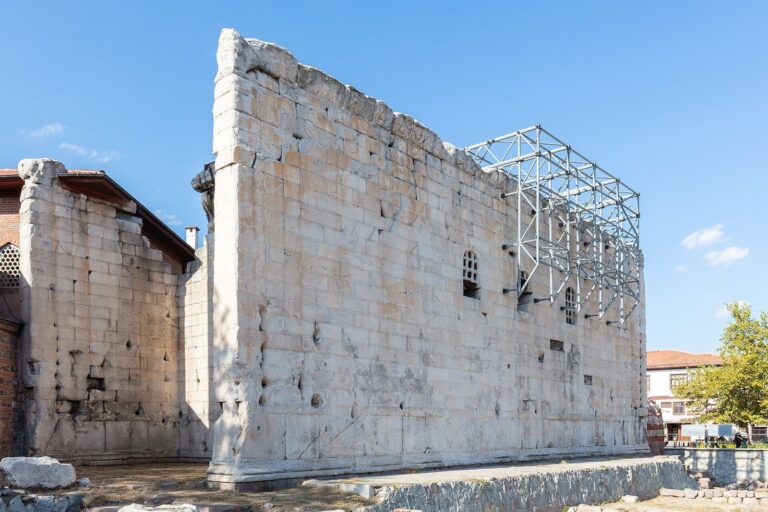
French traveler Joseph Pitton de Tournefort depicted the ruins in an engraving in 1701, showing high walls. In 1813, Scottish traveler John Macdonald Kinneir described a hilltop ruin with walls about 10 metres high; its identification as the baths is probable, but not certain. The walls were blasted with dynamite in 1926 during construction of the Ministry of National Defense building. A 1928 photograph by French photographer Guillaume de Jerphanion is the only known photograph showing some of the bath walls still standing.
Archaeological work began after ancient architectural remains came to light during construction of Çankırı Caddesi. Early excavations, conducted under the Ministry of National Education, were led by German archaeologists Kurt Bittel and Knut Olof Dalman. In 1937, Remzi Oğuz Arık found pottery from Phrygian, Roman, Byzantine, Seljuk and Ottoman periods, revealing a long sequence of activity on the mound.
A new team took charge in 1938 under museum director Hamit Zübeyir Koşay and Hans Henning von der Osten of Ankara University’s Faculty of Language, History and Geography. The work was undertaken for the Turkish Historical Society. A test trench measuring five by ten metres in the centre of the mound exposed the hot room and a furnace. Arık and his students continued in 1939, and by 1941 much of the buried complex had been uncovered.
Under Necati Dolunay, who led excavations through 1943, work on the exercise court and northern wing was completed. From 1944 to 1947, Mahmut Akok excavated south of the baths, on the grounds of the Finance College, to test whether the complex had a symmetrical plan. The newly uncovered southern walls did not mirror those to the north, indicating that this part had been left unfinished for reasons that remain unknown.
The baths opened as an open-air museum after the 1937–1944 excavations. The Museum of Anatolian Civilizations carried out site arrangement and display work from 1996 to 2001. Rescue excavations southwest of the baths took place from 2000 to 2006 during work to identify the outer walls of Ankara Castle. Further excavations in 2009 recovered objects including a Late Dynastic Egyptian amulet and figurines. In April 2022, conservation work cleaned ancient statues, renewed joints in the surviving walls and added protective caps. Later marble additions were removed from the pool area to restore its earlier surface, while the grounds and exercise court were landscaped and walking paths laid out.
Remains
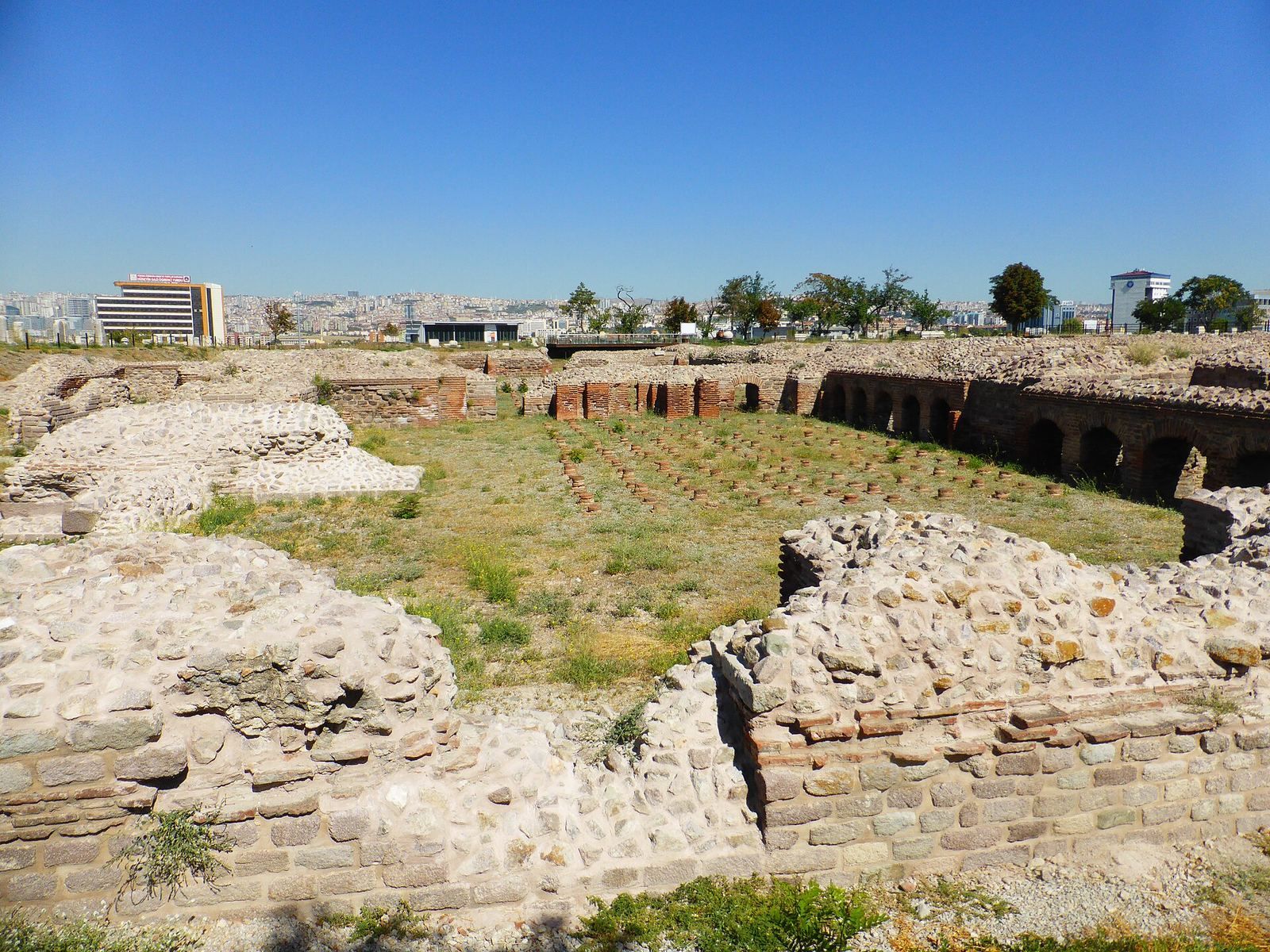
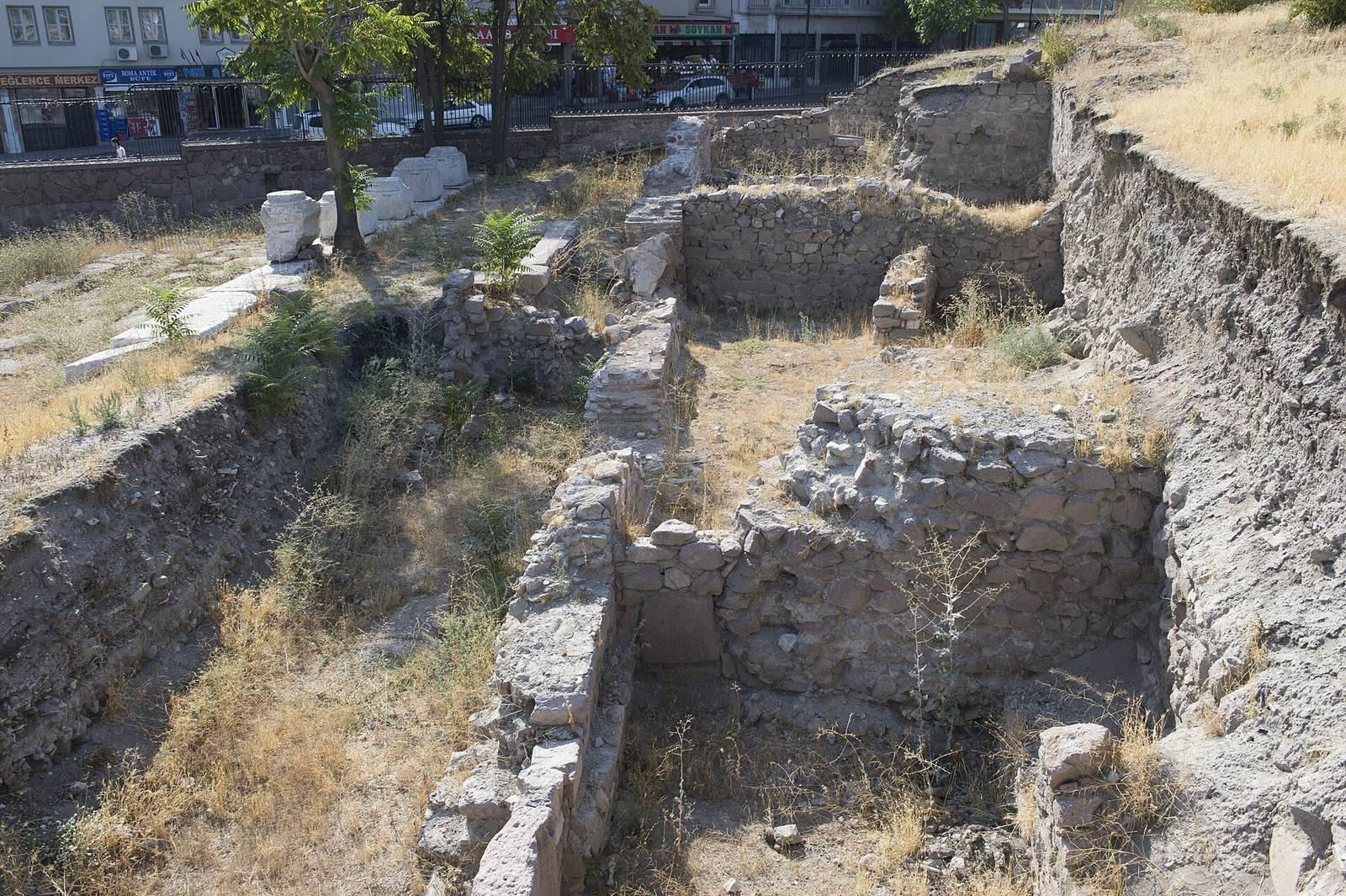
The site occupies a plateau traditionally known as Çankırı Kapı, about 2.5 metres above the western side of Çankırı Caddesi. It covers approximately 65,000 square metres and consists of a bath building and a square exercise court to its northeast. The bath building measures about 80 by 120 metres, while the court is 95 by 95 metres. Walls form the principal surviving remains; the supports for the heating system are comparatively well preserved.
The bath building
Rooms and furnaces
The bath contained a changing room, a cold room, a warm room and a hot room. The entrance area, including the changing room and cold room, measures about 15 by 35 metres. The warm room in the southwest part of the building is about 11 by 25 metres. The square hot room measures roughly 25 by 25 metres and contains a sweating room. Fourteen furnaces supplied heat across the complex.
Underfloor heating and construction
A hypocaust (a system that heats rooms with air beneath their floors) extended under the changing room as well as the other rooms. This unusually broad arrangement has been attributed to Ankara’s cold climate. Brick supports held up the floor, allowing hot air from underground furnaces to circulate beneath it and warm the rooms. The system may have been extended to heat more of the building and limit heat loss.
Stone and brick, laid in alternating courses in the walls, were the main building materials. Later wall additions used rubble masonry. Limestone and marble appear in several door thresholds. The complex also used arches and vaulted ceilings, floor mosaics, marble wall coverings and sewer pipes.
The exercise court
Court and porticoes
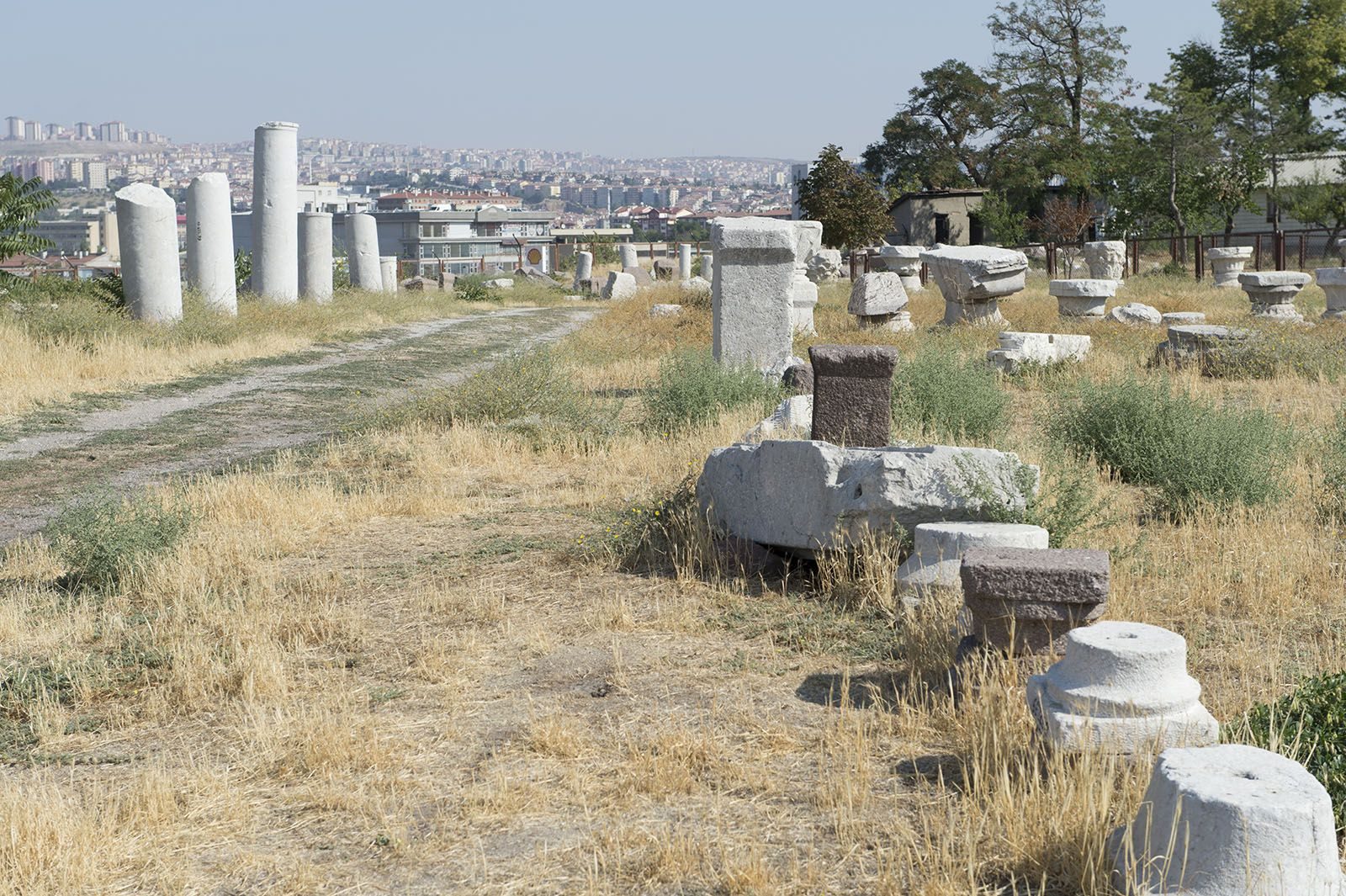
The square court, known as a palaestra (an open exercise area), lay northeast of the bath building. Its roofed walkways, or porticoes (covered paths lined with columns), had 32 evenly spaced columns along each side, 128 in total. The marble columns are now ruined. A doorway midway along the northeast portico opened into the baths, while another doorway on the southeast side provided an exit from the court. Covered structures on the southeast side may have been used for warm-up exercises in wet weather, although their purpose is uncertain.
Tombs and inscriptions
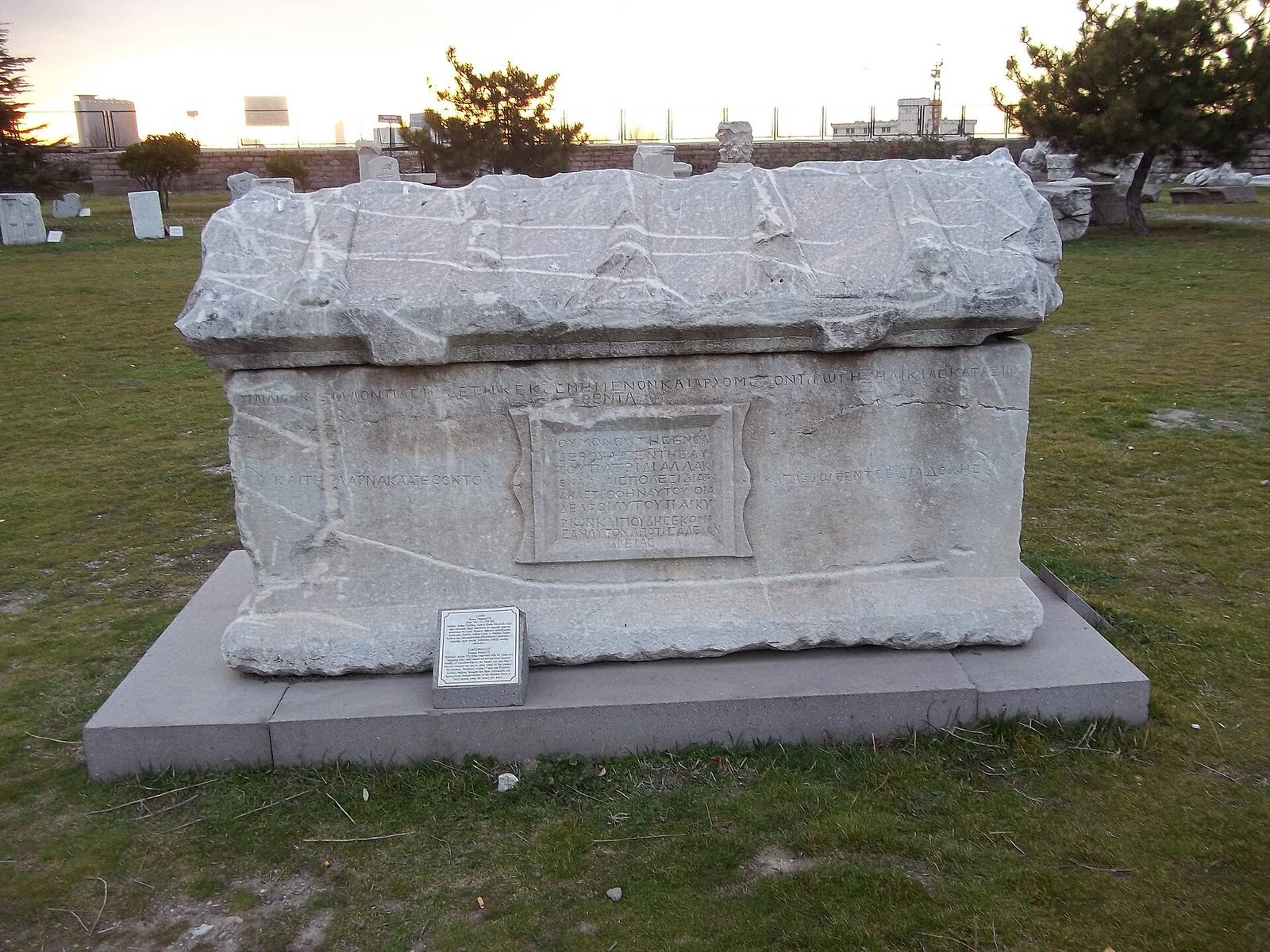
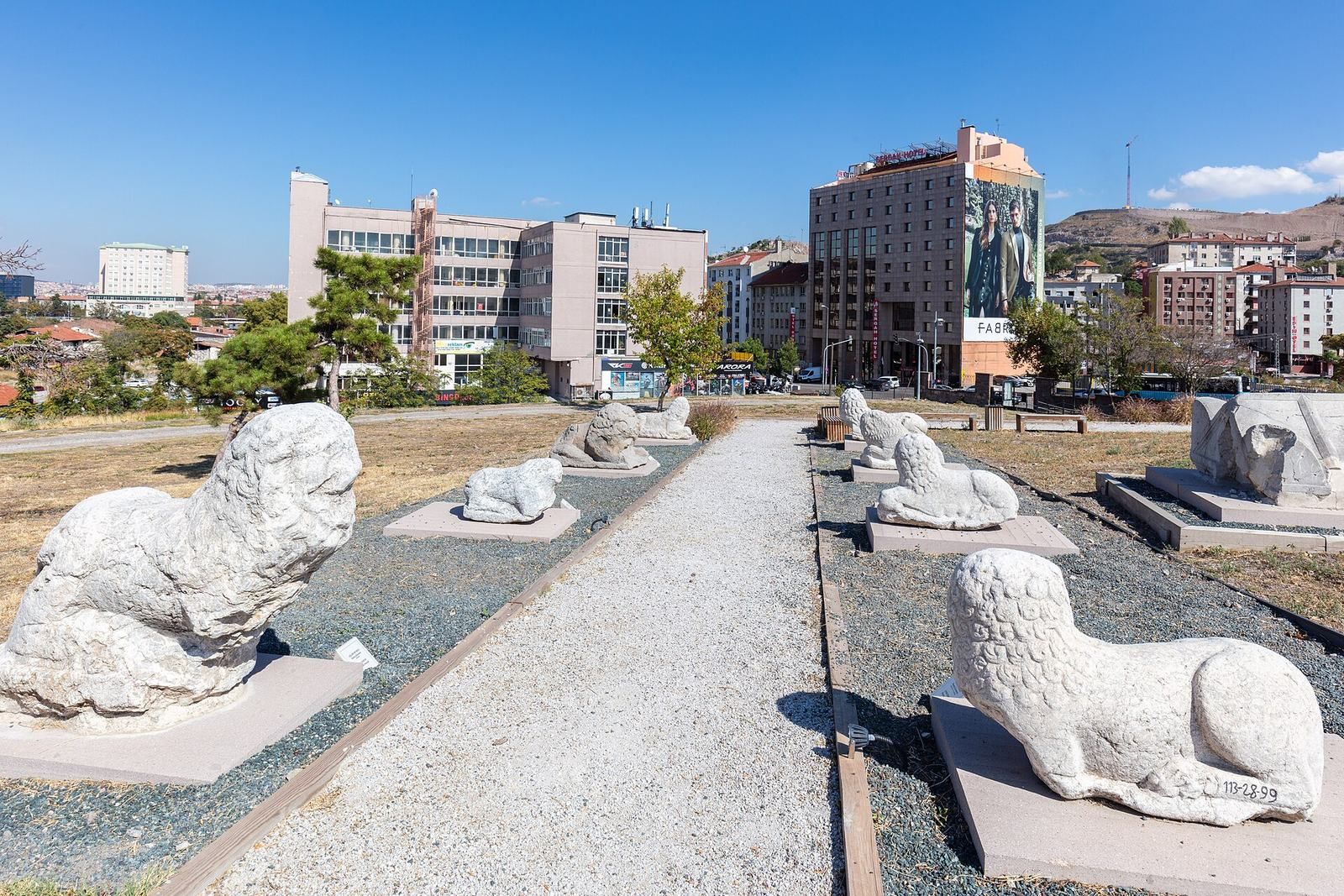
The court contains a display of tombs, gravestones, altars and inscriptions dating to the Late Hellenistic, Roman and Byzantine periods.
Roadways
Road north of the court
Remains of a colonnaded roadway are visible north of the exercise court.
Eastern roadway
Another road ran east of the plateau from Ankara’s sacred precinct, which included the Temple of Augustus and Rome. A section uncovered during construction of Çankırı Caddesi in the 1930s was bordered by grey-veined marble columns with Corinthian capitals, dating to the second or third century.
Archaeological finds
Statue of Asclepius
An excavated statue of Asclepius prompted the suggestion that the baths may have been dedicated to the god of medicine and healing. That proposed connection remains uncertain.
Egyptian amulet
A faience amulet recovered in 2009 dates to the late eighth century BC. It bears the birth name of Ramses II on its front and his throne name on the reverse, with an ostrich feather and a sun disk as decoration.
Bronze statuette of Attis
A bronze statuette about 12 centimetres high depicts Attis, a Phrygian deity, standing with wings, a Phrygian cap, a belted tunic and tall boots.
Figurine of Christ
A figurine of the crucified Christ, 11 centimetres high and assigned to the Early Byzantine period, shows Jesus with outstretched arms, unclothed and wearing a round wreath on his head. It came from an ancient rubbish deposit and is thought to have been discarded during damage associated with the Umayyad army’s eighth-century invasion of Ankara.