Castrejón de Capote: A Celtic Settlement in Spain
Site at a Glance
- Rating
- 4.8
- Popularity
- Medium
- Country
- Spain
- Primary era
- Classical
- External website
- Open
- Eras represented
- Classical
- Civilizations
- Celtic
- Site type
- Military
- Remains
- Fortified Town
On this page18 sections
History
Castrejón de Capote is an archaeological settlement in Higuera la Real, Badajoz Province, Spain, occupied from the sixth to the first century BC. It is associated with the Celtici, indigenous communities identified by Greek and Roman writers in southwestern Iberia. Here, Celtic describes a cultural and historical grouping, not a single unified state.
Occupation and Roman contact
The settlement was densely occupied over several centuries. Archaeologists distinguish an earlier phase, dated approximately 450–152 BC, and a later phase, dated approximately 150–80 BC and associated with the Roman period. The later phase represents the settlement’s most prosperous occupation.
These dates are approximate, based on finds, their preservation, and written evidence relating to the Roman conquest. The remains are interpreted as evidence of a pre-Roman way of life that was later affected by Roman contact and occupation. A further episode of ritual activity is indicated by a deposit found near the settlement entrance.
Discovery and archaeological investigation
In 1984, Higuera la Real native Aurelio Salguero Martin accidentally found a warrior stele being used as the lintel of a nineteenth-century pigsty built over the settlement. The discovery prompted the first test excavations and brought the previously unknown settlement to archaeological attention.
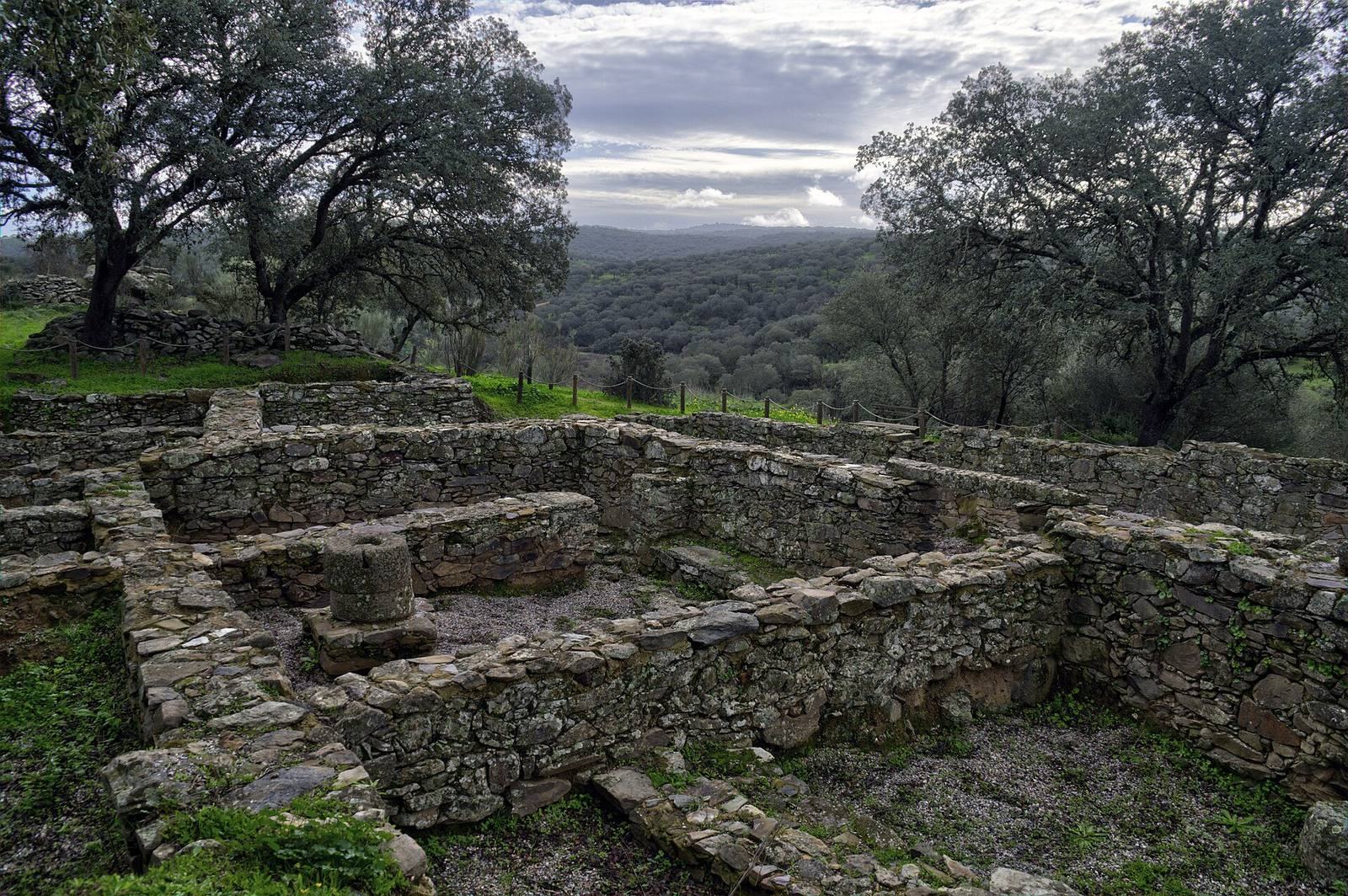
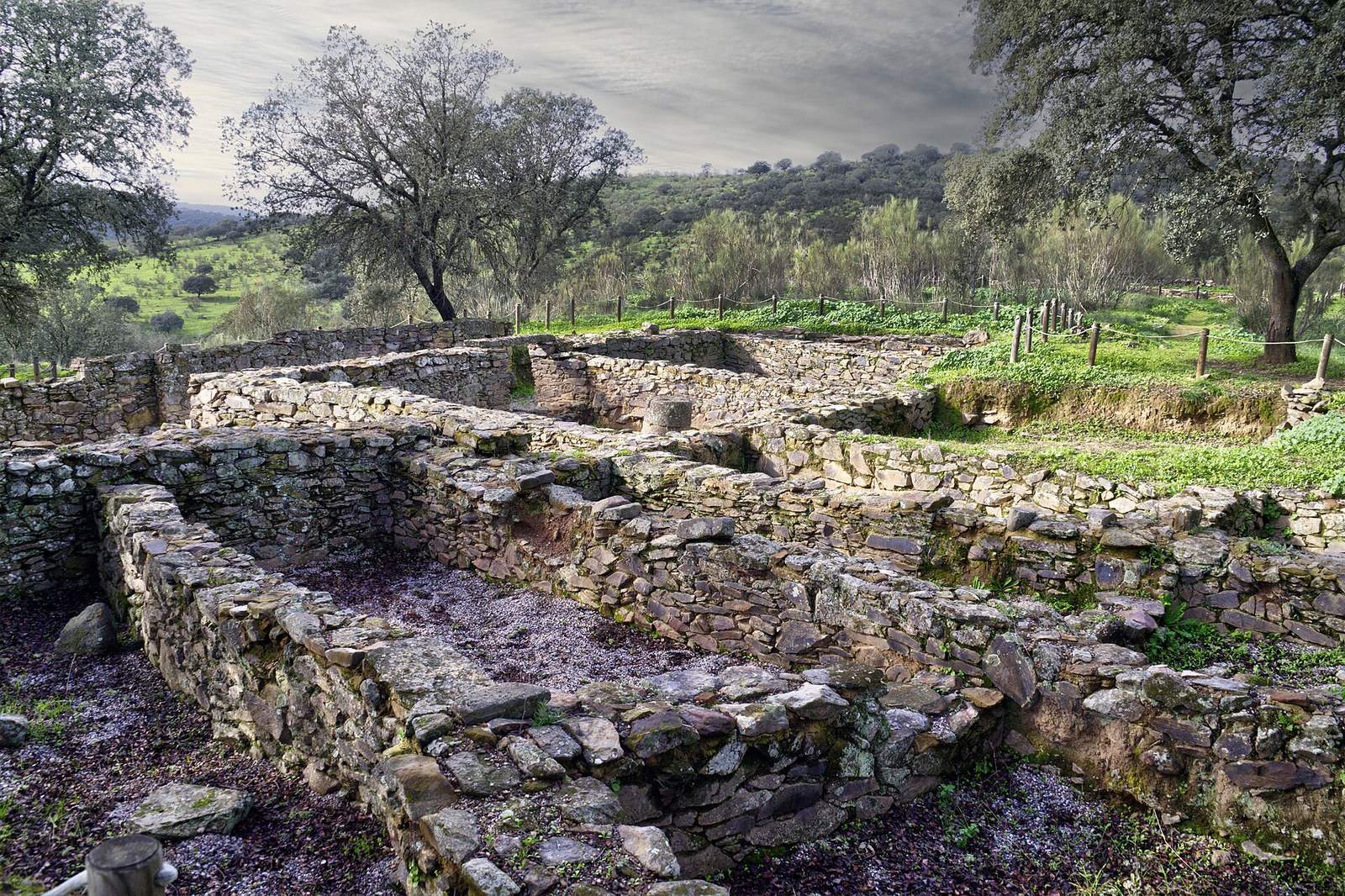
Because much of the site lay covered, investigations took place in successive phases. Work in the late 1980s identified a sanctuary and nearby parts of the settlement. In the 1990s, excavators found a ritual deposit in a pit near the entrance, as well as ancient towers, walls, and sections of the defensive ditch. Further work revealed houses, alleys, workshops, and a storage area.
Remains
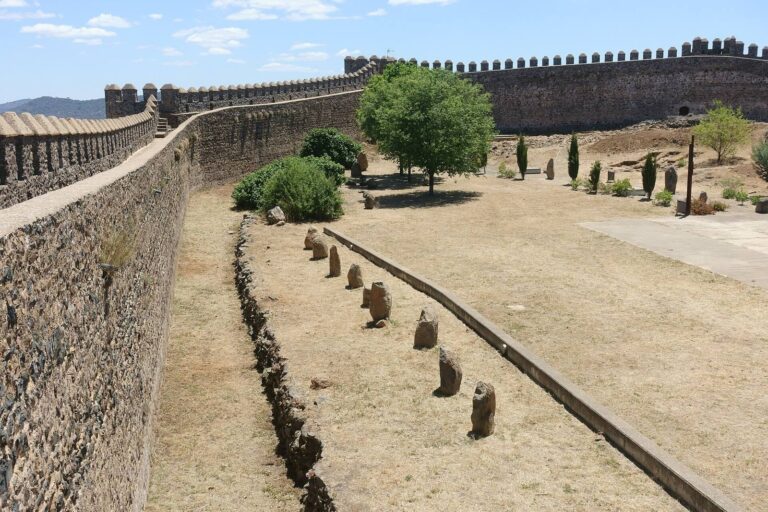
The settlement occupies a long, level hill shaped like a peninsula between the Sillo and Alamo Rivers. It covers slightly more than three hectares. Quartzite and slate form the geological base and supplied the principal building materials in the Celtic and Roman periods. A main street divided the settlement into two parts, and near the sanctuary it branched into a route known as the Y street.
Streets and defenses
Street plan
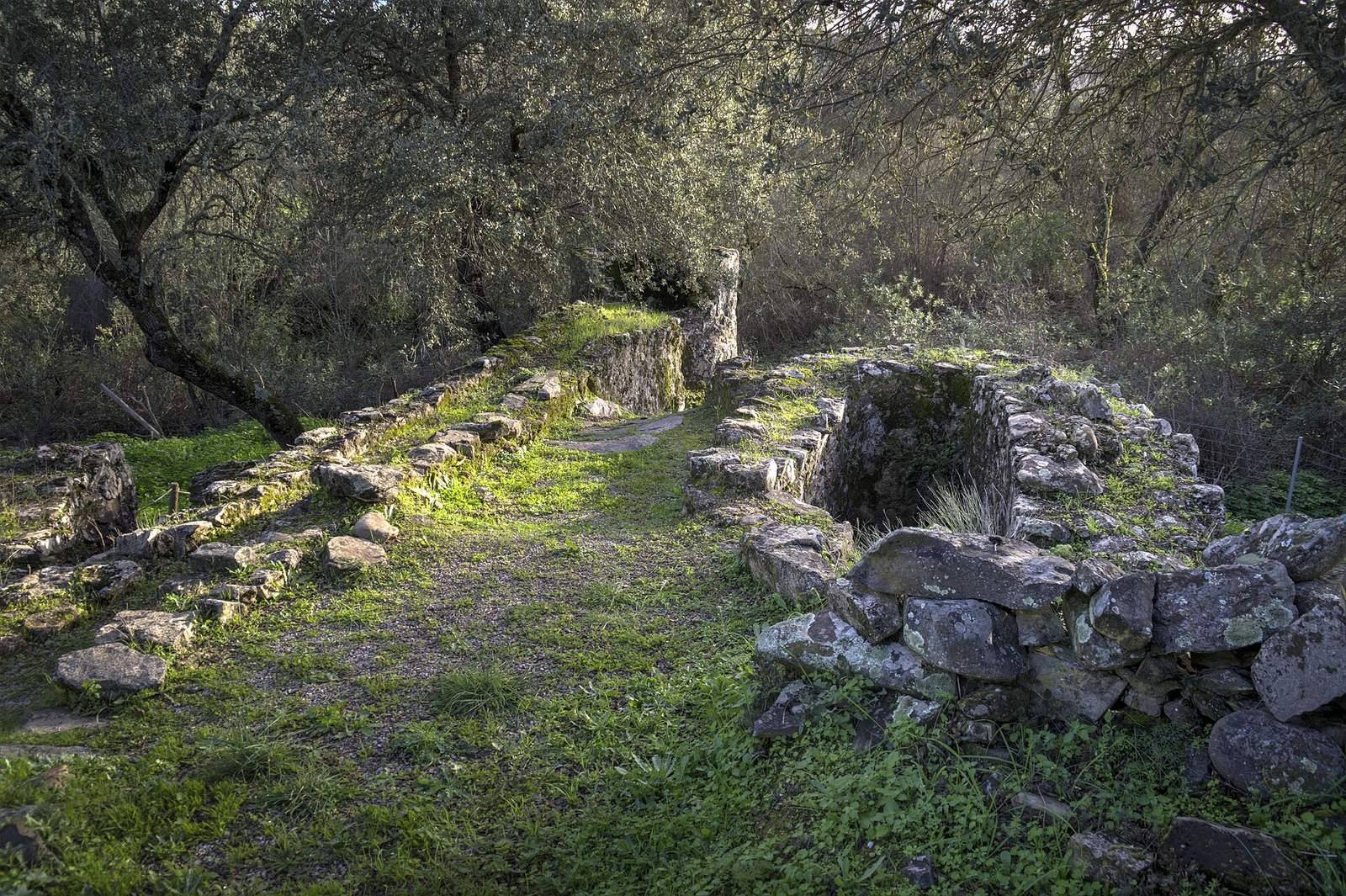
The main street and its branch formed part of a wider urban layout. Ground-penetrating radar studies have helped reconstruct the arrangement beyond the excavated areas. Excavations have also exposed alleys connecting parts of the settlement.
Entrance and walls
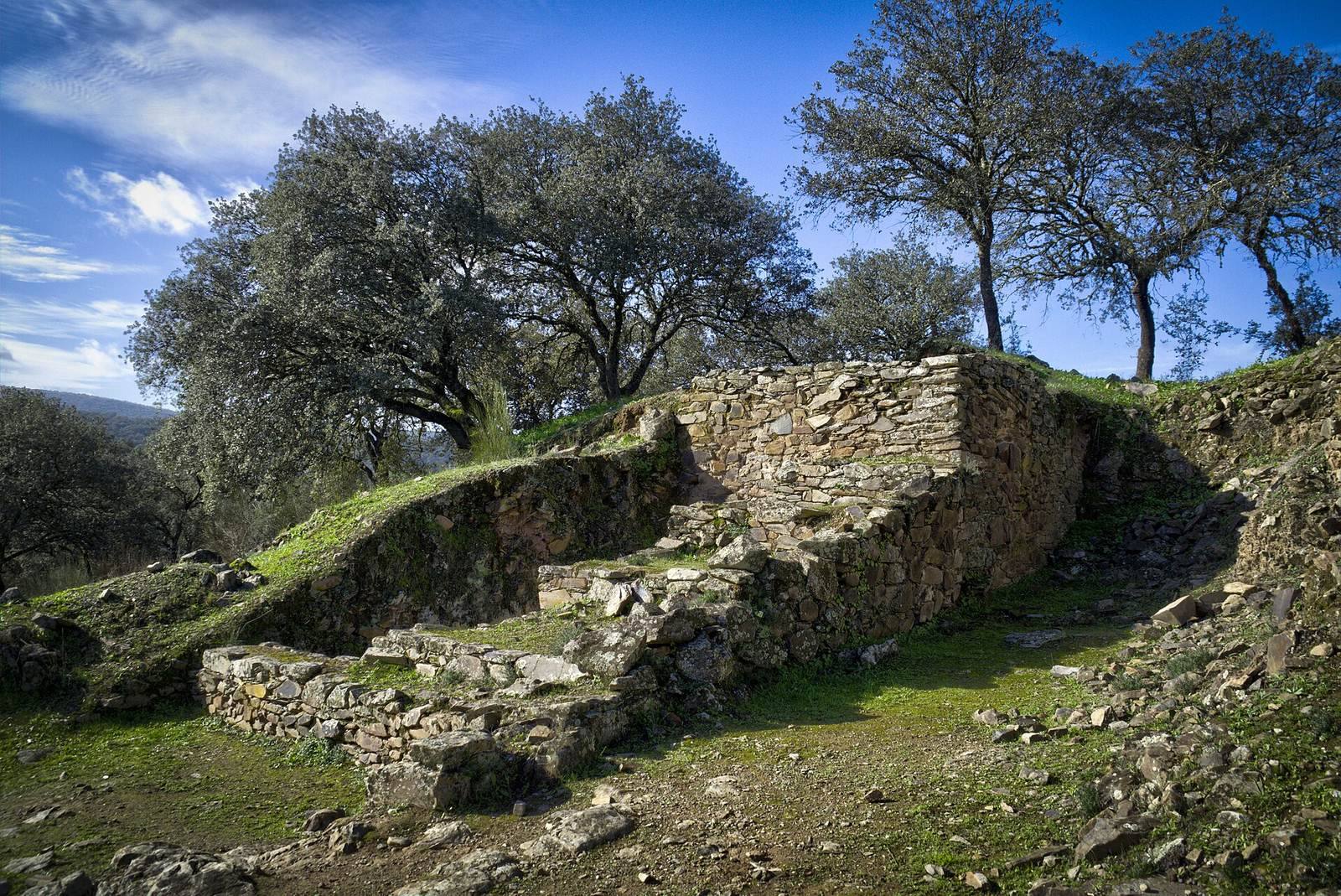
Two rectangular defensive towers, each about nine metres high, protected the principal entrance. A stepped defensive platform beside them was designed to make it harder for attackers to cross the towers or walls. Two surviving stretches of the ditch are between three and four metres deep. Sections of the original walls remain, including part of a monumental wall, about five metres high, that extended from the towers.
Sanctuary and ritual deposits
Sanctuary room
The sanctuary was a rectangular room with an open side facing the main street. A limestone table stood at its centre, surrounded by a broad, continuous bench. The room stood slightly above street level on a podium, or raised platform.
Ritual activity and objects
Hearths, ash, burned stones, and numerous cattle and deer bones came from the sanctuary and nearby parts of the main street. Other finds included a curved, single-edged Iberian sword with a bird-head hilt, spearheads, horse-harness fittings, bracelets, rings, and iron axes. Decorated bronze cones carry incised marks and designs raised by hammering from the reverse. The assemblage also included 127 spindle whorls, weighted objects used to help spin fibres into thread, and more than 58 other decorated objects.
The sanctuary yielded a varied collection of vessels used in ritual activity. It included handmade and wheel-made decorated pottery, a pierced vessel used as an incense burner, a hemispherical bowl, pierced vessels, small cone-shaped forms, rounded cups, bowls, and oval jars. One pierced vessel, dated to the fourth to second century BC, has an egg-shaped body, an inward-curving rim, a tall foot, and two side handles, one with a ring. Triangular and diamond patterns cover its body; the same decoration appears on its base without piercing the clay.
Deposit by the entrance
The ritual deposit lay in a small rectangular pit at the foot of the left defensive tower, beside the stepped platform. It contained statuettes of Venus, a goddess associated with love and fertility; Attis, a deity linked to Cybele; Minerva, associated with wisdom and warfare; and Cybele, associated with motherhood and fertility. The other finds included fine-walled vessels and terra sigillata, fine Roman tableware with a smooth, often glossy surface, from Italy and Gaul. More than thirty classical terracotta objects, two brooches, and a gold-plated laurel leaf were also present. Lamps with scroll-shaped nozzles included one showing gladiatorial combat. The pit held more than six Roman coins called asses, from the reigns of Augustus, Rome’s first emperor, and Claudius, who ruled from AD 41 to 54. A large fire had burned above the deposit; the objects appear to have been burned with essences or oily liquids after a ritual and then covered with stones.
Domestic and storage areas
Houses and workshops
Excavations have exposed houses, alleys, workshops, and a storage area. Some rooms contained large storage vessels left in place. The vessels were complete but somewhat cracked, and included swollen or flattened forms resembling Iberian-Punic jar prototypes, reflecting material traditions associated with Iberia and the Punic world. Some were stamped on the rim or body; one bears a large horse beneath astral signs.
Vessels and inscriptions
Four medium-to-large vessels carry the name Ablonios in both Celtiberian, an ancient language and script used in parts of the Iberian Peninsula, and Latin characters. The name may refer to a local ruler, merchant, or settlement leader of the late second or early first century BC, during the settlement’s final habitation phase. Associated finds include Republican Roman transport jars, lamps with channelled nozzles and radial decoration, imported vessels, globular containers, partly closed bowls, and many plates or shallow dishes called paterae, sometimes used in ritual contexts. Roman coins included denarii and asses, two Roman denominations.
Warrior stele
The warrior stele is a quartzite slab about 97 centimetres long, 47 centimetres wide, and 16 centimetres thick. Its lower part shows schematic martial imagery dated to the ninth century BC, at the end of the Bronze Age. The upper part bears an inscription in Tartessian, the name for the writing system, dated approximately between the seventh and fifth centuries BC. The imagery and inscription therefore belong to different periods.
Buildings in the surrounding landscape
Pig-rearing structures
Traditional circular pigsties in the surrounding landscape were built of dry-laid stone, with larger stones reinforcing the door jambs and lintel. Roofs used either timber frames covered with bundles of broom, rockrose, straw, and grass, or corbelled stone vaults or domes. Each pigsty stood within a stone-walled pen and was used to fatten Iberian pigs. Nearby rectangular buildings, made of stone-and-mud masonry, served as farrowing places. Their roofs were tiled over wooden boards or formed from corbelled stone vaults or domes.
Water mill
A short distance from the settlement, a flour mill with a horizontal waterwheel stands at the natural meander where the Alamo and Sillo Rivers meet. The existing mill dates to the fifteenth century and was built over the remains of a thirteenth-century mill.