Dolmen de Toriñuelo: A Chalcolithic Funerary Monument in Spain
Site at a Glance
- Popularity
- Low
- Country
- Spain
- Primary era
- Stone Age
- Eras represented
- Stone Age, Classical
- Civilizations
- Roman
- Site type
- Burial
- Remains
- Tomb
On this page5 sections
History
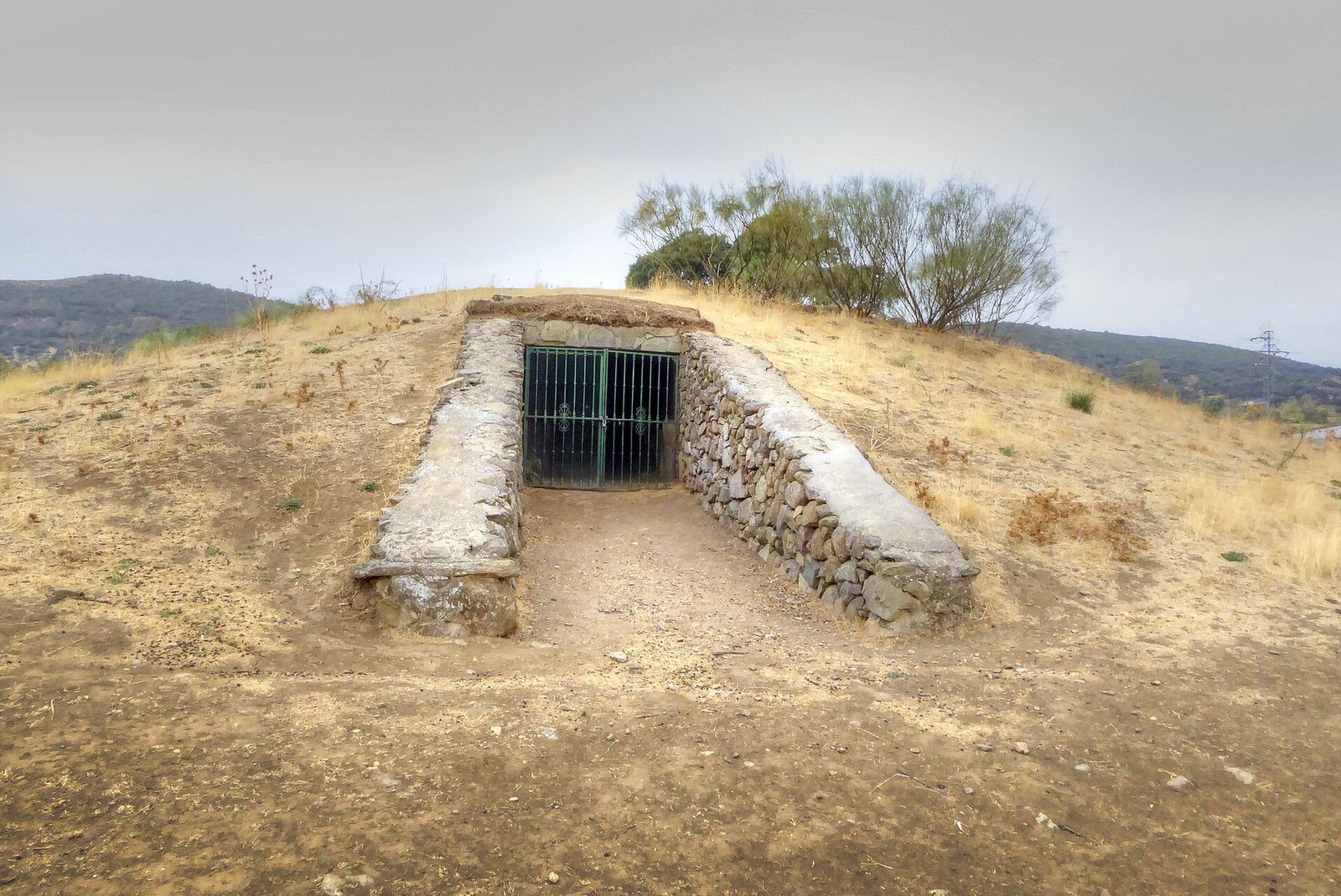
The Dolmen de Toriñuelo is a Chalcolithic funerary monument in La Granja, Spain, about two to three kilometres northeast of Jerez de los Caballeros. It was built during the Chalcolithic, or Copper Age, between the Neolithic and Bronze Age. The tomb is a tholos, a circular or near-circular tomb with a roof formed by stone courses that project inward and an entrance passage.
The monument was used again during the first century BC and the first century AD. Its location amid agricultural, pastoral, and mining activity, near a route later called the Cañada Real, a traditional Spanish livestock-droving route, may have encouraged this reuse.
In 1914, the archaeologist José Ramón Mélida uncovered a stone stele at the site. Its resemblance to a statue-menhir, an upright stone monument shaped or decorated like a human figure, suggests that it dates to about 1,000 to 1,500 years after the dolmen.
The monument was declared a national monument in 1926 and is protected as a Bien de Interés Cultural, Spain’s designation for property of cultural heritage value. Ownership passed into public hands in 2009.
Remains
Tomb structure and decoration
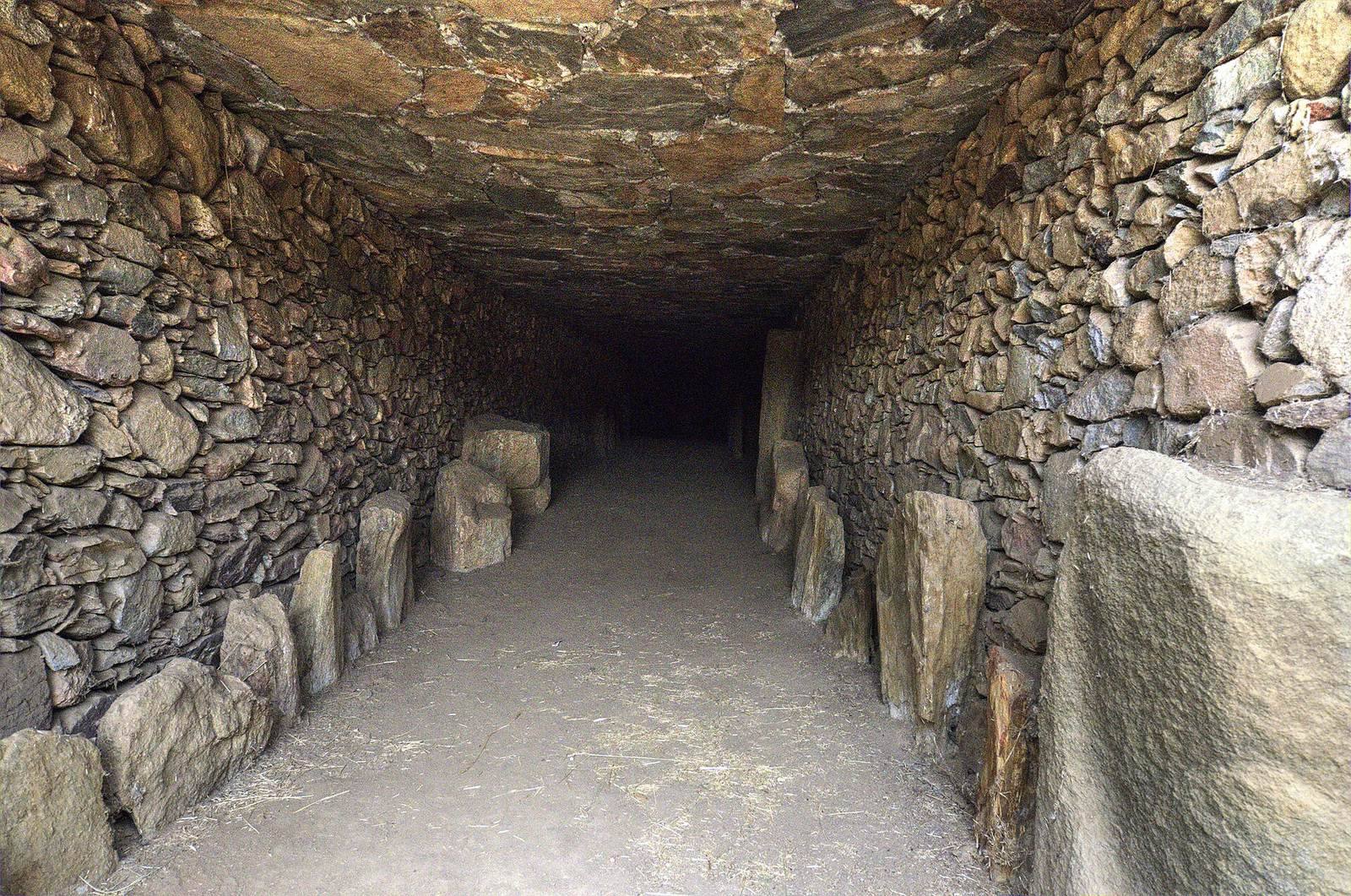
The east-west oriented tomb sits within an artificial mound made from tightly compacted layers of clay and stone. A long entrance passage leads to the burial chamber beneath the mound.
Chamber and passage
The slightly oval chamber measures 3.80 metres along its longer axis and 3.50 metres along its shorter axis. Thirteen upright stone slabs formed its sides, most made of granite and two of slate. A dome of inward-projecting stone courses rested on this base, with a small opening above the chamber. The passage extends about 25 metres. At its entrance it reaches up to 1.42 metres in height, dips slightly midway, then rises toward the chamber. A small rectangular niche lies on its northern side, and a double ramp provides access to the chamber. Walls in the mound’s western sector belong to its later use.
Engravings and stele
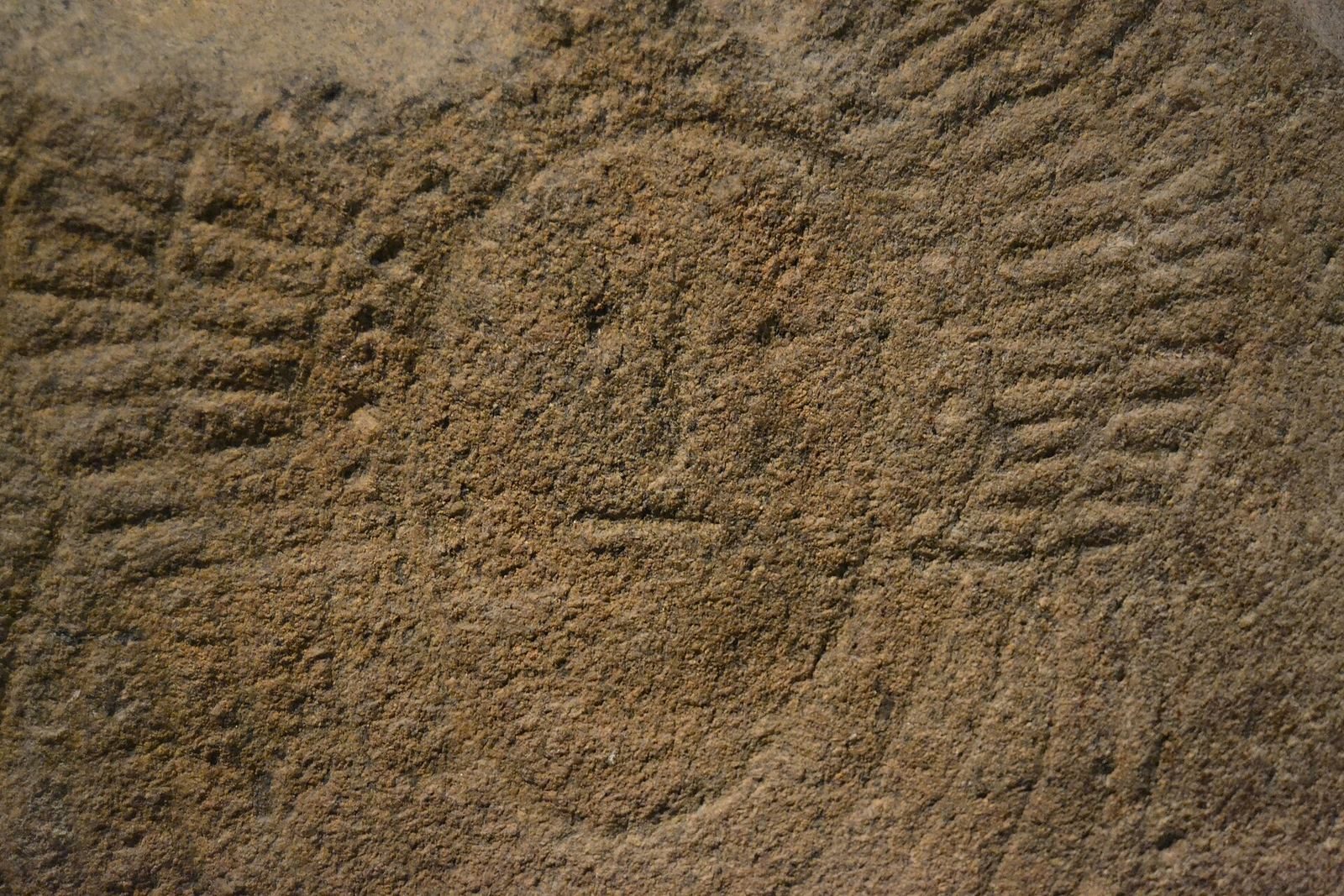
Granite and slate supports carried decoration made with paint and engraving. Engravings survive on three chamber slabs, showing radial, circular, and serpent-like motifs. The stele uncovered at the site is now held at Spain’s National Archaeological Museum in Madrid.