Fonte Coberta Roman Dam: A Roman Water Barrier in Portugal
Site at a Glance
- Popularity
- Very Low
- Country
- Portugal
- Primary era
- Classical
- Eras represented
- Classical
- Civilizations
- Roman
- Site type
- Infrastructure
- Remains
- Dam
History
The Fonte Coberta Roman Dam is a water-control structure at São Gonçalo de Lagos, in Lagos, Portugal, probably built during the Roman period as Roman rule and cultural influence spread across the Iberian Peninsula. Its purpose is uncertain: it may have irrigated fields or supplied water to Lacóbriga, an ancient city at Monte Molião on the east bank of the Ribeira de Bensafrim.
In the second half of the nineteenth century, Portuguese archaeologist and historian Estácio da Veiga identified the remains. By then the dam was almost entirely destroyed, with substantial sections lost. Fragments of fired-clay objects were found nearby.
Archaeological work took place at the monument in 1990-91. It received Portugal’s Property of Public Interest classification, a formal heritage-protection status, by decree on 1 June 1992. Monitoring and study began again in 2010, starting with mechanical vegetation clearance and continuing with manual cleaning. The work found less of the wall exposed than in earlier investigations, consistent with progressive silting.
Remains
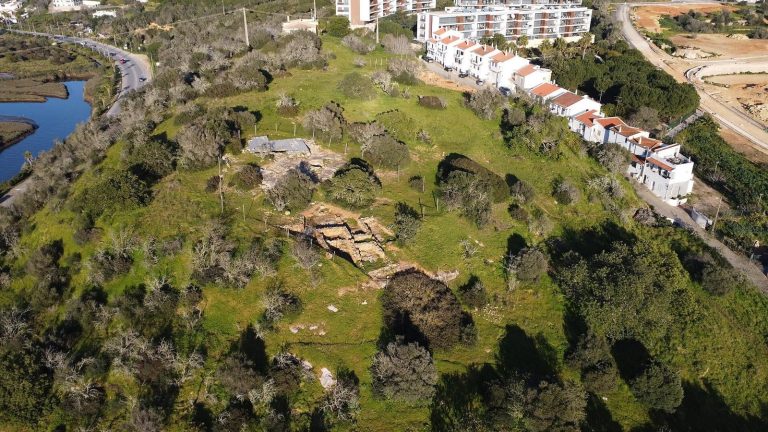
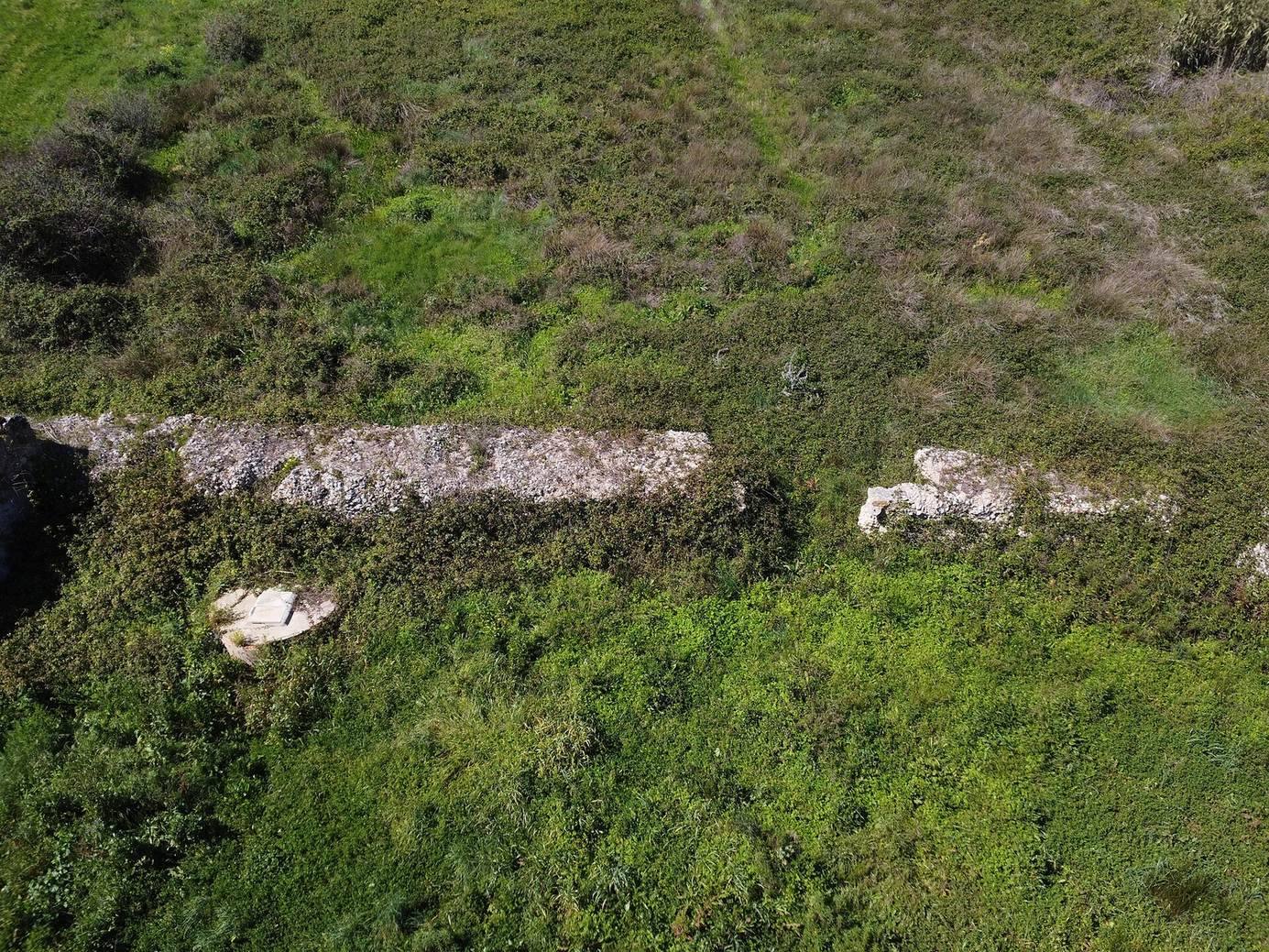
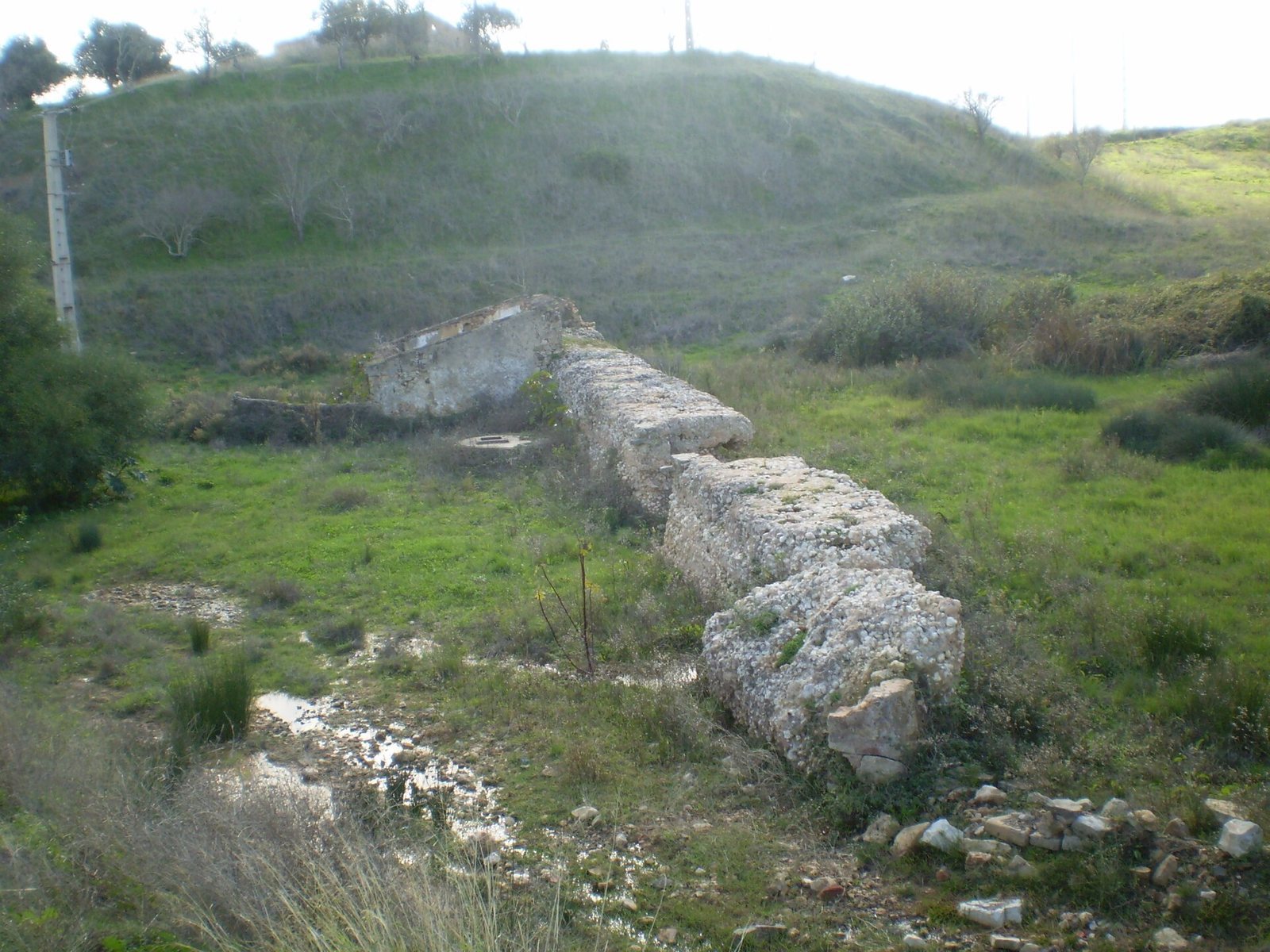
The remains lie in the bed of an ancient stream at Fonte Coberta, about 1.5 km from Lagos. The dam stands where a relatively open valley begins to narrow toward the Ribeira de Bensafrim, about 1.3 km to the east. Its straight wall runs northeast to southwest and once formed a reservoir on the northern slope. The wall is several dozen metres long, approximately 2.5-2.7 m thick, and between 1.3 and 2.37 m high.
Small, relatively uniform stone blocks are bonded with lime-and-sand mortar using Roman concrete construction, which binds aggregate with mortar. Visible layers may represent successive building phases. Impressions of horizontal boards remain on some faces, probably left by boards used to shape the masonry during construction. A much later building is attached to the dam’s south side, and the monument is in poor condition.