Forte Casilina: A Fort in Rome’s Defensive System
Site at a Glance
- Rating
- 5
- Popularity
- Very Low
- Country
- Italy
- Primary era
- Modern
- Eras represented
- Classical, Modern
- Civilizations
- Italian, Roman
- Site type
- Military
- Remains
- Fort
On this page7 sections
History
Construction and Rome’s defenses
Forte Casilina is a nineteenth-century fort in Rome, Italy, built in 1881–1882 as part of the capital’s defensive system. It belonged to Rome’s entrenched camp, a coordinated network of forts and artillery positions designed to protect the city from invasion. The wider project began in 1871, and its 15 forts were built between 1877 and 1891. Three artillery batteries formed part of the system, although four were initially planned. Defensive positions along the Aurelian Walls, the ancient walls built around Rome in the third century AD, provided further protection.
The fort was designed by Luigi Durand de la Penne, an Italian military engineer who took over work on Rome’s fortifications from Luigi Garavaglia in 1877 and continued in that role until 1885. On 19 July 1881, the prefect of the Province of Rome authorized the occupation of land belonging to the Quadraro and Casetta degli Angeli estates. The property, owned by Prince Alessandro Torlonia, was to yield about 170,724 square metres for the fort, with compensation of 46,181 lire. A military access road was built alongside it.
By decree of 1 November 1882, the fort took its name from nearby Via Casilina. It stood near the road’s fourth kilometre and less than a kilometre from it. Its position was intended to control the area between Forte Prenestina and Forte Appia Antica, while its artillery could protect the Rome–Naples railway. The 4.5-kilometre distance to Forte Appia Antica, considered alongside the range of contemporary guns, led to the construction of an additional artillery position at Porta Furba.
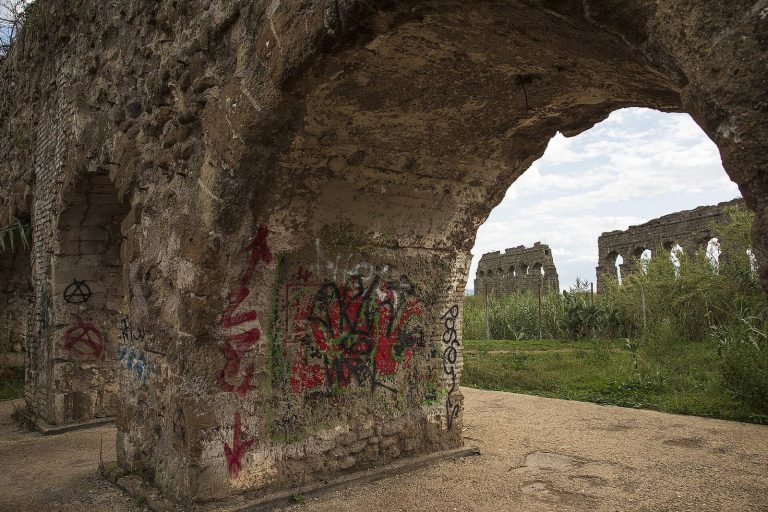
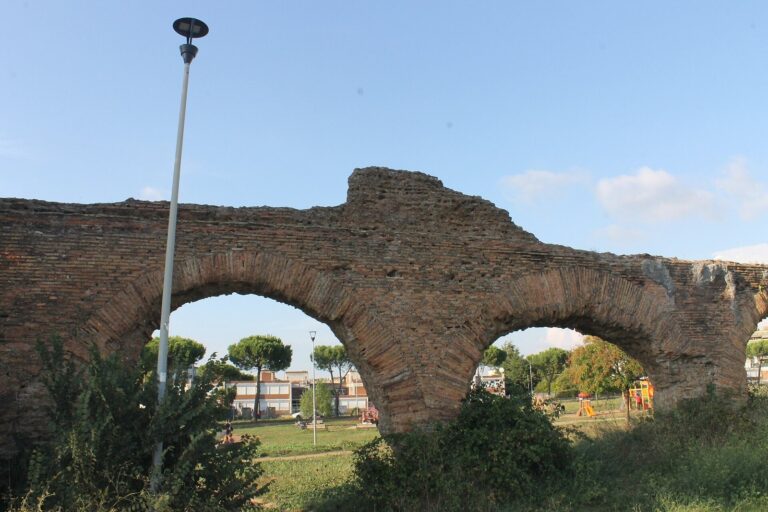
An extensive Roman-period settlement lay in the area, so the General Directorate of Antiquities assigned archaeologist Rodolfo Lanciani to oversee excavation work and safeguard archaeological interests during construction.
Military use and later occupation
Although built for Rome’s defense, Forte Casilina was never used in direct combat. Its strategic function ended in 1919. During the Second World War, German troops stationed at Centocelle airport used the fort. After the war, some rooms were used for storage supporting flight squadrons based there, a purpose that continued until May 1965.
Remains
Fort layout
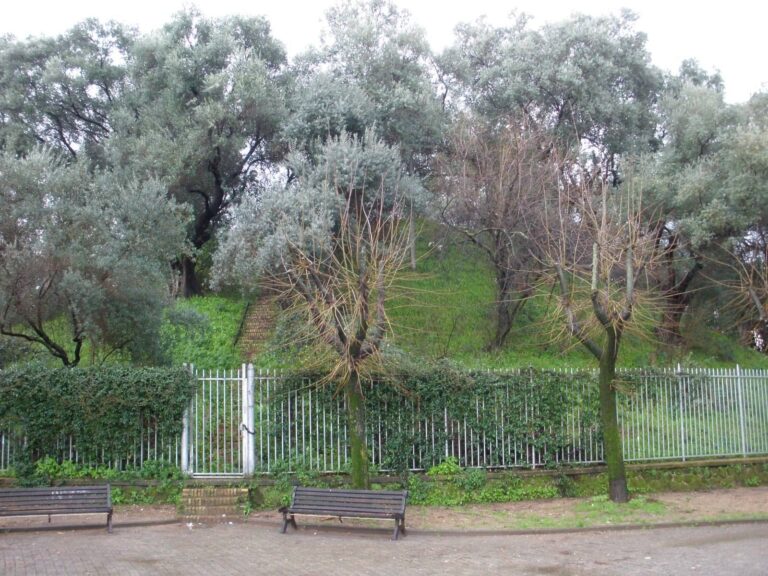
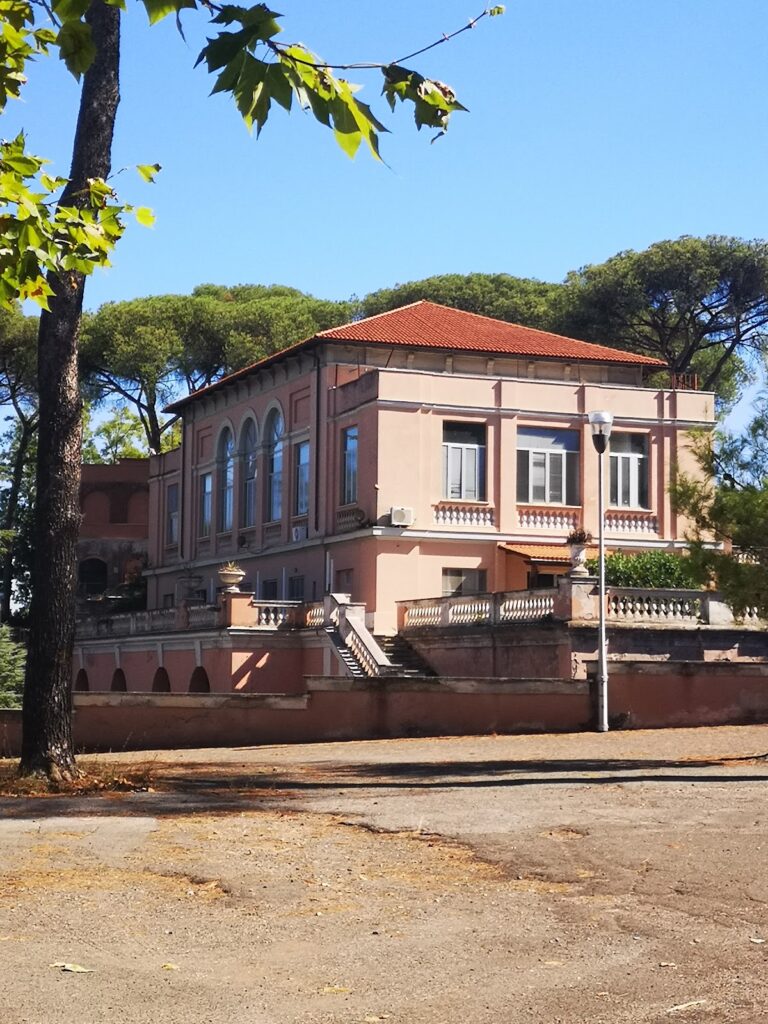
The fort covers 3.8 hectares and has a plan shaped like an isosceles trapezoid, with angles of about 60 and 120 degrees. Its longer front measures approximately 120 metres. It stands in Rome’s Don Bosco district, within the military grounds of the former F. Baracca airport at Centocelle.
Perimeter and entrance
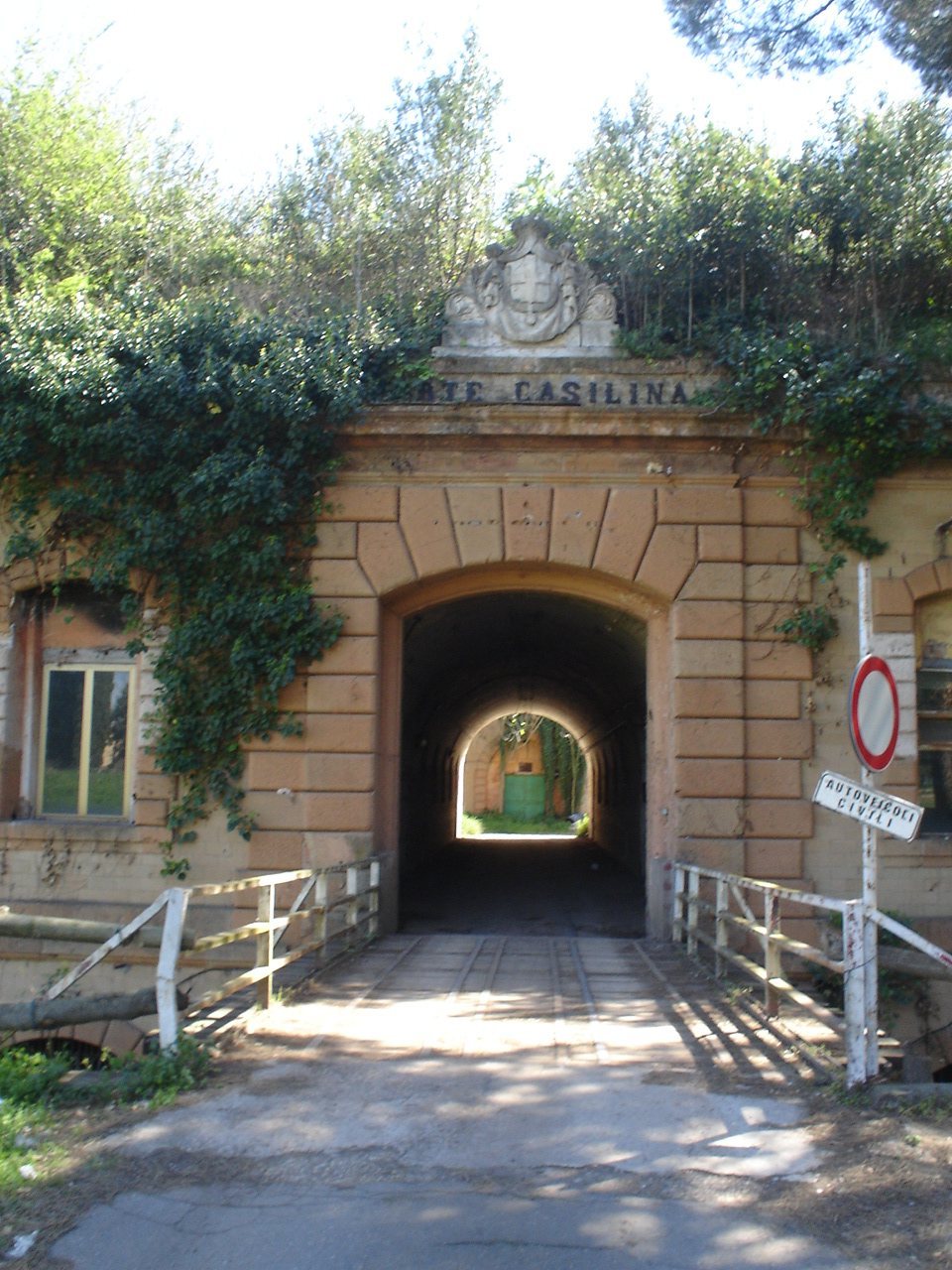
A dry ditch, about seven metres deep, surrounds the fort. Its single entrance was approached by a narrow drawbridge, and a passage through the outer walls leads into the central parade ground.
Central and underground spaces
Service rooms are arranged around the parade ground, both along the inner perimeter and in the centre. Further service spaces, ammunition magazines, and shelters lie beneath the rampart. Roman-period tunnels found during construction were incorporated into the fortification.