National Archaeological Museum of Paestum: Museum of the Ancient City and Its Region
Site at a Glance
- Popularity
- High
- Country
- Italy
- Primary era
- Classical
- Eras represented
- Stone Age, Bronze Age, Iron Age, Classical, Medieval
- Civilizations
- Ancient Greek, Mycenaean, Roman
- Site type
- Museum
On this page21 sections
History
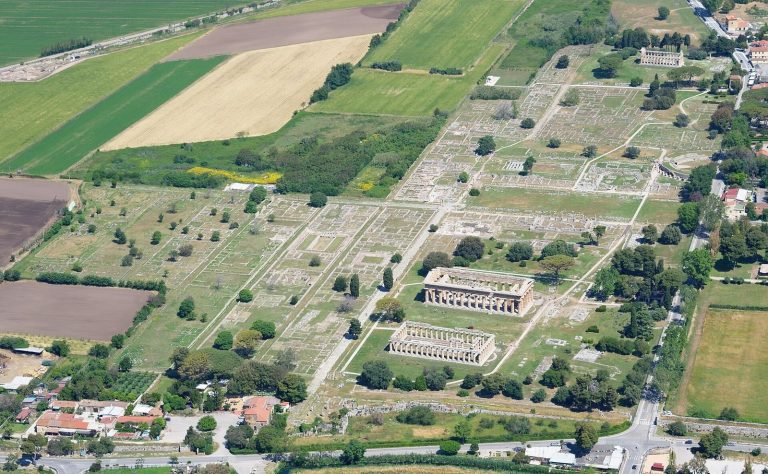
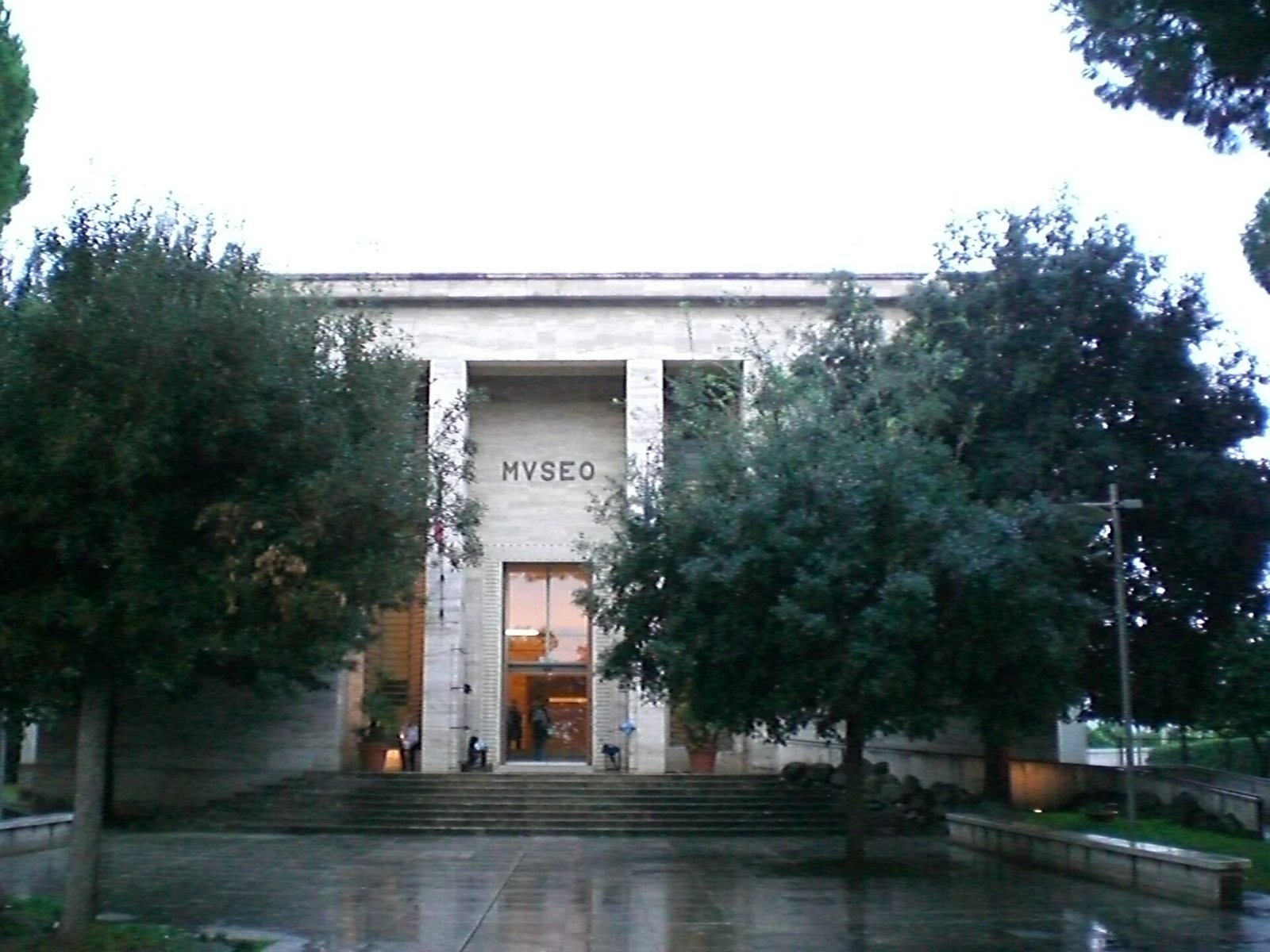
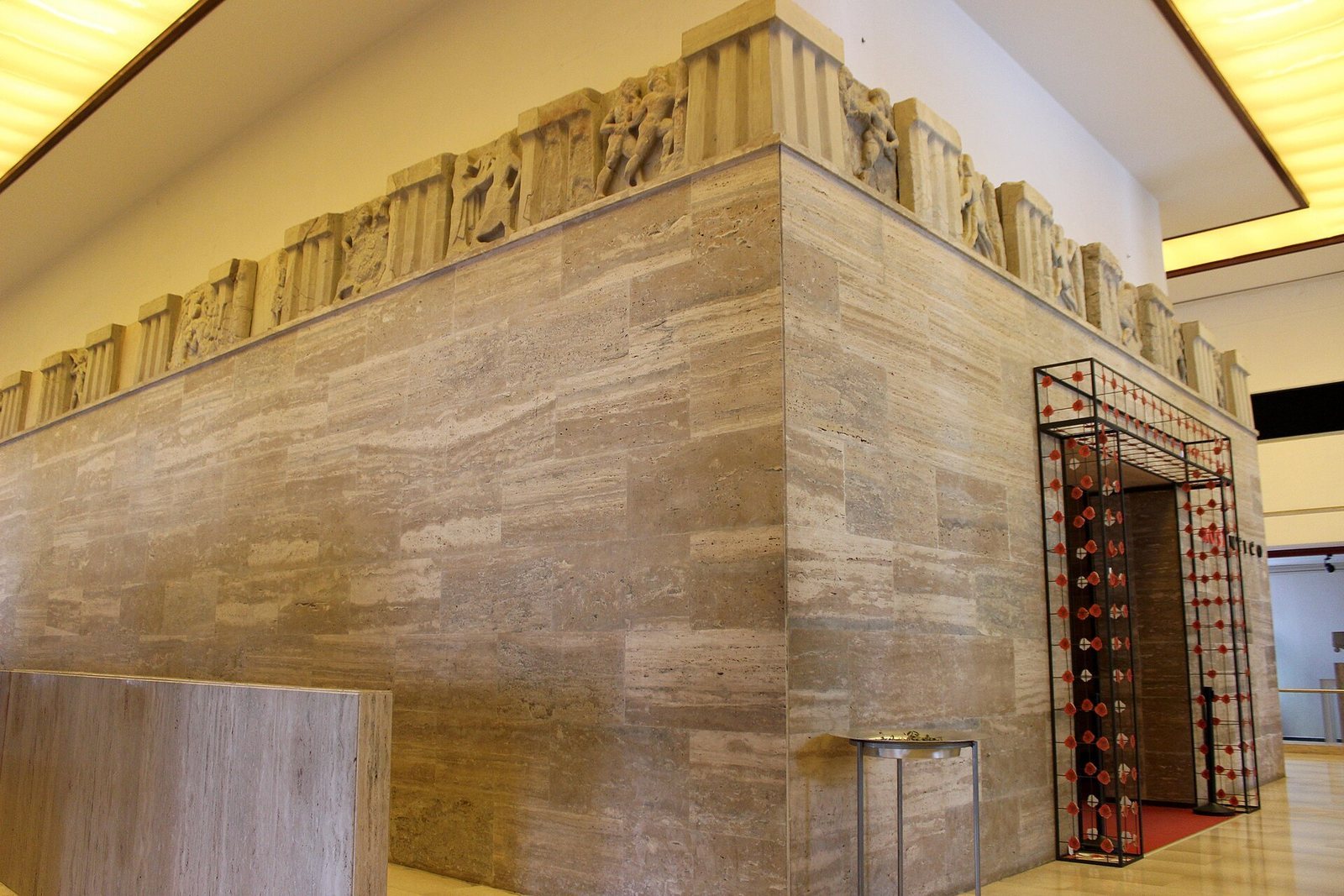
The National Archaeological Museum of Paestum is a museum within Paestum’s archaeological park in Italy. It opened on 27 November 1952 to house finds from the ancient city and the surrounding region. Its design continued Italian Rationalism, a modern architectural movement that gained prominence in Italy during the Fascist period. The building stands close to Paestum’s temples, and its construction removed underlying ruins. Critics objected to both its placement among the ancient remains and its continued association with that architectural tradition.
Planning, opening, and expansion
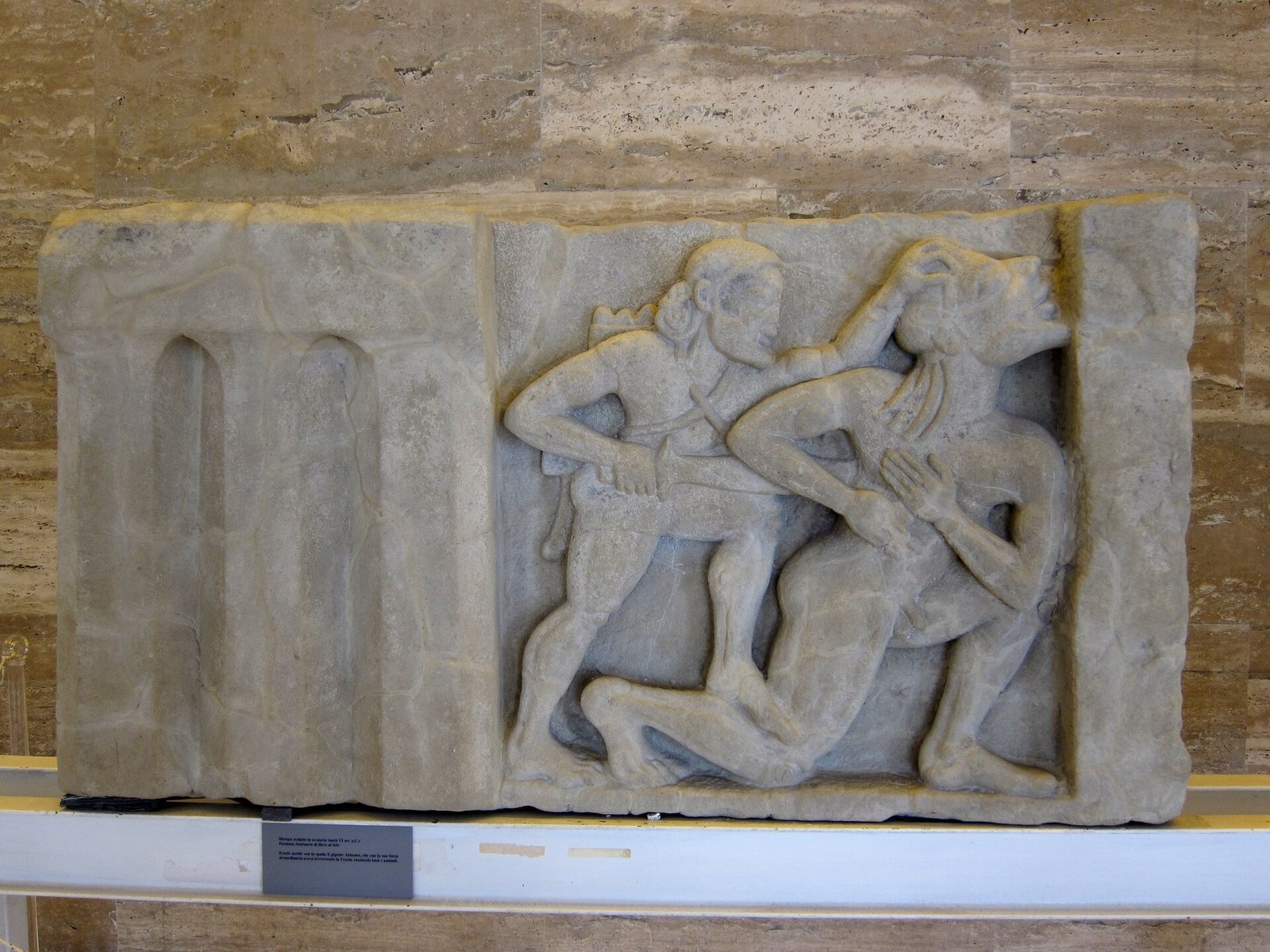
The discovery of carved panels from the Heraion in 1929 prompted plans for a museum at Paestum. A Heraion is a sanctuary dedicated to Hera. The museum was first intended mainly for finds from the sanctuary at the mouth of the Sele River, excavated by Paola Zancani Montuoro and Umberto Zanotti Bianco. Italy’s public-works engineering service oversaw construction.
Excavations in Paestum and its burial grounds intensified in 1951 under Pellegrino Sestieri. A first campaign ran from 13 December 1951 to 13 September 1952. Finds from the Temple of Neptune were prepared and restored in time for the museum’s opening, while objects from trial excavations at Arensola were also presented. The opening ceremony was attended by President Luigi Einaudi, Education Minister Antonio Segni, and the vice-president of the Italian Senate. Excavations in the city and its surroundings continued after 1952.
As excavations added material beyond the original Heraion collection, the museum’s space became inadequate. An expansion followed in 1966, and further work began in 1970 after new discoveries, including excavations led by Mario Napoli. The discovery of numerous richly painted Lucanian tombs in 1968 prompted Giovanni De Franciscis and Sabrina Viola to reorganize the displays. A broad redesign in 1999 added a Roman gallery upstairs and an educational area with a screening room downstairs.
Ancient communities represented in the collections
The collections concern the ancient city and the region south of the Sele, from prehistory to Late Antiquity. The city’s Greek name was Poseidonia; Paistom is associated with its Lucanian period, and Paestum is its later name. Finds from Gaudo came to light in 1943 during construction of an Allied airfield. Iron Age material from Arensola and Tempalta helps explain the communities around Paestum, though those finds are not from the ancient city itself.
Burials at Laghetto and Arcioni indicate that indigenous inhabitants were displaced after the Greeks arrived. Greek-made objects, including Proto-Corinthian pottery, an early Greek pottery style, were also placed in these graves. Taken together, the burial evidence suggests that Greek control extended over the city and its territory at roughly the same time. The Greek city’s early phases included a sanctuary built in the late sixth century BC, probably a heroon, a shrine associated with a hero cult, and an Ekklesiasterion, a place for civic assemblies, built around 470 BC. When Rome established a colony, a settlement with formal civic status under Roman authority, Greek civic institutions were superseded. The heroon was deliberately buried and the assembly place filled in. Smaller sanctuaries founded in the Greek period continued to be used under the Lucanians, an Italic people of southern Italy.
Funerary customs changed as Lucanian rule rose during the second half of the fifth century BC. Earlier Greek burials generally contained fewer costly offerings, while wealthy Lucanian families increasingly furnished their tombs richly. Some graves probably belonged to mercenaries and held weapons, at times a complete set of armor. The arrangement of one burial has led to the theory that the dead person may have been a shaman connected with mercenaries. Paintings in about 80 of roughly 1,000 known Lucanian tombs point to decorated burials as an elite practice. At the Spinazzo cemetery, only seven of 120 known tombs had paintings, dating to a period when the custom was nearing its end.
Paestum became one of five centers of South Italian vase painting, also known as Paestan painting. The city first imported pottery from Attica, the region around Athens, but local workshops flourished by the fourth century BC. Their work formed part of the artistic culture of Magna Graecia, the Greek colonies and their cultural world in southern Italy. Evidence of pottery workshops was found in Port Marina, in the western part of the ancient city.
With the Roman colony came a change in burial practice: rounded ceramic urns replaced the earlier lavish grave goods, while objects from Roman houses point to domestic luxury. A hoard found within the city in 1998 probably dates to 12 BC. It contained 647 silver denarii, Roman coins, struck between the second century BC and the early reign of Augustus. The hoard’s value was nearly three times a Roman legionary’s annual pay. A Flavian colony, founded under a Roman imperial dynasty of the first century AD, was established at Paestum in AD 71.
Institutional development and research
Marina Capriani directed the museum from 1988 to 2015, followed by Gabriel Zuchtriegel, who served until 2021. From 2015 the institution held state-museum status with special autonomy. Between 2016 and 2020 it was incorporated, alongside the archaeological areas of Paestum and Velia and the site and interpretive museum at Foce Sele, into the autonomous Archaeological Park of Paestum and Velia. As part of the Cilento and Vallo di Diano National Park, the museum has been included in the UNESCO World Heritage property since 1998. Its collection was estimated at about 20,000 objects in 2018.
Museum research examines archaeological materials and cultural interaction between Greek colonies and pre-Roman Italic societies, including collaborative work with the Italian Association of Archaeometry. Study and restoration of Lucanian painted slabs have supported multidisciplinary analysis of the tomb paintings.
Remains
Museum building and display arrangement
Building
The museum covers about 4,040 square metres over three floors. Its original design drew in part on plans prepared in 1938. A later extension created a large, naturally lit hall around an interior courtyard, with broad windows facing the ancient city. The complex also contains offices, storage rooms, an archive, and workshops for photography, drawing, and restoration.
Galleries
The displays now group material from prehistory, the city’s origins, the Heraion at the Sele mouth, urban and regional sanctuaries, burial grounds, Lucanian painted tombs, and the Roman period. On the ground floor, a central temporary-exhibition room is surrounded by the Heraion panels. The room matches the dimensions of a structure known as the Heraion’s Treasury. Finds from the early city and its hinterland line the outer walls; objects from the underground sanctuary occupy an end wall, and an adjoining room presents material from the Sele-mouth sanctuary.
Displays across the floors
A small room to the right contains finds from Paestum’s northern city sanctuary. Displays around the courtyard include material from the southern sanctuary and nearby places of worship. Another room presents objects from Greek and Lucanian sanctuaries. The Tomb of the Diver has its own room, followed by displays of Lucanian tomb material, especially paintings. Objects relating to writing and crafts in the Greek and Lucanian city occupy the left side of the entrance hall. The prehistoric gallery arranges its material by period, while the upstairs Roman section follows themes including the colony’s foundation, civic life, religion, homes, public monuments, and the later settlement.
Prehistoric and Heraion finds
Material from the surrounding area
The oldest finds from the area of the later city include worked stone tools, scrapers, and flakes dated to about 35,000 BC. Neolithic objects include pottery, particularly of the Serra d’Alto culture, and part of a clay female figurine. Finds from Gaudo include metal daggers and a ceramic pot. Four bronze axeheads belong to the Early Bronze Age, while pottery from a small Middle Bronze Age settlement at Porta Giustizia represents a later phase. Some objects are attributed to Mycenaean culture. Iron Age finds from Arensola and Tempalta are also displayed.
The Heraion and its offerings
The Heraion’s sandstone panels date to 770–760 BC. Some have carved figures in relief, while others use incised outlines. Their mythological subjects include the Fall of Troy and the deeds of Heracles. Other objects from the sanctuary include architectural pieces and an open terracotta lamp whose fuel basin rests on several female figures with crossed arms. Finds from the underground sanctuary include two bronze water jars and a large black-figure vase, a Greek technique that shows dark figures against a lighter ground. The vase bears work attributed to the Chiusi Painter; another sanctuary object is a large mixing vessel by the Antimenes Painter.
City and regional sanctuaries
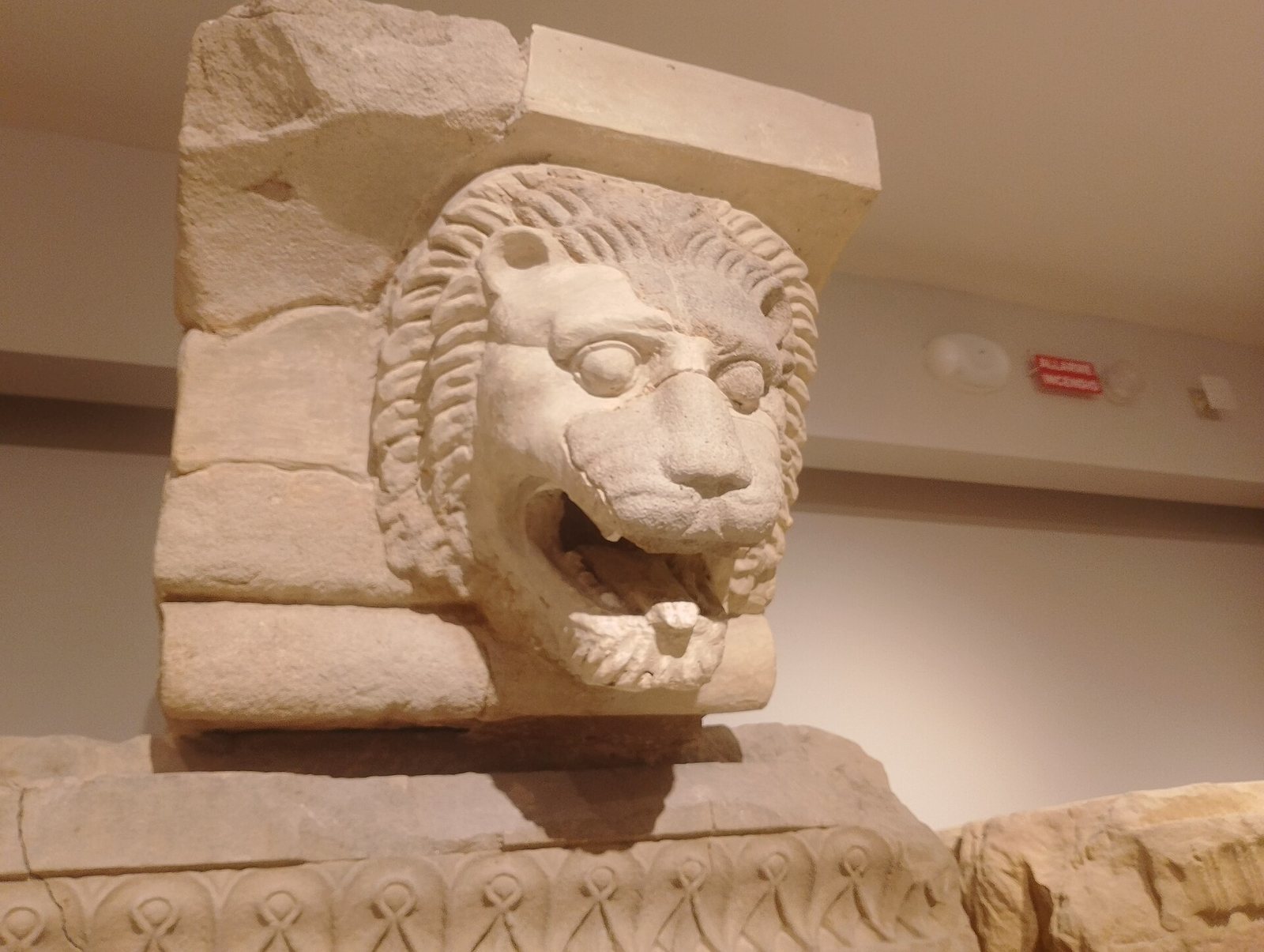
A statue of Hera, probably from the early Lucanian period, is a rare work in Paestan marble. It was found in a structure assembled from pieces of other buildings, along with objects suggesting a female cult. Displays from the Temple of Athena include brightly colored decorative roof panels, stone capitals, and other architectural elements. Finds from the Temple of Hera include roof-edge ornaments shaped as women’s busts, a terracotta group of Europa and the bull, and a red-figure vase attributed to the Nikoxenos Painter. Red-figure pottery leaves the figures in the clay color against a contrasting background.
Material from additional sanctuaries includes terracotta offerings representing Athena and a seated goddess thought to be Hera, as well as inscriptions connected with healing cults. The figurines and pottery help trace the Hera cult at Poseidonia to Achaean traditions in southern Italy. Other objects include a locally made small oil vessel depicting the Adonia festival, which commemorated the death of Adonis. A stone marker associated with a hero cult bears an inscription naming Chiron in an archaic form of Greek writing. Upright stone slabs with Oscan inscriptions, in an ancient Italic language used in southern Italy, are also displayed.
Burials and painted tombs
Greek-period graves and the Tomb of the Diver
Among the burial finds is an Attic red-figure storage jar, made in the region around Athens, with scenes of athletic exercise on both sides. Another unusual burial contained four brooches used to fasten clothing. The deceased was fully covered, with a flat slab carved in relief placed directly opposite the face. The Tomb of the Diver, found by Mario Napoli on 3 June 1968 in a small cemetery 1.5 kilometres south of Paestum, dates to about 480–470 BC. It is a stone-slab tomb with paintings on its walls and ceiling, and is the only known tomb monument of its type from the Greek period in Magna Graecia.
Lucanian painted tombs
The museum preserves about 500 painted slabs and fragments, mainly from Lucanian tombs of the fifth to third centuries BC. They were recovered from burial grounds during the first decades of the twentieth century. The interiors of stone-slab tombs and room-like chamber tombs display a varied range of colors and subjects. Named examples include the Multicolored Rooster, White Rooster, Piebald Horses, Pomegranates, Funeral Games, Black Knight, Mother and Child, Mourning Women, Deer Hunt, Returning Knight, Fighting Animals, Nereid, and Mule Cart tombs.
The Spinazzo chamber tomb
A separate room contains a reconstruction of the Spinazzo chamber tomb. After looters removed the tomb, it was confiscated and entrusted to the museum. Its paintings are noted for their accomplished execution and naturalistic treatment.
Paestan pottery and Roman-period collections
Vases and workshops
The Paestan-vase gallery looks across farmland toward the Campanian mountains. Ancient defensive walls enclose the farmland. The collection includes many red-figure vases made in the local style, especially vessels from burial grounds, and works attributed to Asteas, Python, and the Aphrodite Painter. Asteas and Python are the only named vase painters known from Magna Graecia; the Aphrodite Painter is another important figure in the Paestan tradition.
Civic and religious objects
Roman-period displays include a terracotta female figure and pottery recovered from the filled Ekklesiasterion, some of it marked with Latin graffiti. A bronze figure of Marsyas, the mythological musician, survives without its arms or restraints and may reproduce a statue that Roman commoners placed in the Forum. Public-space finds include busts of Livia Drusilla and her son Tiberius. From the sanctuary of Santa Venera comes a marble copy of Aphrodite Anadyomene.
Homes, portraits, and later sculpture
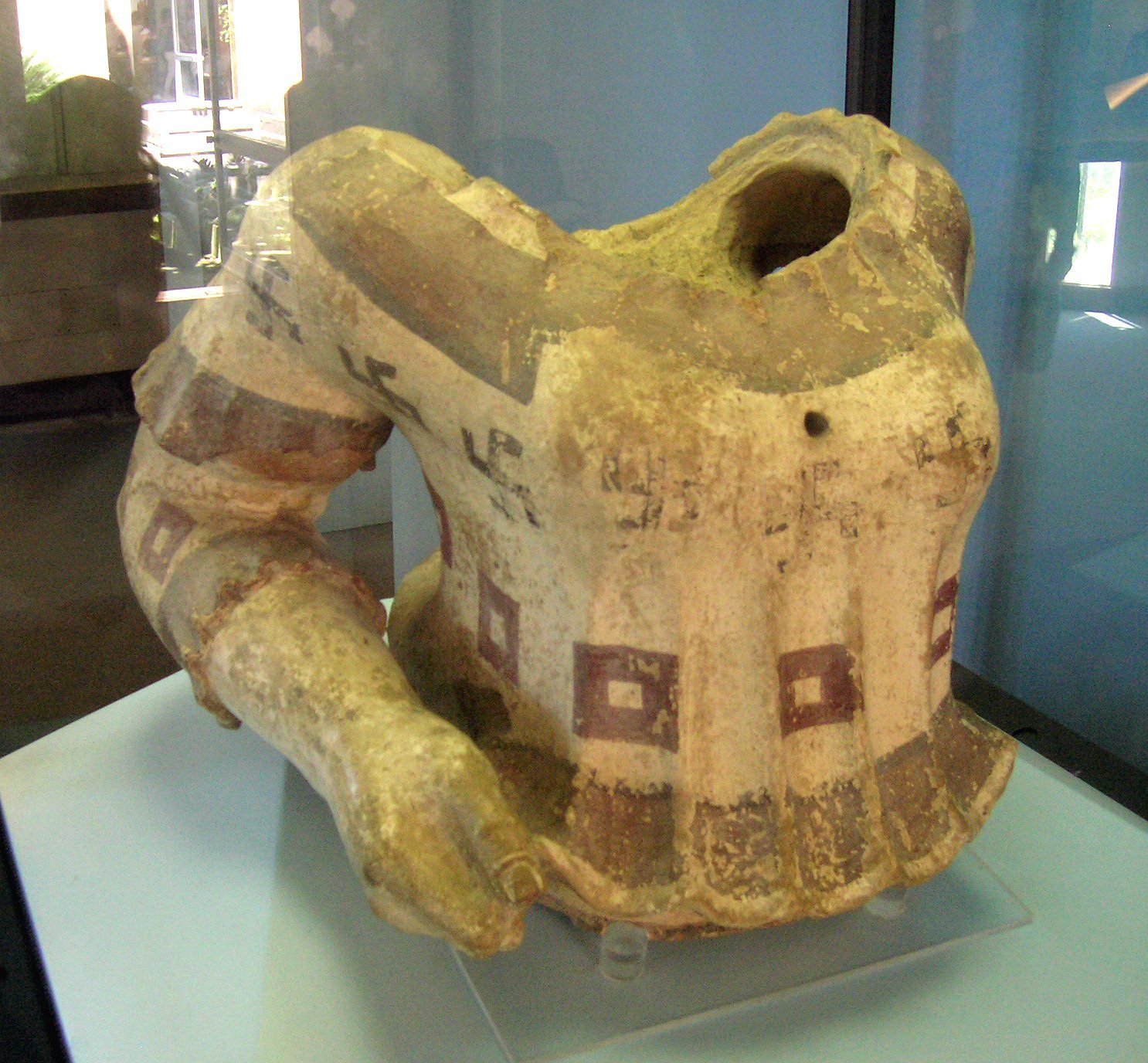
Objects from private houses include terracotta wall reliefs and table supports decorated in relief. Two finely made marble portrait busts date to the late Roman Republic. Fragments of an armored statue found in a public basilica, a large civic hall, may represent a son, nephew, or younger brother of Minera, the wife of Gaius Cocceius Flaccus. Minera was a patron of the city, where an honorary statue known as the Togato Spinazzola was displayed publicly. Sculptures associated with the Flavian colony include a headless statue of Artemis, portraits of young people, and a portrait of a court lady from the reign of Trajan.