Althiburos: An Ancient Numidian Settlement and Roman Town in Tunisia
Site at a Glance
- Popularity
- Medium
- Country
- Tunisia
- Primary era
- Classical
- Eras represented
- Iron Age, Classical
- Civilizations
- Numidian, Roman
- Site type
- City
On this page20 sections
History
Numidian and Carthaginian periods
Althiburos was an ancient Numidian settlement and later a Roman town near Dahmani in Tunisia. It stood on the route between Carthage and Theveste, and came under Carthaginian influence and then control. Archaeological work in two areas exposed six metres of pre-Roman buildings and occupation layers, divided into Early Numidian (10th–8th centuries BC), Middle Numidian (7th–5th centuries BC), and Late Numidian phases.
Farming was practiced from the earliest identified occupation, with cereals, legumes, and grapes among the crops; olives were added by the late 8th century BC. This evidence places established cultivation at Althiburos centuries before Phoenician settlements became widespread in Africa. Ironworking was also taking place by the 8th century BC, challenging assumptions about the primacy of Phoenician technology.
Roman rule
After Rome defeated Carthage in the Punic Wars, Althiburos became part of Roman Africa, the empire’s province in North Africa. The town retained a Carthaginian-style dual magistracy into the 2nd century AD. These chief officials were called sufetes, magistrates in Punic civic government. On one occasion, the town also appointed three executive officials at the same time.
Under Emperor Hadrian, who ruled from AD 117 to 138, Althiburos gained municipal status and Italian rights, a privileged legal standing granted to some communities in the provinces. Its formal name became Municipium Aelium Hadrianum Augustum Althiburitanum. The town prospered during the 2nd and 3rd centuries.
Christian community and abandonment
Althiburos had a Christian bishop from the 4th century until the end of the 7th. Victor, active around 393, was Donatist or Maximianist; Donatism was a rival Christian movement in Roman North Africa, and Maximianists were a group within it. The Catholic bishop Basilius served from 397 to 418. Augustalis, a Donatist, opposed Basilius at the Council of Carthage, while the Catholic Vindemius took part in the Council of Huneric in 484. The historic diocese was re-established in 1933 as a titular see, a title that does not entail governing a resident diocese.
The settlement was destroyed during the Muslim conquests. The area’s population center subsequently shifted to Ebba Ksour on the plain, while Althiburos’s ruins remained largely intact. European travelers rediscovered them in the 18th century.
Excavations
Excavations began in 1908, paused, and resumed in 1912. They uncovered parts of the forum, a main street, and a monumental gate with a Latin inscription honoring Hadrian. A Punic inscription from the site is now in the Louvre Museum in Paris. Spanish and Italian archaeological teams have worked under the auspices of Tunisia’s National Heritage Institute since 2006–2007. From 2007, work on the theatre has focused on surveying its remains and reconstruction.
Remains
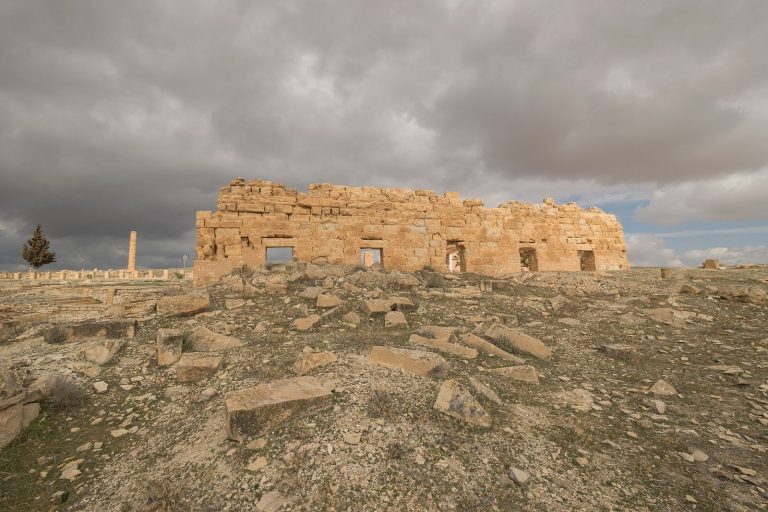
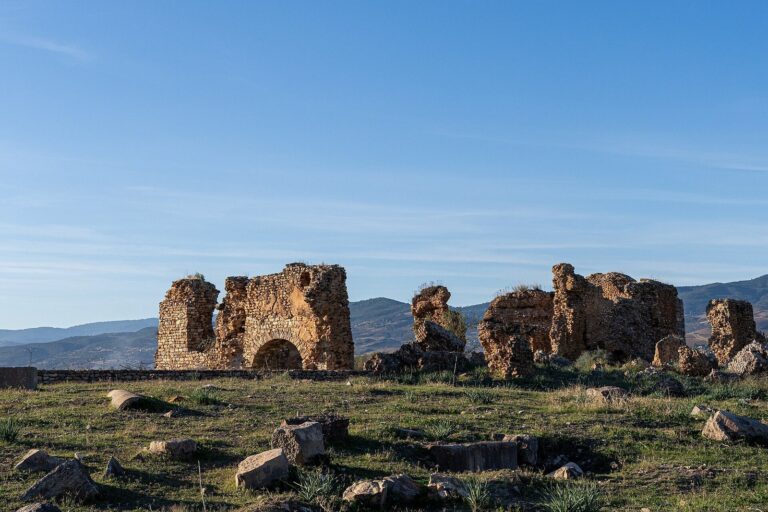
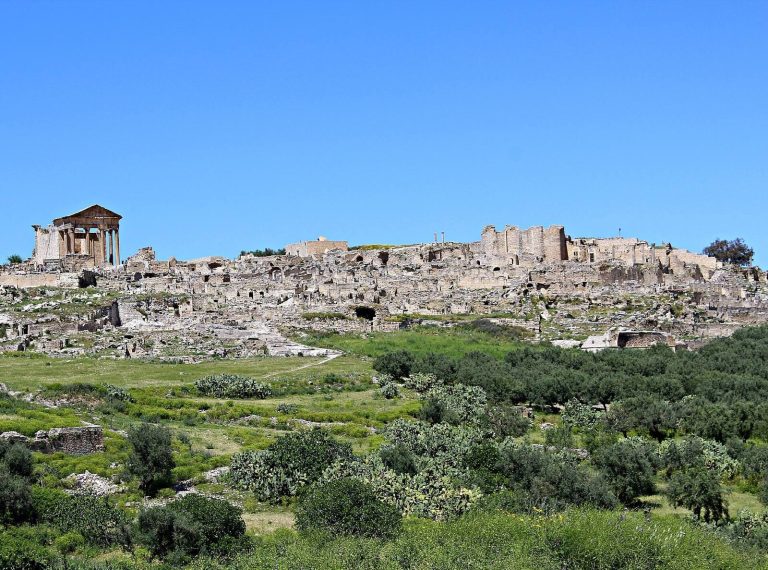
The remains include a Roman civic center, houses with mosaics, a hilltop theatre, a dam, and mausoleums. The forum and Capitolium, a principal temple in a Roman town, form the civic core. Other houses lie northeast and southeast of the forum, while the House of the Fish Scene stands across the Oum-el-Abid River.
Civic center and monuments
Forum and Capitolium
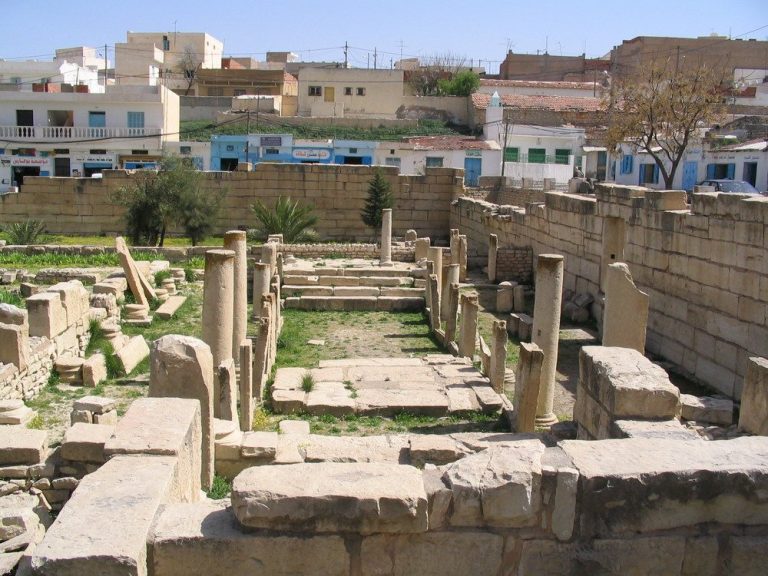
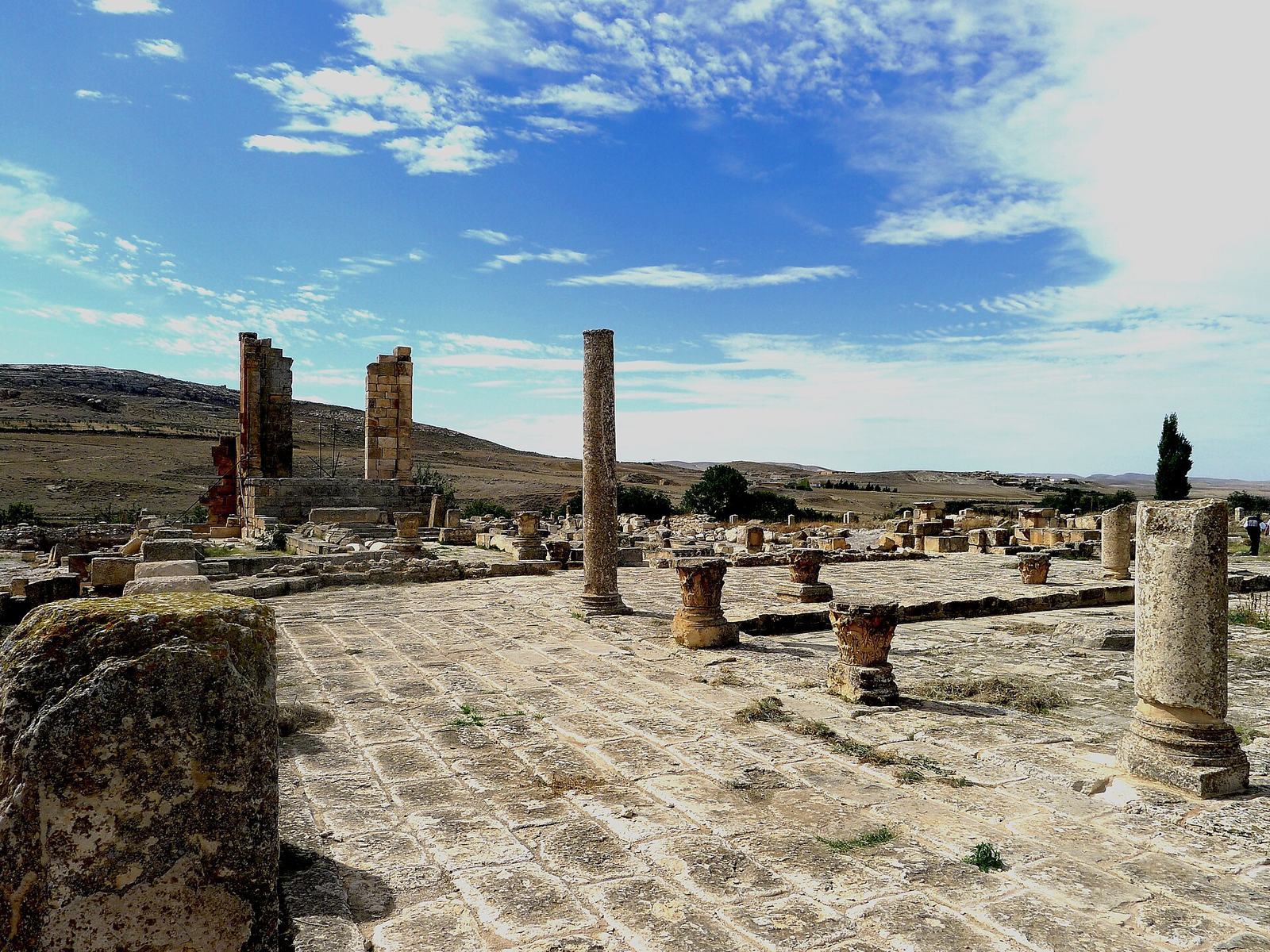
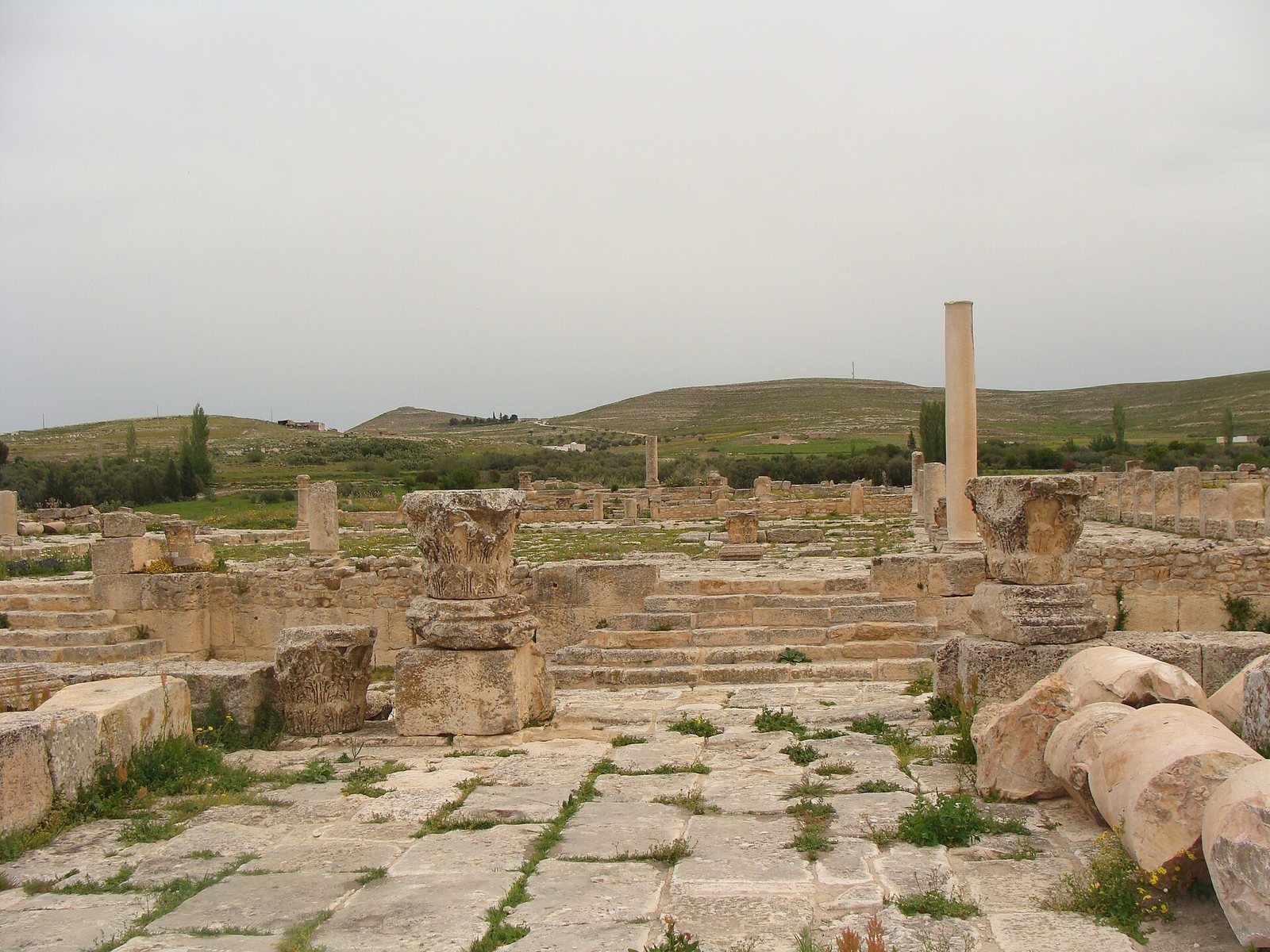
The area associated with the forum and Capitolium measures 44.6 by 37.15 metres. Its paved open space measures 23.35 by 30.8 metres and is bordered by a roofed colonnade with ten columns on one side and twelve on the other. Marble statues of Minerva and Juno, Roman goddesses, were found at the site.
Temple and triumphal arches
A temple dedicated to an unknown god or gods stood beside the forum. Its surviving remains include the raised platform and some Corinthian architectural pieces, whose capitals have elaborate ornament. An inscription points to a date around AD 145. One triumphal arch, dated to AD 185–191, is largely ruined, although part of its front remains. A separate triumphal arch dates to the 4th or 5th century.
Monumental gate and inscriptions
The monumental gate bears a Latin inscription dedicated to Hadrian. The site also yielded a Punic inscription, now held at the Louvre in Paris.
Houses and other buildings
Northeast forum complex
A building complex at the forum’s northeast corner includes a house with a columned courtyard surrounded by a walkway, known as a peristyle. It had 16 columns, and geometric mosaics covered its four roofed porticoes. Other mosaics from Althiburos are held at the Bardo Museum in Tunis.
Workshop and fountain
Southeast of the forum, a building measuring 10 by 7 metres was probably a workshop. A monumental fountain also stood in this area.
House of the Muses
The House of the Muses is noted for its mosaics.
House of the Fish Scene
Across the Oum-el-Abid River, mosaics in the House of the Fish Scene depict fish.
House of Asclepius
The House of Asclepius takes its name from a mosaic. Its function is uncertain, and its mosaics are of high quality.
House of the Sixteen Bases
The House of the Sixteen Bases is named for 16 figures carved on six stones belonging to a base. The figures appear to reflect Punic influence.
Theatre and outlying remains
Roman theatre
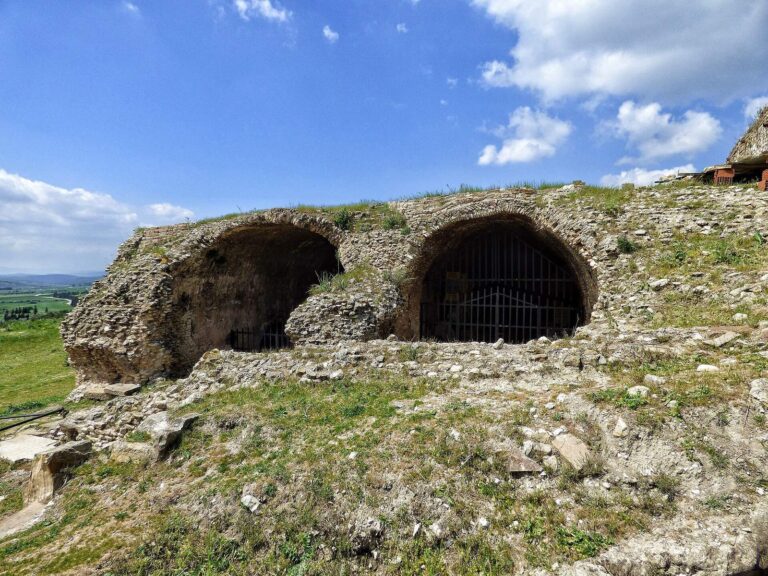
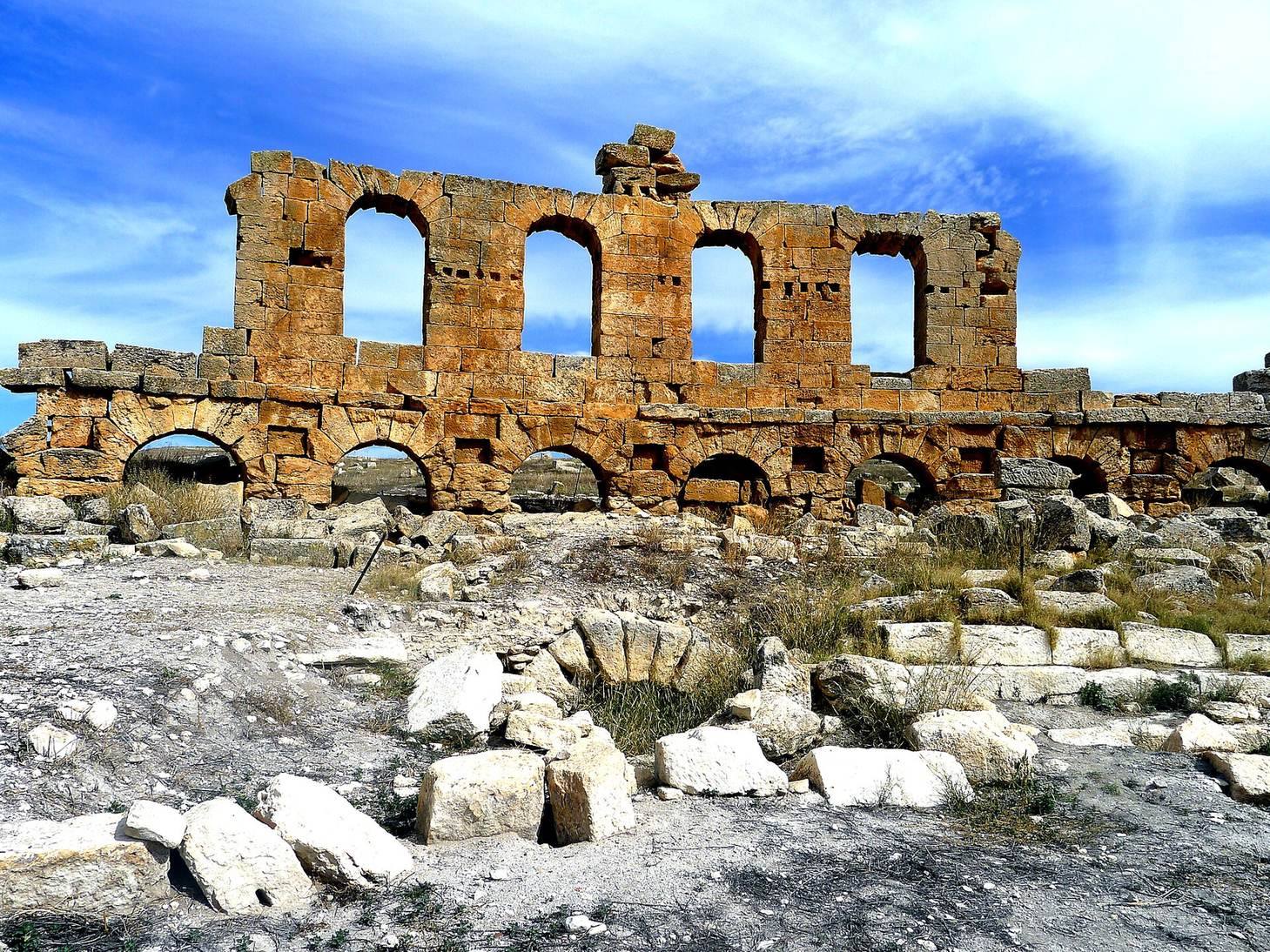
The Roman theatre stands on a hilltop and is partly buried among scattered blocks. A row of 19 arches remains upright, with five arches from the first storey above it. Measurements made in the late 19th century give the theatre a diameter of 60 metres and a width of 35 metres.
Dam, mausoleums, and road
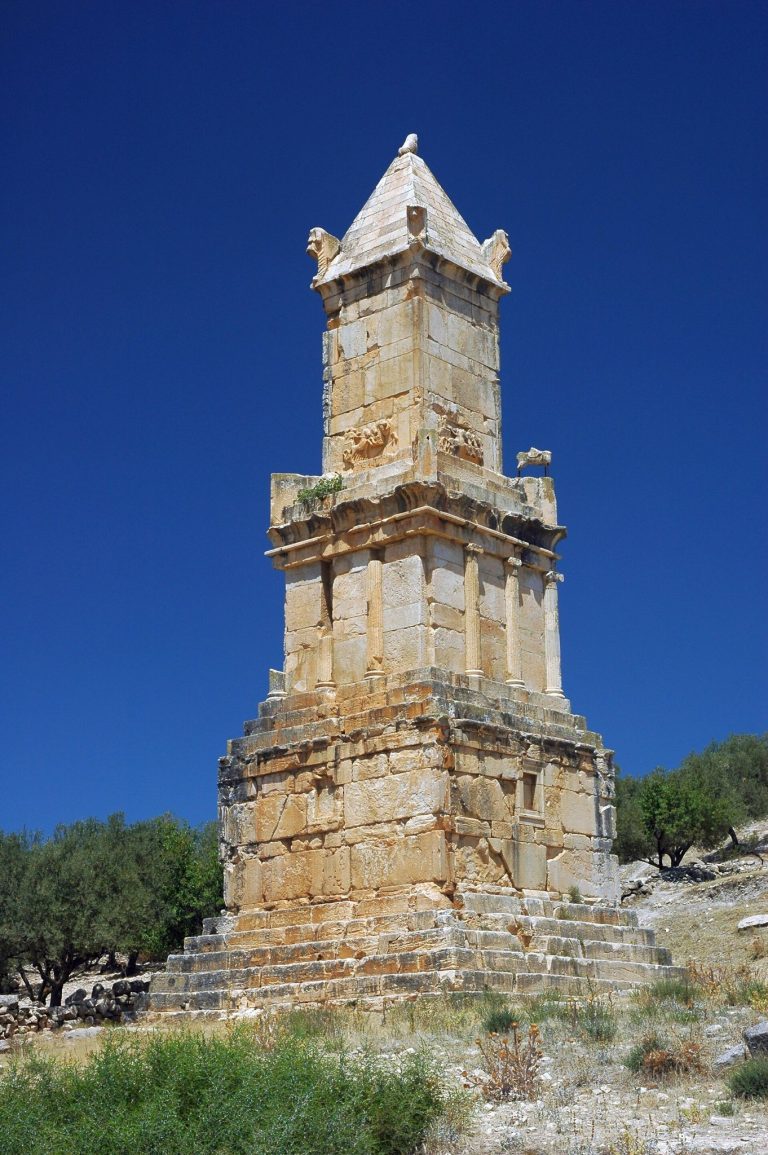
The site includes a dam and mausoleums. The principal mausoleum, at Ksar Ben Hannoun to the west, has an inscribed chamber measuring 3.2 by 2.5 metres. A Roman road ran in the direction of Tebessa.