Dar Qita: An Ancient Settlement and Church Site in Syria
Site at a Glance
- Popularity
- Very Low
- Country
- Syria
- Primary era
- Medieval
- Eras represented
- Classical, Medieval
- Civilizations
- Byzantine, Roman
- Site type
- City
On this page11 sections
History
Dar Qita is an uninhabited settlement on the north slope of Jebel Barisha near Haram in Syria, occupied by the first century AD and known for its early Byzantine churches. By 355, its marketplace had made it an export center for olive oil and wine. Like other communities of the Dead Cities, a group of late-antique settlements in northwestern Syria, Dar Qita prospered most in the fifth and sixth centuries.
Settlement and Christian growth
A Roman-period road linking Chalcis and Antioch passed near Dar Qita. In 355, Flavius Eusebius, son of Cyril, built and financed the marketplace and built a gate. He appears to have introduced Christian teaching to the settlement, and his public profession of Christianity may have encouraged others to convert. Inscriptions trace the growth of Christian belief, while followers of the traditional Roman polytheistic religion remained in the region into the middle of the sixth century.
Churches and later phases
Four churches in northern Jebel Barisha, built during the first two decades of the fifth century, are attributed to the architect Markianos Kyris. The earliest, the East Church at Babisqa, was completed around 403 or 404. The Church of St Paul and Moses, dedicated to the apostle Paul and to Moses, the prophet and lawgiver of the Hebrew Bible, was completed by 418. Its inscription gives the names of Diodoros, the community elder, and Kyros, the architect. The congregation was probably under the authority of the Patriarch of Antioch, a senior Christian bishop with authority over an ecclesiastical jurisdiction.
The Church of St Paul and Moses was remodeled in the early sixth century. The Church of St Sergios was completed in 537. Sergios was among the most popular saints honored in church dedications and was buried at Resafa. The church’s decoration revived a style developed earlier at Dar Qita, after neighboring settlements had adopted other forms. An inscription records the renewal of the door of its baptistery in 566 or 567, during the reign of Byzantine emperor Justin II (565–578) and under Patriarch Anastasios.
The Trinity Church, named for the Christian doctrine of one God in three persons, represents a later decorative style than that associated with Markianos Kyris. Its design follows a form linked to sixth-century cathedral architecture.
Modern examination
American archaeologist and architectural historian Howard Crosby Butler briefly examined the ruins in 1900 and 1905. In April 1909, he established a camp at Dar Qita to make a fuller record of the settlement and nearby Baqirha.
Remains
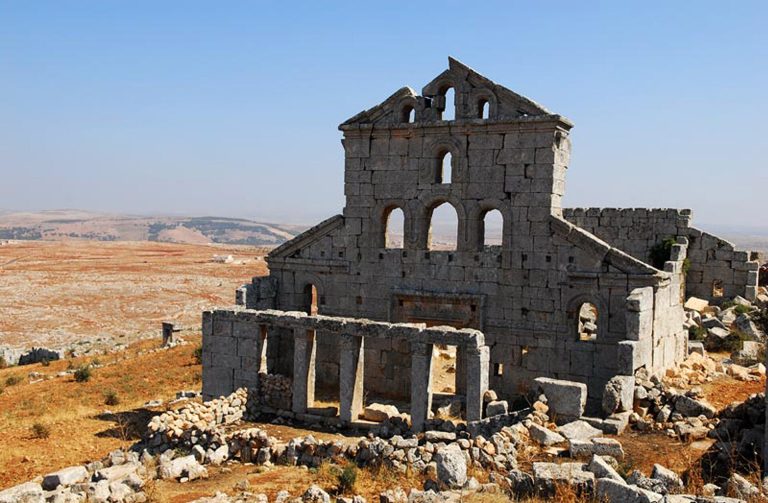
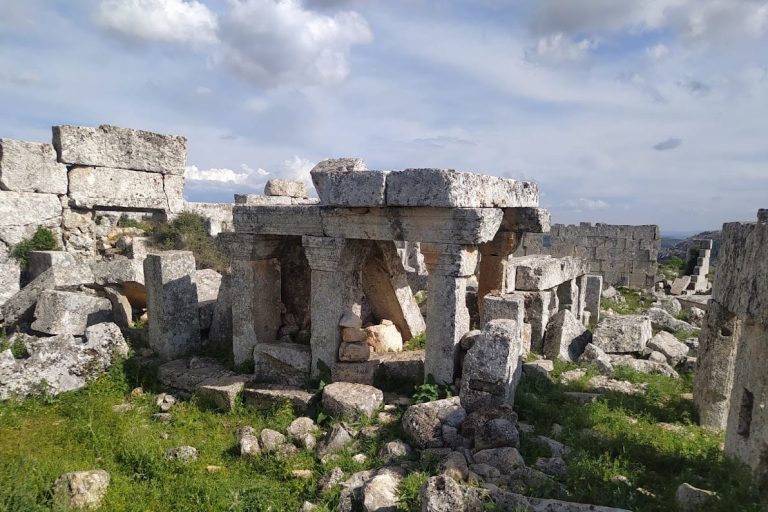
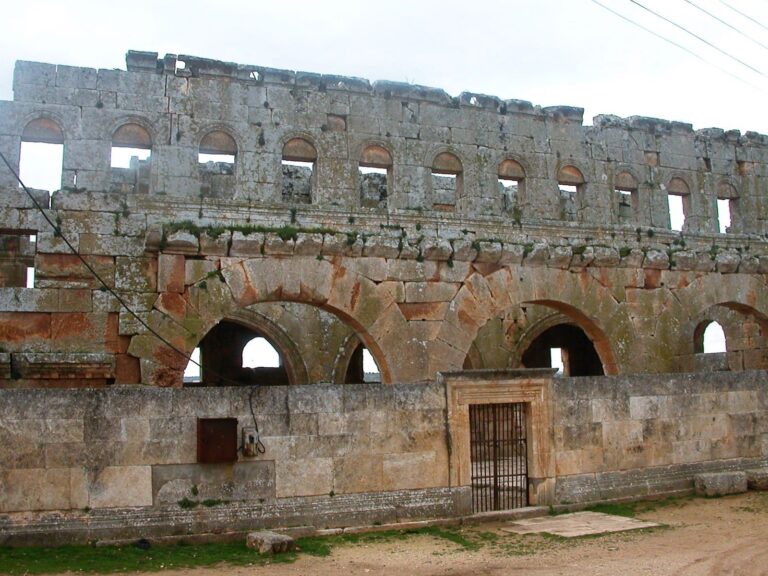
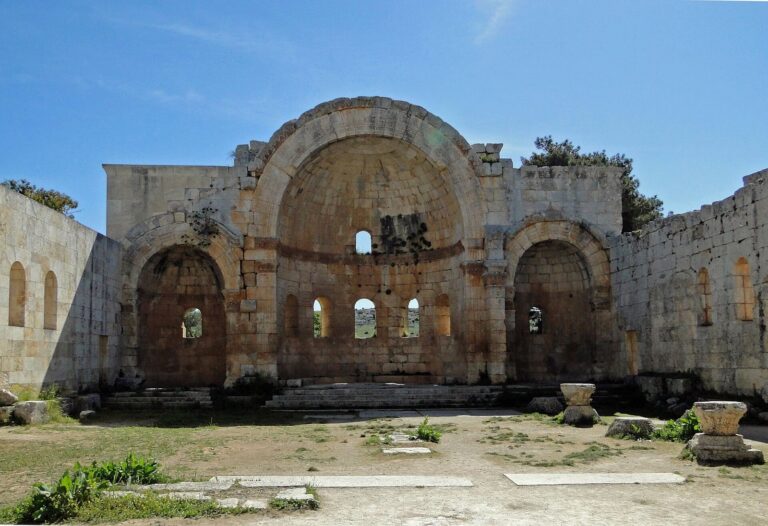
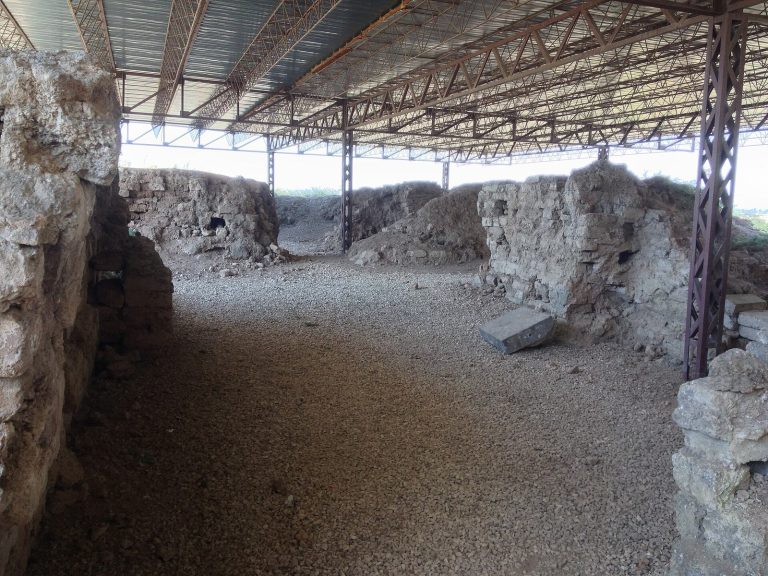
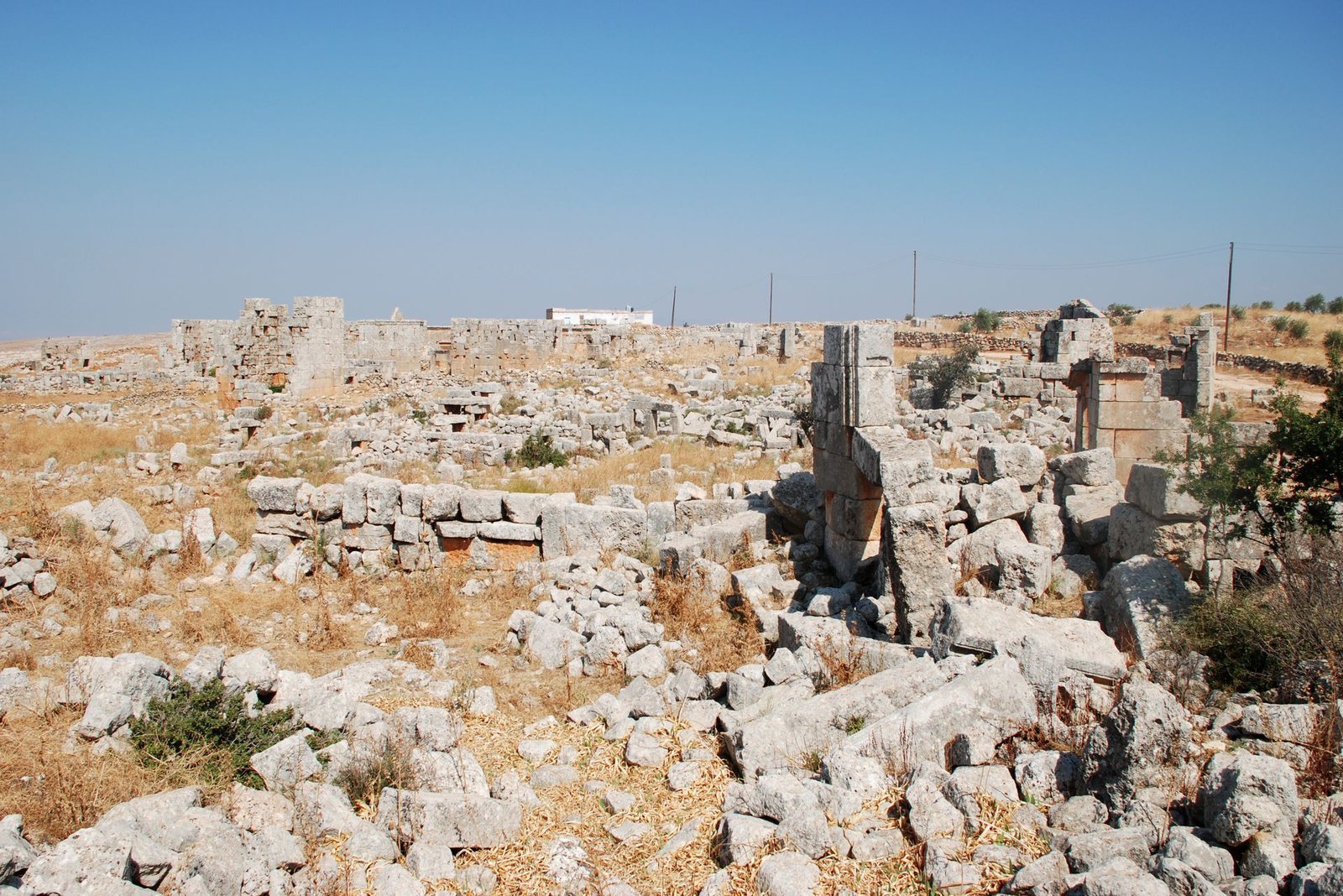
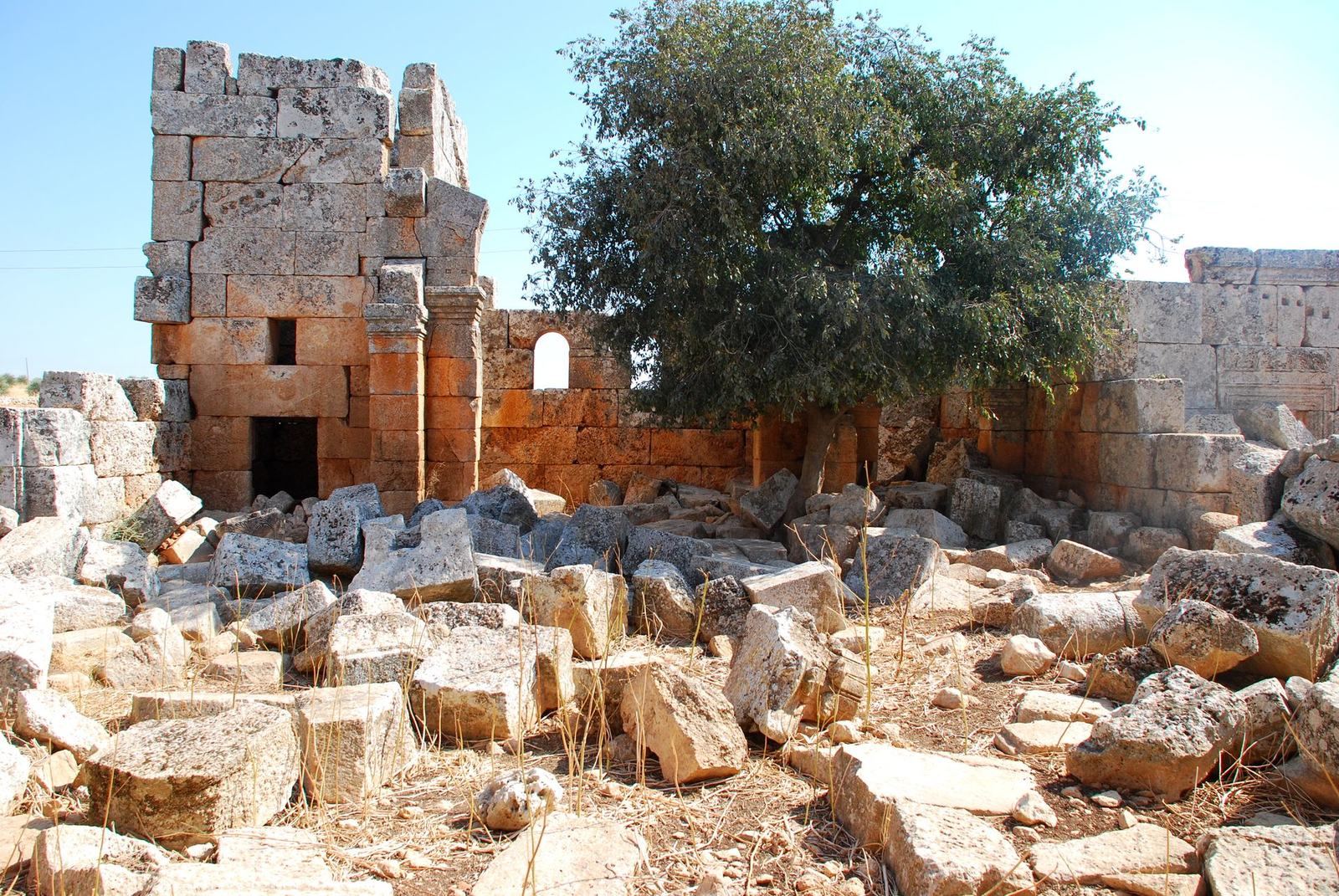
Dar Qita lies in the central part of the northern Syrian limestone massif. The ruins of Baqirha are a few hundred metres to the south, on a higher, barren karst hill. Three early Byzantine churches survive at Dar Qita, among scattered dressed stone blocks from substantial residences.
Settlement fabric and inscriptions
The marketplace and a gate associated with Flavius Eusebius are known through inscriptions. A text dated 295 or 296, attached to a private house, is the earliest known pre-Christian inscription at Dar Qita. Inscriptions from 339 or 340 and later examples through 515, placed on doorways or above house entrances, affirm belief in one God and Christ. A text dated 431 at a churchyard entrance adds the Holy Spirit. The Greek-language inscription at the Church of St Paul and Moses carries a dedication to Paul and Moses and a formula naming the Father, Son, and Holy Spirit.
Churches
Church of St Paul and Moses
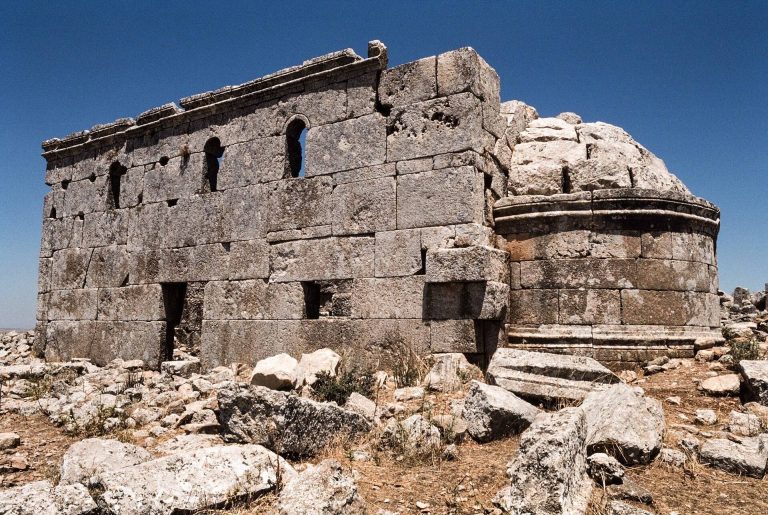
The church was a three-aisled basilica, a long hall with a central space and side aisles, measuring 20.3 metres in overall length. Four columns on each side supported the upper walls. At the east end, a semicircular apse, a recessed space at the end of the church, stood between rectangular rooms; the outside of the eastern wall was straight. Doors connected these rooms with the aisles and apse. Two doorways opened in the south wall, while the north and west walls were initially closed. An enclosed area included a courtyard on the south side.
The narrow windows had lintel stones shaped on their undersides to suggest arches. During the early sixth-century remodeling, new doorways were cut into the west and north walls and framed with decorative moldings. The west wall survives to its lowest row of stone, and the east wall remains up to the point where the apse arch begins to curve. Six of the church’s eight column tops were uncovered. Some have smooth-leaved acanthus in the Corinthian style, a design associated with Markianos Kyris; others follow the Tuscan style, a plainer classical column form.
Baptistery of St Paul and Moses
A small baptistery stood near the church’s southwest corner and was about six metres high. An inscription dates it to 515. A raised horizontal band decorated its middle, and framed entrances opened to the west and north. The baptismal pool was sunk into the floor, allowing an adult to stand immersed to chest depth.
Church of St Sergios
The three-aisled church had a baptistery attached at the eastern end of its south side, probably built at about the same time as the main building. The western portal carries the inscription recording the church’s completion, and another inscription above the baptistery entrance records the later renewal of its door. The church’s ornamented lintels repeat a style developed earlier at Dar Qita. Their cornice molding alternates upright smooth acanthus leaves with fan-shaped palmettes, while a simplified vine design takes the place of the interwoven pattern usually found beneath.
Trinity Church
An undated inscription in Syriac is associated with the church. Raised horizontal bands run above the exterior windows and curl into scrolls at their ends. The door lintels bulge at the center, and the column tops in the Corinthian style carry animated leaves that appear swept by wind.