Mišćina Mosque: A Sixteenth-Century Ottoman Mosque in Sarajevo
Site at a Glance
- Popularity
- Low
- Country
- Bosnia and Herzegovina
- Primary era
- Early Modern
- Eras represented
- Early Modern, Modern
- Civilizations
- Ottoman
- Site type
- Religious
- Remains
- Mosque
On this page8 sections
History
Mišćina Mosque is an Ottoman-style mosque in Kovači, Sarajevo, Bosnia and Herzegovina, built around the middle of the sixteenth century by Kebkebir Hadži Ahmed, son of Oruč. Hadži is an honorific for a Muslim who has completed the pilgrimage to Mecca. The exact construction year is uncertain: an inscription gives 1543, while 1557 is also assigned to the mosque.
The quarter associated with Ahmed existed before it was first recorded in 1528. It initially belonged to the quarter of Skender Pasha, a high-ranking Ottoman official, and later became a separate neighborhood.
Destruction and rebuilding
In 1697, Habsburg commander Eugene of Savoy led a campaign against Sarajevo, during which fire completely destroyed the mosque. It was rebuilt in 1700.
The eighteenth and nineteenth centuries
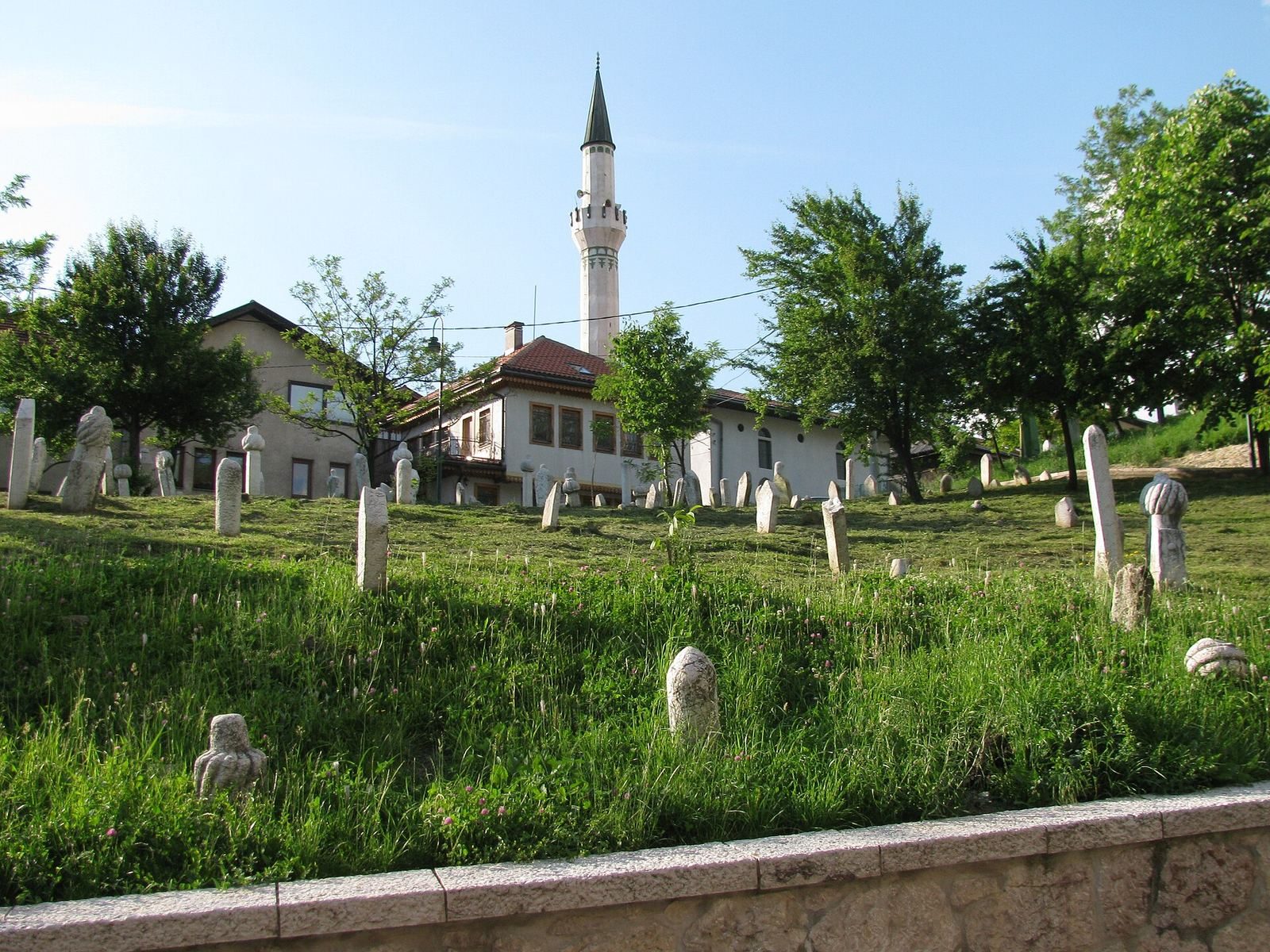
The mosque’s familiar name comes from Mehmed, son of Yusuf, its eighteenth-century caller to prayer. Known as Miščija or Mišćo, he was remembered by Sarajevo chronicler Mula Mustafa Bašeskija as a celebrated, white-bearded man who recited praises at dawn, with a voice that carried across the city. Bašeskija included him among the dead in 1786/87. Mehmed also made fermena, traditional women’s garments, lived in Ploča above Kovači, and was buried in the cemetery opposite the mosque.
Several endowments provided for the mosque. In 1800, Hadži Fatima, daughter of Hadži Ahmed-aga Džino, endowed a shop in Varoš and two rooms, directing their income to the mosque’s lamps. In 1813, Hafiz Muhammed ef. Baki Džino-zade endowed his residence and other properties for the mosque’s upkeep.
In 1844, Hadži Omer Karić, son of Muharem, endowed a bakery, three rooms, a store, a grocer’s shop, and a house in Čekrekčija quarter to support the mosque’s maintenance and staff. Hadži Mustafa Faginović, born in Sarajevo in 1839 and deceased in Istanbul in 1900, came from a prominent family of traditional calligraphers and painters. His paintings were valued for their artistic quality, and he also repainted Sultan Fatih Mosque in Istanbul. In 2012, the Commission for the Preservation of National Monuments declared Mišćina Mosque a National Monument of Bosnia and Herzegovina.
Remains
The mosque
Exterior and porch
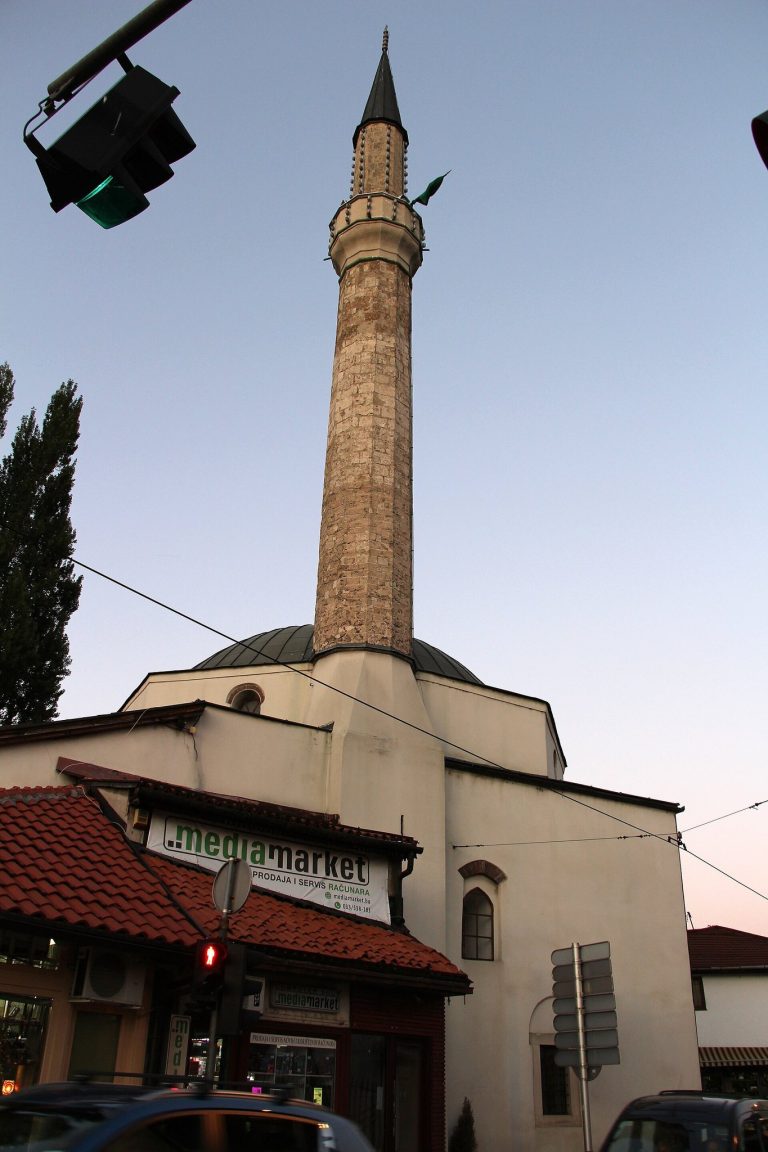
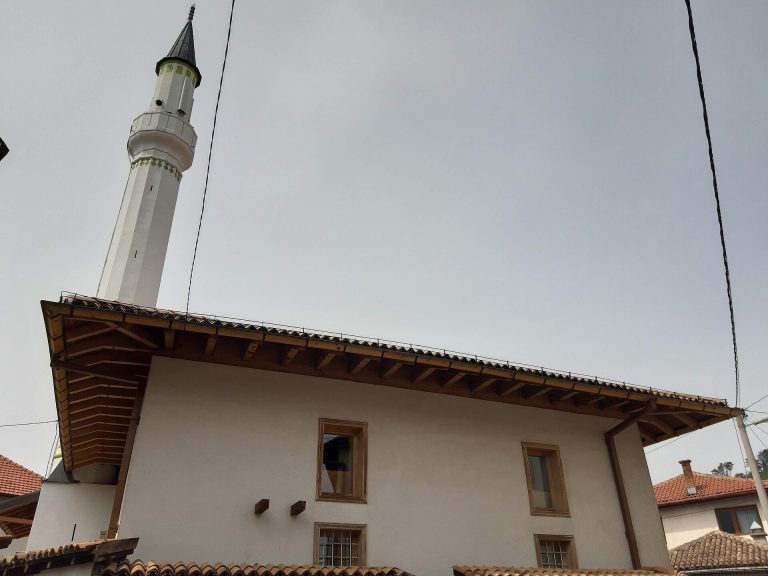
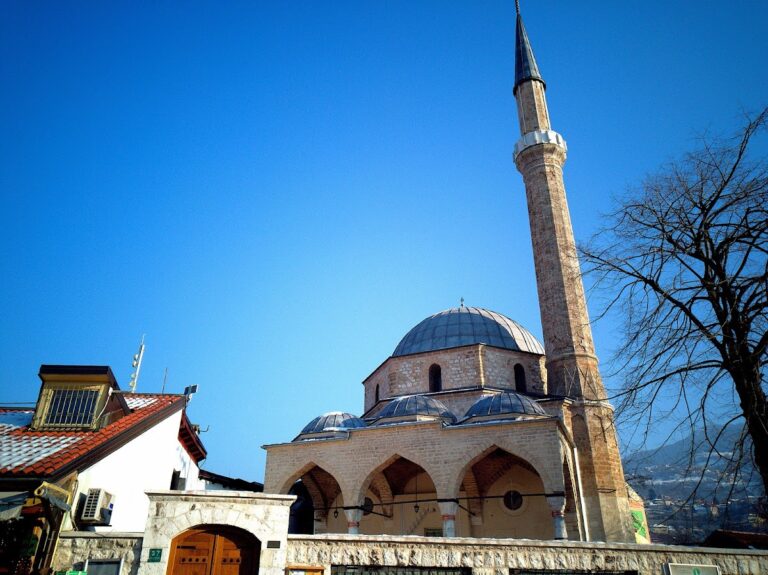
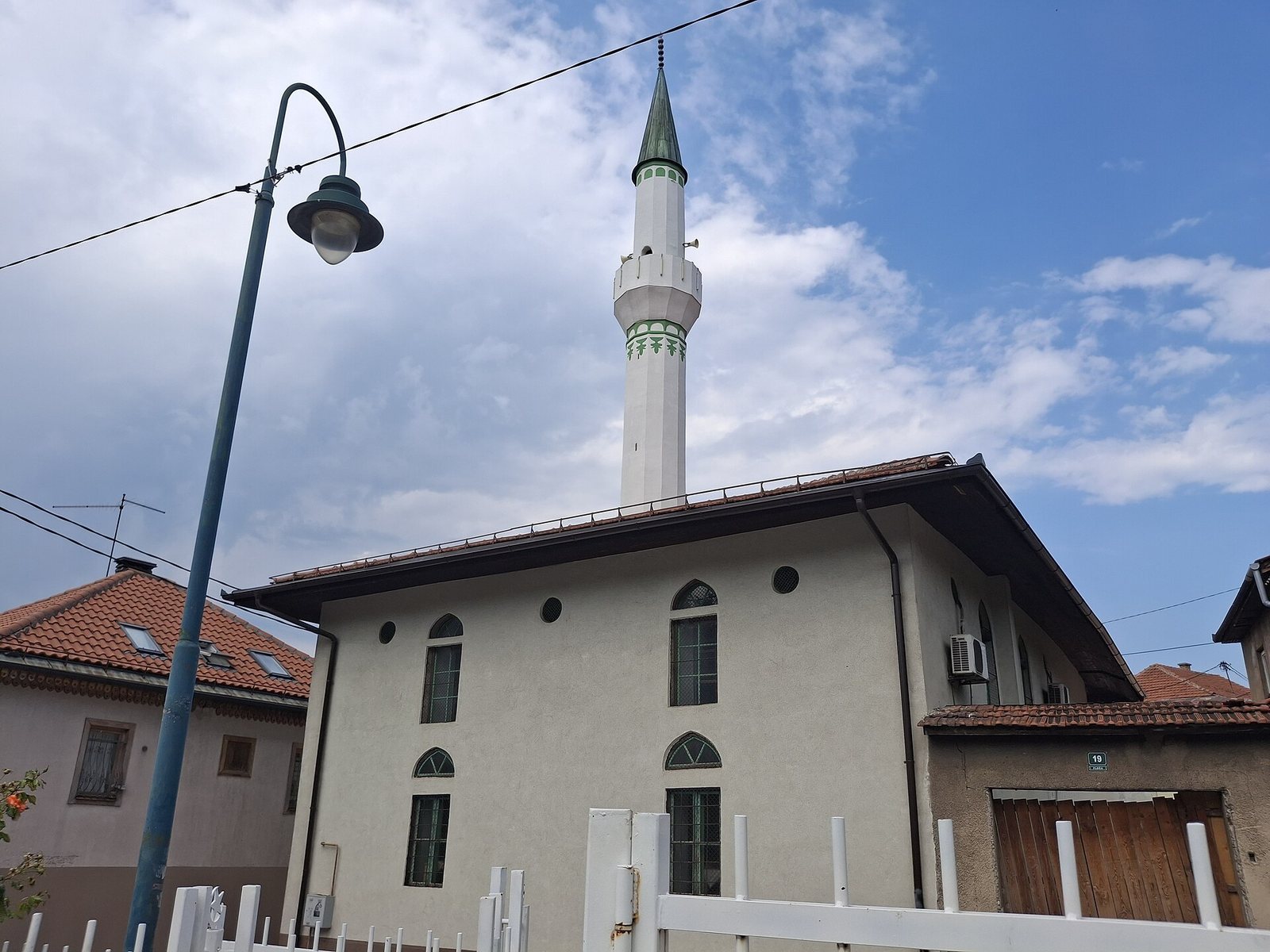
The mosque is a single-space building with a hipped roof and one stone minaret. Its exterior measures 11.33 by 15.80 metres, including the porch. The porch has raised seating platforms and an ablution room built in 1997.
Interior
Inside, the mihrab, the niche indicating the direction of prayer, and the minbar, the pulpit, have floral decoration. The interior also contains a preacher’s platform and a wooden mahfil, or gallery. Inscribed panels and other paintings decorate the walls. Two paintings of Mecca and Medina are on the northeastern interior wall; Hadži Mustafa Faginović painted them in 1878.
Cemetery
In the cemetery opposite the mosque, two small green grave markers are enclosed by a stone retaining wall.