Casarás Convent: A Medieval Hostel and Royal Lodging in Spain
Site at a Glance
- Popularity
- Medium
- Country
- Spain
- Primary era
- Early Modern
- Eras represented
- Classical, Medieval, Early Modern
- Civilizations
- Roman, Spanish
- Site type
- Domestic
- Remains
- Elite Residence
On this page10 sections
History
Casarás Convent is a ruined complex in Spain that began as a hostel and hospital for travellers and poor people crossing the Sierra de Guadarrama, with construction promoted between 1166 and 1180. Its later royal lodging, built in the sixteenth century, used Herrerian details, a restrained Spanish Renaissance style, and served royal travellers until 1788.
The medieval hostel
Gutierre Miguel, a knight from Segovia, and his wife, Anderaço de Castro, promoted the original institution. After Gutierre died, Anderaço completed the work and gave it a mill beside the Molinos stream to support its upkeep. Alfonso VIII confirmed the gift in 1201.
The founders’ great-grandson Gil García became the fifth and final hereditary administrator. His will, dated 1314, left the hostel to the Chapter of Segovia Cathedral, the body of clergy responsible for the cathedral’s affairs. The church held it through much of the fourteenth and fifteenth centuries. It may also have housed a secluded religious community while continuing to shelter travellers.
The institution was known as the Hostel of Fuenfrida and the House of Anderaço, among other names. Casarás, in use by 1845, is traced through successive forms referring to Anderaço’s house and its convent, rather than to the House of Eraso with which it was traditionally associated. Local tradition connected the site with the Knights Templar, a medieval Catholic military order suppressed by papal order in the early fourteenth century, but their presence there remains uncertain. In the late fifteenth century, the Council of Segovia established another public inn at the Fuenfría meadow, about a kilometre away. This may mean the older hostel was unusable, ruined, or reserved for religious use.
The royal lodging
In 1565, Philip II commissioned a royal residence at the site. Royal travellers going from New Castile, a historic region of central Spain, to the Palace of Balsaín crossed the Fuenfría pass. The king wanted a separate stopping place for them, apart from the public inn at the meadow. The lodging was distinct from the Palace of Balsaín; claims that it had belonged to the royal family since the time of Henry III confuse the two.
A royal works master designed the building and a master builder directed its construction, completed in 1571. The residence stood where a large cross had previously been erected and may have incorporated the very ruinous remains of an earlier monastery. Francisco de Eraso supervised the lodging. It also served as the Royal House of Fuenfría, a name reflecting its later function.
A nearby chapel was dedicated to Our Lady of Remedies in honour of the victory at the Battle of Lepanto on 7 October 1571, when the Holy League, a coalition of Catholic powers, defeated the Ottoman fleet. A record from 1677 describes a friar from the Franciscan convent in Segovia celebrating Mass there on Sundays and feast days between 1 May and 1 November.
Abandonment and later traditions
In 1788, Charles III commissioned a new road from Villalba to the Royal Site of La Granja de San Ildefonso, crossing the Navacerrada pass. The royal route over Fuenfría then fell out of use, and the lodging was abandoned. The complex deteriorated during the nineteenth century. Descriptions of the royal properties used the name Casarás and recounted Templar lore in 1845; Pascual Madoz included the name and tradition in his geographical dictionary in 1847.
Later stories embellished the uncertain Templar connection with claims of a secret monastery, confinement in the harsh winter climate, and concealed treasure. A tale set amid postwar famine and economic collapse tells of a local resident who found a passage containing supposed Templar valuables while digging near the royal properties. He kept the discovery secret and told his descendants before he died.
Local stories of a white apparition predated Jesús de Aragón’s 1931 novel The White Shadow of Casarás. The novel probably added a sorcerer and a countess to the older tradition. Its plot presents Hugo de Marignac, a Templar seneschal and treasurer of Castile, as hiding treasure and seeking a sorcerer’s help to win Countess Blanca de Torrenuño. After a ritual involving a kidnapped girl reveals that the victim is the countess, Hugo kills the sorcerer and takes his own life; his ghost is said to haunt the mountains during storms. A story that anyone spending the night in the abandoned royal inn will turn to stone may also have originated with the novel.
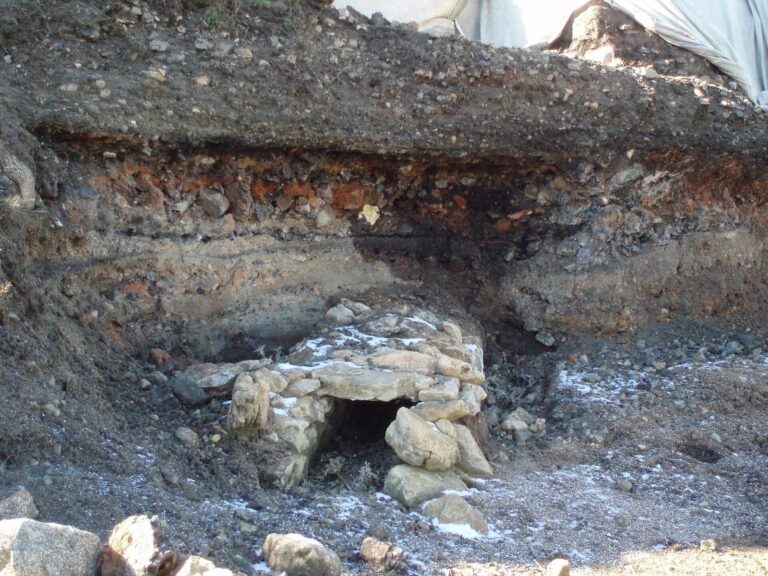
In the 1970s, Patrimonio Nacional excavated the surrounding area in search of ancient treasure, including objects thought to date from the Visigothic period. The work brought to light a substantial stretch of the Roman road of Fuenfría.
Remains
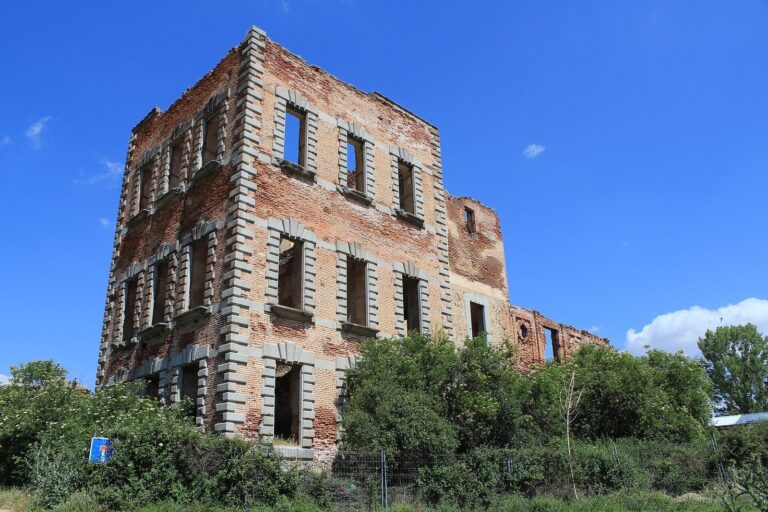
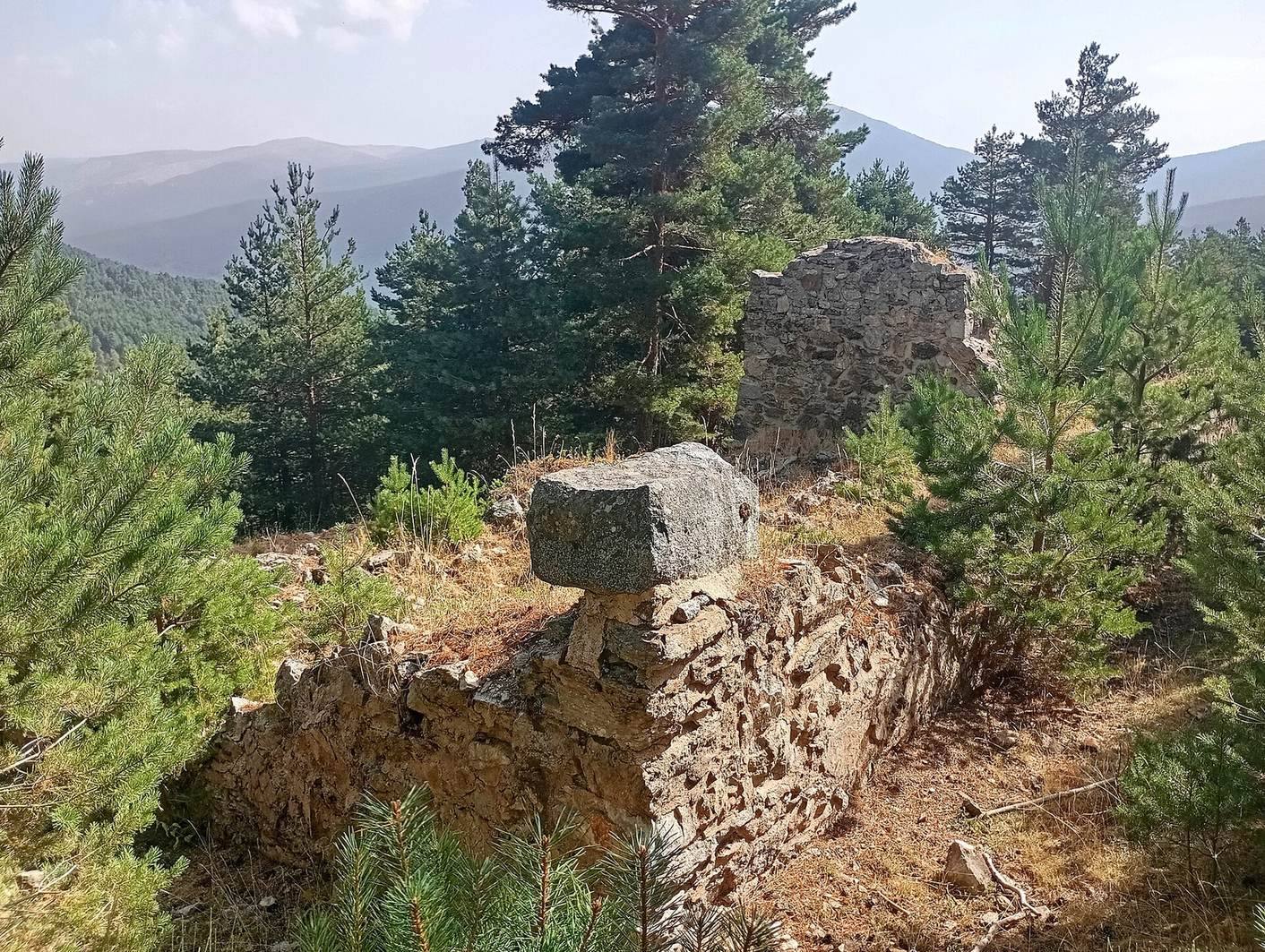
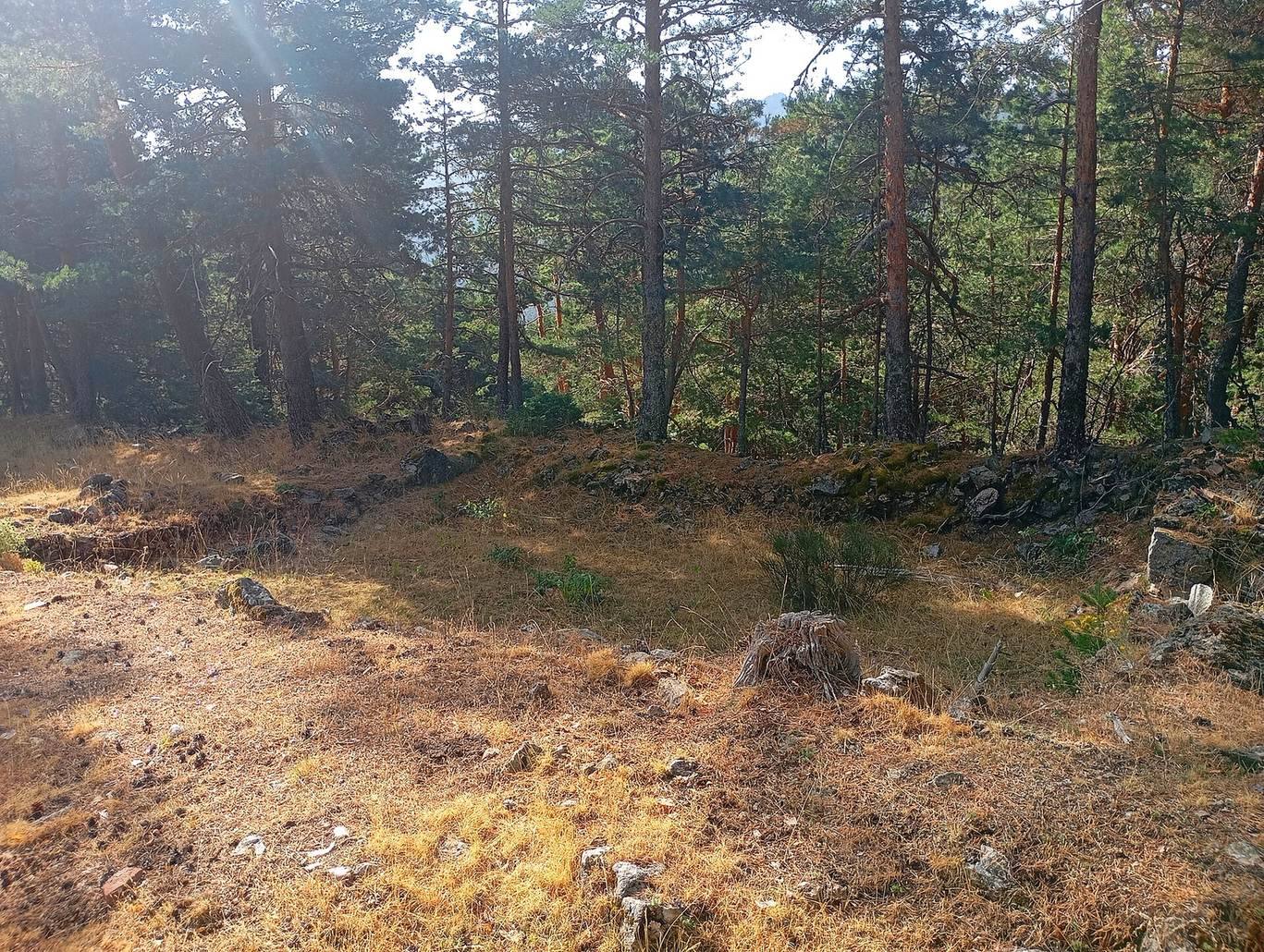
The ruins stand in a clearing in the Pinar de Balsaín, within Sierra de Guadarrama National Park, at about 1,700 metres above sea level. They occupy a horseshoe bend where the Roman road of Fuenfría, the medieval Santillana drove road, and the Bourbon road converge. The site lies on the ascent from Segovia to the Fuenfría pass, about 2.2 kilometres from the pass and more than ten kilometres from any settlement, at equal distances from Cercedilla and Valsaín. The surviving complex includes a rectangular royal house, a snow store, a small square pool, possible stables, and a chapel nearby.
Buildings around the royal house
Royal lodging
The principal building was rectangular and two storeys high, with a granite cornice and a slate roof carried on a timber frame. Its intricate roof structure drew admiration in its time. The building’s Herrerian details are comparable to those of the Royal Monastery of San Lorenzo de El Escorial. A 1639 oil painting by Jusepe Leonardo depicts the complex during its royal period.
Snow store and ancillary structures
A snow store supplied the Palace of Balsaín during summer. Nearby features include a small square pool or pond and the surviving walls of a rectangular building that may have served as stables.
Chapel of Our Lady of Remedies
The chapel stood close to the royal house. Its walls, like those of the snow store, remain ruinous. The image of Our Lady of Remedies associated with the chapel is now in the Church of San Sebastián in Revenga.
Surviving fabric
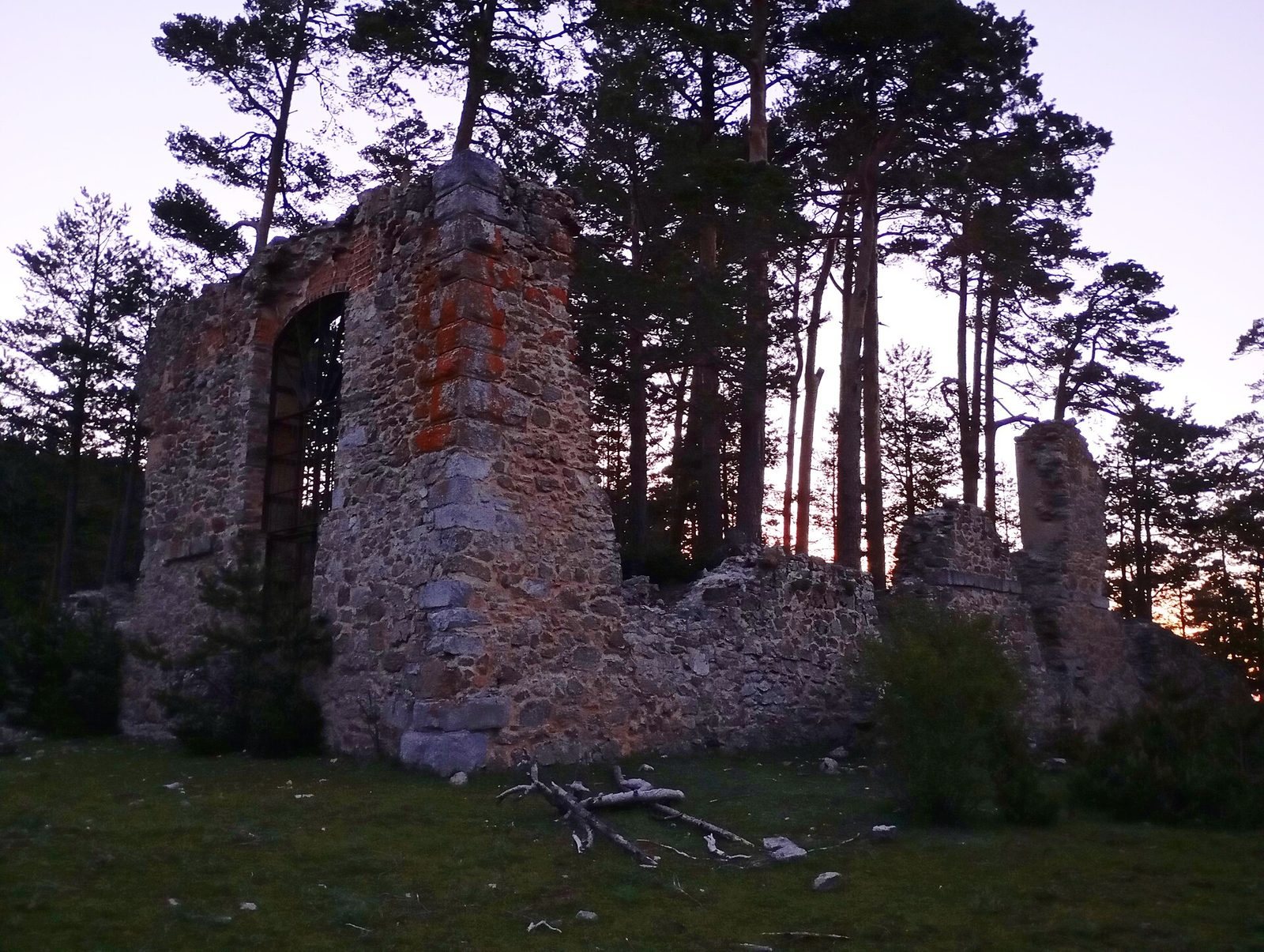
The ruins remain unconsolidated, with pines growing within them. Sections of wall rise to about three metres, and a metal grille supports the arch of the main entrance.