Chalasmenos: A Late Minoan Settlement in Crete
Site at a Glance
- Popularity
- Very Low
- Country
- Greece
- Primary era
- Bronze Age
- Eras represented
- Bronze Age, Iron Age
- Civilizations
- Ancient Greek, Minoan, Mycenaean
- Site type
- City
On this page10 sections
History
Late Bronze Age occupation
Chalasmenos is a Minoan settlement near Ierapetra in northeastern Crete, Greece, occupied chiefly from about 1200 BC until approximately 1100 or 1070 BC. Its principal phase belongs to Late Minoan IIIC, a late phase of the Minoan Bronze Age, around the time the Bronze Age was ending on Crete. Chalasmenos was among the largest settlements in the northern Ierapetra Isthmus during this period. The name is modern, and the settlement’s ancient name is unknown. An earlier Middle Minoan occupation has also been proposed, but remains uncertain.
The relationship between Chalasmenos and Katalymata, another Minoan settlement about 350 metres to the northeast, has been interpreted in different ways. Katalymata lies on the northern slope at the outlet of Cha Gorge and has finds from several periods. It has been viewed as a predecessor to Chalasmenos, while another interpretation sees Katalymata as a temporary refuge and Chalasmenos as a permanently inhabited settlement. Chalasmenos itself has also been proposed as a refuge for Minoans and Mycenaeans after the collapse of Mycenaean rule and culture.
Minoan civilization developed on Crete, while Mycenaean civilization, centered on mainland Greece, extended its influence to the island. Crete was under Mycenaean control during Chalasmenos’s main phase, and pottery from the settlement resembles examples from the Kavousi area. The combination of Minoan and Mycenaean architectural and material traditions has prompted interpretations of a community with mixed origins. Excavation director Metaxia Tsipopoulou suggested that residents may have had different ethnic backgrounds; another interpretation describes the population as a mixture of Minoans and Mycenaeans.
Later activity and archaeological work
Later activity included an economic building erected in the sixth century BC, during the Late Geometric period, an early phase of Greek history associated with geometric designs in pottery and other art.
Systematic excavations began in 1992 under the direction of Greek archaeologist Metaxia Tsipopoulou and American archaeologist William Coulson.
Remains
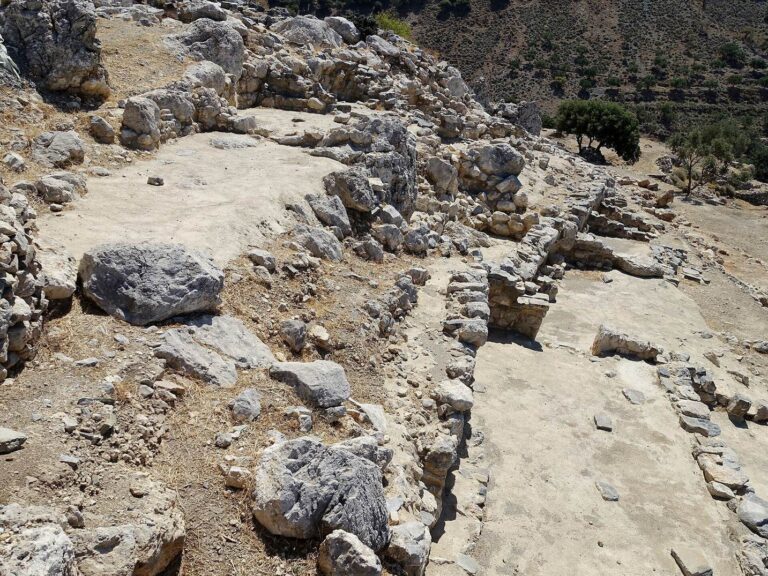
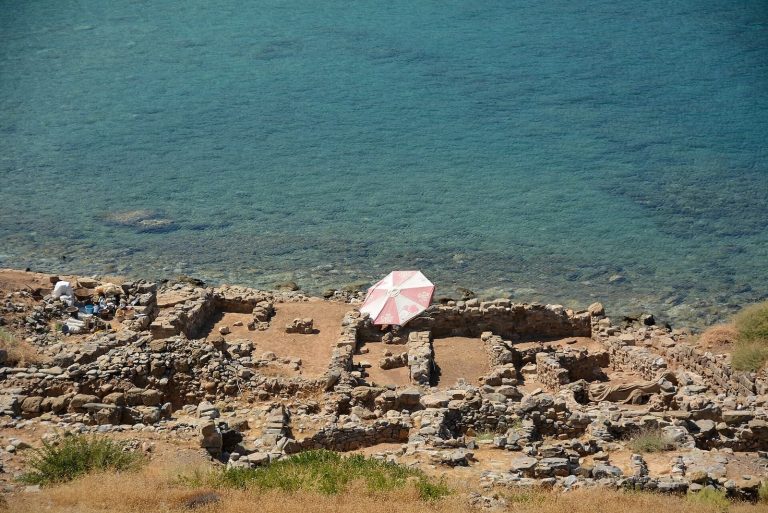
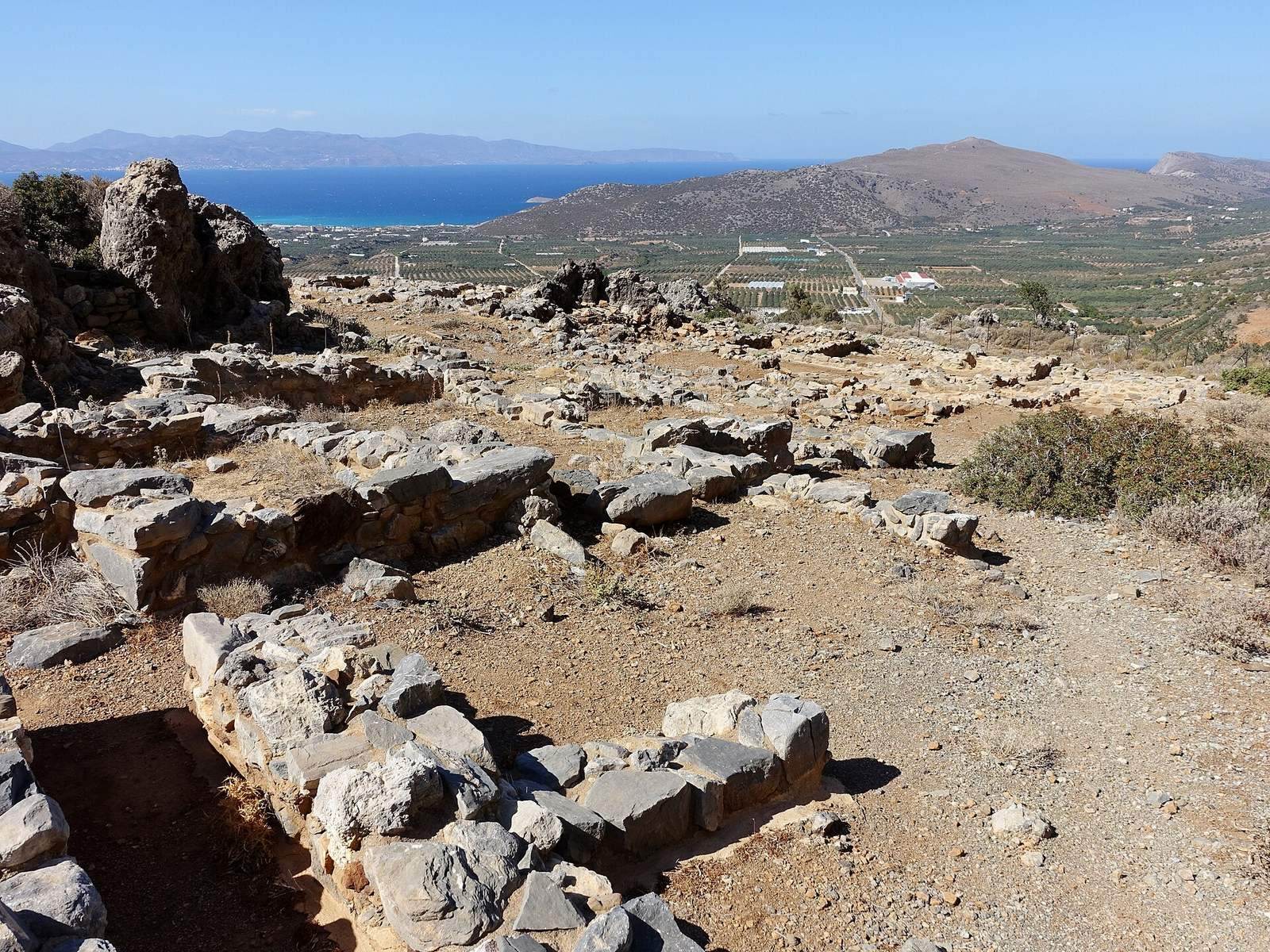
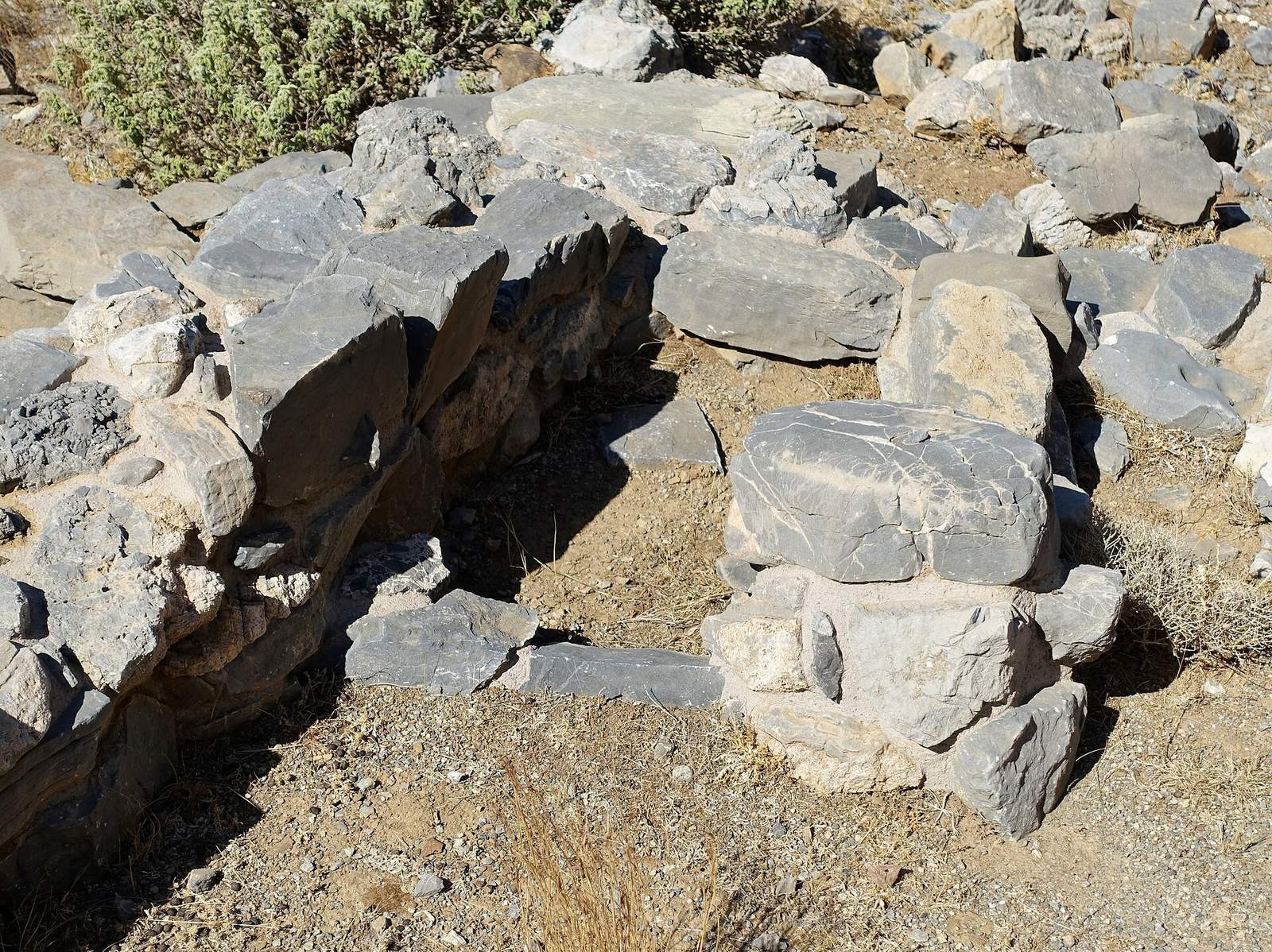
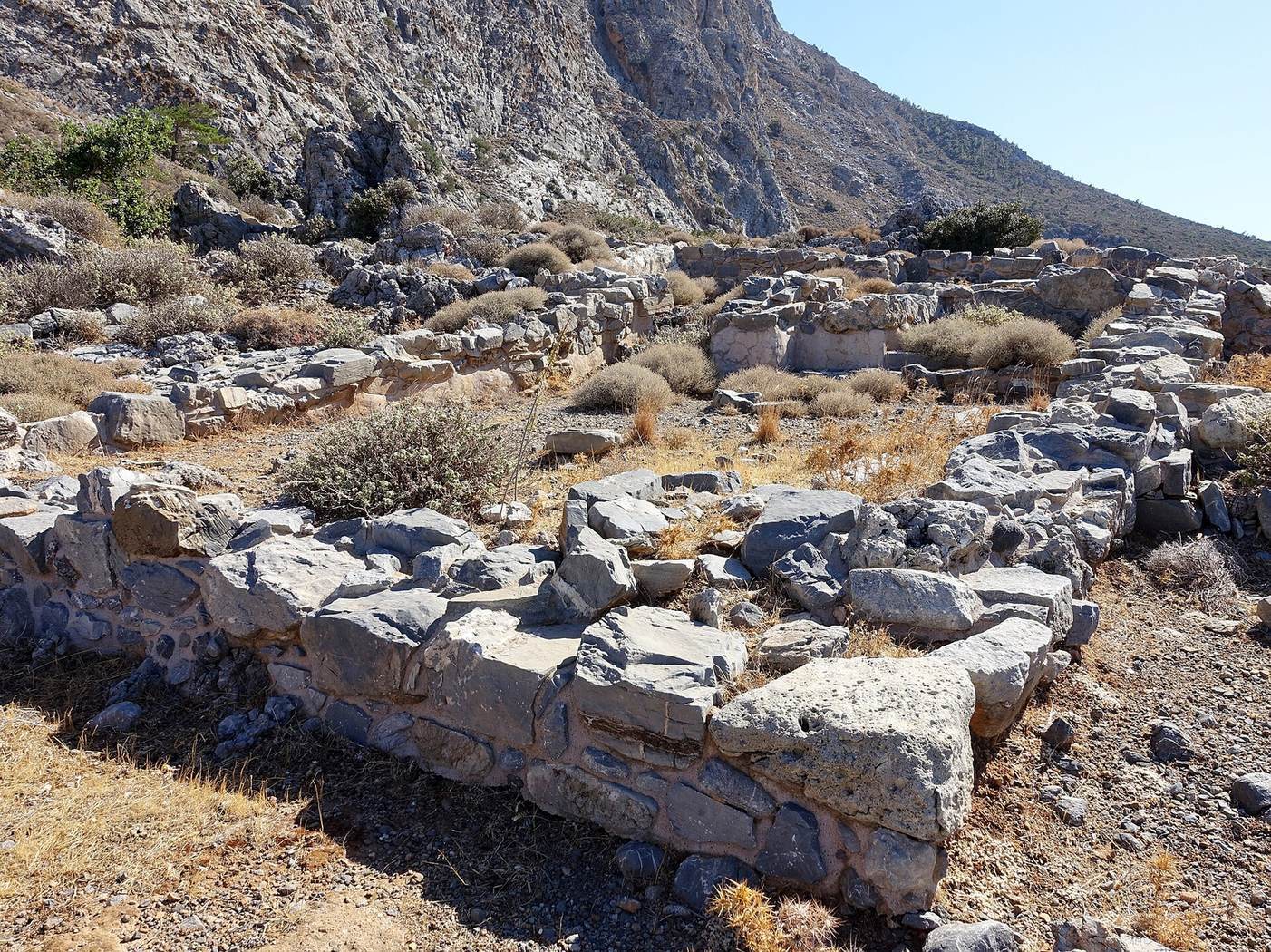
The settlement occupies a rocky hill at an elevation of 230 metres, near the outlet of Cha Gorge and overlooking the Gulf of Ierapetra. Its plan is divided into three sectors, also grouped as two principal areas at different elevations. An approximately square open space lies at the center.
Architecture and burial
Megaron-type houses
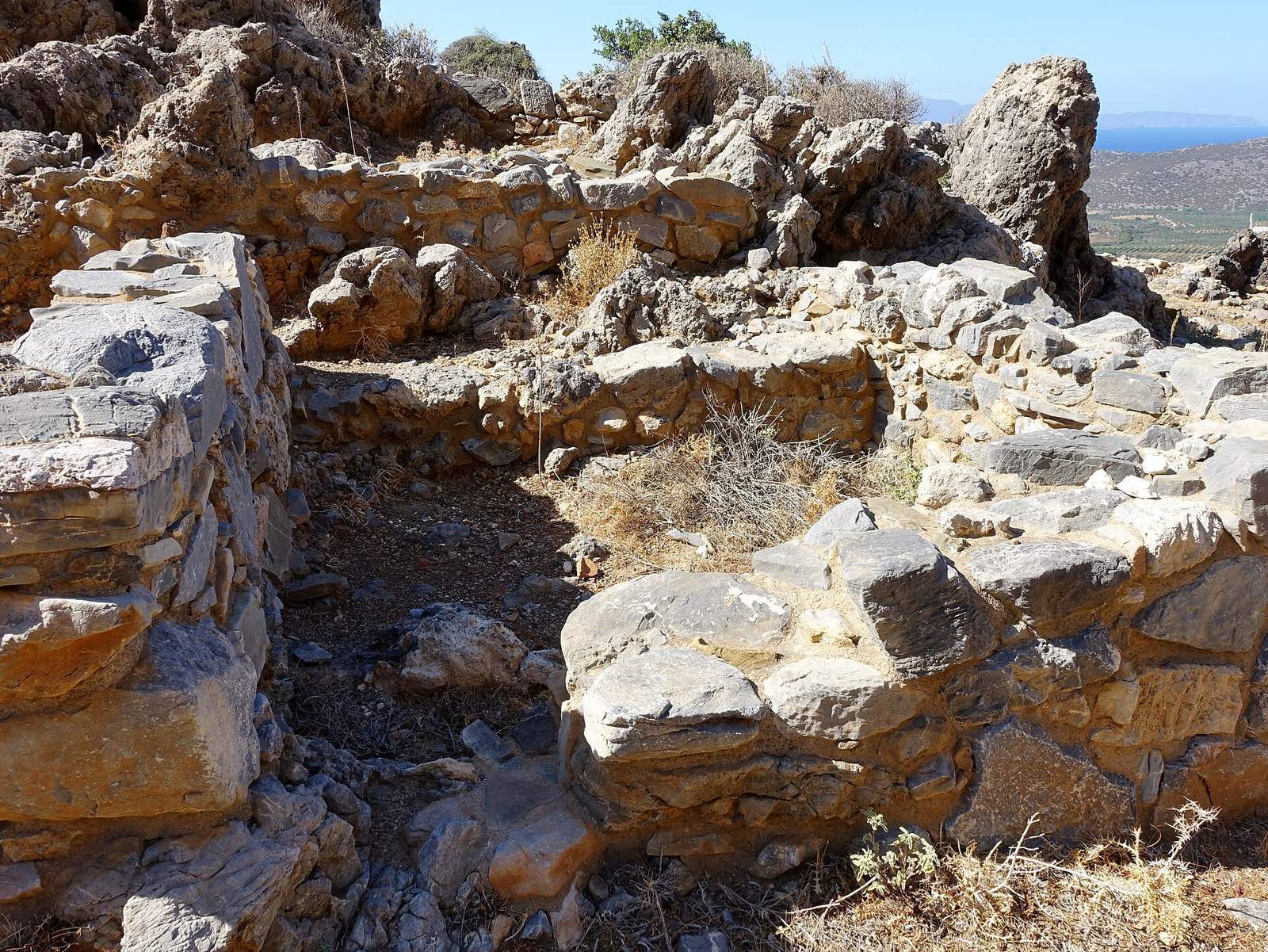
Twenty-seven buildings have been identified. At least three are described as megaron-type houses, a rectangular form centered on a main room. Five megara have been excavated, with evidence for a possible sixth. Three stood parallel to one another in the northern part of western Sector A. Houses in southeastern Sector B and northeastern Sector C were also arranged in rows.
Shrine of the Goddesses with Raised Arms
The shrine stood in the northern part of the settlement and measured 5.5 by 13 metres. It was the settlement’s only nearly freestanding building. A comparable shrine has been found at Vronda near Kavousi.
Economic building
The economic building, an oikos or household building, stood southeast of the southern megaron in Sector A, adjoining the central open space.
Tomb
A circular, beehive-shaped tomb dating to Late Minoan IIIC was found about 200 metres south of the settlement.
Finds
Finds include pottery influenced by Mycenaean forms, loom weights, and architectural elements. About 57 percent of the pottery consisted of vessels for preparing food, 26 percent of vessels for eating, 17 percent of storage vessels, and less than 1 percent of specialized vases.