Vlašim Castle: A Renaissance and Neoclassical Château in Czechia

Site at a Glance
- Rating
- 4.6
- Popularity
- Low
- Country
- Czechia
- Primary era
- Modern
- External website
- Open
- Eras represented
- Medieval, Early Modern, Modern
- Civilizations
- Habsburg, Holy Roman Empire, Kingdom of Bohemia
- Site type
- Domestic
- Remains
- Castle
On this page10 sections
History
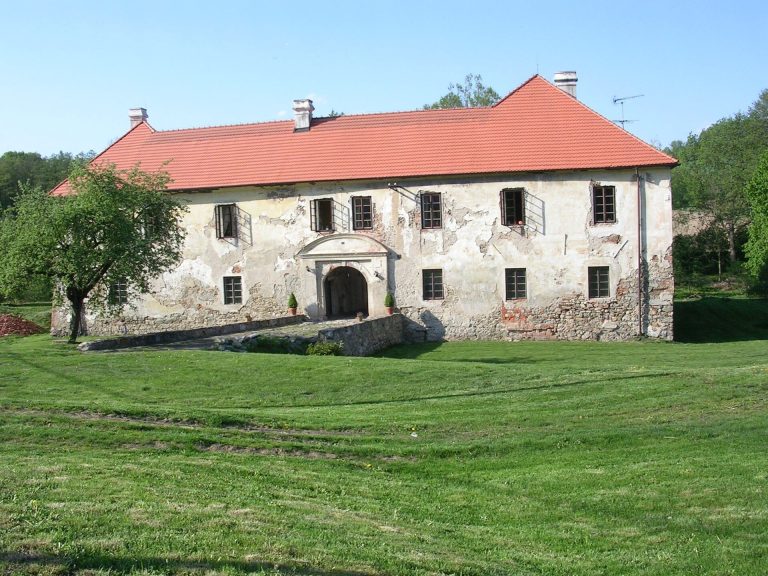
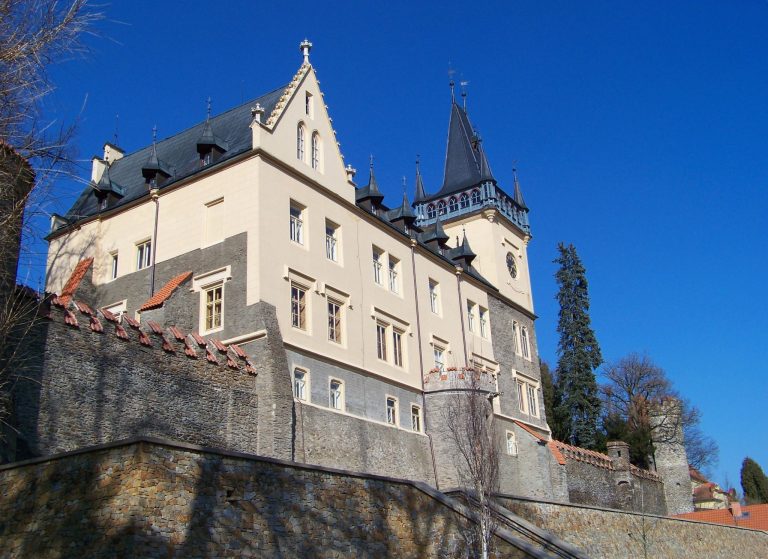
Vlašim Castle is a historic château in Vlašim, Czechia, whose origins lie in a Gothic castle probably built in 1303 by Hynek of Vlašim. The castle was first mentioned in 1318 and developed through successive rebuilding phases, eventually taking on Renaissance, Neogothic, and Neoclassical forms. Today, the complex is owned by the town of Vlašim and protected as a cultural monument of the Czech Republic.
Medieval Lords and Fortifications
The Lords of Vlašim increased their influence from the fourteenth century. The family was associated with Jan Očko of Vlašim, a Czech Catholic churchman who became a cardinal and the second Archbishop of Prague, and with Jan of Jenštejn, his successor in the Prague diocese. Their connections contributed to the castle’s adaptation for representative functions.
During the fifteenth century, the Trčkas of Lípa carried out major work at Vlašim. Mikuláš Trčka the Younger of Lípa strengthened the castle’s military defenses and added an external ring of protective earthworks. This defensive feature was later removed as the complex changed in character.
Renaissance and Auersperg Transformations
Around 1600, under the Ostrovcové of Kralovice, the Gothic castle was rebuilt as a Renaissance château. Later owners included the Jankovský family of Vlašim, the Ungnad family of Weissenwolff, the Trautson family, and the Auersperg family.
The Auerspergs held Vlašim Castle from the eighteenth century until 1945. In the nineteenth century, they remodeled the residence into its present architectural form, adding Neoclassical elements. Neoclassical architecture draws on the forms and vocabulary associated with ancient Greece and Rome. Maria Josefa of Auersperg founded the castle chapel in 1771.
Park, Fire, and Modern Use
Karl Josef of Auersperg and his wife, Maria Josefine von Trautson, established the surrounding park in 1775 in the valley of the Blanice River. It was created on the site of a former pheasantry and château garden. The grounds were first arranged geometrically and later enlarged with landscape structures and decorative features. An English landscape garden seeks to evoke a naturalized scene through irregular planting, water features, paths, and picturesque buildings rather than a strictly geometric plan.
In August 1992, a fire destroyed the entire south wing. Reconstruction and other restoration work continued until 2005, and the rebuilt wing now accommodates the Vlašim Secondary Technical School and Secondary Vocational School. The castle houses the Museum of the Blaník Region, with exhibitions on the history of the castle and park, local traditions of shooting and arms manufacture, and the everyday life of earlier generations. A separate museum presents the history of the local ammunition manufacturer Sellier & Bellot.
Remains
The complex consists of the château, associated buildings, and a surrounding park extending across approximately 70 hectares in the Blanice valley. The river forms two meanders through the park, while much of the grounds is enclosed by a wall with three large gates. The buildings and landscape features combine Renaissance, Neogothic, and Neoclassical elements.
Château and Interior Features
Castle Buildings and Chapel
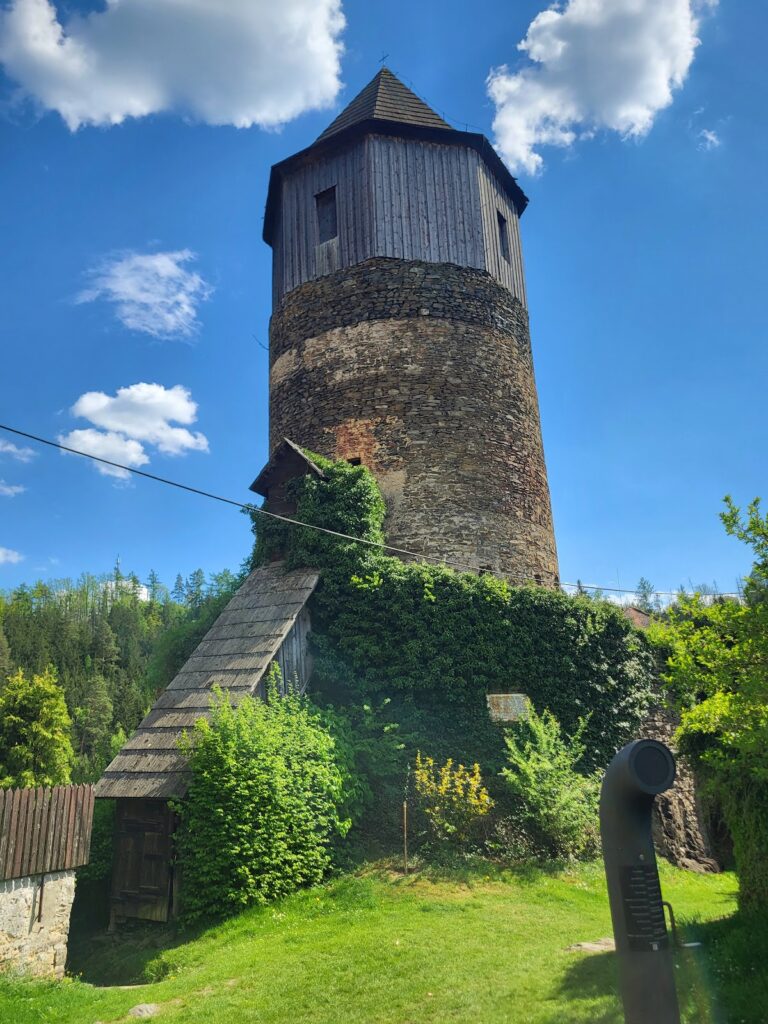
The château retains a tower used as a lookout and a representative hall intended for wedding ceremonies and chamber concerts. The castle chapel, founded in 1771, survives as part of the complex, together with a surviving fragment of its altar. Museum displays within the castle include historical weapons, traditional costumes, statues, aristocratic coats of arms, stuffed exotic animals, and material connected with the castle and park.
Landscape Park
Gates and Exhibition Spaces
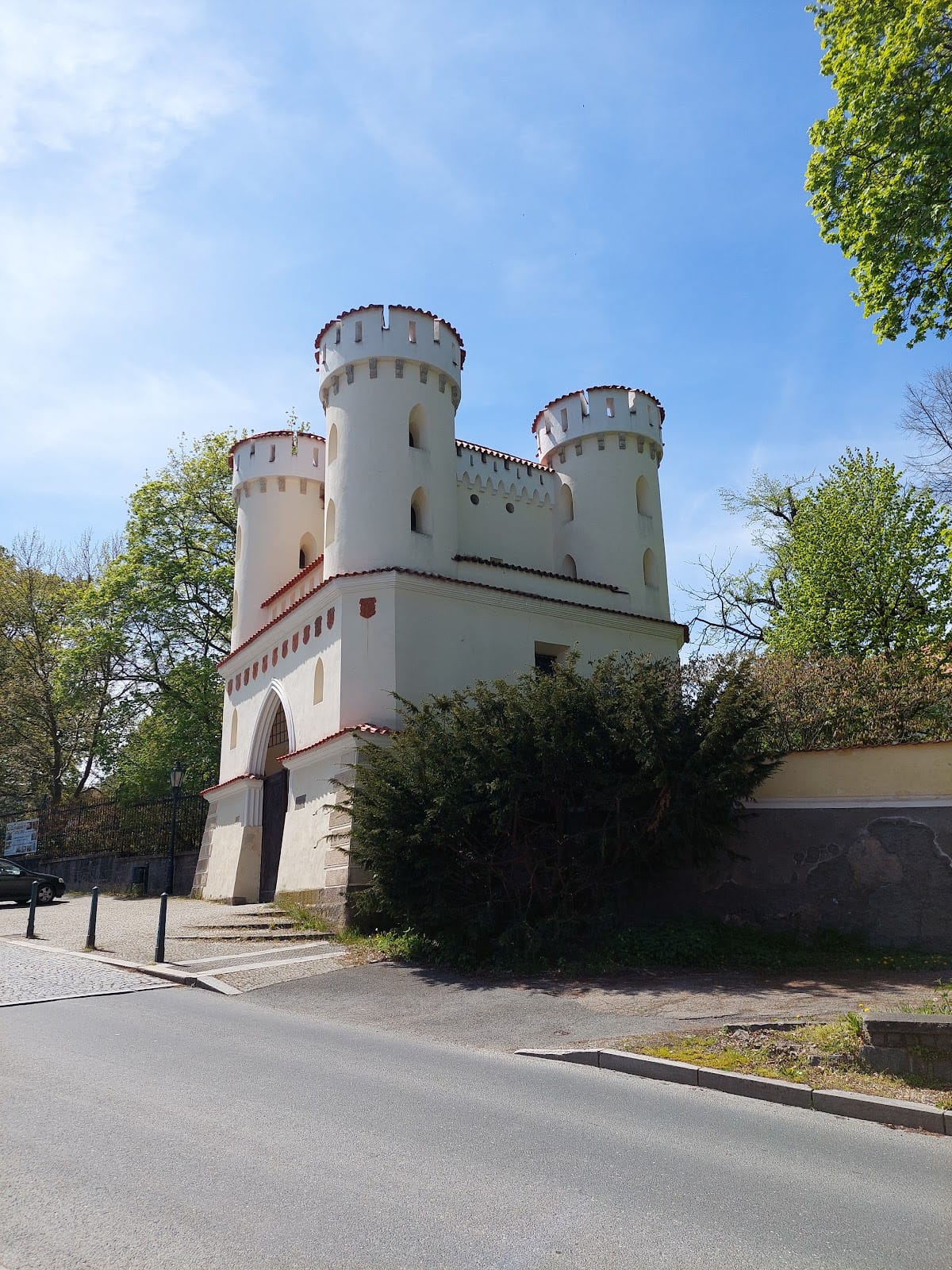
Three Neogothic gates mark the enclosed park: the Vlašim Gate, the Domašín Gate, and the Znosim Gate. The Vlašim Gate has become a symbol of the town and contains the Podblanická Gallery, which presents exhibitions by regional artists. Other park buildings serve as exhibition spaces, and one accommodates a restaurant.
Decorative and Archaeological Features
Surviving features in the park include the Chinese Pavilion, an artificial ruin, the remains of the Old Castle, the statue of Samson, and the Venetian Well. The Old Castle houses a collection of engravings depicting historical views of the park. Together, these structures and artworks reflect the landscape design that expanded after the park’s initial geometric arrangement.