Vranov Castle: A Medieval Rock Fortress and Romantic Memorial Complex in Czechia
Site at a Glance
- Rating
- 4.8
- Popularity
- Medium
- Country
- Czechia
- Primary era
- Medieval
- External website
- Open
- Eras represented
- Medieval, Modern
- Civilizations
- Habsburg, Holy Roman Empire, Kingdom of Bohemia
- Site type
- Domestic
- Remains
- Elite Residence
On this page10 sections
History
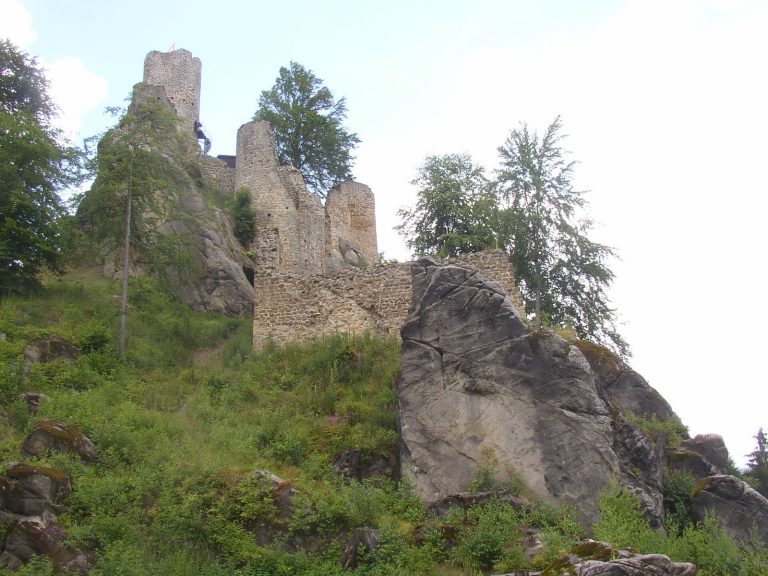
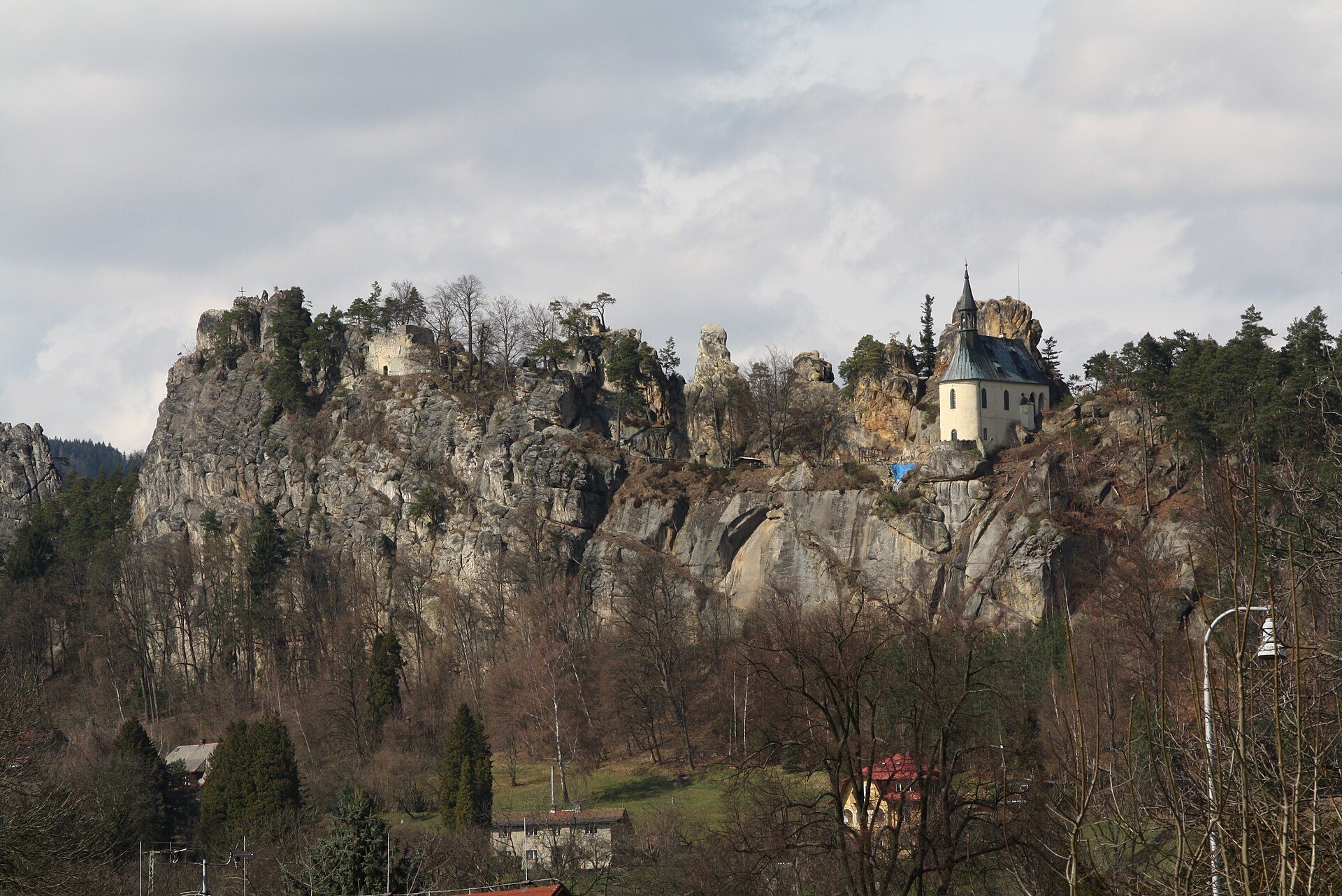
Vranov Castle is a late-medieval rock fortress and Romantic memorial complex in Czechia, standing above the Jizera Valley near Malá Skála in the Bohemian Paradise. Tradition places its foundation in 1414, while archaeological evidence confirms its existence in the fifteenth century and construction probably began in the early 1420s. The castle became a regional stronghold of Hussitism, the Bohemian reform movement associated with Jan Hus, before later being transformed into the Pantheon, a memorial complex dedicated to historical, political, military, and cultural figures.
Foundation and Hussite period
Tradition attributes the castle’s establishment to Henning of Waldstein, who is said to have created it as a military base during the struggle against the Hussites. The first certain references to Vranov date from 1422 and 1425. In this early phase, the fortress was held by Heníček of Skála and his father, Heník Štěpanický of Waldstein. The Waldstein family retained the castle throughout the fifteenth century.
Under Heníček’s son, who held Vranov from 1453 to 1487, the castle reached its greatest prosperity and became a regional centre of Hussitism. Its military role ended in 1477, when the Six Cities and Silesian troops destroyed it. By 1500 the castle had been left to decay. Jan of Vartemberk purchased the estate in 1538, but he showed little interest in the ruined fortress, which continued to deteriorate during the sixteenth century.
The Pantheon transformation
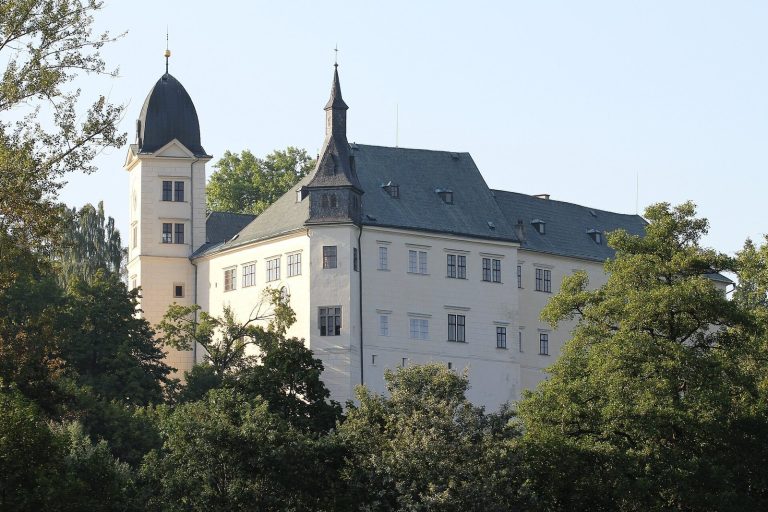
In 1802, the textile entrepreneur Franz Zacharias Römisch bought the Malá Skála estate from the Desfours family. Between 1803 and 1826, he reshaped the ruins as the Pantheon, a Romantic memorial landscape. Römisch commissioned the sculptor Franz Pettrich to create a complex commemorating Czech, German, Habsburg, and wider European cultural and political history, with particular attention to military heroes of the Wars of Liberation. These were the campaigns of 1813 and 1814, when an alliance of European powers fought Napoleon’s dominance. The concept has been interpreted as anticipating the later Walhalla monument.
The central memorial space honoured figures associated with the Wars of Liberation. Its niches contained busts of the allied rulers Alexander I of Russia, Francis I of Austria, and Frederick William III of Prussia. They also commemorated the commanders Schwarzenberg and Colloredo-Mansfeld for Austria, Platov and Ostermann for Russia, and Blücher and Kleist for Prussia. The Romantic reconstruction did not survive intact, but Vranov remains a combination of medieval rock fortress and nineteenth-century memorial landscape. It is a registered cultural monument and is owned by the municipality of Malá Skála.
Remains
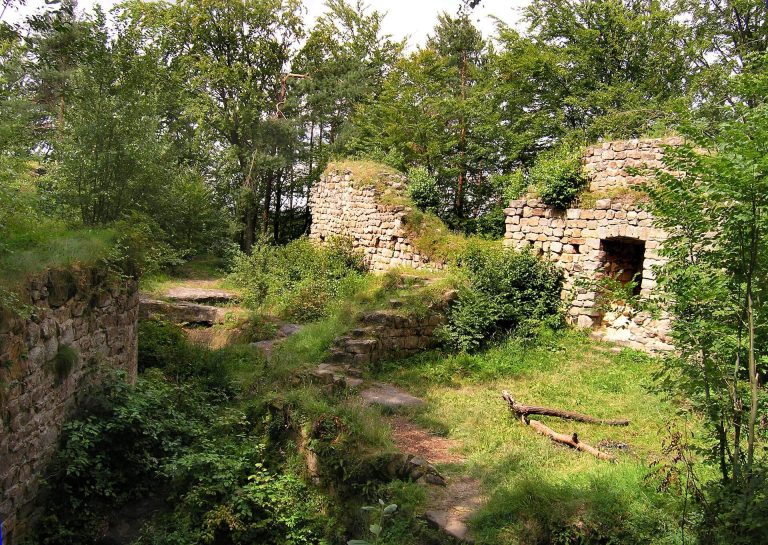
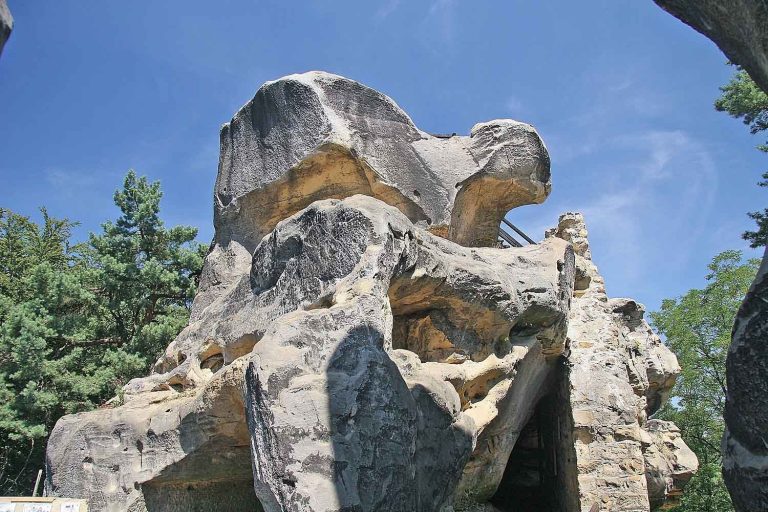
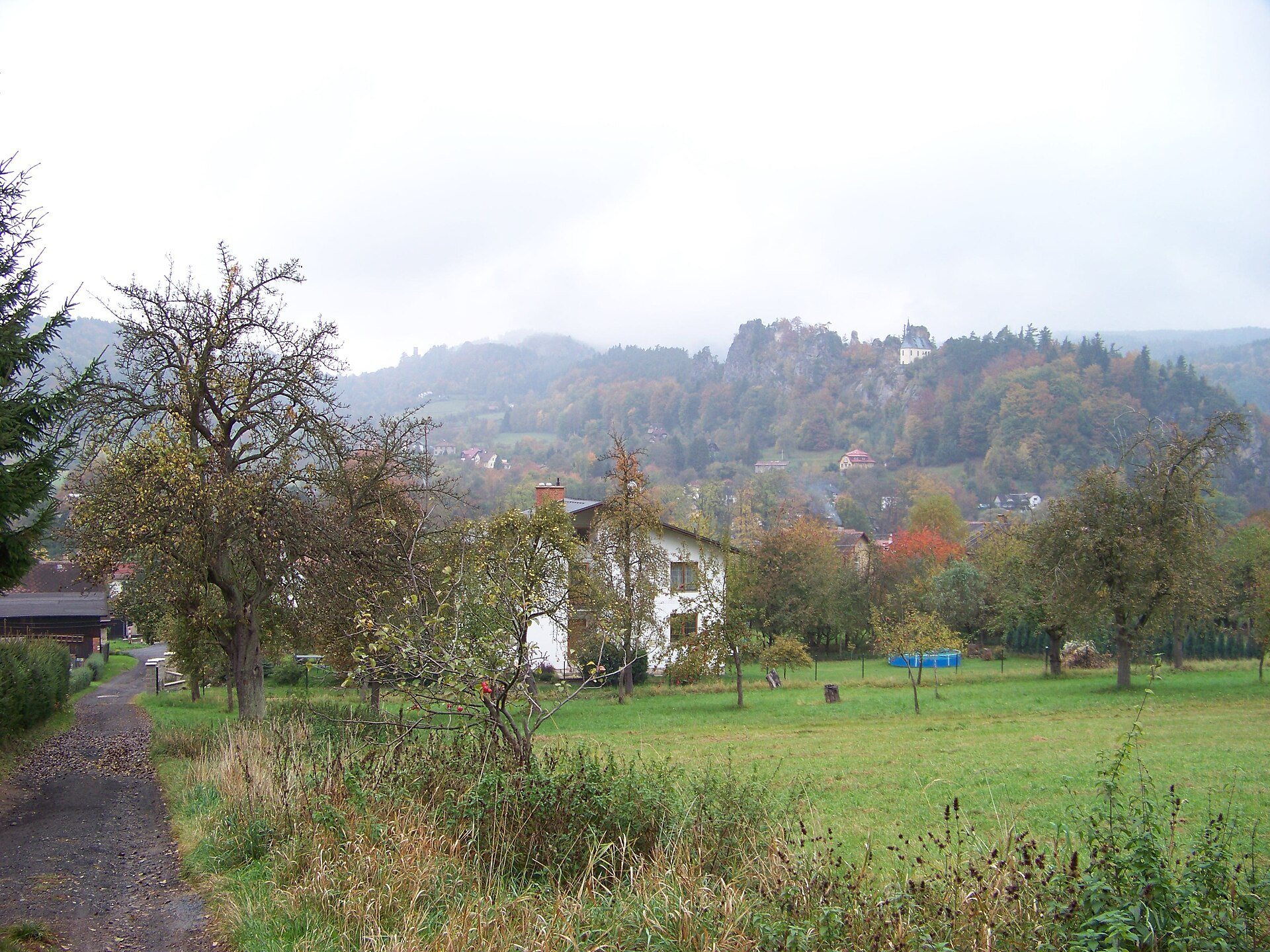
Vranov occupies a steep sandstone promontory above the right bank of the Jizera. Together with its outer bailey, the castle extended for approximately 400 metres and is described as the largest and longest rock castle in Bohemia and Moravia. Its surviving fabric forms an irregular labyrinth shaped by the rocky terrain, with medieval spaces partly overlain or obscured by the later Pantheon. The medieval remains are fragmentary, while the Pantheon has largely fallen into ruin, although its overall design remains recognizable.
Medieval rock fortress
Numerous rooms were cut directly into the rock, and the surviving complex includes passages, stairways, small chambers, cellars, beam sockets, gates, terraces, and the castle well. These features preserve the arrangement of a fortress adapted to a narrow and uneven sandstone site. At the highest point stands a summit cross, while the elevated position provides views toward the Suché skály rock formation.
Memorial spaces of the Pantheon
Hall of Heroes
The former castle palace was incorporated into the Pantheon as the Hall of Heroes. Busts and commemorative plaques occupied the altered medieval space, linking the surviving castle fabric with Römisch’s nineteenth-century memorial programme.
Hall of the Three Emperors
A substantial part of the Hall of the Three Emperors survives. Its memorial purpose recalled the allied victory over Napoleon at the Battle of Leipzig in 1813, the largest engagement of the Wars of Liberation. The Pantheon’s central area was enclosed by rock and dedicated to major figures of those campaigns. Its original central inscription referred to the alliance of nations and the struggle for the liberation of Germany and Europe in 1813 and 1814.
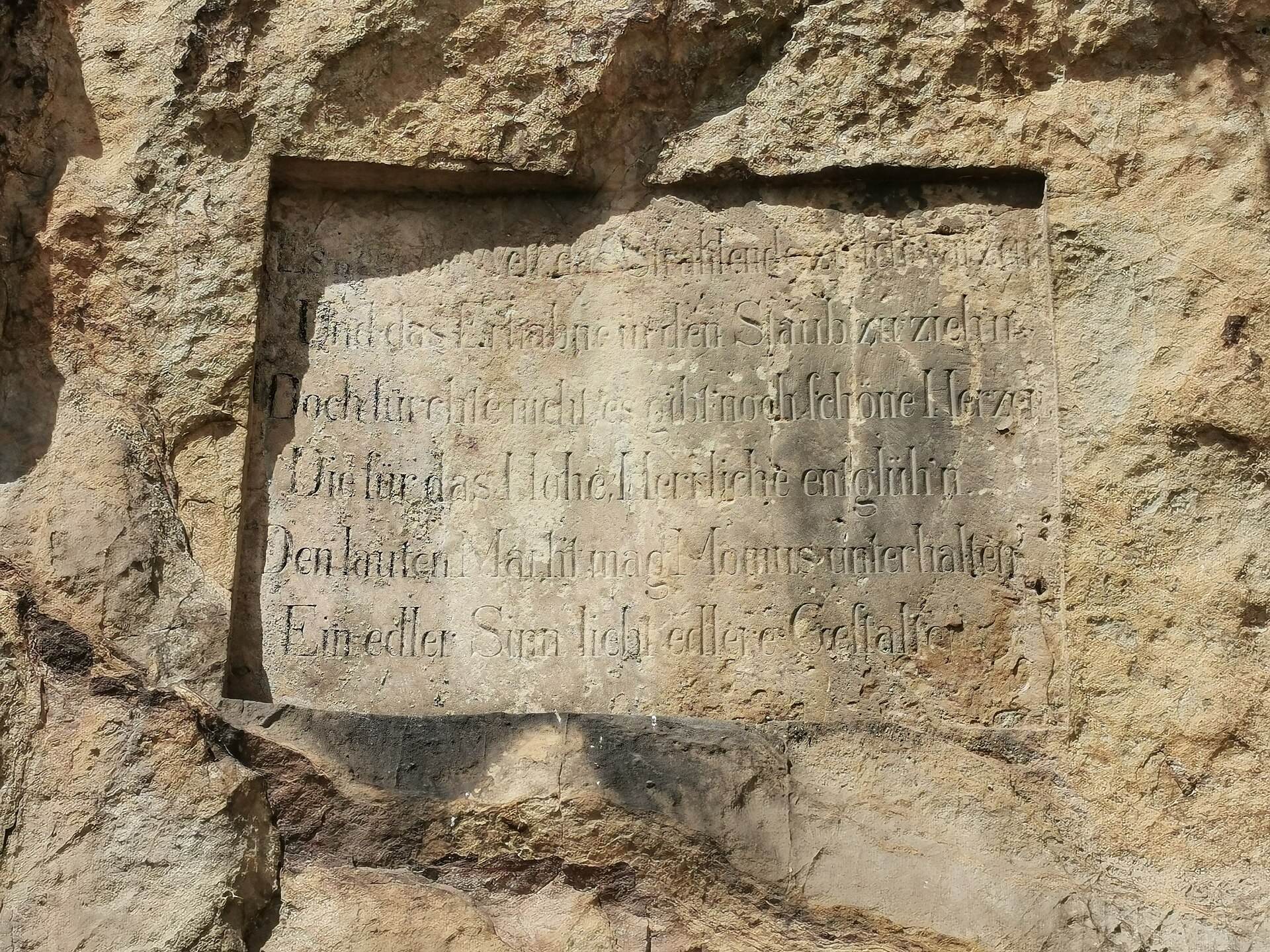
Rock inscriptions
Numerous aphorisms, maxims, and poems in German were carved into the rock, and many remain legible. One surviving inscription preserves the concluding stanza of Friedrich Schiller’s poem The Maid of Orleans. Another records a maxim concerning contentment.
Neo-Gothic lodge
On the castle courtyard, Römisch built a chapel-like hunting lodge or summer residence in the Neo-Gothic style on the ruins of the former castle chapel. Neo-Gothic was a nineteenth-century revival of medieval Gothic forms, including pointed arches and castle-like or ecclesiastical references. Dating from 1826, the building is the dominant surviving feature of the Pantheon complex.