Castelo Rosso: The Medieval Fortress of Karystos, Greece
Site at a Glance
- Rating
- 4.5
- Popularity
- Low
- Country
- Greece
- Primary era
- Medieval
- Eras represented
- Medieval
- Civilizations
- Crusader
- Site type
- Military
- Remains
- Castle
On this page7 sections
History
Castelo Rosso is a medieval castle in Greece near Karystos, on southern Euboea. A Byzantine castle occupied the site in the eleventh century, while the surviving fortress was probably built after 1205 during the thirteenth century under the Lombard Dalle Carceri ruling house. It became the residence of the local lord and the administrative center of southern Euboea.
Byzantine and Lombard control
Licario, a Byzantine military commander active in Euboea, captured the castle for the Byzantines in 1276. Lombard control returned in 1295 under Bonifazio da Verona, the lord who led the recovery. After Bonifazio died in 1318, the fortress and the Castle of Armenon passed to the Catalans, members of the Catalan Company who established control over parts of Greece in the early fourteenth century.
Venetian and Ottoman periods
The Venetians, a maritime republic with overseas possessions and strongholds in the eastern Mediterranean, bought the castle in 1366 for 6,000 ducats as they sought control of Karystos. After its decline, they leased it to the Giustiniani in 1386 and to the barony of Nicolo Zorzi in 1406.
Following the Ottoman conquest of Chalkis in 1470, Castelo Rosso came under Ottoman control and became known as Kizil Hisar. Greek inhabitants continued to live within the castle until the revolution of 1684. During the Greek War of Independence in 1821, the fortress withstood sieges led by the military leaders Odysseas Androutsos, Nikolaos Kriezotis, and Charles Fabvier, and remained unconquered.
Restoration and name
Restoration work began in 1967 to address deterioration, with particular attention to the entrance gate, the outer defensive wall, and sections of the walls. Castelo Rosso is now an archaeological site in Greece. Its name derives from the red local stone used in its construction.
Remains
Hilltop fortifications
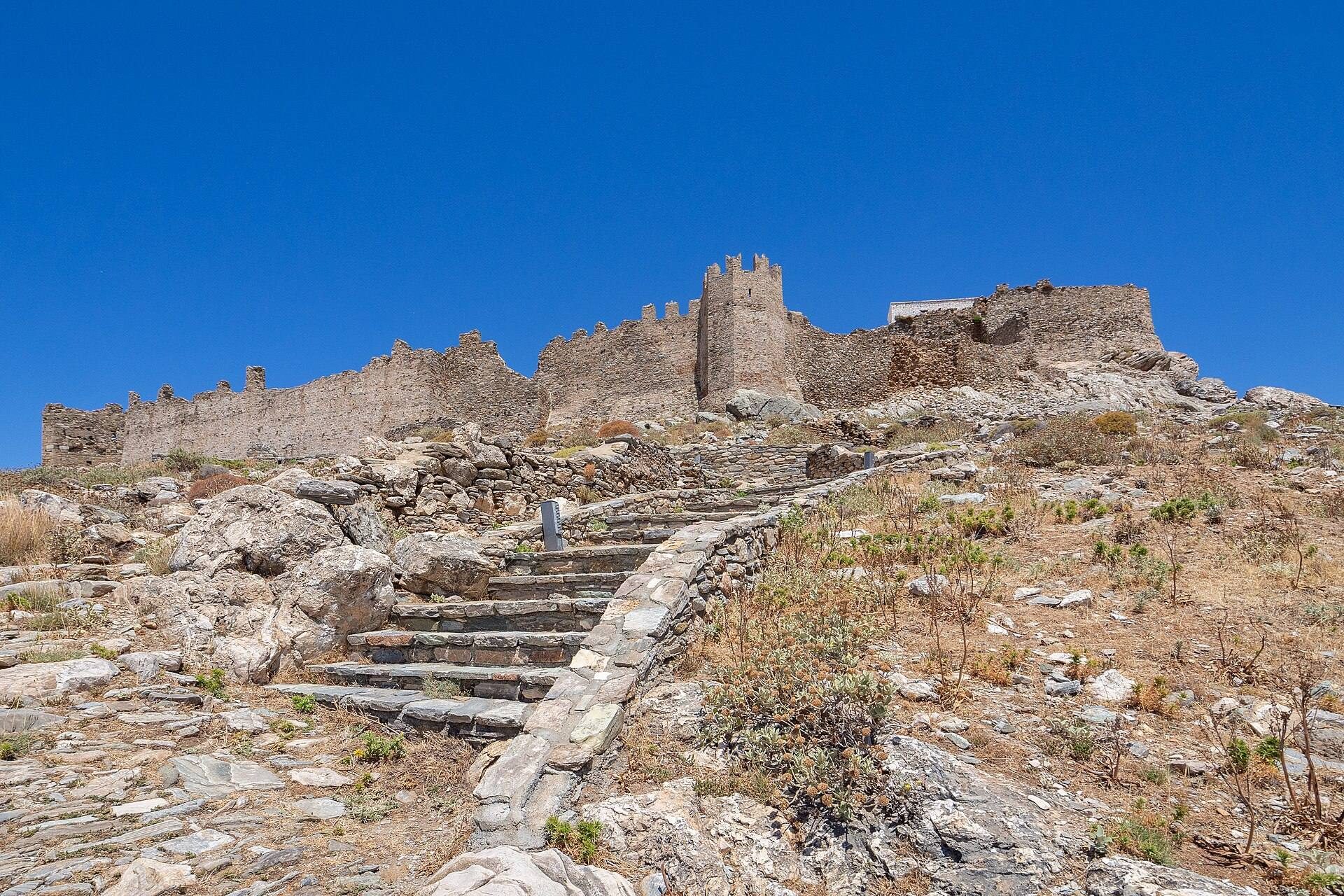
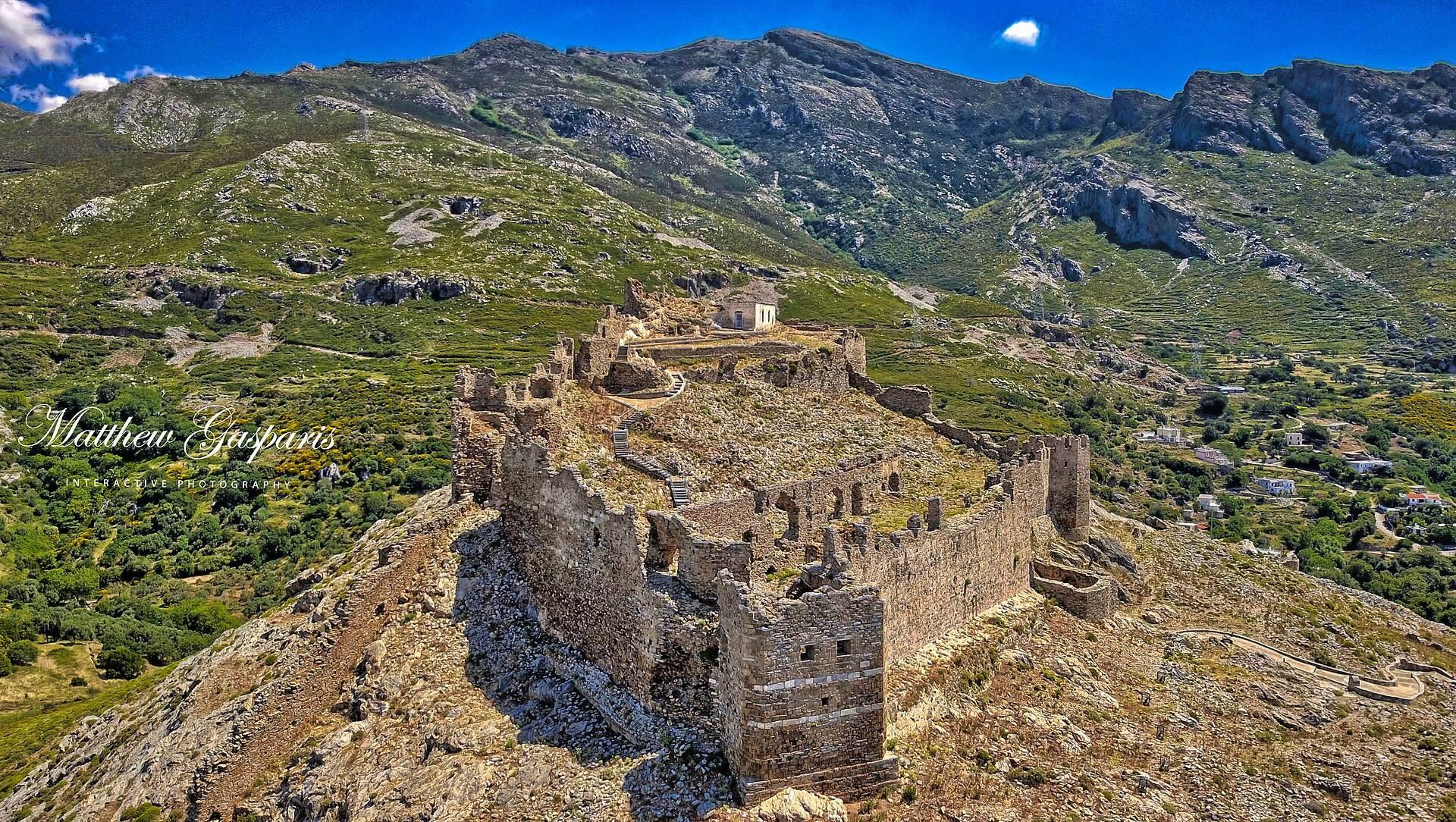
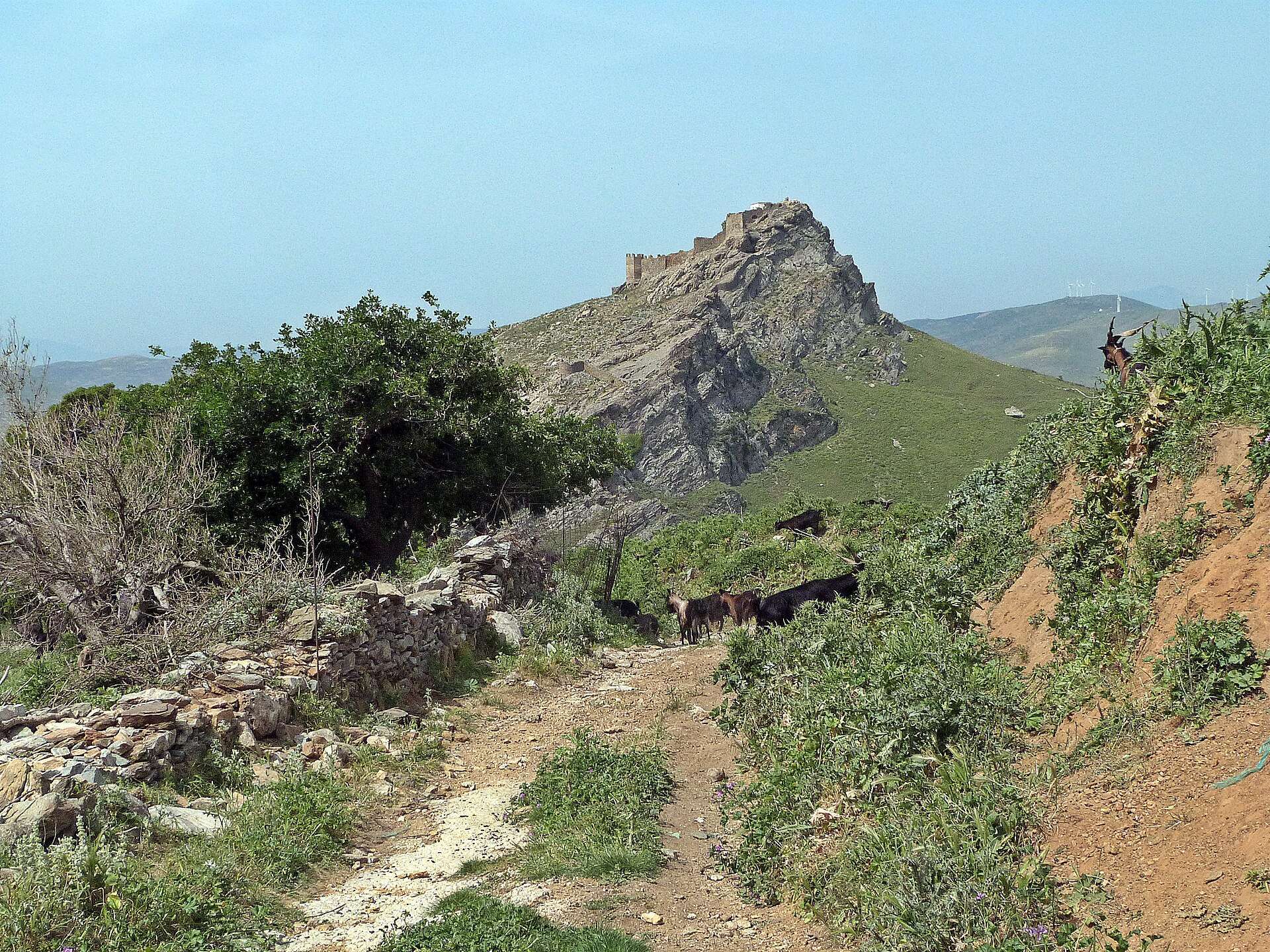
Castelo Rosso occupies the summit of the conical hill of Montofoli, at the foot of Mount Ochi between the villages of Myloi and Grampia, about 4 kilometers from Karystos. From this position, it overlooks the Karystos plain. Two enclosures follow the natural contours of the hill and surround the medieval settlement.
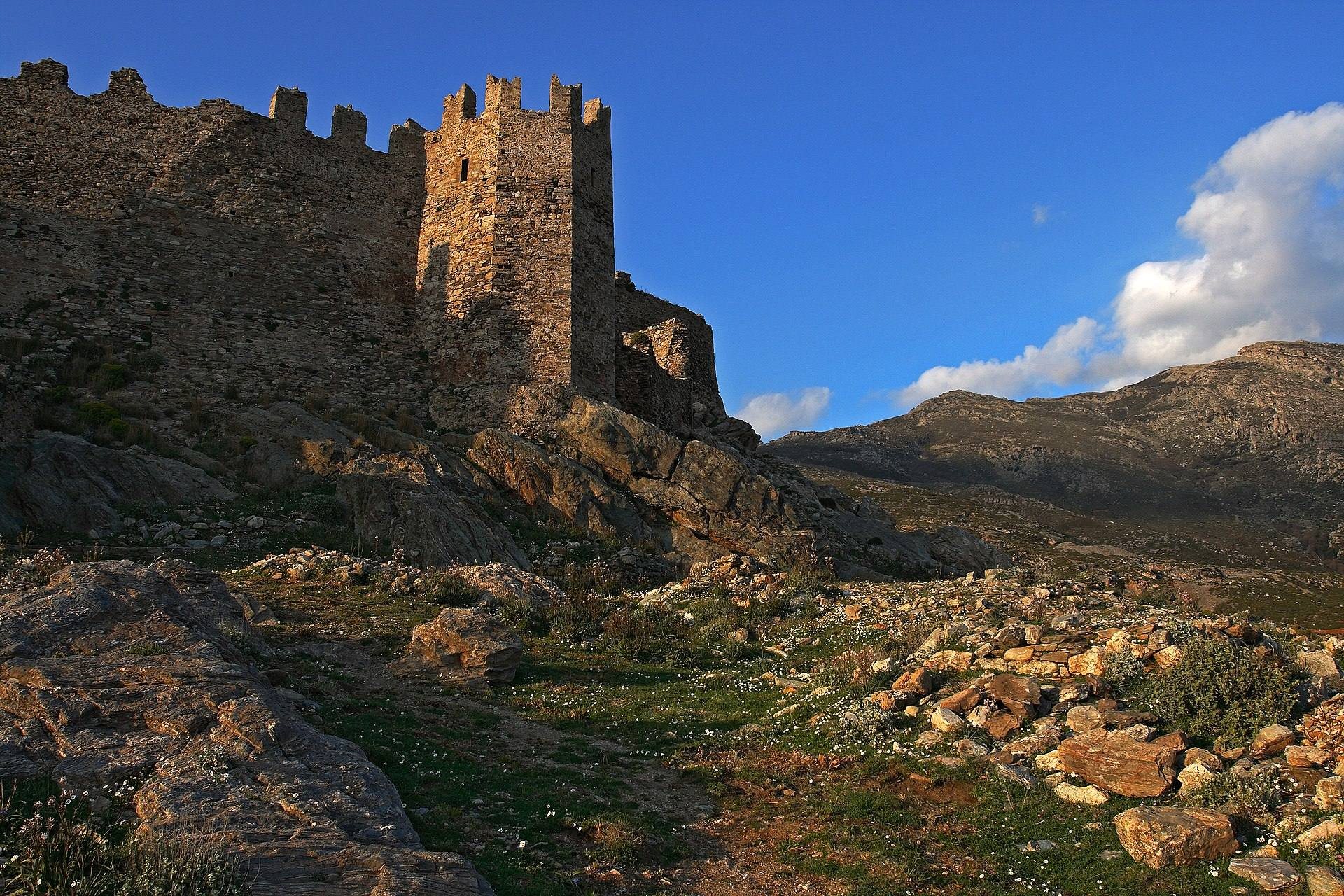
The fortification walls are made from local schist laid with strong mortar of gravel and lime. They survive to the level of the battlements. Four towers formed part of the defensive system, including a pentagonal tower on the southeastern side. The entrance gate is on the southwestern side, while a fortified structure at the summit served as the citadel and is now destroyed.
Settlement buildings and waterworks
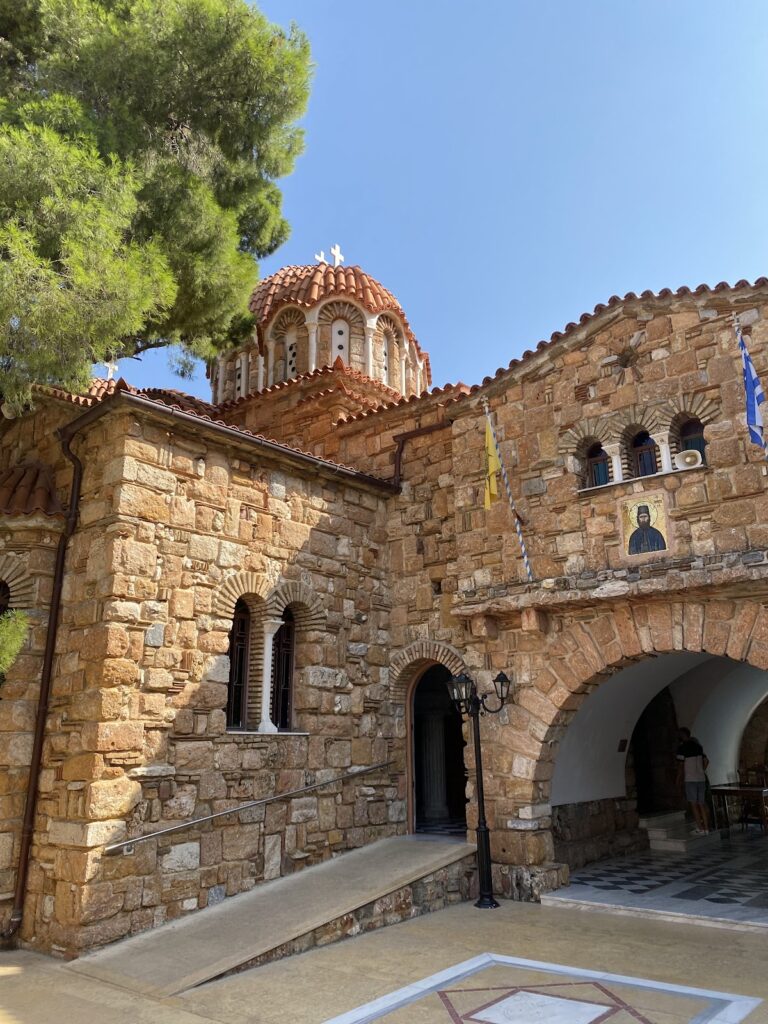
Within the enclosures stands a surviving two-storey rectangular building, alongside ruins of houses and the remains of cisterns. A later church dedicated to the Prophet Elijah, the biblical prophet honored as a saint in Christian tradition, stands beside the rectangular building.
An aqueduct, a channel built to carry water, lies north of the castle and conveys water from Mount Ochi. Together with the cistern remains, it forms part of the water infrastructure associated with the hilltop settlement.