Sanctuary of the Egyptian Gods at Nea Makri: A Roman Religious Complex
Site at a Glance
- Popularity
- Medium
- Country
- Greece
- Primary era
- Classical
- Eras represented
- Classical
- Civilizations
- Roman
- Site type
- Religious
- Remains
- Sanctuary
On this page7 sections
History
Foundation and worship
The Sanctuary of the Egyptian Gods at Nea Makri, on the eastern coast of Attica, Greece, was built around AD 160 by Herodes Atticus. A Greek senator, rhetorician, and benefactor of the Roman Empire, Herodes chose Marathon because it was his home region and where he lived. The sanctuary may have stood within his estate. After his wife’s death, he returned to the region and was reportedly active there as a philosopher.
The cult of Egyptian gods had reached Greece from Egypt by the third century BC. The sanctuary honored Serapis, Isis, Osiris, and Horus, and hosted major festivals for Serapis and Isis. Serapis was a Greco-Egyptian deity understood here as a Hellenized form of Osiris; Horus was worshipped as their son.
Excavation
Louis-François-Sébastien Fauvel, a French consul in Athens and early antiquarian, first excavated the site in 1789 while searching for the Athenian burial mound. A plan he produced in 1792 shows ancient ruins on an islet in the marsh. Systematic excavations followed from 2001 to 2008 under archaeologist Ifigéneia Dekoulákou.
Remains
Courtyards and terrace
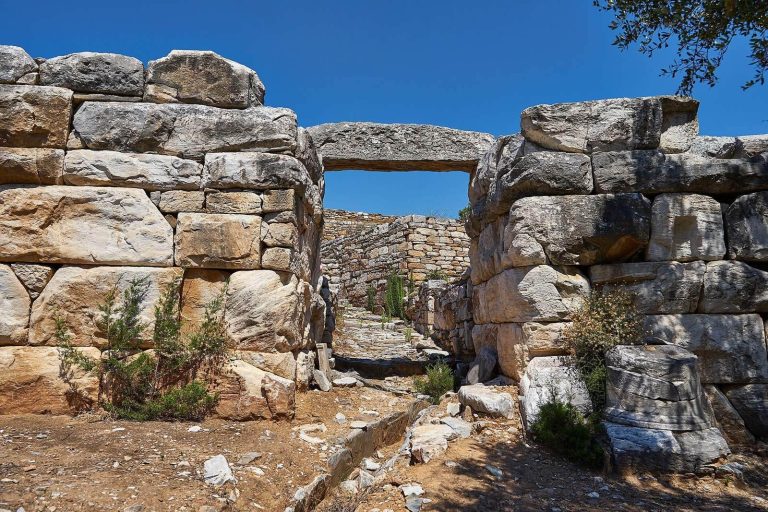
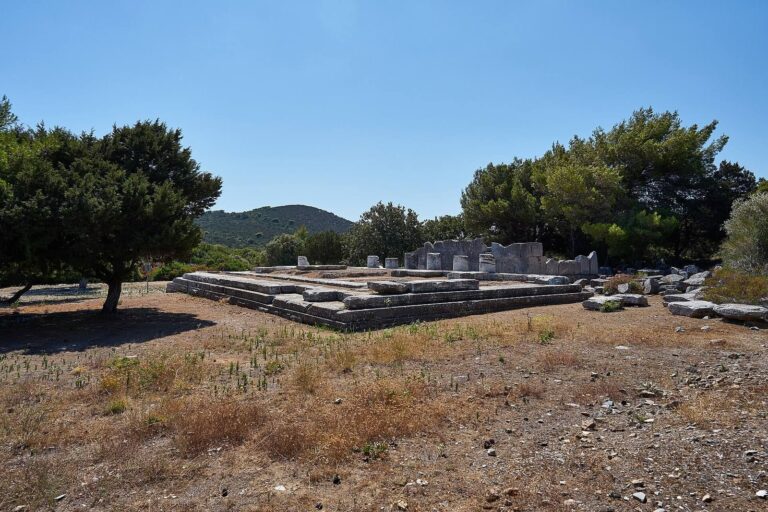
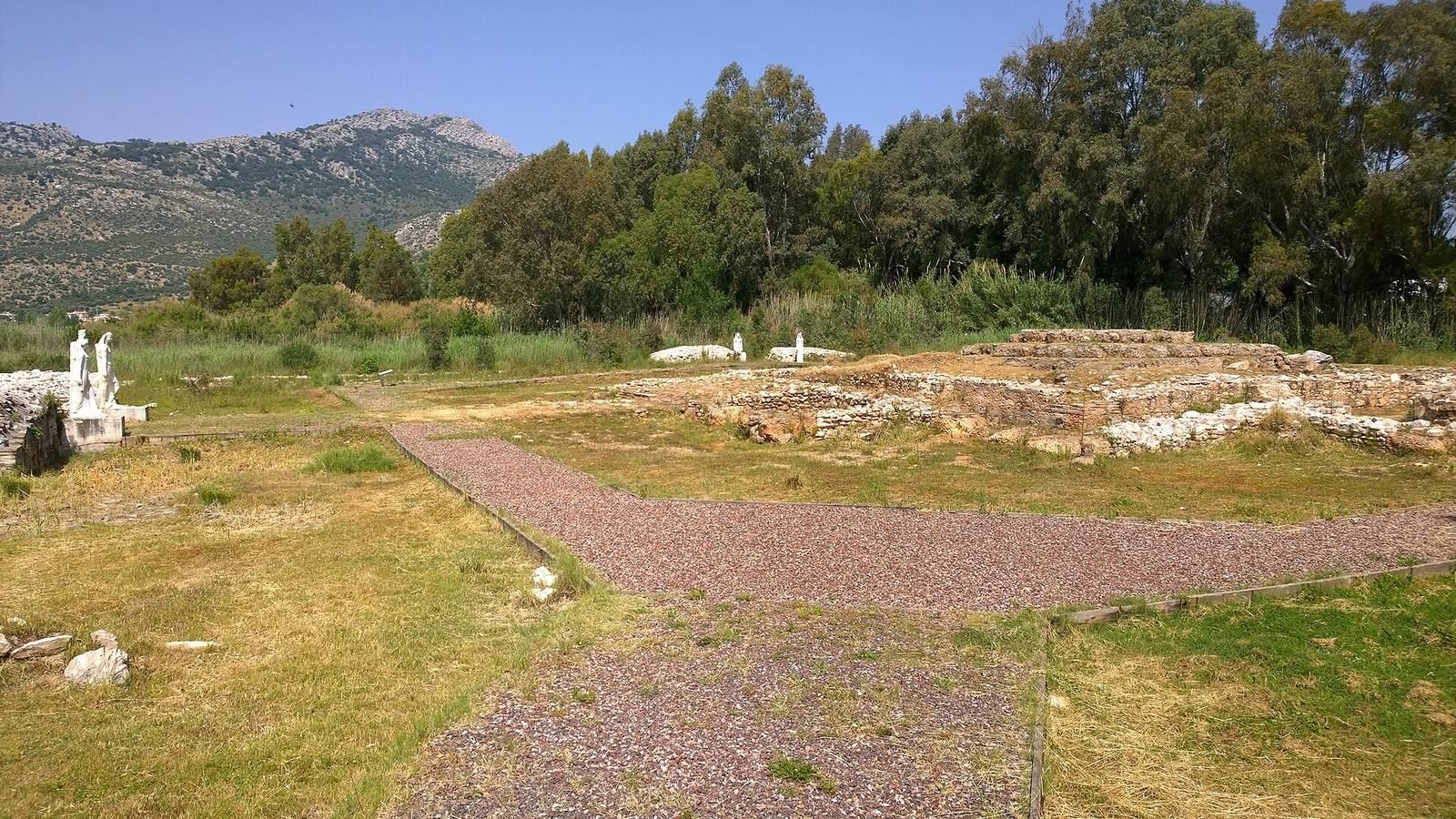
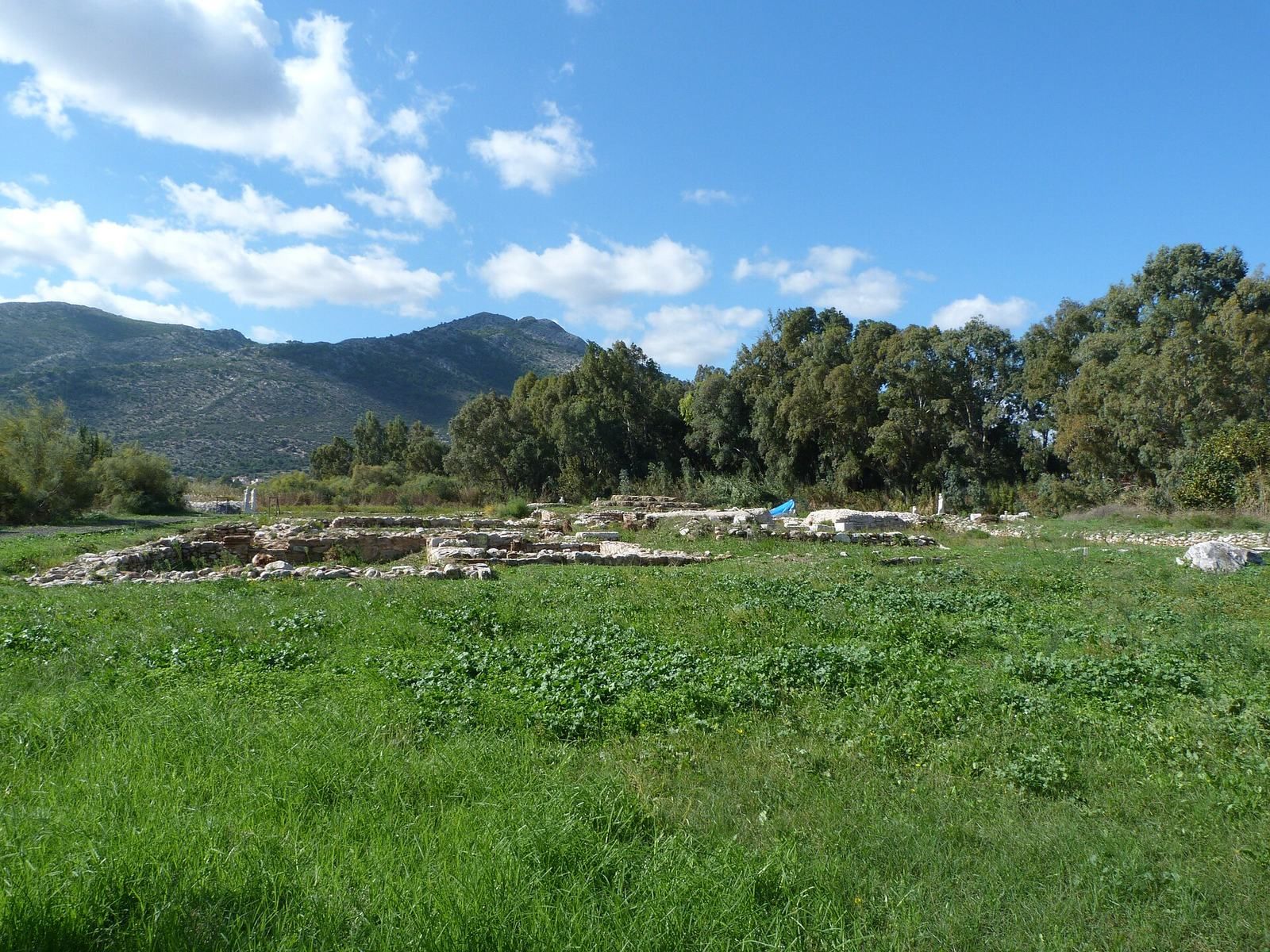
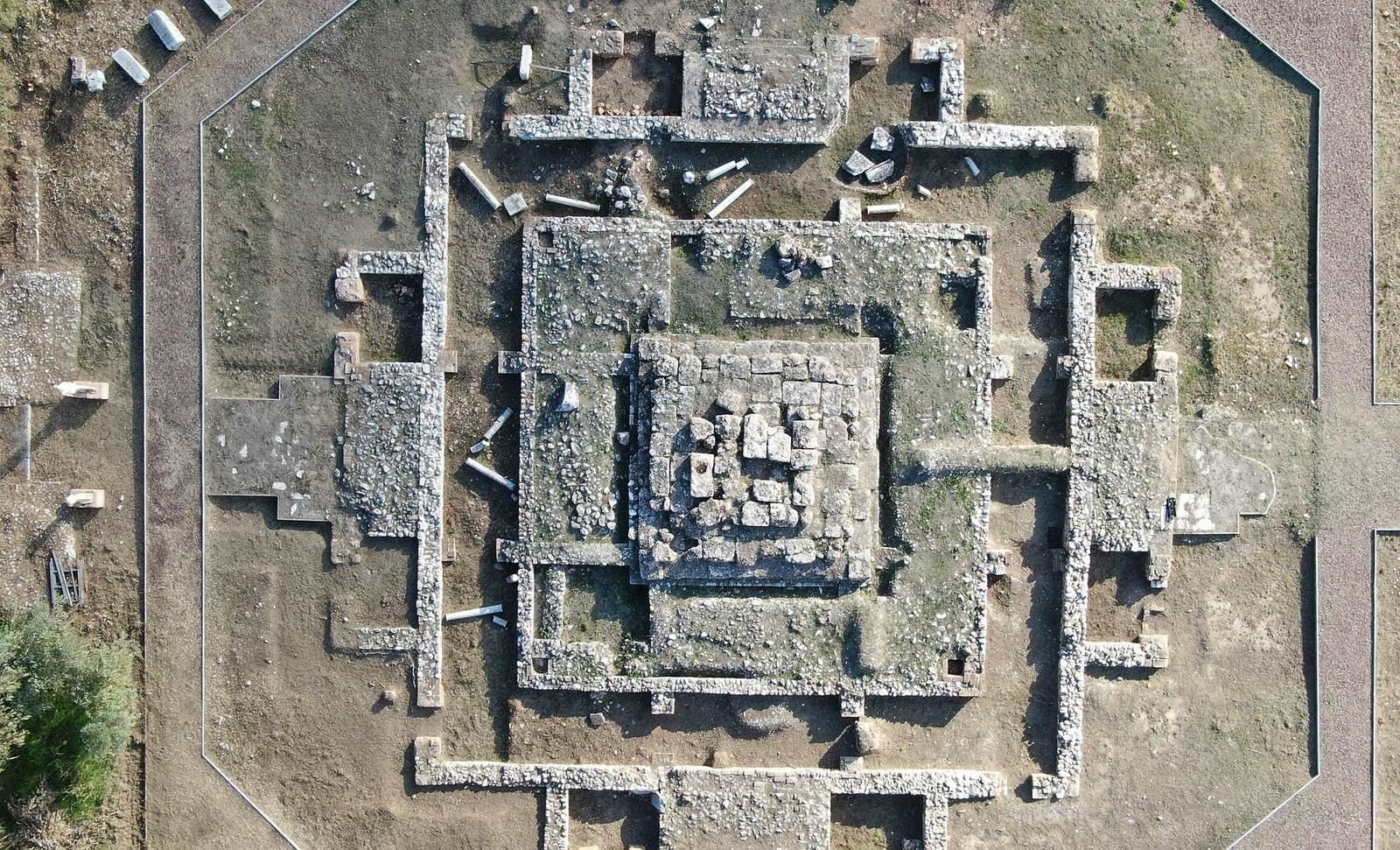
The sanctuary stood on an artificial islet in a marsh called Mikró Élos, meaning “Little Marsh”; the islet was formerly known as “Island.” At Brexiza, between Agios Panteleimonas and Nea Makri, the site lies about 1.5 km south of the Athenian burial mound. The complex covered about 3,900 square metres and comprised two walled courtyards. Its nearly square main courtyard had an entrance on each side. The design imitated the Serapeum, a sanctuary dedicated to Serapis, at Hadrian’s Villa, the Roman imperial complex at Tivoli, and the original Serapeum at Canopus, an ancient Egyptian city. The entrances opened onto a terrace with a covered gallery and a pyramid-shaped structure.
Sculptures and ritual objects
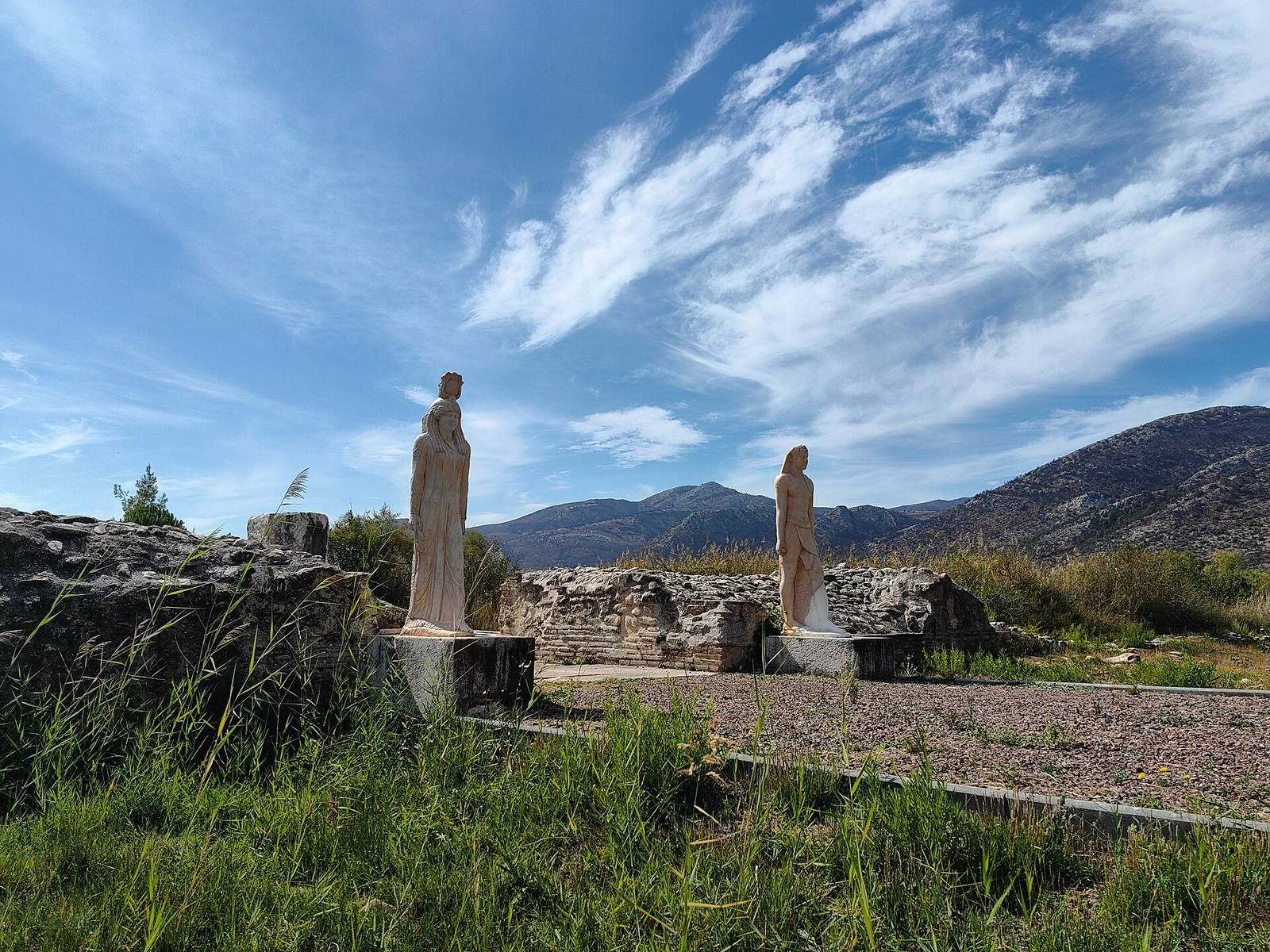
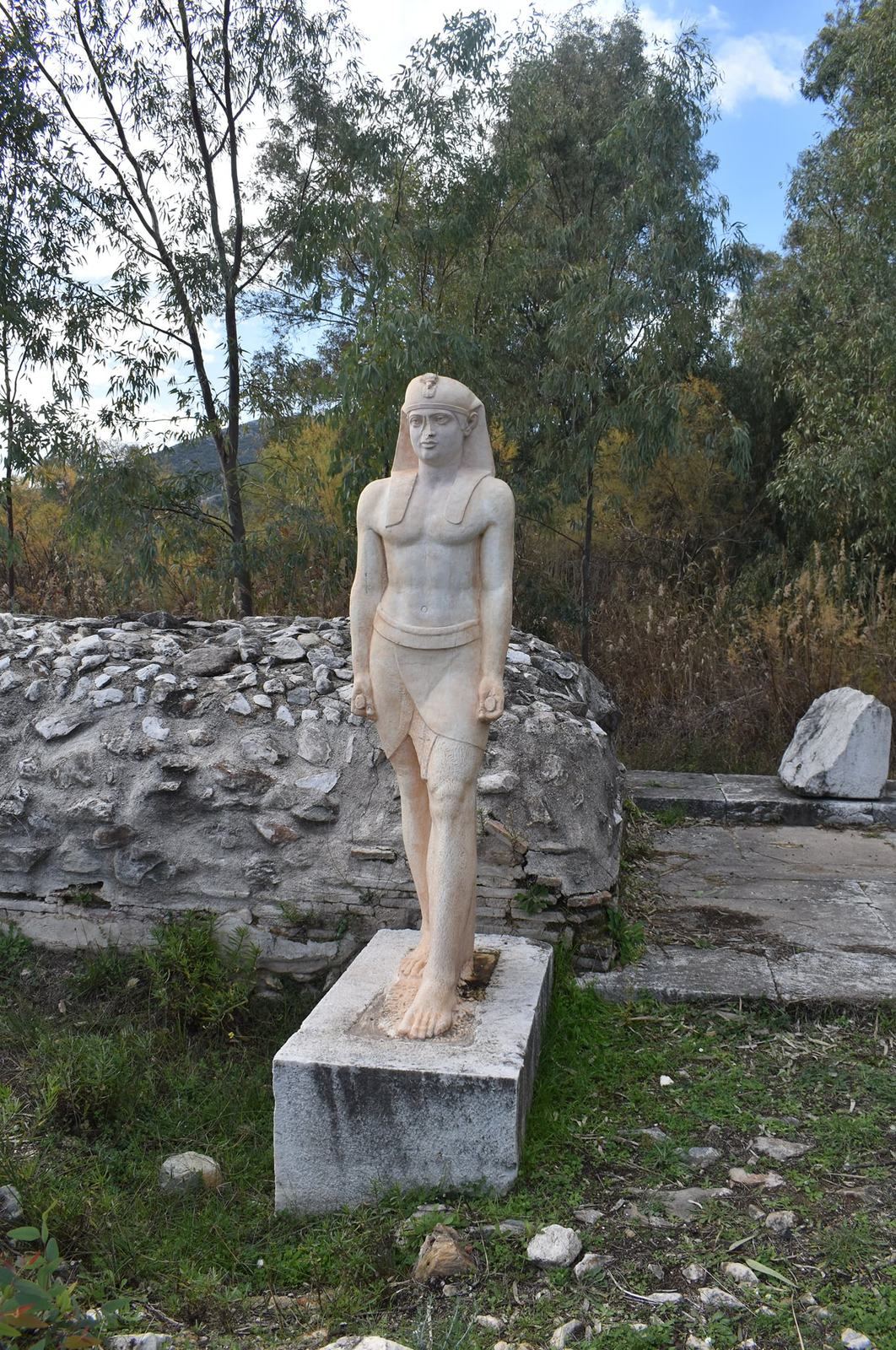
Each entrance had two statues outside and two inside. In each pair, one figure showed Osiris in pharaonic form, while the other represented Isis as the Greek goddess Aphrodite or Demeter. The statues were carved from Pentelic marble, quarried from Mount Pentelicus in Attica, and set on high pedestals. Finds from the site included four statues of Isis, statues of the emperors Lucius Verus and Marcus Aurelius, and large ritual lamps. The original sculptures are held at the Archaeological Museum of Marathon, while replicas occupy their former positions among the ruins. Other finds from the sanctuary are exhibited at the Archaeological Museum of Marathon and the National Archaeological Museum.
Bath and water basin
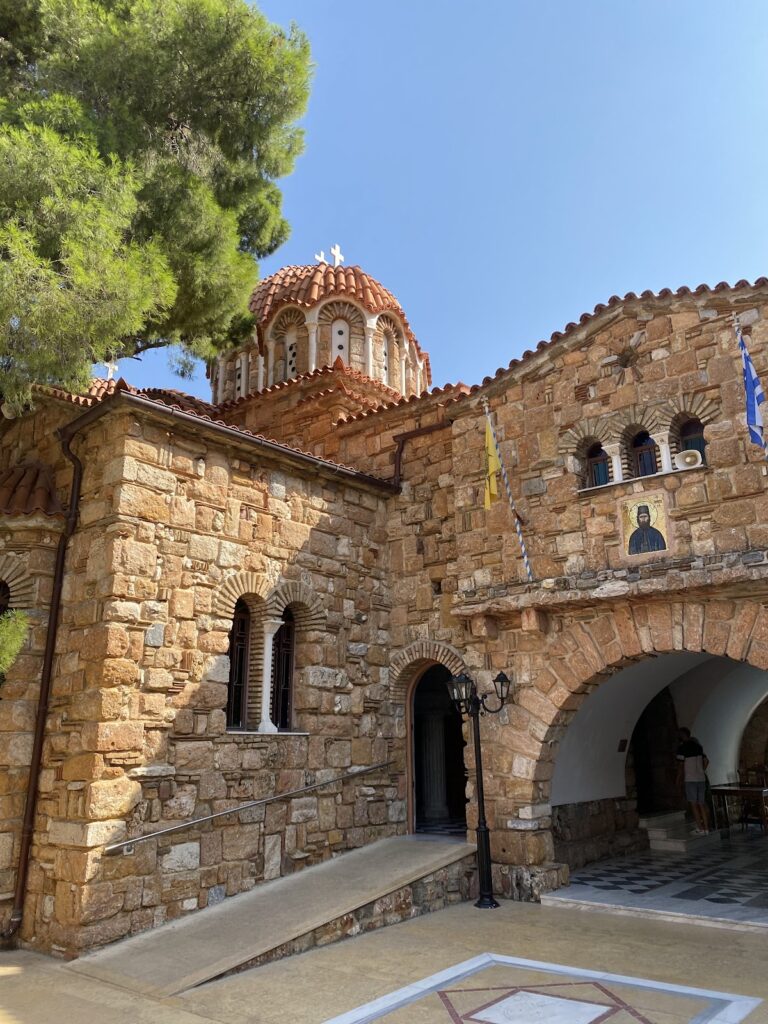
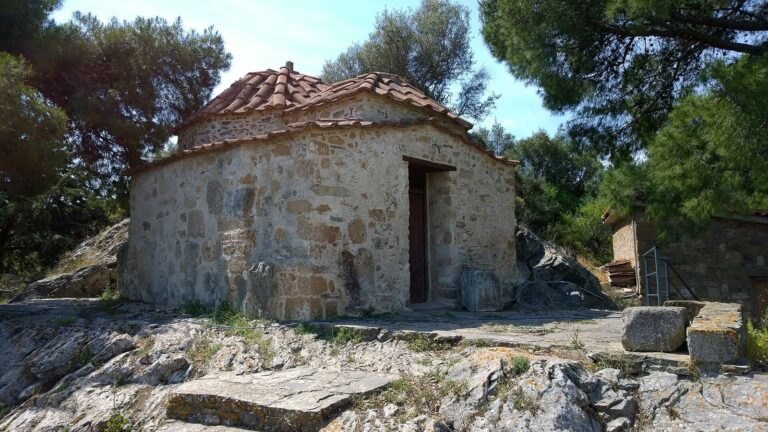
A Roman bath stood about 40 m southeast of the sanctuary, with a large oval water basin farther south. The bath was used for ritual purification before worship and remained in service into the fourth century. A church dedicated to Saint Kyriaki, a Christian martyr venerated in the Eastern Orthodox tradition, stands near the ruins.