Temple of Artemis Tauropolos: Cult Center of Halai Araphenides
Site at a Glance
- Popularity
- Very Low
- Country
- Greece
- Primary era
- Iron Age
- Eras represented
- Iron Age, Classical
- Civilizations
- Ancient Greek
- Site type
- Religious
- Remains
- Temple
On this page10 sections
History
The Temple of Artemis Tauropolos was a Greek sanctuary near the coast at modern Artemida, Greece, and the principal cult center of Halai Araphenides, a local civic district of ancient Athens in eastern Attica. Dedicated to Artemis, a goddess associated with nature, hunting, and rites of passage, the sanctuary existed by the sixth century BCE at the latest. The main temple followed the Doric order, one of the principal styles of ancient Greek architecture. Its construction date is uncertain, with proposed dates in either the Archaic or Classical period, successive phases of ancient Greek history and art.
Early sanctuary and foundation tradition
A foundation story in Iphigenia among the Taurians, a tragedy by the fifth-century BCE Athenian playwright Euripides, links the sanctuary to Orestes and his sister Iphigenia, figures from the royal family of Mycenae. In the story, Orestes reached the coast carrying a wooden statue of Artemis from Tauris, a region associated with the Taurians near the northern Black Sea. The goddess Athena, associated with wisdom and strategic warfare, ordered him to bring the statue there and establish the temple.
The name Tauropolos was interpreted as “bull-tamer.” In the foundation myth, it also carried the sense of a goddess worshipped by the Taurians. The sanctuary was connected through the story of Orestes with Brauron, regarded as Iphigenia’s burial place and itself associated with rites of passage. The myth also linked the site with the coastal sanctuary at Aulis in Boeotia.
Festival and regional connections
The Tauropolia festival was celebrated at the sanctuary and appears in works by Euripides and Menander, a later Athenian comic playwright. It apparently included an initiation rite for boys or young men. One ritual, understood as expiation for Orestes’ interrupted sacrifice, involved holding a sword to a man’s throat and drawing blood.
The festival may also have marked unmarried girls’ transition to adulthood. They performed choral dances in preparation for marriage, while the celebration included a nighttime procession. Finds from the site indicate that participants also feasted there.
The temple was discovered in 1925. The Archaeological Society of Athens excavated it in 1956 and 1957.
Remains
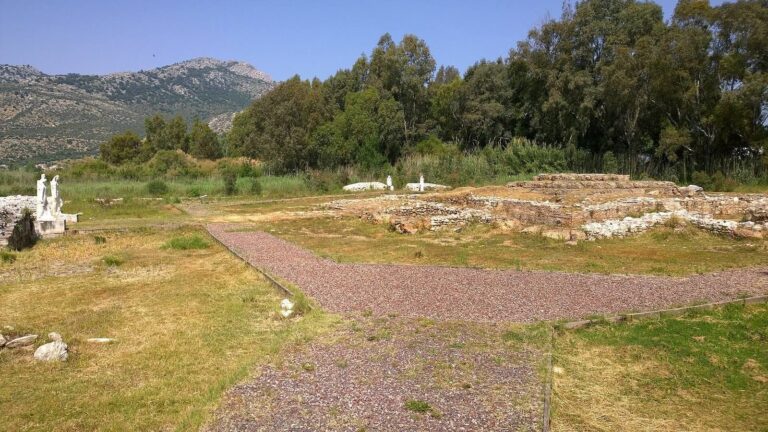
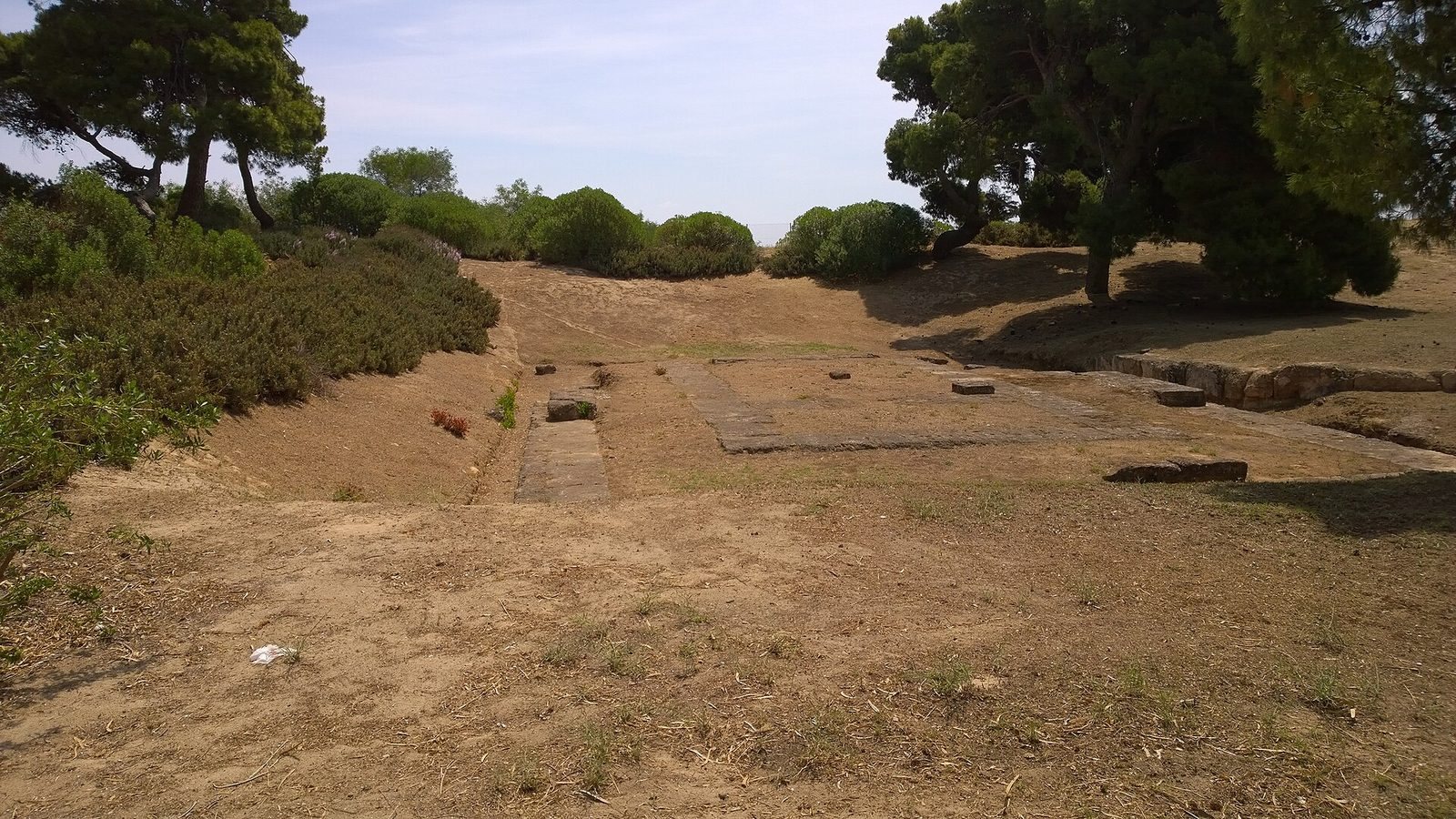
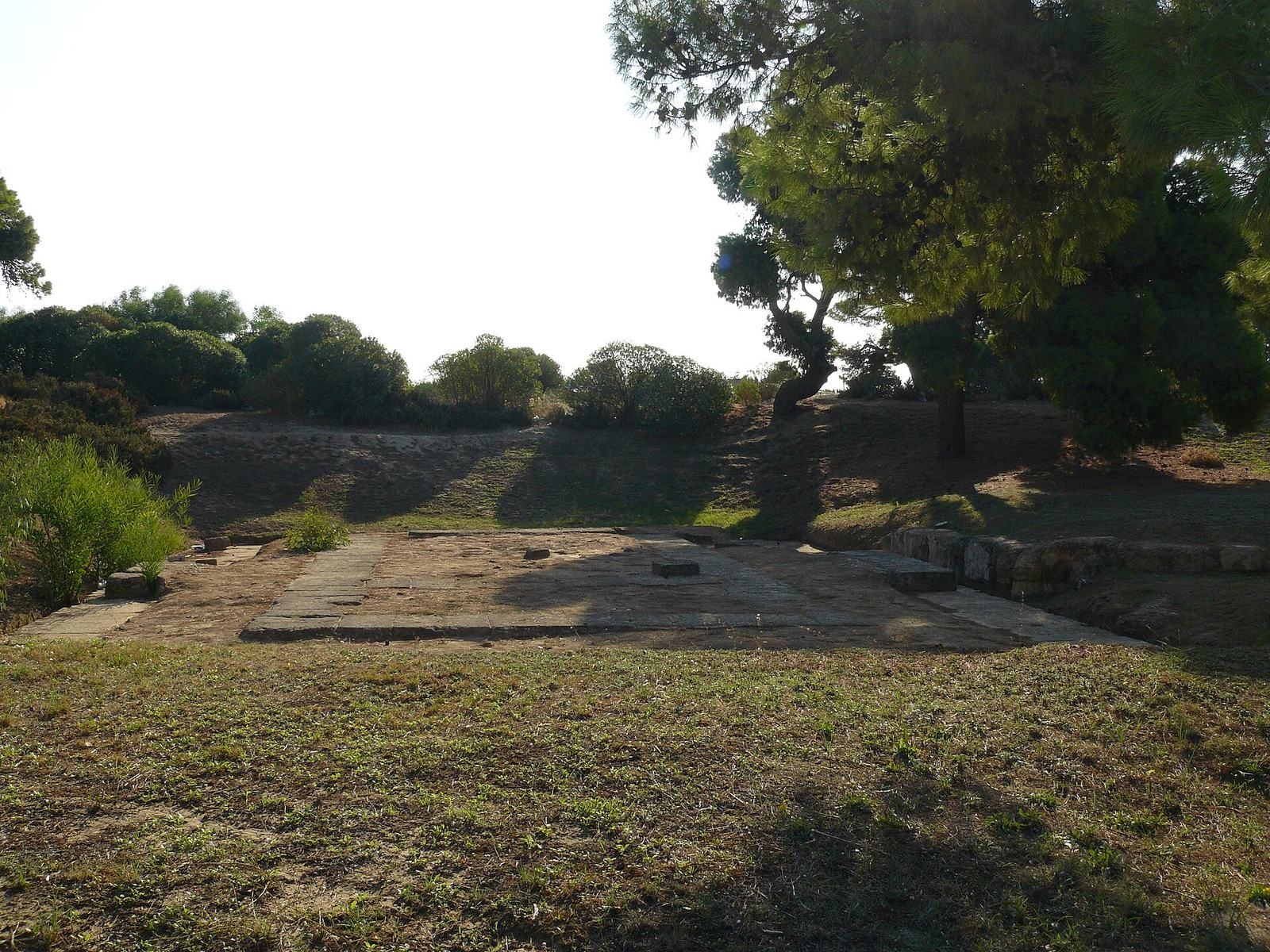
The sanctuary was arranged around a Doric main temple, with porticoes to its east and west, a paved road, and bases for statues. A smaller temple stood on the shore to the south, while a separate sanctuary lay inland to the west.
Main temple and precinct
Main temple
The main temple’s foundations measured approximately 21 by 14 metres. It had six columns along each short side and thirteen along each long side. Its inner chamber was divided into two parts; the western section was probably a restricted inner space.
Precinct and setting
Two porticoes stood on opposite sides of the main temple, one to the east and one to the west. A paved road and statue bases formed other elements of the precinct. The sanctuary lay about 6.1 kilometres north of the Temple of Artemis Brauronia at Brauron.
Nearby sanctuaries
Smaller temple by the shore
About 260 metres south of the main temple, a smaller building stood on the beach and was probably dedicated to Artemis. Numerous votive offerings from the Geometric through the Classical period were found there. Finds from the two temples are held at the Archaeological Museum of Brauron.
Sanctuary of Dionysus
A sanctuary dedicated to Dionysus, a god associated with wine and performance, lay about 500 metres west of the main temple, inland.