Soros: The Athenian Burial Mound at Marathon
Site at a Glance
- Popularity
- High
- Country
- Greece
- Primary era
- Classical
- Eras represented
- Classical
- Civilizations
- Ancient Greek
- Site type
- Burial
- Remains
- Burial Mound
On this page12 sections
History
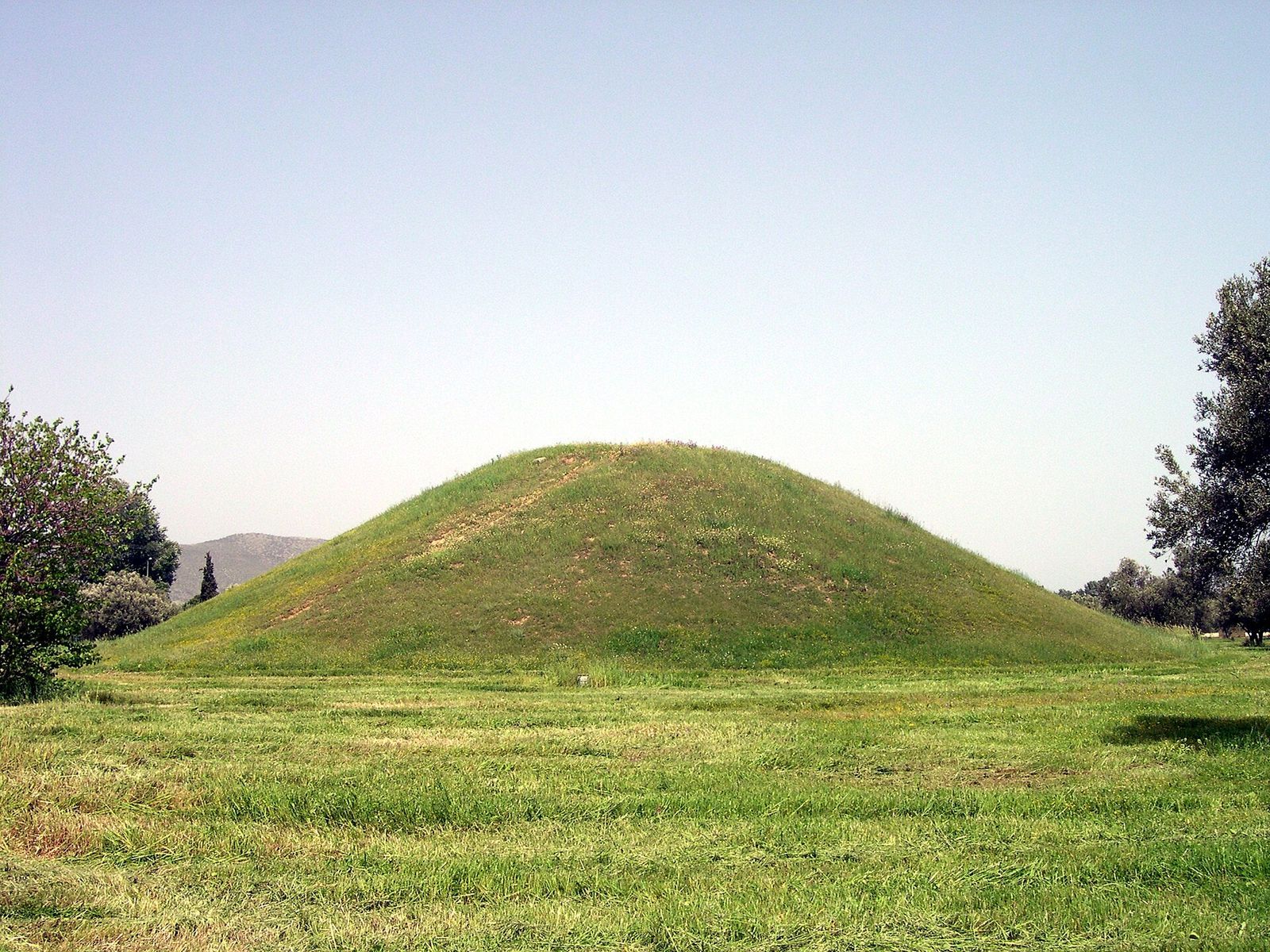
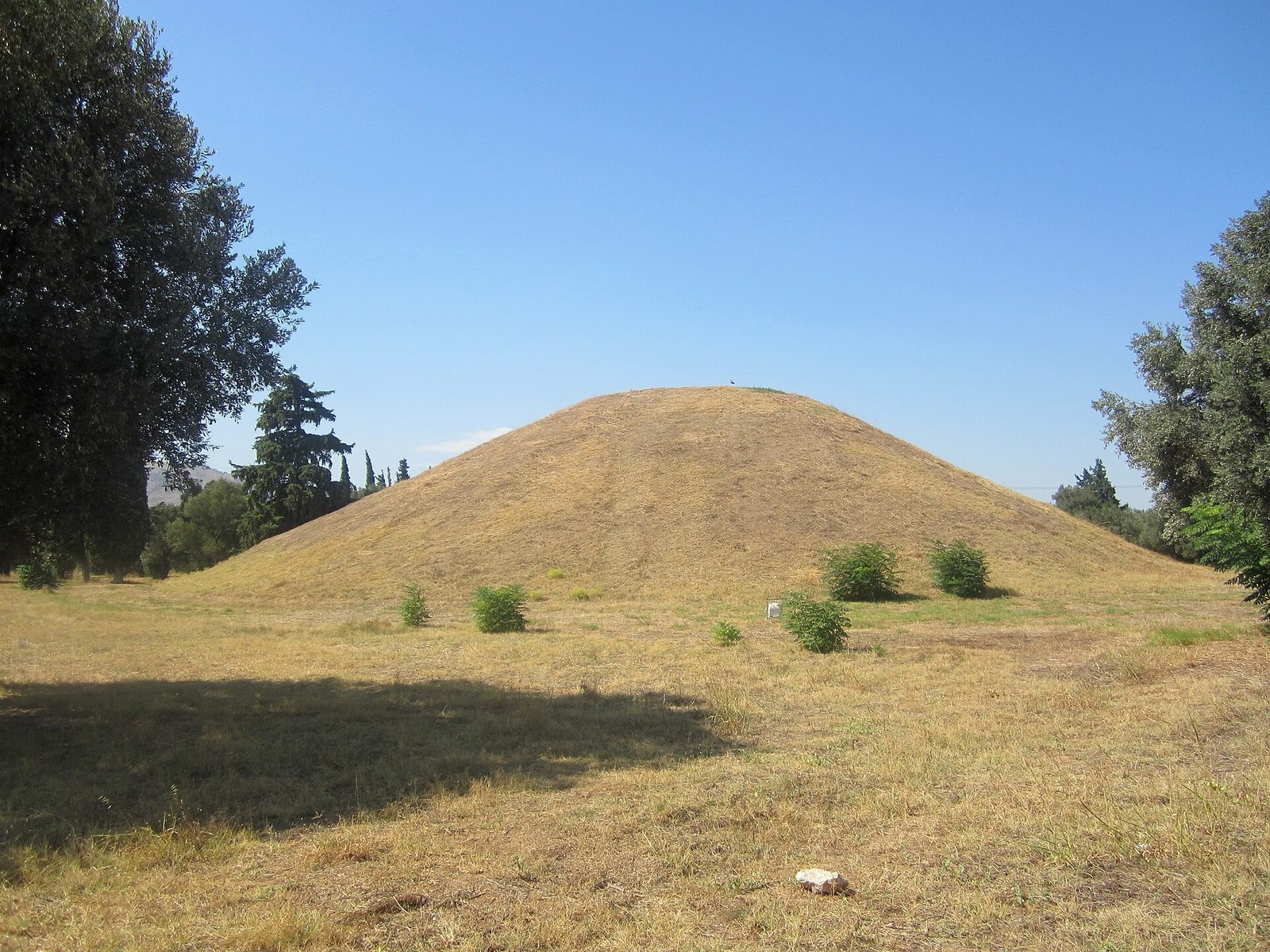
Soros is a hemispherical burial mound on the plain of Marathon in Greece, raised by the Athenians in 490 BC for the cremated remains of 192 men killed in the Battle of Marathon. The name derives from a Greek word for a funerary urn. The battle, fought against the Persian expedition of King Darius I, is dated to September 12 or, in an alternative dating, August 12, 490 BC.
Burial and commemoration
The Athenians’ burial at Marathon was exceptional. Their war dead were usually taken to Athens for burial at the Kerameikos, an important cemetery beside the Dipylon Gate. The travel writer Pausanias described the dead as buried “on the spot.” This has been understood to mean at Marathon rather than at Athens, but it does not establish that Soros stands at the precise place where the fighting occurred.
Annual sacrifices commemorated the dead at the mound. Some scholars have interpreted its monumental shape as a deliberate reference to heroic funerals in the Iliad, the ancient Greek epic.
Excavations and identification
Antiquarian Louis-François-Sébastien Fauvel dug into Soros in 1788, spending eight days making three large holes. His central excavation reached ground level, while the other two extended about 1.8 to 2 metres down. On June 25, 1802, Thomas Bruce, 7th Earl of Elgin, sent sailors to dig elsewhere in the mound. They recovered crude pottery fragments and pieces of silver.
Further excavations between 1830 and 1840 eventually exposed the mound. In 1836, Greek Minister of Education Iakovos Rizos-Neroulos urged the provincial directorate of Attica to prohibit digging at Soros and other places associated with the battle.
In 1883, Heinrich Schliemann dug two trenches and enlarged the central hole. Water filled the eastern trench when it was about one metre deep, and he stopped the work. Schliemann argued that Soros was a prehistoric mound dating to the nineteenth century BC, unrelated to the Battle of Marathon. Dimitrios Philios excavated it in 1884. Valerios Stais’s work in 1890–1891 established Soros as the burial place of the Athenians, an identification accepted thereafter.
Debate over the battlefield
Reports of projectile points prompted debate about whether Soros also marked the exact battlefield. Edward Daniel Clarke collected flint points in 1801. In 1819, Edward Dodwell described black flint points and attributed them to the Persian army. William Gell associated similar objects with Ethiopians said to have fought alongside the Persians. Their reasoning drew on historian Herodotus’s account of Persian archers and Pausanias’s description of Ethiopians on a statue of Nemesis at Rhamnous, an ancient settlement in Attica.
William Martin Leake reported brass arrowheads and numerous roughly made flint fragments in 1829. In 1835, he described black flint pieces collected at the mound’s foot by his servant, but did not identify them as Persian arrowheads. Although Leake had heard that bronze objects had been found, he had found none himself. Neither Stais nor Schliemann reported bronze arrowheads. The flint fragments were later identified as parts of wooden threshing machines, which separate grain from stalks. Whether bronze arrowheads came from Soros remains uncertain.
Historian N. G. L. Hammond argued that arrowheads showed the mound’s earth had been taken from ground where Persian arrows had fallen. That proposed origin is not established by the evidence. Soros’s position on the plain, by itself, therefore does not prove that the mound marks the precise place of the fighting.
Remains
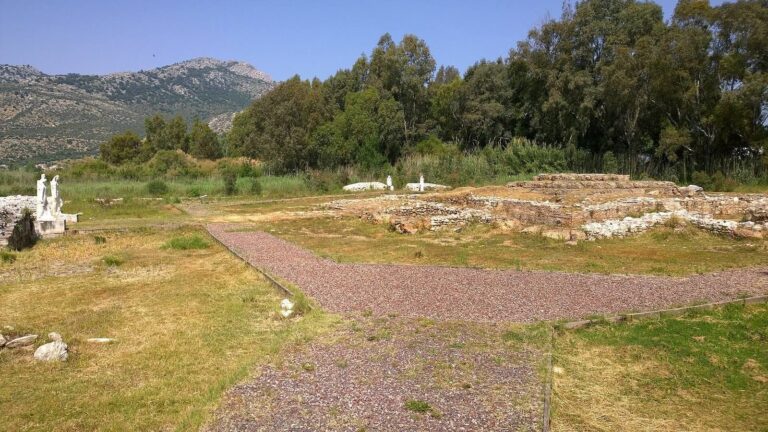
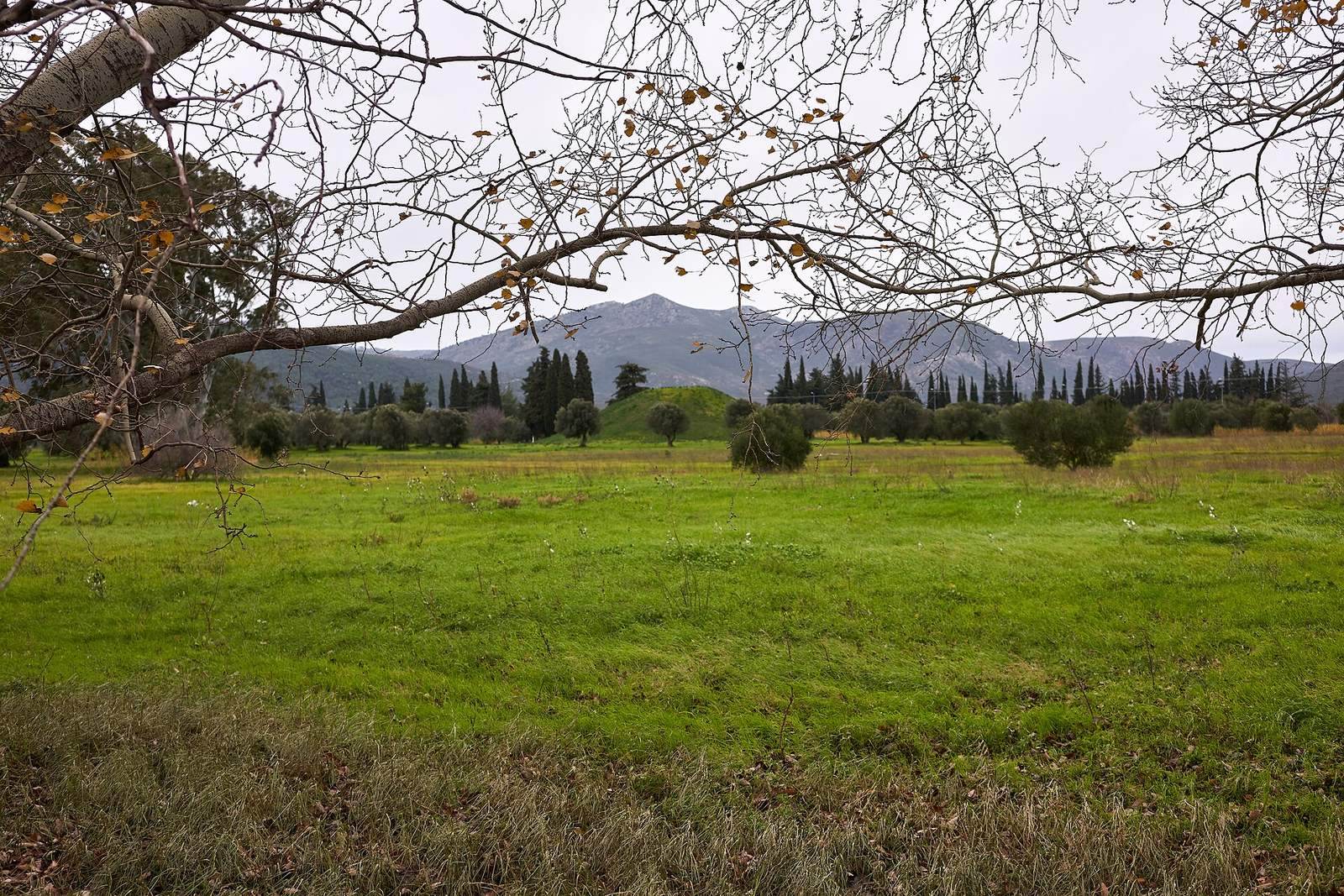
Soros is a large earthen mound, about 9 metres high and 50 metres across, situated west of Agios Panteleimonas. It stands within a park and remains clearly visible despite the damage caused by earlier excavations.
Mound and burial deposit
Mound form
The mound has a rounded, hemispherical profile. Its earth was heaped over the burial after a pit had been dug into the ground.
Cremation pyre
Stais found the funeral pyre about 6.5 metres below ground, resting on a base of aligned bricks. The deposit contained ashes, cremated bones, food remains, and fifth-century BC black-figure pottery, decorated with dark figures against the clay surface.
Projectile finds
Reported arrowheads
Leake described brass arrowheads about 2.5 centimetres long, triangular in shape, with a hole at one end and a round opening for the shaft. He characterized the flint fragments as more numerous and crudely made. The proposed links between such finds and Soros remain uncertain.
Collections with uncertain provenance
Elisabeth Erdmann classified 38 arrowheads in a London collection and 35 in Karlsruhe as four types, three dating to the Persian Wars and one later. The Karlsruhe examples cannot be securely connected to Marathon. John Forsdyke considered the London pieces likely to have come from an antiquarian collection and found insufficient evidence to link them to Soros.
Ten iron arrowheads now in London were donated to the British Museum in 1906 by Saumarez Brock. She said her father had found them during excavations in 1830 near a tomb on the Marathon plain. They may instead have come from another tomb, which has since disappeared, and their connection with Soros is unproven.
Other monuments on the plain
The Plataean burial mound lies about 2.7 kilometres west of Soros, and a modern statue of the Athenian commander Miltiades stands near the mound. The plain also has a victory column originally erected by the Athenians to commemorate their victory over Darius’s expedition. After the ancient column collapsed, a modern replica was made to match its height and general mass.