Castle of Arronches: A Medieval Frontier Stronghold in Portugal
Site at a Glance
- Rating
- 4.4
- Popularity
- Low
- Country
- Portugal
- Primary era
- Medieval
- Eras represented
- Medieval, Early Modern
- Civilizations
- Portuguese
- Site type
- Military
- Remains
- Wall
On this page9 sections
History
The Castle of Arronches is a medieval and early-modern frontier stronghold in Arronches, Portugal, with a recorded construction date of 1166. Its defenses developed through centuries of conflict between Muslim and Christian forces and later became part of Portugal’s military line during the seventeenth-century wars with Spain.
Conquest and medieval reconstruction
Forces loyal to Afonso Henriques, the first king of Portugal, conquered the territory in 1166. Control then shifted between Muslim and Christian forces before King Sancho II captured Arronches in 1235. Christian troops commanded by Paio Peres Correia reconquered it in 1242. The primitive medieval structure associated with the 1166 date is otherwise known through its later historical development.
Afonso III issued a royal charter, or foral, on 16 June 1255. This type of charter defined a settlement’s rights, obligations, administration, and relationship with the Crown. The charter was confirmed on 2 January 1272. In 1310, King Dinis brought Arronches into the Crown territories and ordered the castle to be reconstructed.
Late medieval royal authority
After a Castilian invasion, forces led by Nuno Álvares Pereira retook the castle and the lands of Arronches in 1384. Nuno Álvares Pereira was a Portuguese commander and constable who led forces during the crisis of 1383–1385. The first Cortes of Arronches met in 1475. The Cortes was a representative assembly of the Portuguese realm that brought together the estates of the kingdom.
Manuel I granted a new charter on 1 June 1512. In 1549, John III granted Arronches to the masters of the Bishopric of Portalegre, marking another change in the settlement’s administration and institutional connections.
Frontier warfare and artillery defenses
When the Portuguese Restoration War began in 1640, Portugal fought to recover its independence from the Spanish Habsburg monarchy. The Castle of Arronches was incorporated into Portugal’s primary defensive lines, and its medieval defenses were probably modernized to withstand artillery fire.
John of Austria captured Arronches in 1661. Two years later, an explosion in the powder magazine, a fortified storage chamber for gunpowder, damaged the castle. The fortifications were then slated for dismantling within the same year. After Portuguese rule was restored, Afonso VI issued another charter on 25 July 1678. The castle resisted a Castilian attack in 1712, and fighting took place at Arronches in 1801.
Damage and conservation
The defenses suffered further damage in the 1755 earthquake. As Arronches expanded, sections of the former walls were absorbed into residential construction. Twentieth-century work progressively consolidated and conserved the surviving remains. The bastions and walls were treated in 1975, wall sections between Largo Serpa Pinto and Rua João Morais were addressed in 1976–1977, and the walls along the Rio Gate were conserved. A ruined merlon, the raised section between openings along a parapet, was treated in 1978–1979, followed by further conservation in 1981, 1983, and 1987.
The remains of the fortifications were classified as a Property of Public Interest by a decree published on 29 September 1977. The Portuguese Republic owns the site, which is operated by the Municipality of Arronches.
Remains
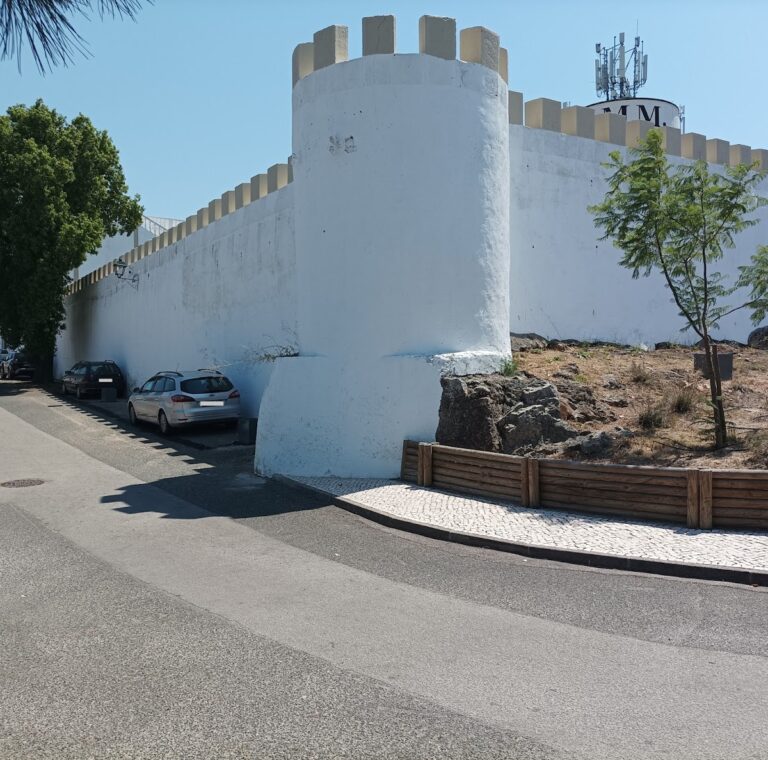
The fortification once extended around the entire village, forming a defensive perimeter that is now incomplete. Surviving sections combine medieval elements with later bulwarks, projecting defenses designed to strengthen walls and provide flanking fire against attackers using artillery. The walls are built of stone masonry, with many stones fitted together without mortar. Some sections received cement as a preservation treatment.
Gates and projecting defenses
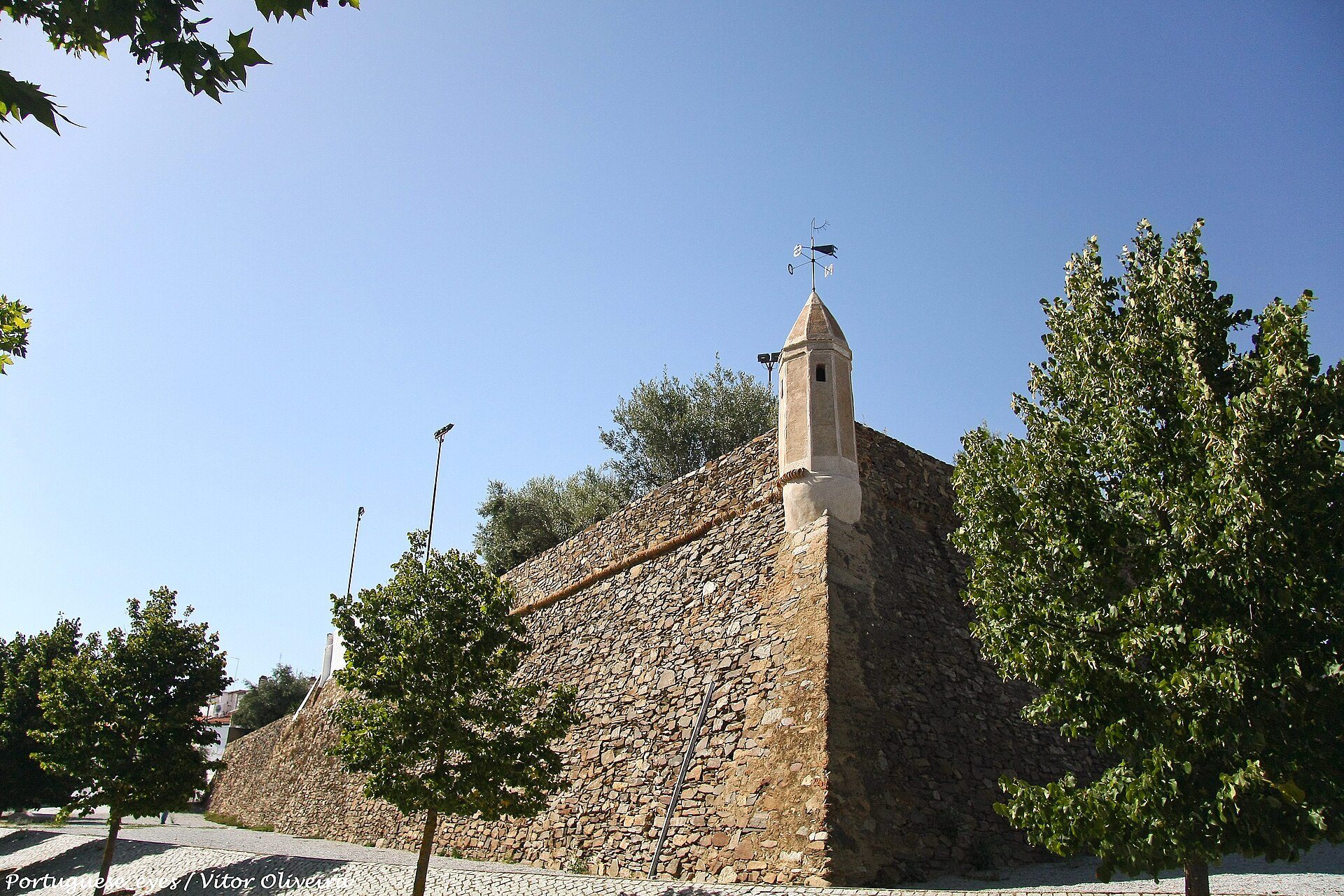
The defensive circuit includes the walls and moats of the Bulwark of the Elvas Gate. This structure has a prismatic corbel, a projecting structural support, and a pyramidal cap. The circuit also contains the Bulwark of Santo António and the Bulwark of Espírito Santo, whose corbels have similar forms. The wall is interrupted by the Rio Gate and includes the remains of the Bulwark of Clérigos.
Medieval tower and later walls
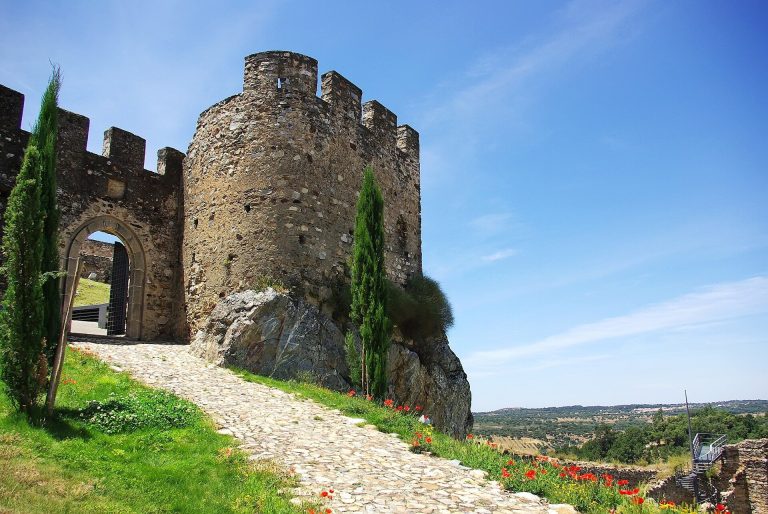
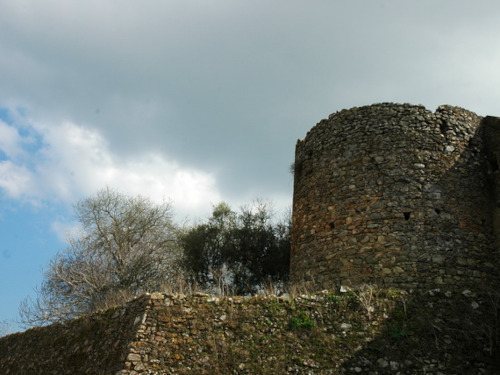
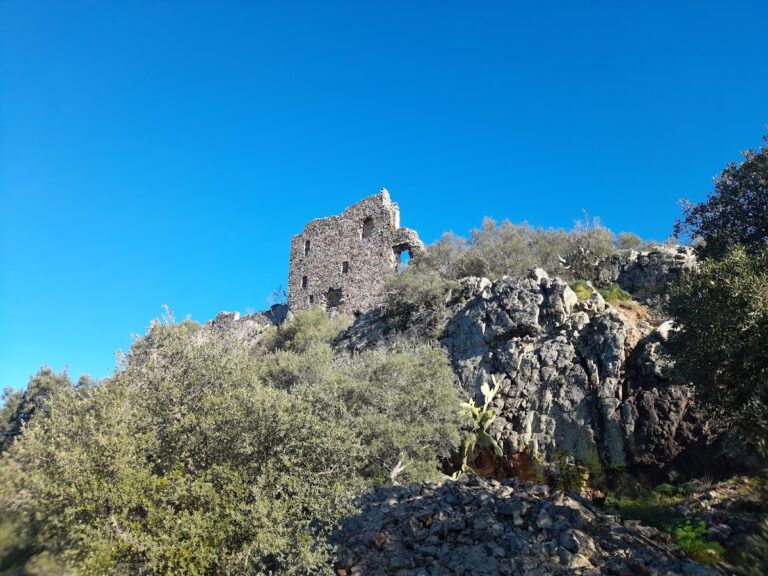
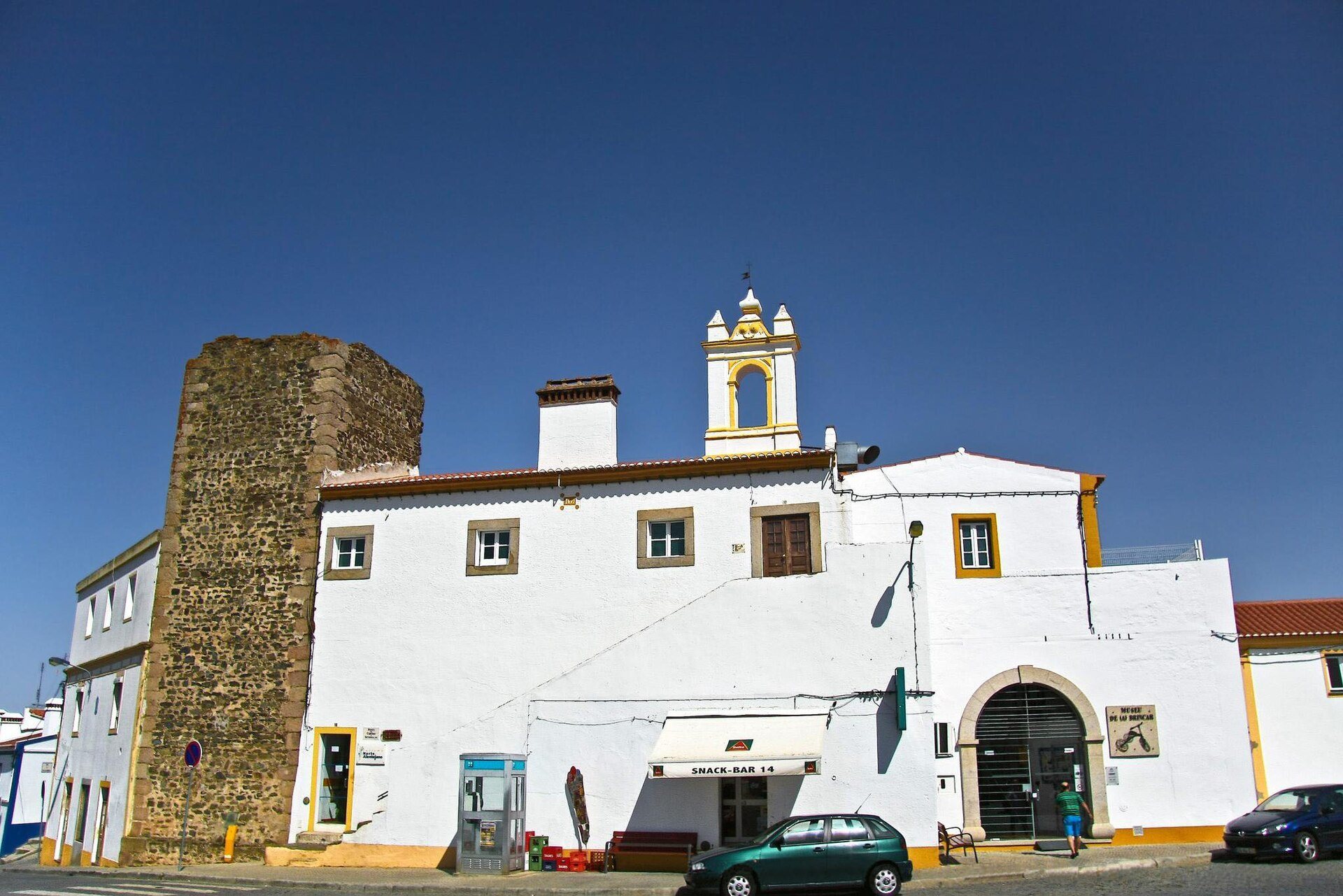
In the northeast, the remains of a tower and an attached corbel survive from the primitive military installations, enclosed by the castle’s bulwark. The medieval castle is represented by the ruins of one surviving tower. Sections of the medieval wall remain alongside modern defenses, including the remains of the Bulwark of Nossa Senhora da Luz.
Stonework and urban fabric
The surviving walls retain their dry-stone construction, in which stones are fitted together without mortar, although cement was applied in places during conservation. Other wall sections became part of houses as the settlement grew, leaving the defensive fabric integrated into the modern urban structure of Arronches.