Lamalou Dolmen: A Late Neolithic Burial Monument in France
Site at a Glance
- Popularity
- Low
- Country
- France
- Primary era
- Stone Age
- Eras represented
- Stone Age, Modern
- Civilizations
- Unclassified
- Site type
- Burial
- Remains
- Tomb
On this page12 sections
History
The Lamalou dolmen is a late Neolithic funerary monument at Rouet, France, dating to the fourth millennium BCE. It is also known as Le Crès.
The monument was classified as a historic monument in 1954. Excavations recovered a substantial archaeological assemblage, and restoration work took place in 1977.
Remains
Setting and mound
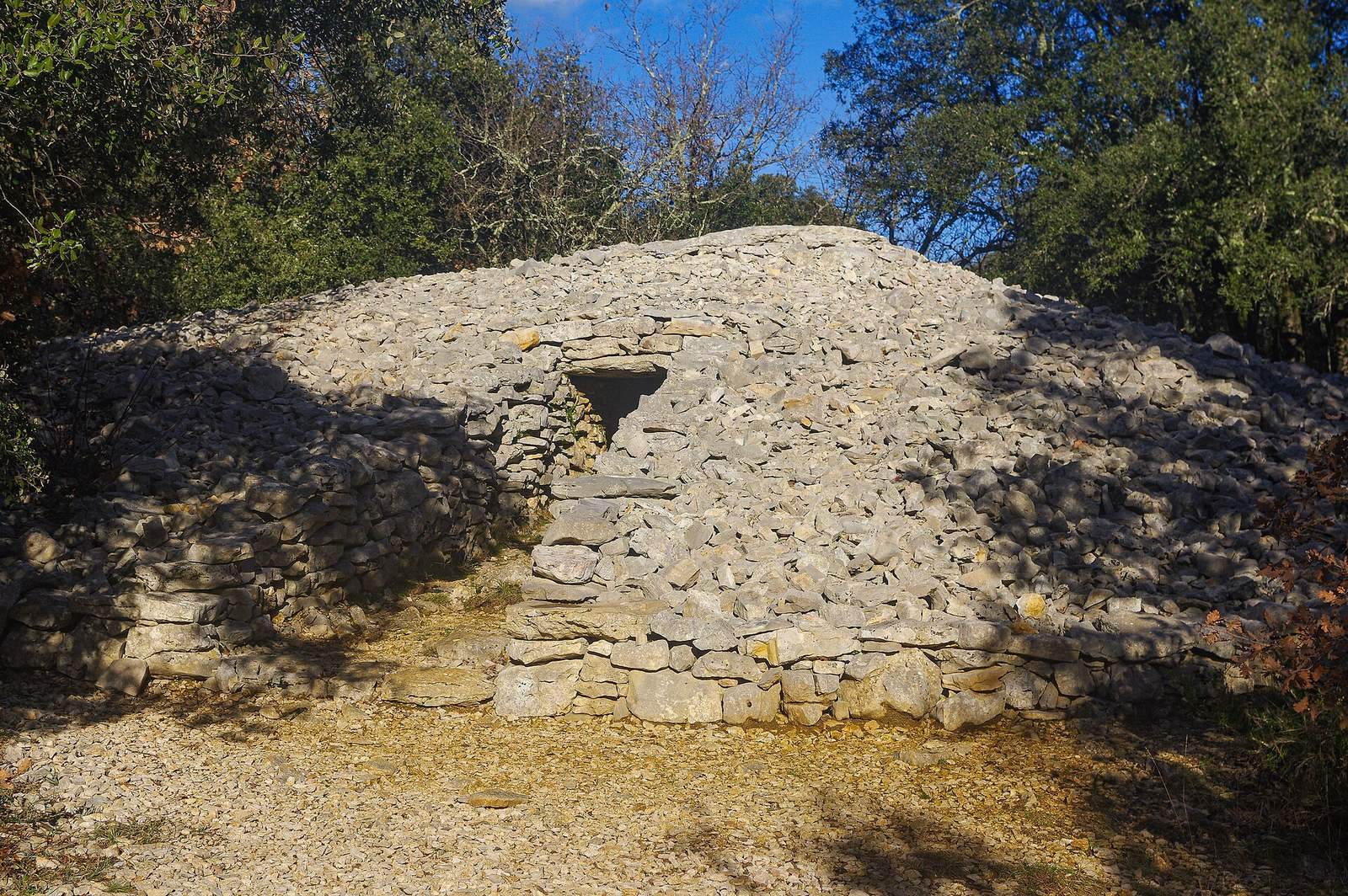
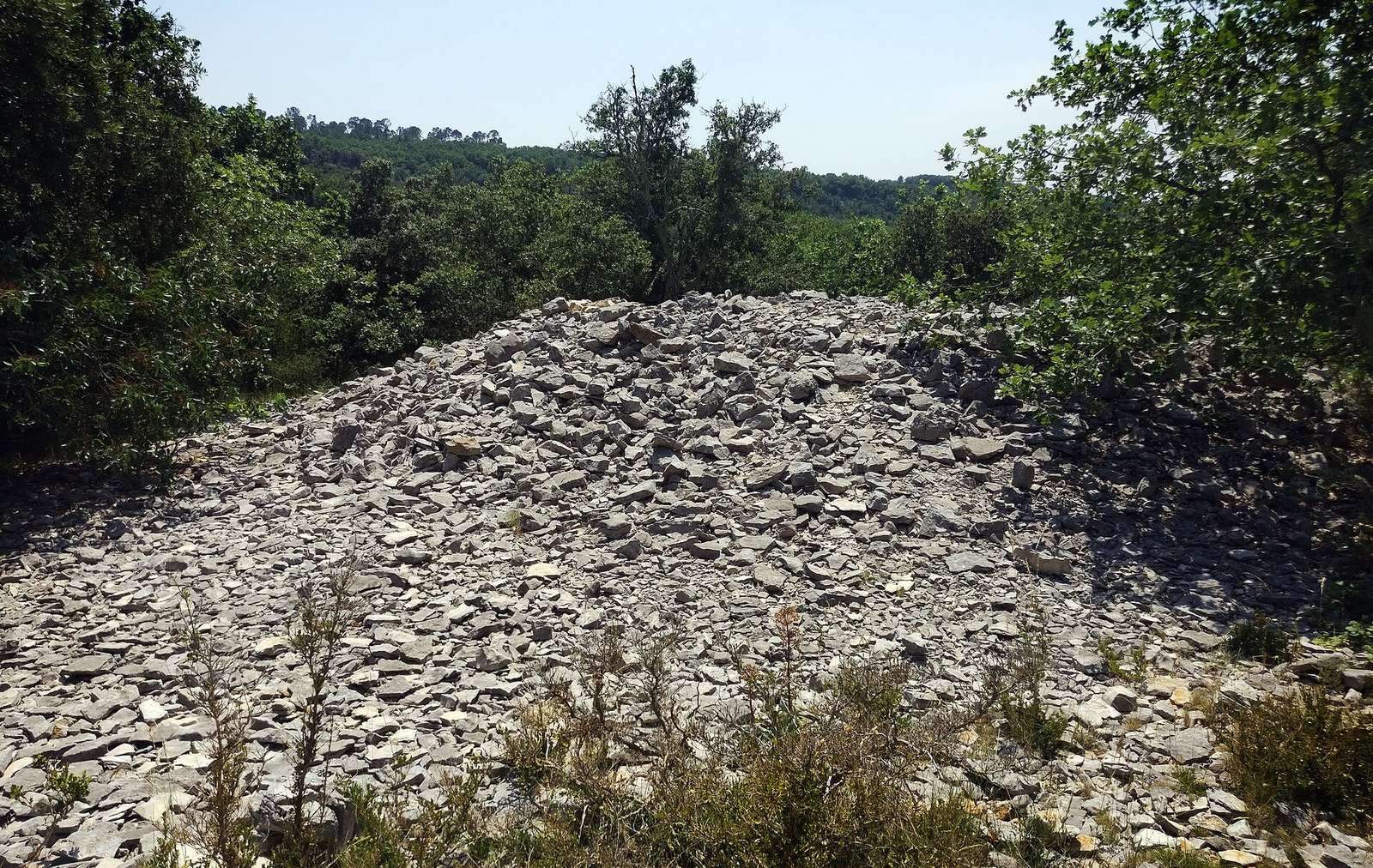
The dolmen stands on the limestone plateau of the Causse de l’Hortus, near the southern edge of the Cévennes. A circular tumulus, or artificial mound, about 15 metres across and 3 metres high encloses the central burial chamber. A ring of upright stone slabs reinforces the mound’s base. The entrance faces southwest, following the natural slope. Nearly all the monument’s major structural elements survive, an unusually high degree of preservation for a Languedoc dolmen.
Passage and antechamber
Passage
The passage is about 5.10 metres long and 1 metre wide. It bends slightly and lies off the chamber’s central axis, possibly because of pressure from the mound. Its dry-stone walls, made of stones laid without mortar, reach about 1 metre high near the antechamber. Two capstones cover the passage’s terminal section, roughly 3 metres from its entrance.
Antechamber
Two upright slabs divide the passage from the antechamber. One has an oven-door-shaped opening about 0.74 metres wide and 0.90 metres high. The antechamber measures about 2 metres long and 1.80 metres wide, with a height of 0.90 to 1 metre. Its thin dry-stone walls included a slight inward projection on the north side. Two slabs cover the chamber; a third was placed above them during the 1977 restoration. The floor was probably beaten earth.
Burial chamber
The slightly trapezoidal burial chamber measures 2.24 metres across at the entrance, 2.17 metres at the rear, and about 2.10 metres deep. Five upright stones lean inward to support it, with dry-stone walling filling the gaps. At the entrance, two slabs overlap at their tops, leaving a triangular opening below, 0.50 metres wide and 1 metre high. A broken slab found in front of the opening, measuring 0.80 by 0.64 metres, may have served as a door; it has a notch along its upper edge.
The rear support slab rises slightly higher than the side slabs. As a result, the ceiling is 1.88 metres high at the entrance and 2.10 metres at the rear. A single oval capstone covers the chamber. It is 3.50 by 2.50 metres, 0.22 metres thick, and projects 1.20 metres over the antechamber. Rough paving forms the chamber floor.
Excavated finds
Human remains and tools
Small stones covered the archaeological layer, and the antechamber yielded the richest assemblage. Excavated human remains include more than 50 kilograms of heavily fragmented bones and about 2,270 intact teeth. Flint objects include two large, thin blades, six broad blades, two daggers, eight microlith fragments (from small stone tools), two arrowhead fragments, 12 scrapers, and 253 other fragments and flakes. One arrowhead fragment has a tang, the projecting part used to attach a weapon to a shaft. The bone tools include 18 awls made from rabbit shinbones.
Ornaments and pottery
Personal ornaments include more than 80 beads made of steatite, callaïs (a green ornamental stone), calcite, and bronze, as well as about 20 pendants fashioned from perforated animal teeth and shell. The pottery consists of poorly fired sherds representing at least 11 vessels. Their simple decoration includes raised cords and deep incisions.
Other chamber finds and collections
Other small objects found in the burial chamber include hand axes, carnivore teeth, and jewelry chains. Whether some of these items were placed there as original grave goods or were deposited later is uncertain. The archaeological material is held at the museum and depot in Lattes, where some small finds are displayed at the Musée Henri Prades, an archaeology museum.
Nearby dolmens
The Dolmen des Feuilles has strong architectural similarities to Lamalou. The Dolmen des Feuilles I and Dolmen du Capucin, the latter about 2.5 kilometres to the east, are also comparable in their passages and antechambers.