Ascain Roman Bridge: A Historic Crossing over the Nivelle
Site at a Glance
- Popularity
- Very Low
- Country
- France
- Primary era
- Early Modern
- Eras represented
- Early Modern
- Civilizations
- French
- Site type
- Infrastructure
- Remains
- Bridge
On this page5 sections
History
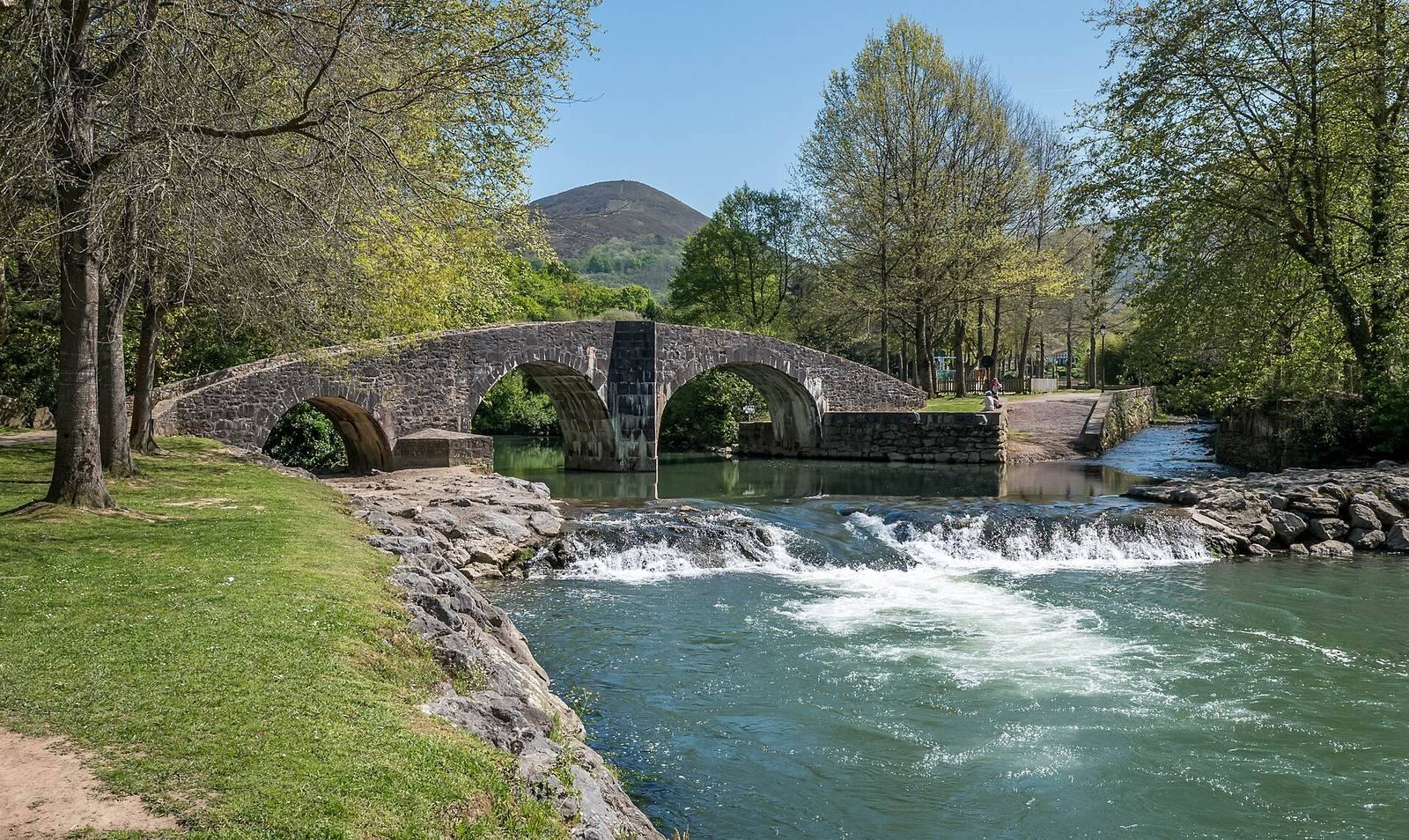
The Ascain Roman Bridge spans the Nivelle in France, north of the village center. Its traditional Roman attribution is uncertain. It has sometimes been dated to around AD 450, within the Roman Empire, the ancient state centered on Rome, but construction in the sixteenth or possibly seventeenth century is considered more likely. The prestige of Roman architecture also led some medieval and modern bridges on ancient routes to be called Roman.
On 10 November 1813, during the Battle of the Nivelle, an engagement in the Peninsular War, the bridge was broken to prevent the movement of Wellington’s artillery. Arthur Wellesley, 1st Duke of Wellington, was the British commander leading allied forces in the conflict. The bridge was listed as a French historic monument in 1925. Flooding on 26 August 1983 weakened its largest pier, and another flood of the Nivelle caused that pier to collapse in December 1994.
Remains
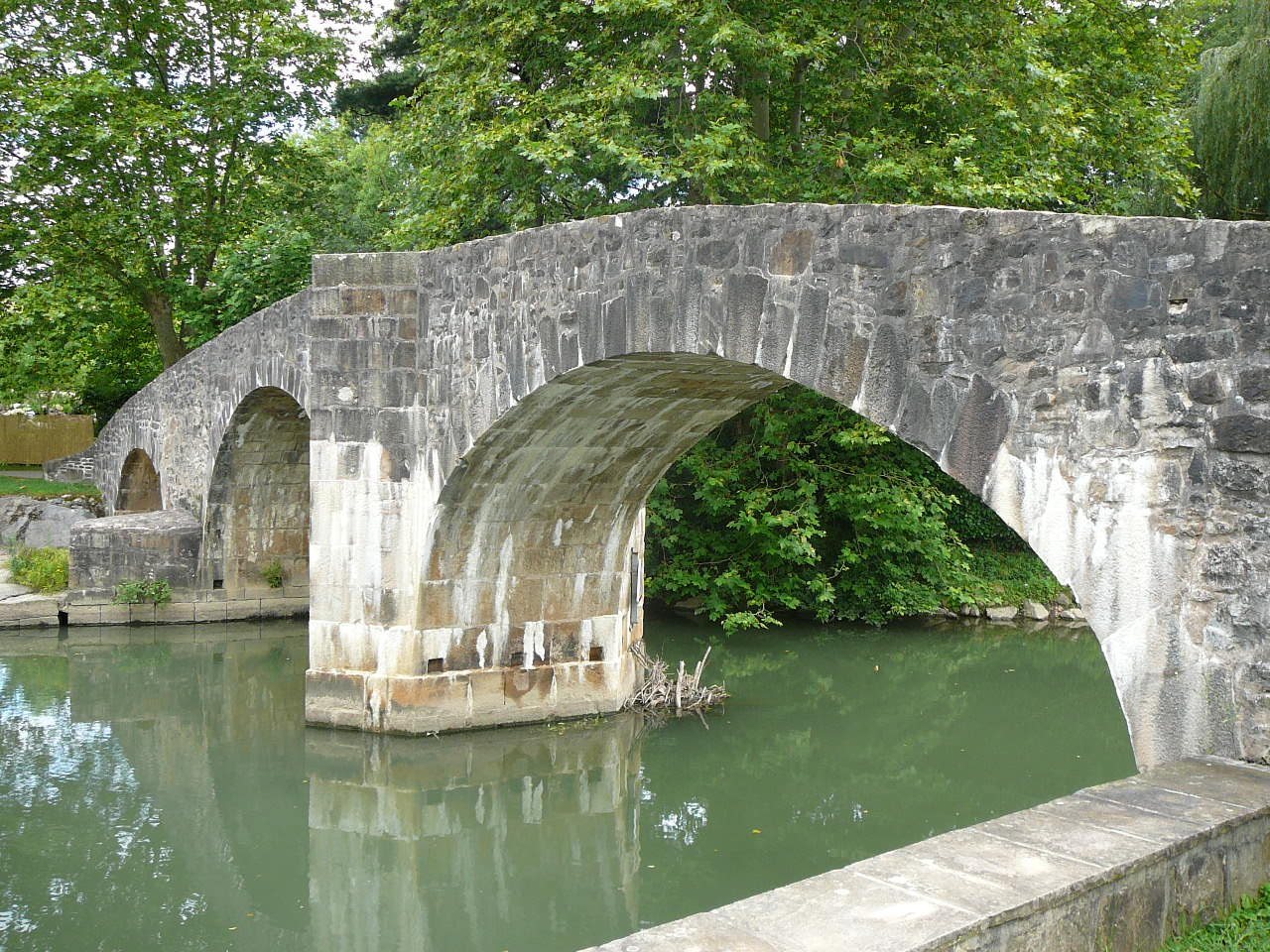
The crossing runs north to south across the river and was about 40 metres long. Its stone construction formed three semicircular arches of unequal spans and heights.
Roadway and river structures
Approaches and roadway
A paved road known as the Roman road reaches the bridge from both sides. The approaches narrow in a funnel shape toward the deck, which is narrower than the road leading to it. Two recessed refuges at the main pier provided places for pedestrians to step aside from traffic.
Pier and river control
The largest intermediate pier stood about five metres high and had projecting spurs on both its upstream and downstream sides. A carved human head at its base probably served as a guide to the river’s water level. Timber beams could be fitted between the piers and arches to block river traffic, and the bridge could also function as a dam. It appears to have belonged to a complex that included a mill and its supply canal. Tides reach the bridge but do not extend upstream beyond it.