Montegrande: An Ancient Spiral Temple in Peru
Site at a Glance
- Popularity
- Medium
- Country
- Peru
- Primary era
- Stone Age
- Eras represented
- Stone Age
- Civilizations
- Unclassified
- Site type
- Religious
- Remains
- Temple
On this page6 sections
History
The Mayo-Chinchipe-Marañón tradition
Montegrande is an ancient spiral-shaped temple enclosure on the outskirts of Jaén, Peru, associated with the Mayo-Chinchipe-Marañón tradition, an archaeological name for a cultural tradition of the upper Amazon. The site is estimated to be more than 5,300 years old, although its precise construction date is uncertain. This tradition extended across areas of present-day Peru and Ecuador, with a wider range from Ecuador’s Podocarpus National Park to the Chinchipe–Marañón confluence near Bagua.
Spondylus shells, from a genus of spiny oyster found along Ecuador’s coast, have also been found in Jaén and Bagua. Their presence points to exchange between territories that are now part of Peru and Ecuador.
Archaeological reassessment
Before excavation, people viewed the hill as a natural rise with cultural remains left by the pre-Inca Bracamoros, a culture of the region that preceded the Inca. Around 1920, Peruvian archaeologist Julio C. Tello proposed that Andean culture had an Amazonian origin, but other researchers rejected the idea. Before archaeological work began, the hill had also become a dump and a place where people smoked. Foundations of an unfinished Catholic church stood at its summit.
Excavations began in 2009 with funding from the Andean Community, a regional organization of Andean countries. Ecuadorian archaeologist Francisco Valdez and Peruvian archaeologist Quirino Olivera led teams from their respective countries. The site was cleared and modern construction removed as excavation revealed the ancient enclosure. From 2016, the project also received support from the Peru–Ecuador Binational Development Plan and Jaén Municipality, in coordination with Peru’s Ministry of Culture. Peru recognizes Montegrande as Cultural Heritage of the Nation, a national designation for recognized cultural heritage.
Remains
The spiral enclosure
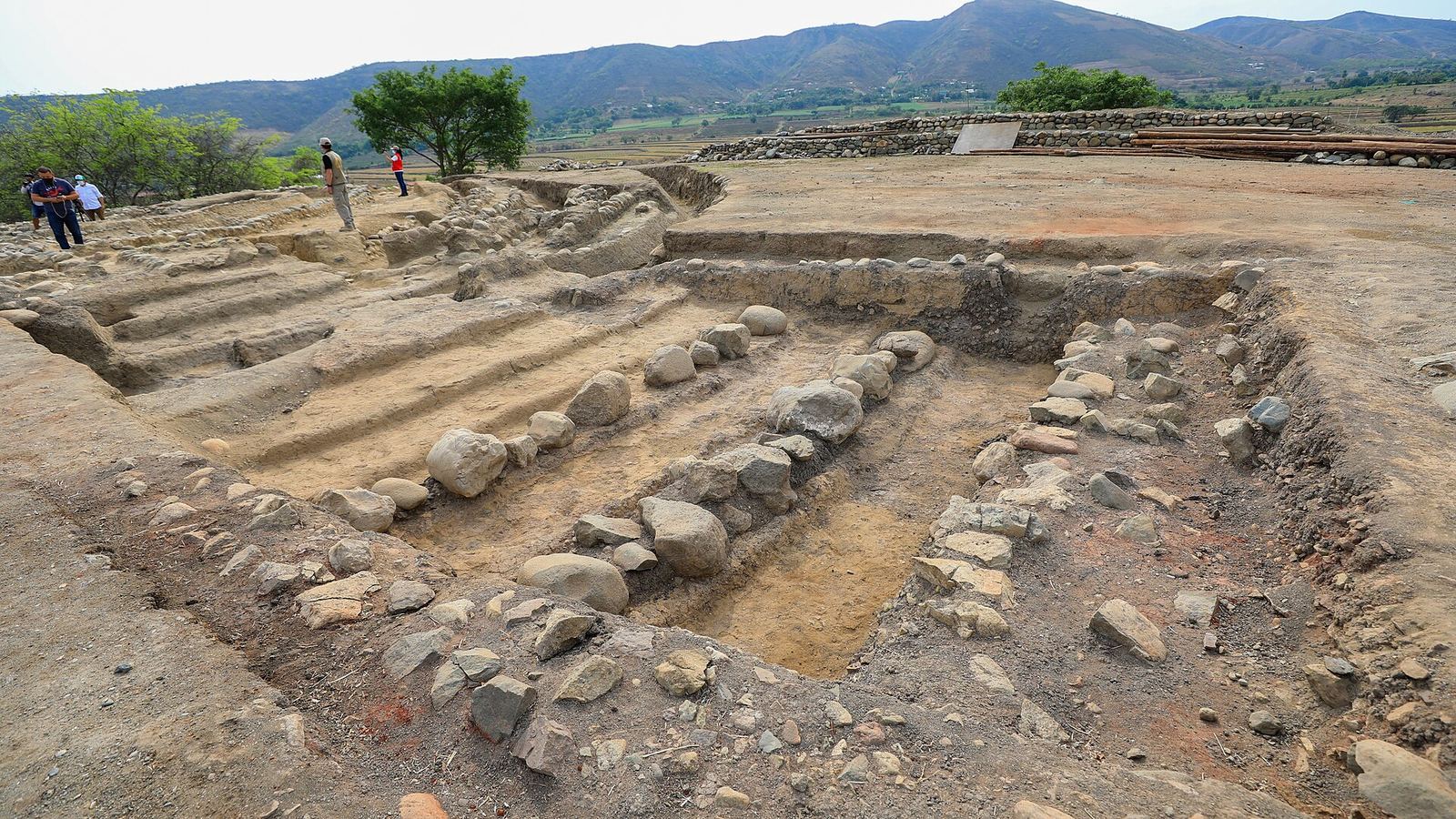
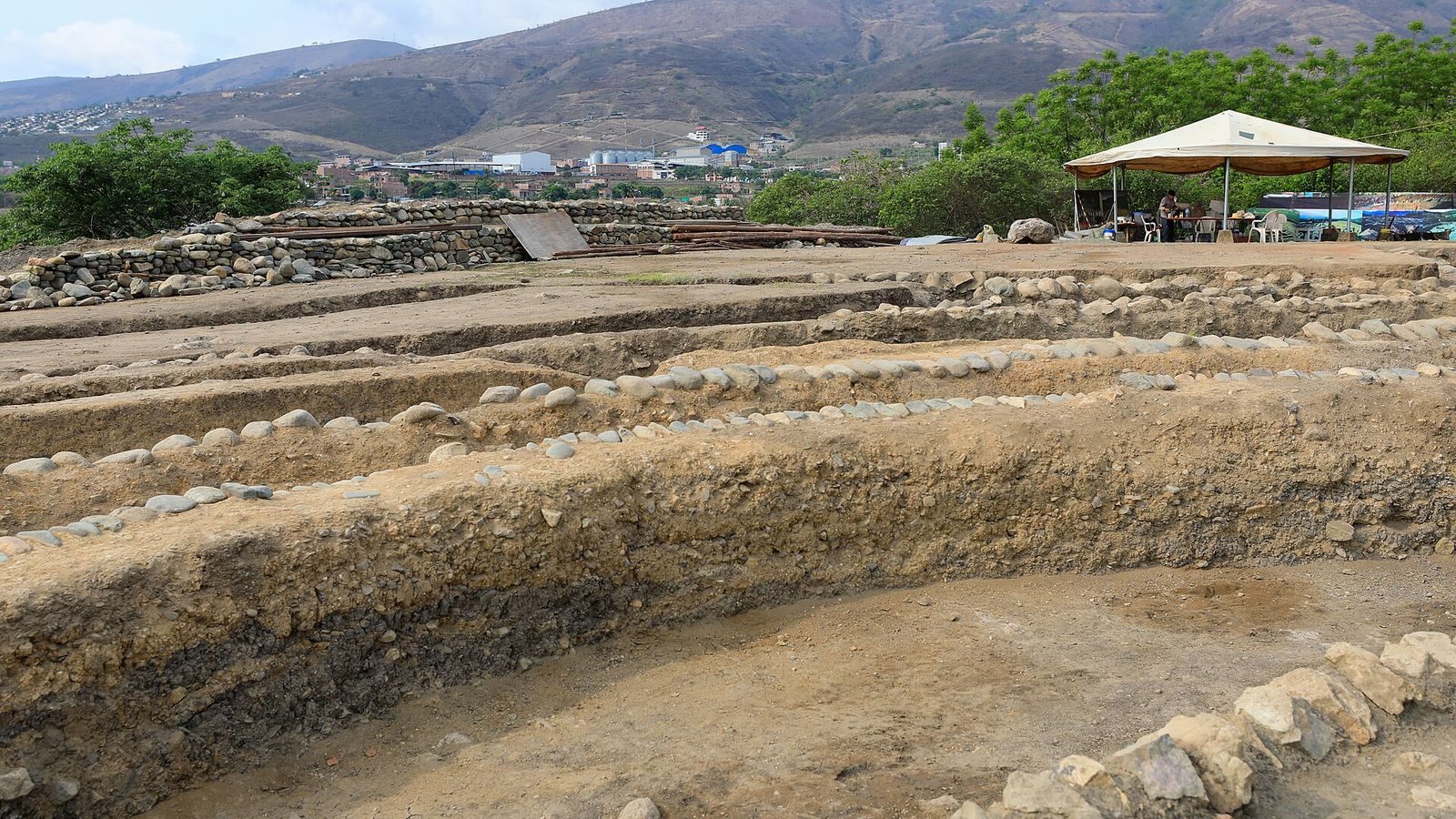
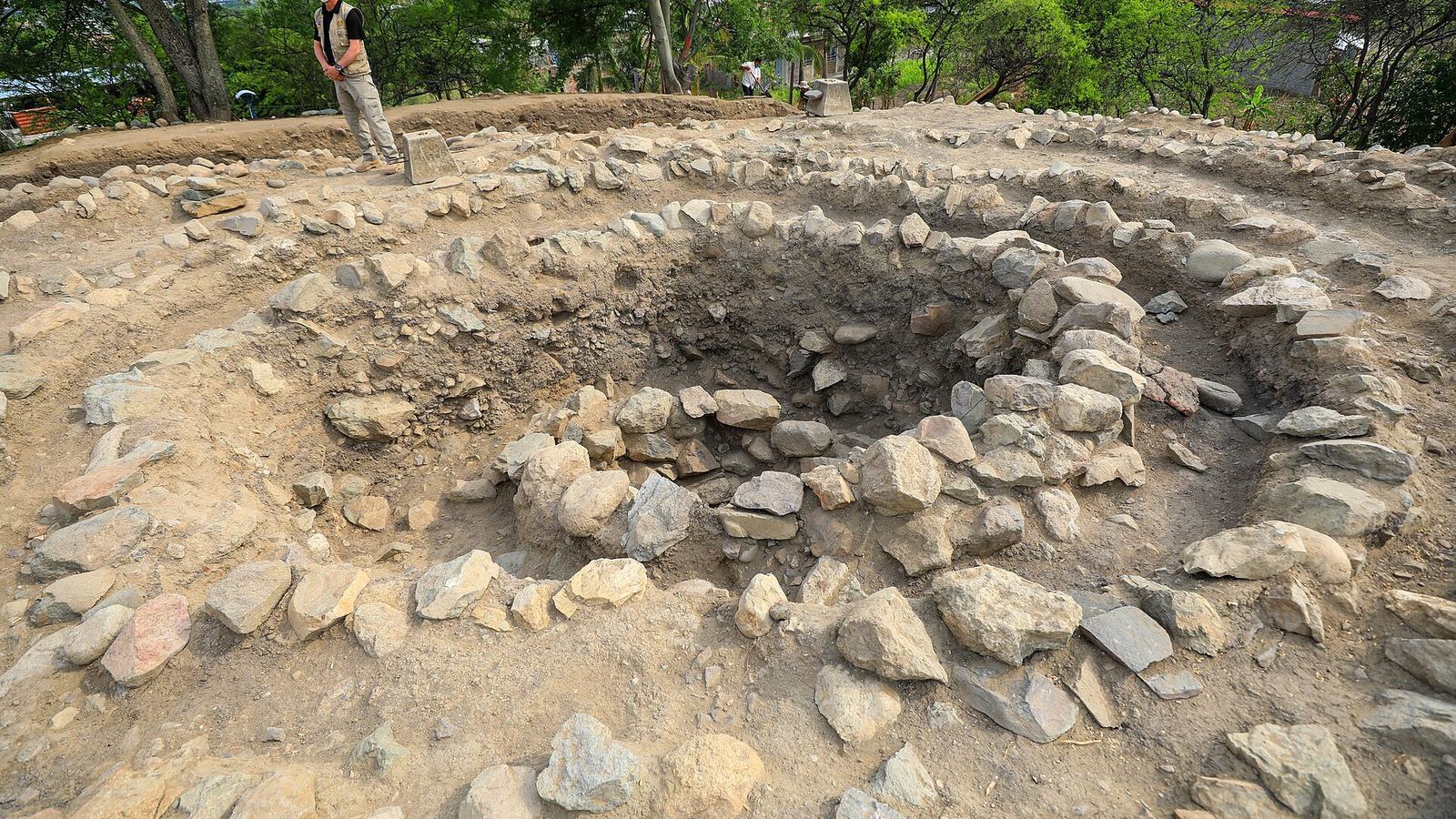
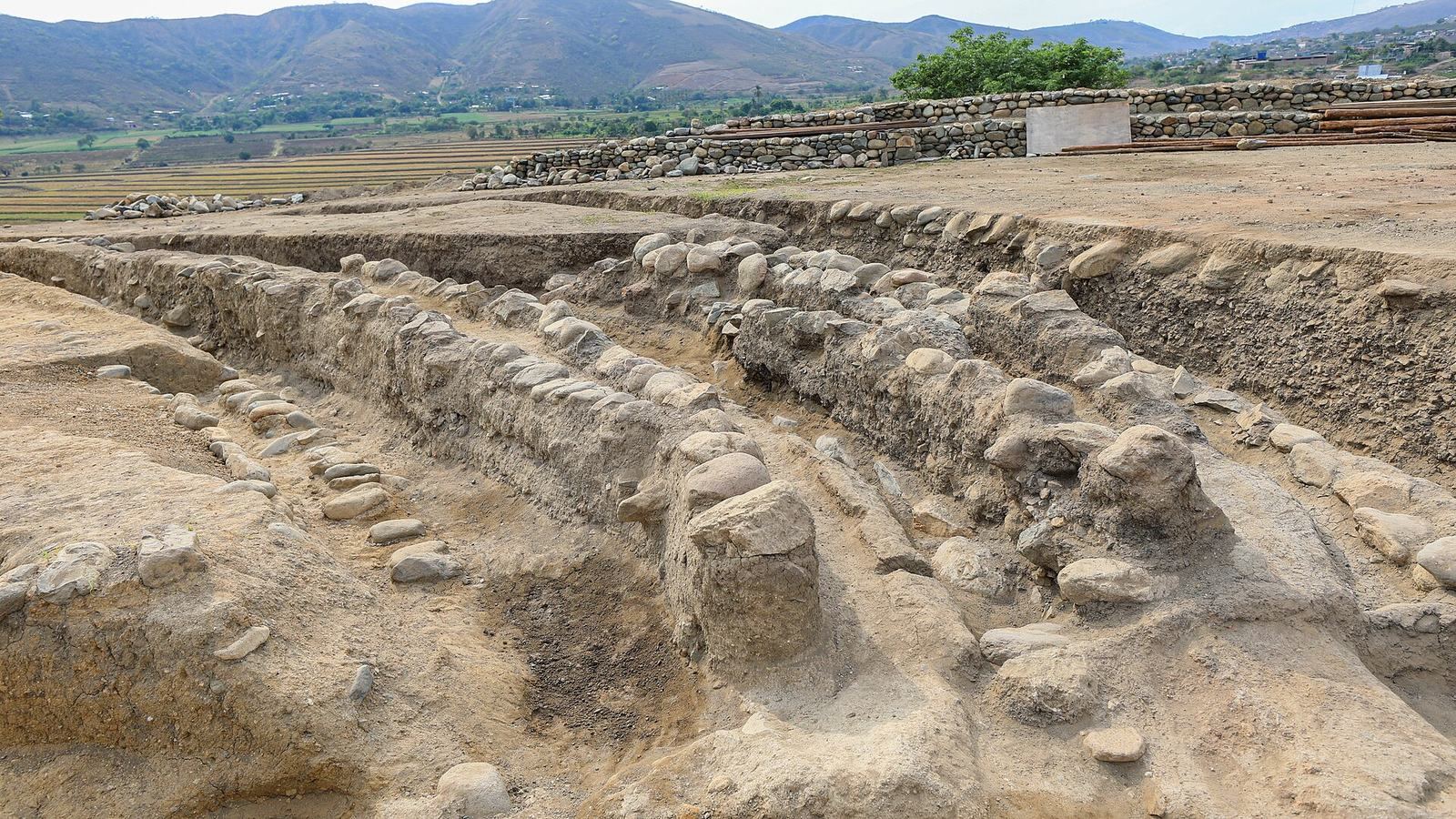
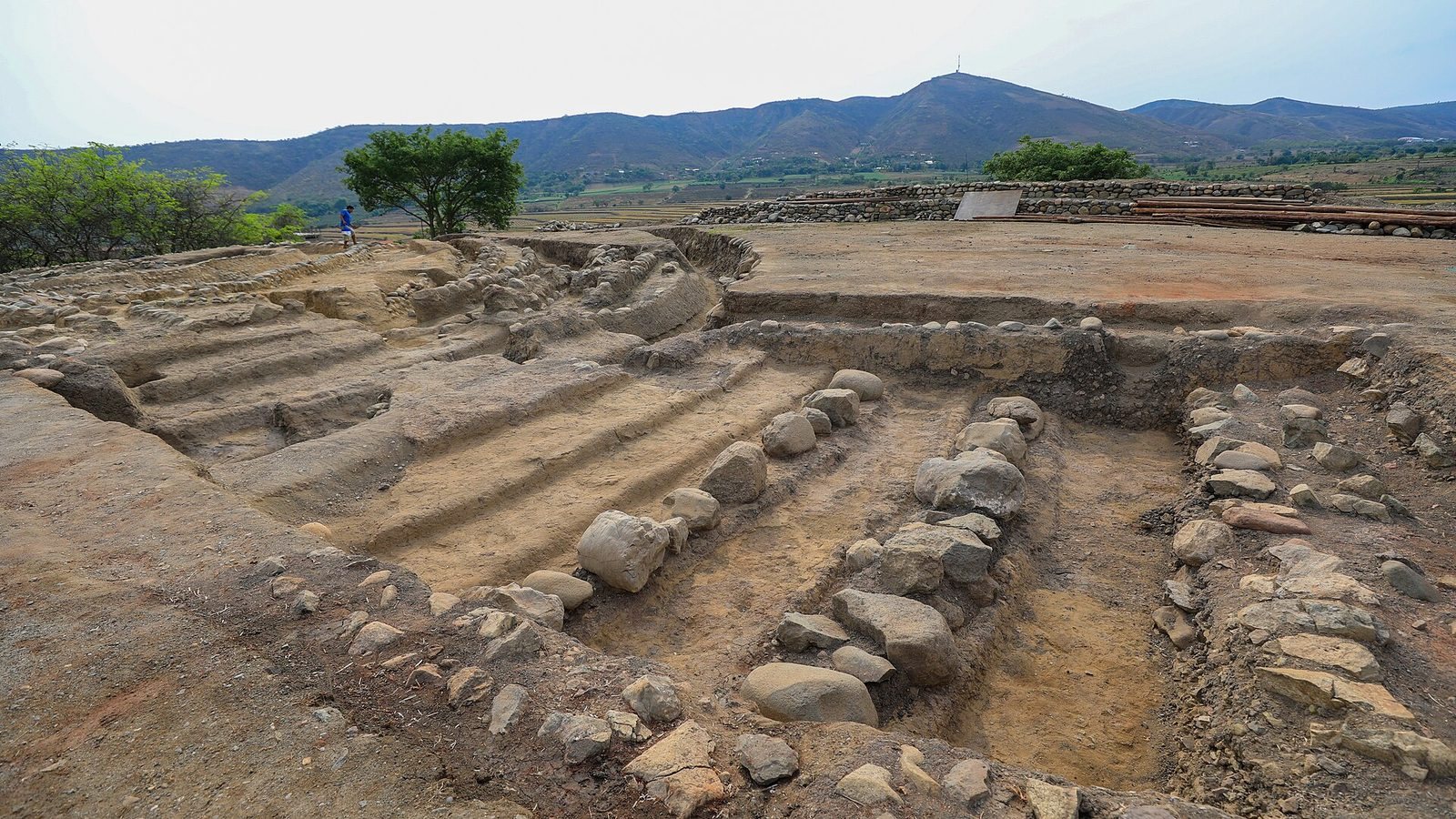
The site covers approximately two acres, and its principal feature is a spiral-shaped enclosure. Excavation first exposed yellow-colored steps and floors. Beneath a layer of clay and rounded stones, archaeologists found the spiral structure, built with adobe, river stones, and mountain stones. The stone materials are described as roughly 70 percent river stones and 30 percent mountain stones. The clay and rounded stones had formed an impermeable covering over the enclosure, helping shield its architecture from the area’s periodic torrential rains and preserve the remains.
Archaeologists have suggested that the spiral may represent a coiled snake, a symbol also found at nearby sites. Its shape has also been compared with the monkey ground drawing at Nazca and with a Spondylus shell. A tomb beneath the spiral’s center has been proposed, perhaps for a priest or healer, based on burials at Palanda and San Isidro. This proposed tomb remains uncertain. Human remains indicate that a man may have been sacrificed before construction of the enclosure was complete.
Finds and ritual interpretations
Excavated finds include ceramic fragments in the forms of vessels and jaguar or macaw heads, stone sculptures shaped like cacao pods and seeds, human burials, evidence of Amazonian foods, camelid offerings from a mammal group that includes llamas and alpacas, and remains of fire pits. The cacao-related finds have been interpreted as evidence of ritual use of cacao, the plant known scientifically as Theobroma cacao, and characterized as the earliest known evidence for the plant. Cultivation at Montegrande has also been proposed, based on comparisons with Palanda and objects shaped like cacao fruit.