Church of San Francisco in Betanzos: A Gothic Franciscan Church
Site at a Glance
- Popularity
- Medium
- Country
- Spain
- Primary era
- Medieval
- Eras represented
- Medieval
- Civilizations
- Crown of Castile
- Site type
- Religious
- Remains
- Church
On this page10 sections
History
The Church of San Francisco in Betanzos is a Gothic Roman Catholic church in Galicia, Spain, reconstructed in the second half of the fourteenth century under the patronage of Fernán Pérez de Andrade. Dedicated to Saint Francis of Assisi, founder of the Franciscan order, it follows the Roman Rite, the principal liturgical tradition of the Roman Catholic Church, and belongs to the Archdiocese of Santiago de Compostela.
Franciscan foundation and medieval rebuilding
Land for the church was acquired in 1289, and a monastery dating to the thirteenth century preceded the present building. The convent is first recorded in 1334. Fernán Pérez de Andrade, a Galician nobleman and regional feudal lord identified as the church’s founder and patron, also rebuilt the existing monastery. At one time, the adjoining Franciscan house accommodated as many as 47 mendicant friars, members of religious orders traditionally reliant on alms. Fernán died in August 1397 and was buried in the church.
Fire, suppression, and return
A Franciscan provincial chapter, a regional meeting of the order, took place at the monastery in 1524. A fire that struck Betanzos in 1565 badly damaged the monastery, which was rebuilt and reformed in 1567.
Following the ecclesiastical confiscations of 1835, the monastery was suppressed and abandoned. Its chapter house, cloister, and much of its other accommodation disappeared in the late nineteenth century. Monks returned to the church and surviving monastery in 1914, and a new residence opened in 1919. That year, the church was declared a National Monument; it later received Spain’s Bien de Interés Cultural designation, a formal cultural-heritage status.
On 22 July 1936, soon after the Spanish Civil War began, a fire burned the residence and church. The convent reopened in November 1955. Religious men occupied it until 1992, after which nuns lived there.
Remains
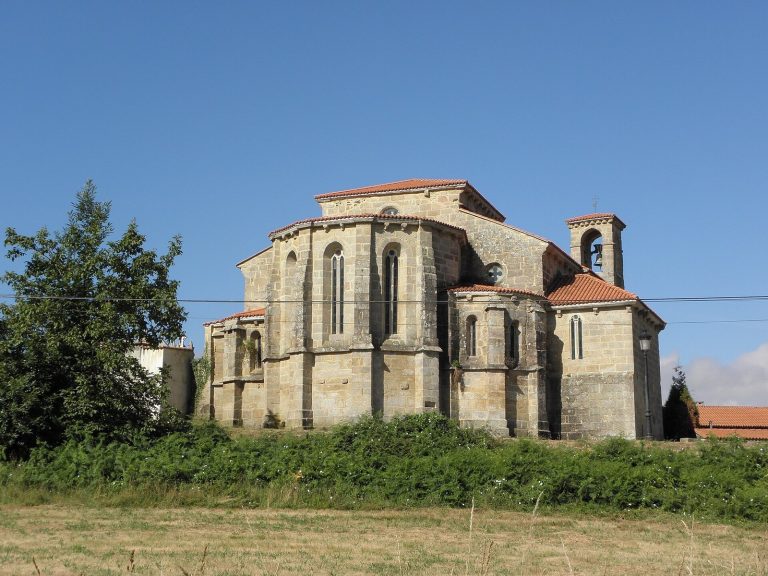
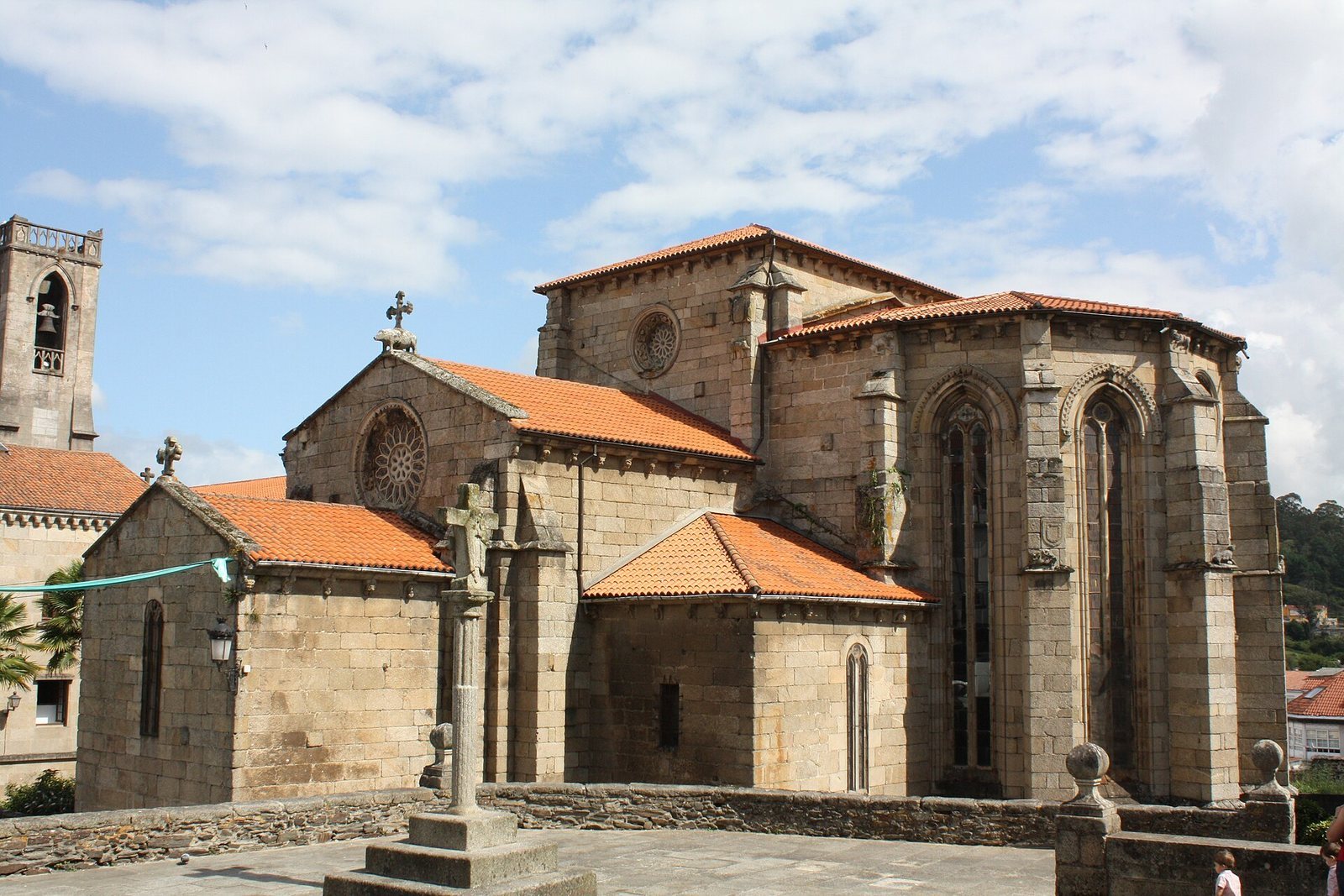
The Gothic church has a Latin-cross plan, with a long central axis crossed by a shorter one. A single nave leads to a polygonal apse, the sanctuary end of the church, covered by a ribbed vault, a ceiling supported by projecting stone ribs. Two rectangular chapels extend from the sides.
Church architecture and decoration
Portal and exterior
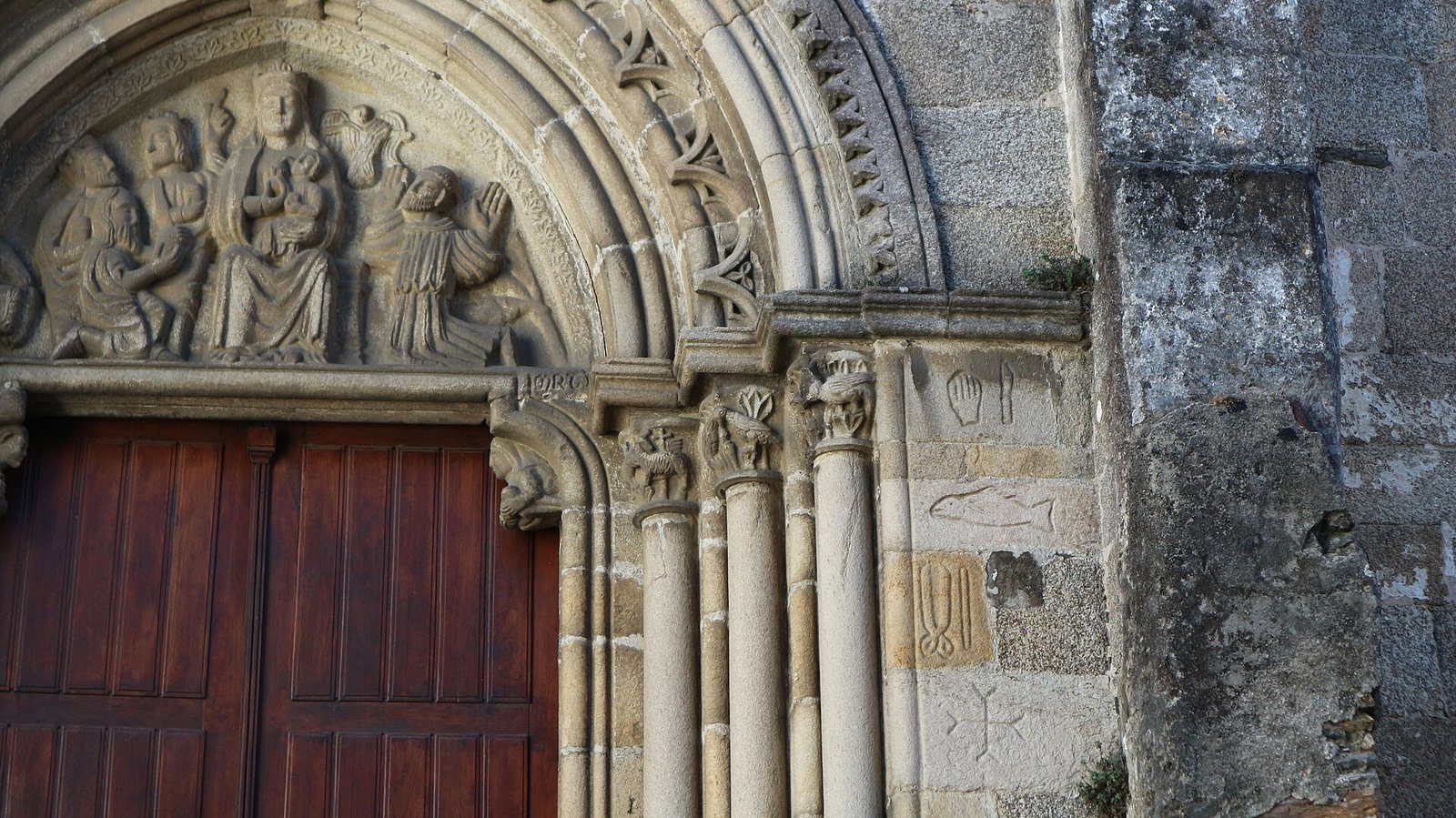
The main portal has three pairs of columns that support three pointed arches. Its tympanum, the decorated panel above the doorway, depicts the Virgin and Child, the Adoration of the Magi, and Saint Francis receiving the stigmata, wounds corresponding to those of Christ’s crucifixion. The polygonal apse has paired windows, arches, and staggered buttresses. Rose windows, Gothic stained glass, and figurative corbels, projecting architectural supports, also form part of the exterior. A cross supported by a boar stands on the roof above one arm of the church.
Main chapel
A relief in the main chapel shows God in majesty surrounded by the four Evangelists, figures traditionally associated with the canonical Gospels. Angels playing different instruments decorate the ribs of the vault, including one playing bagpipes. The main altar is dedicated to the Last Judgment, the final judgment of humanity by God in Christian belief. Some capitals, the upper parts of columns, bear carvings of fantastic animals.
Andrade burials
Tomb of Fernán Pérez de Andrade
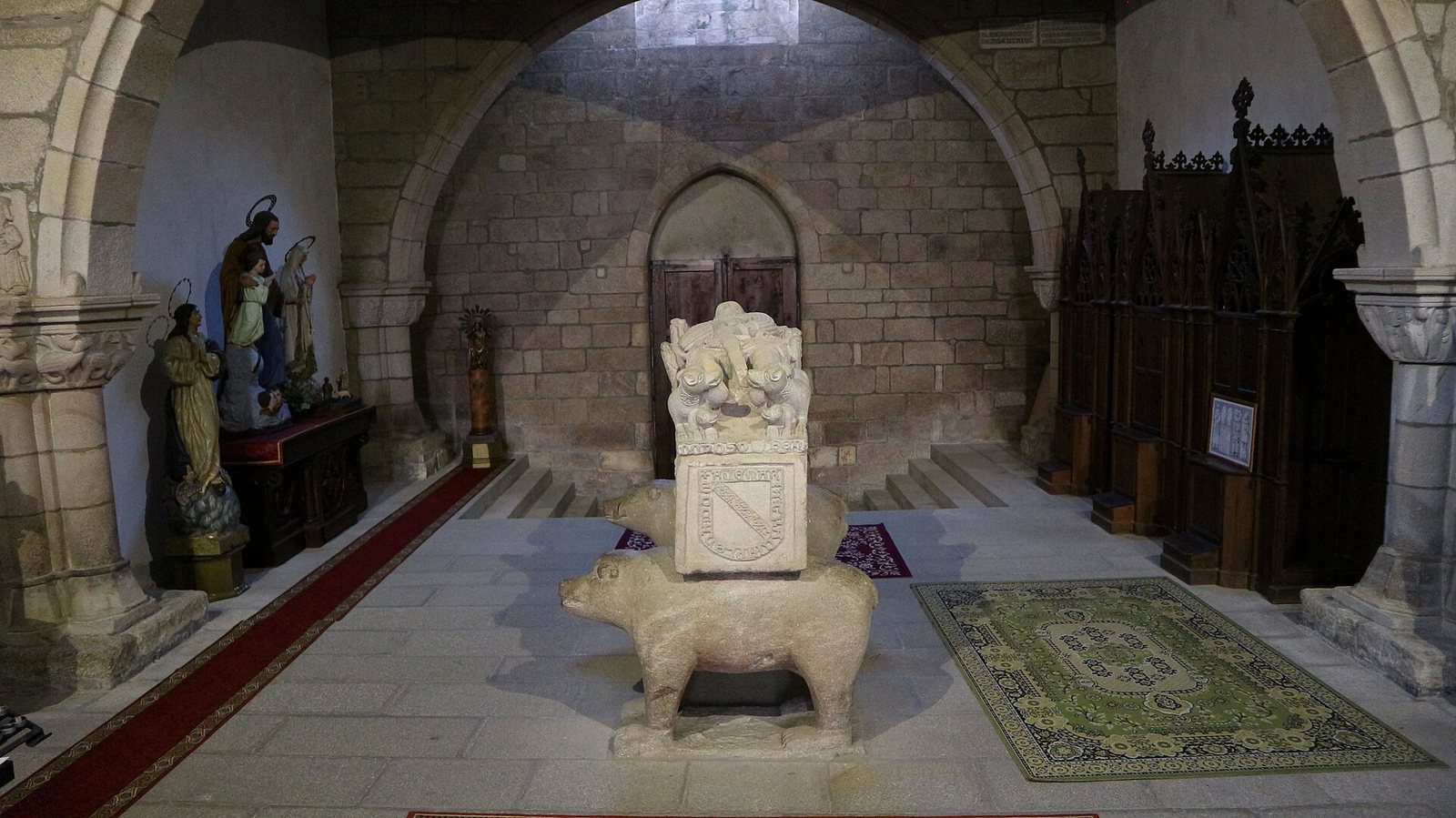
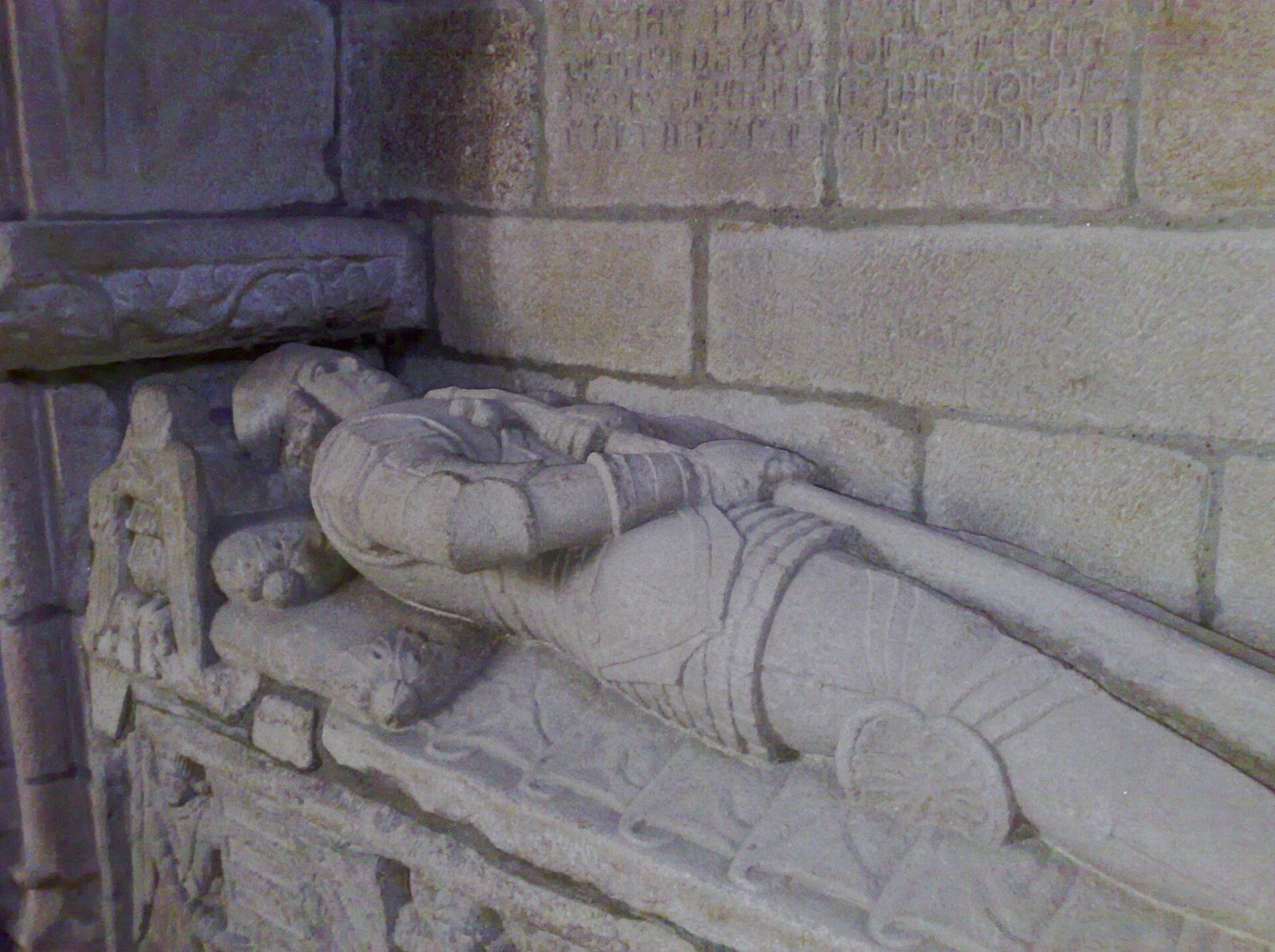
Fernán Pérez de Andrade’s tomb, regarded as a precursor of medieval funerary sculpture, was moved in 1782 from the main chapel to the foot of the church beneath the choir. The stone sarcophagus rests on a bear and a boar, animals associated with the Andrade family. The family arms appear at its head and foot, while scenes of boar hunting run along its sides. An inscription encircles the tomb; its date refers to the completion of the church’s reconstruction. A second inscription on the figure’s chest names the knight.
The reclining effigy, a sculpted figure shown lying down, represents Fernán in armor, his bust resting on two cushions. Two hunting dogs lie at his feet, with two more beneath them; three additional dogs appear at his sides, two on the right and one on the left. Four kneeling angels keep watch. One holds a censer, while the other three read psalms. Fernán’s right hand rests on his heart, and his left grips the sword hilt. Its pommel bears a symbol of Solomon, regarded as magical and protective.
Other family burials
The church contains 16 sarcophagi of Andrade family members, as well as burials of other noble families, some in dedicated chapels. It is regarded as Galicia’s most important heraldic pantheon, a burial church noted for noble tombs and emblems such as coats of arms. The sarcophagus of Fernán’s wife, Sancha, once stood beside his tomb and remained in the church until the seventeenth century. It is now incomplete and preserved in the Museo das Mariñas in Betanzos.