Church of San Dionisio: A Gothic-Mudéjar Parish Church in Jerez de la Frontera
Site at a Glance
- Popularity
- Medium
- Country
- Spain
- Primary era
- Medieval
- Eras represented
- Medieval, Early Modern
- Civilizations
- Crown of Castile, Spanish
- Site type
- Religious
- Remains
- Church
On this page16 sections
History
Foundation and medieval development
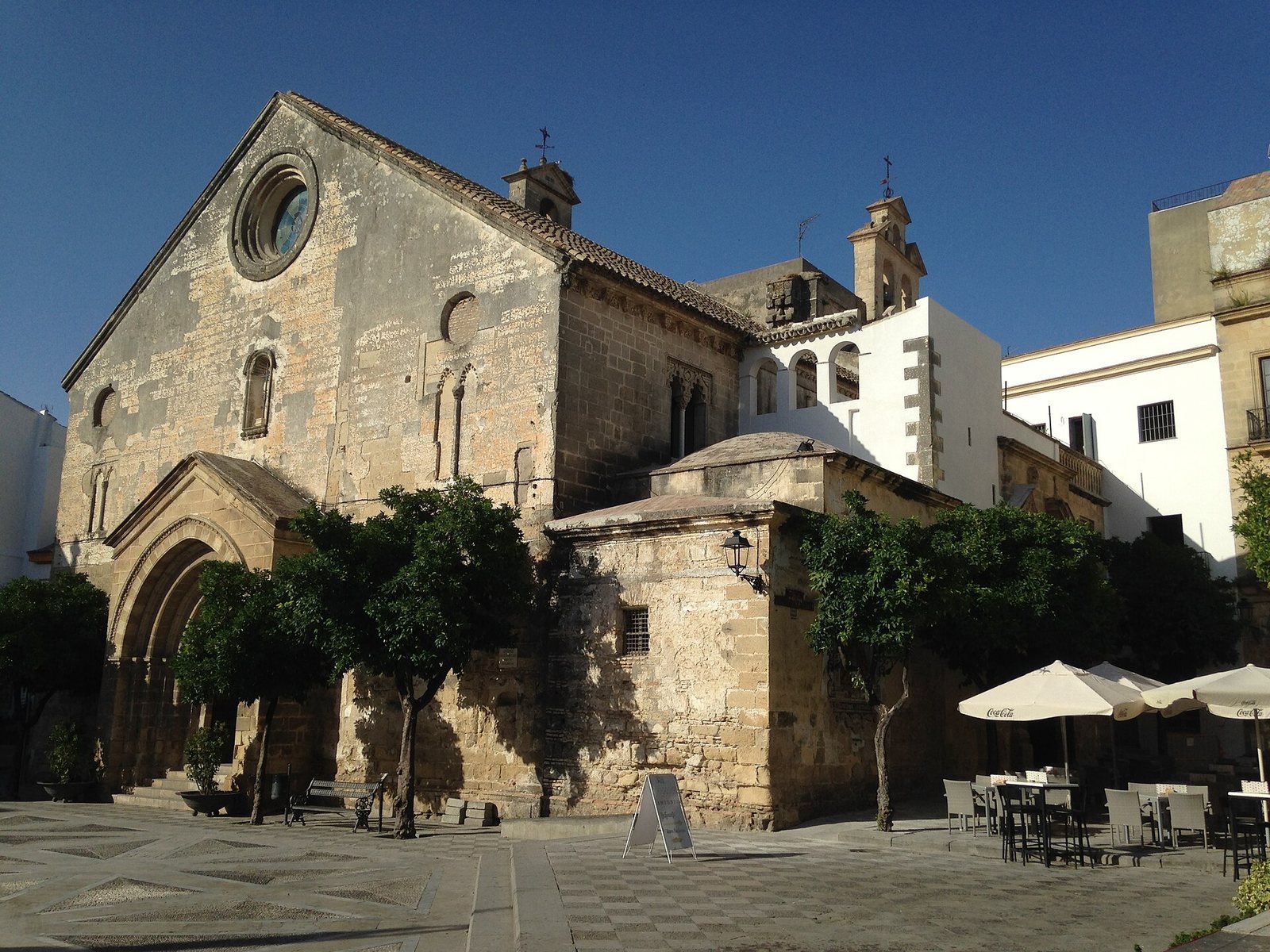
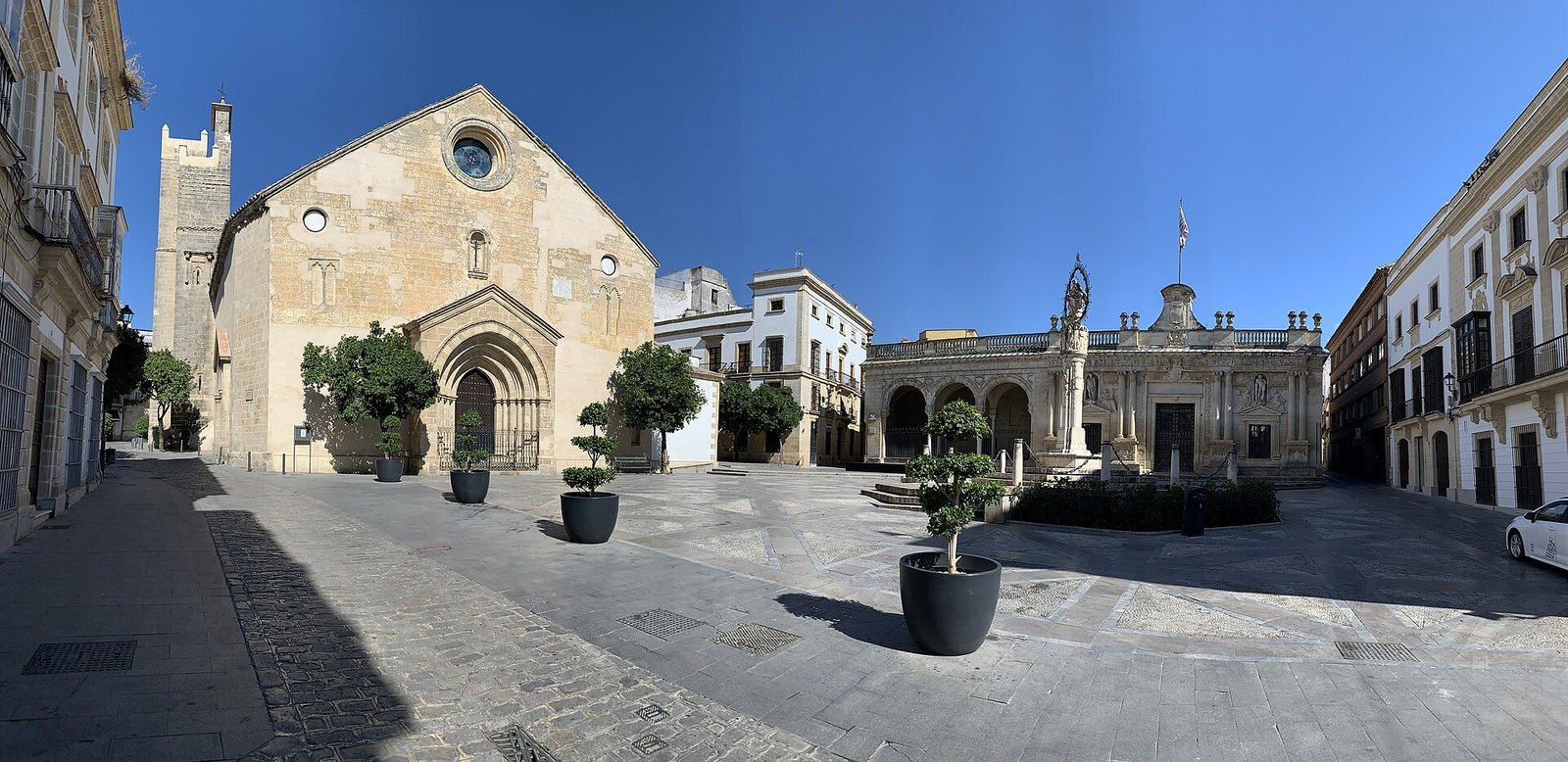
The Church of San Dionisio is a Catholic parish church in Plaza de la Asunción, Jerez de la Frontera, Spain. Alfonso X of Castile established the parish after Christian forces retook the city in 1264, and its first church was built in the 13th century in Gothic style. It was dedicated to Dionysius the Areopagite on the feast day of Denis of Paris. The dedication arose from a mistaken identification of the two distinct saints, but a papal decree retained it. San Dionisio later became Jerez’s patron saint.
During the first half of the 15th century, the church underwent substantial rebuilding in the Gothic-Mudéjar style, which combines Gothic forms with artistic and building traditions influenced by Islamic rule in Iberia. The Torre de la Atalaya, a separate municipal structure attached to the church, was completed around the middle of that century. Also known as the Clock Tower, Council Tower and Watchtower, it served as a lookout for fires and attacks and housed the town clock. The tower is first mentioned in 1447, its clock was installed in 1454, and it was used as a lookout from 1484. It has a cultural-heritage designation independent of the church.
Early modern alterations
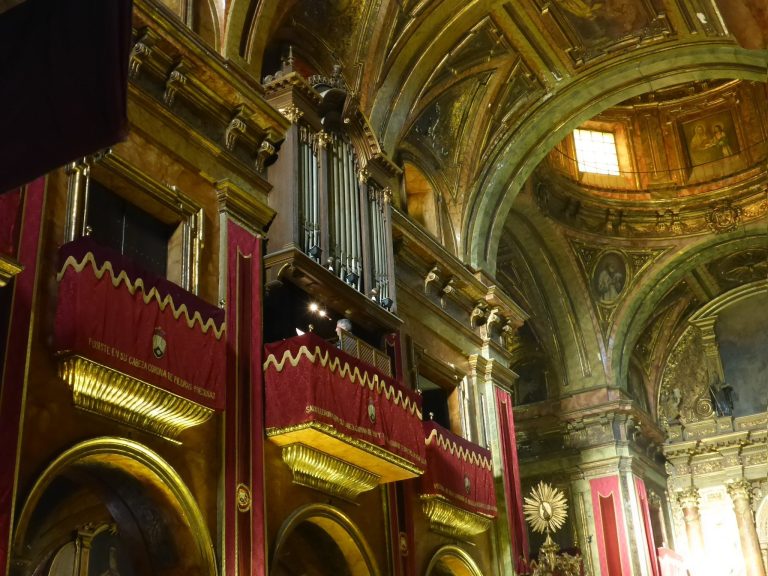
A 16th-century project sought to replace the nave’s wooden roofs with late-Gothic vaults. Its completed work included a new main chapel and an elaborate curved rib vault in front of it, a ceiling supported by projecting masonry ribs.
The church’s interior was extensively altered in the 18th century. From 1728 to 1731, architect Diego Antonio Díaz changed the ends of the naves and the pillars, and replaced the old wooden ceiling with vaulting. These changes concealed much of the medieval fabric. After the Lisbon earthquake of 1755, further work was undertaken between 1758 and 1760 under architect Pedro de Silva and carried out by local master builder Juan de Vargas. The campaign affected the roofs, pillars, the space behind the choir and the bell tower.
The main altarpiece, a carved structure behind an altar, was made in the 18th century by woodcarver Agustín de Medina y Flores for a Jesuit church. After the Jesuits were expelled in 1776, King Charles III transferred it to San Dionisio, where Andrés Benítez adapted it to its new setting.
Restoration and continuing religious use
Restoration in the 1960s and 1970s removed most of the Baroque ornamentation and returned the wooden beam ceiling and other details to their earlier positions. In 1964 the church was declared an Asset of Cultural Interest and a national Historic-Artistic Monument. Its pillars were reinforced in 2010. Work in 2017 repaired roofs and stone walls and restored the parish complex; archaeological remains found beneath the floor also became part of the work. Heavy rain in 2021 dislodged a gargoyle that had been restored in 2017.
The church is the official base of the Brotherhood of Our Lady of Greater Sorrow, the Brotherhood of the Sacred Resurrection and the Parish Association of the Divine Shepherdess. The image known as Christ of the Waters has a popular devotional association with appeals for rain during drought.
Remains
Plan and medieval fabric
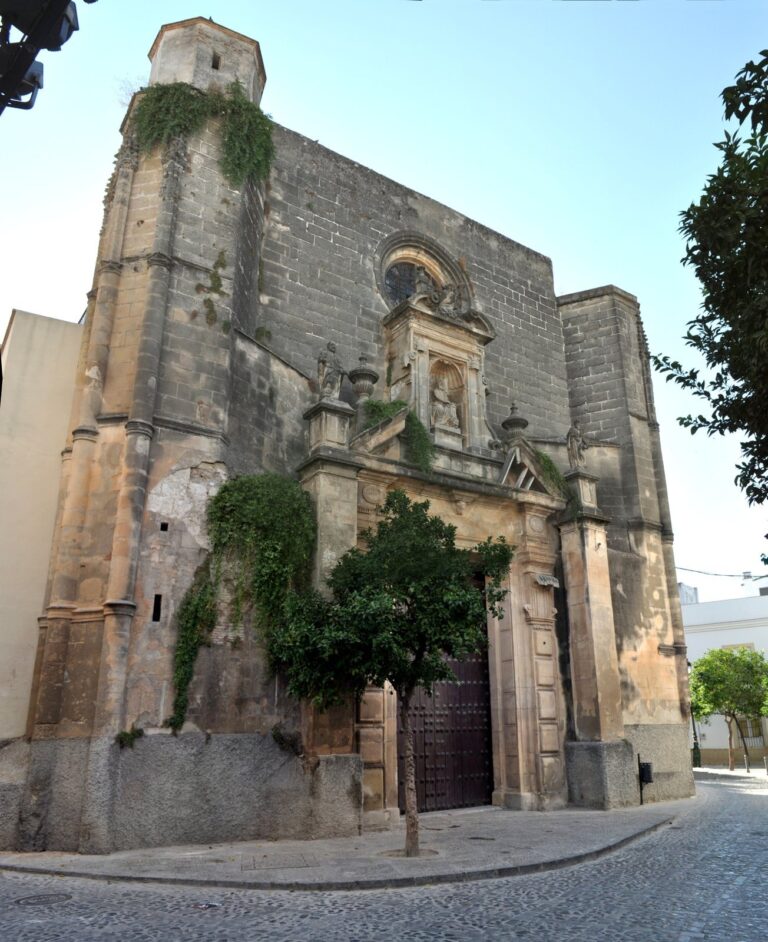
The church has three lengthwise divisions, or naves, separated by tall pillars with cross-shaped plans. Large interlaced ornament rises along the pillars to their tops. Most arches between the naves are pointed and toothed, with a band of fine, repeated-lobed ornament above them. The arches opening toward the high altar differ in form. Each nave ends in an apse, the curved end of a church. One of these apses preserves the clearest surviving part of the 13th-century building. The west entrance is set in a plain gabled wall that follows the roof’s two slopes, with a recessed round rose window above it.
Altarpieces and chapels
Main altarpiece
Baroque altarpieces cover the apses. The main one, known as the Altar of Saint Anne of the Martyrs, has four finely carved, tapering supports that divide it into three vertical sections, and a shell-shaped feature crowns the composition. In its lowest tier, a painted wooden figure of Dionysius the Areopagite by Daniel Herrera y Herrera stands below a niche containing Saint Anne and the Virgin Mary. Saint Joseph with the Child and Saint Joachim appear between the supports. The upper section includes Saints Honorius, Stephen and Eutychius, as well as Denis of Paris. The figure of Dionysius was blessed on 8 October 2016.
Side chapels
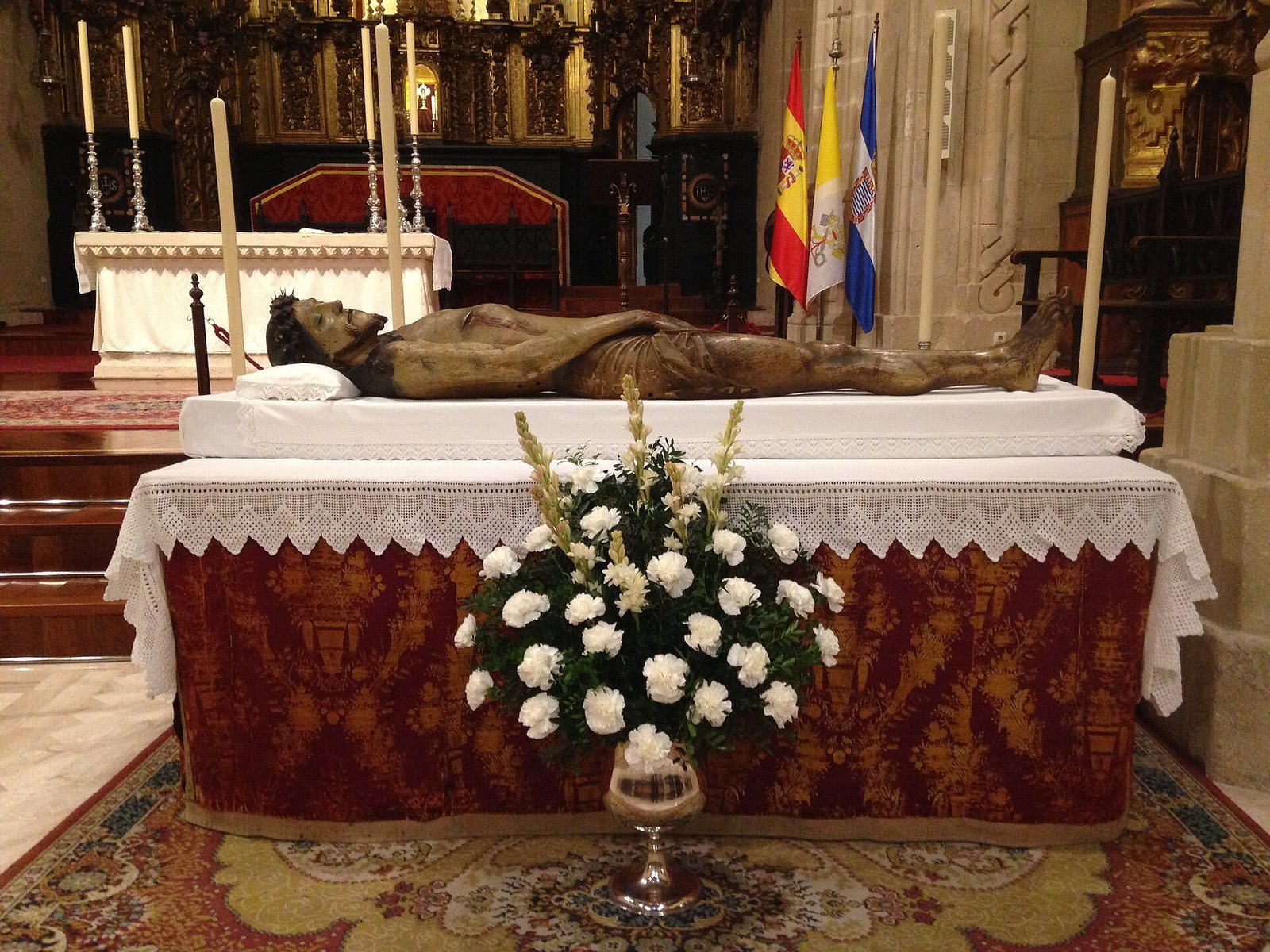
The church also contains the Chapel of the Sacrament and the Baptism Chapel. The latter was once called the Chapel of the Astera and has a simple ribbed stone ceiling. The Baptism Chapel now houses the image of Christ of the Waters.
Entrances and tower
Doorways
Two of the church’s three doorways have deeply recessed, pointed Gothic-Mudéjar arches. A third, on one side of the building, has a Baroque design and replaced a medieval entrance. The west doorway sits beneath the circular rose window in the gabled wall.
Torre de la Atalaya
The Torre de la Atalaya is attached to the church but was built as a municipal, civilian structure. Its association with the town clock and lookout duties distinguishes it from the parish’s religious buildings.
Sculptures and underground chamber
Christ of the Waters
The recumbent wooden figure of Christ of the Waters dates to the 16th century. It is attributed either to Sevillian sculptor Pedro Millán or to someone in his immediate circle, and is associated with the Seville School. Its elongated body gives prominence to naturalistic form and suffering. The varnish preserves the visibility of both the painted colors and the chestnut wood grain. For decades the image was kept in the space now used as the Chapel of the Sacrament; it is now in the Baptism Chapel.
Our Lady of Greater Sorrow
A Baroque image of Our Lady of Greater Sorrow, attributed to sculptor Ignacio López, dates to about 1718.
Crypt
An old underground chamber lies beneath the area around the high altar. Recovered in 2017, it was converted into a columbarium, a room with niches for urns, and blessed by the bishop of Asidonia-Jerez.