Church of Our Lady of Loreto: A Renaissance Church in Bratislava
Site at a Glance
- Popularity
- Medium
- Country
- Slovakia
- Primary era
- Early Modern
- Eras represented
- Early Modern
- Civilizations
- Habsburg, Hungarian
- Site type
- Religious
- Remains
- Church
On this page10 sections
History
Construction and transfer to the Ursulines
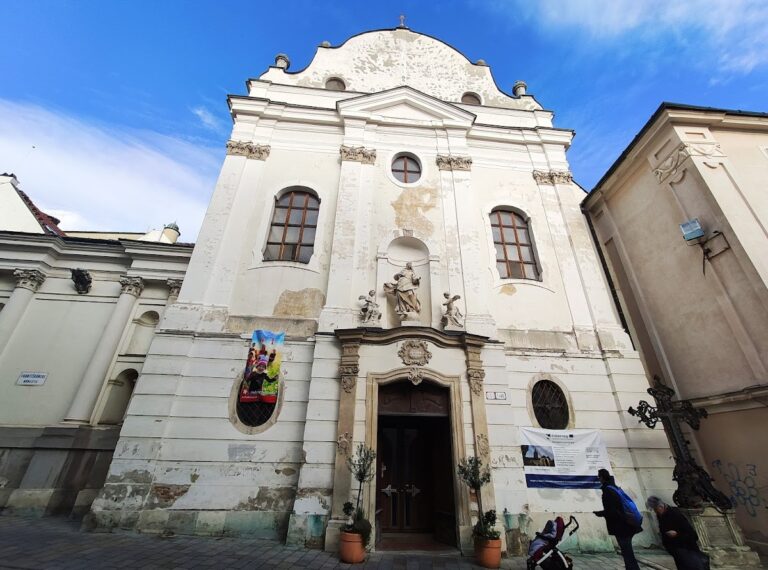
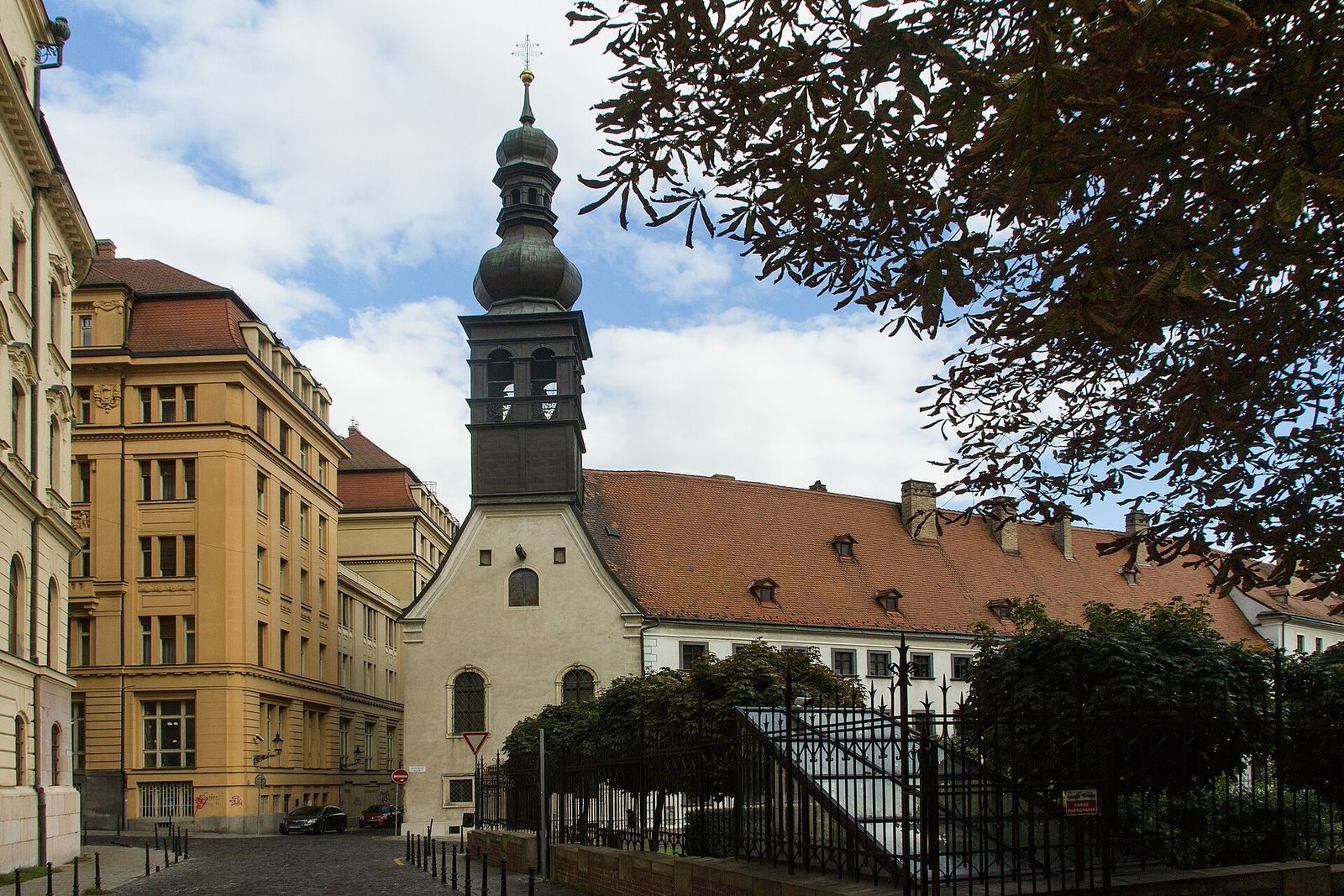
The Church of Our Lady of Loreto is a Renaissance church on Uršulínska Street in Bratislava, Slovakia, built by the city’s Protestant community between 1659 and 1663. The Renaissance was a European artistic and architectural period. The church is among Bratislava’s oldest buildings.
The Ursulines, a Catholic women’s religious order founded in Brescia in November 1535 by Angela Merici, focused on educating girls and young women. Sisters settled in Pressburg, then part of Hungary, during the second half of the seventeenth century and began working there. Protestants used the church until 1670. After the Wesselényi conspiracy, a plot by Hungarian nobles against Habsburg rule, was uncovered, the church was taken from the Protestant community and assigned to the Ursulines in 1672. They dedicated it to Our Lady of Loreto, a Catholic title for Mary associated with a shrine in Loreto, Italy. In 1676, Archbishop of Esztergom Juraj Selepčéni authorized the Ursulines to extend their activities throughout the country.
Changes and continuing use
The tower’s original shingle roof burned in 1683 and was replaced by a Baroque roof, part of a later European artistic style. The following year, Archbishop Leopold Kolonič gave the Ursulines a statue of Our Lady of Loreto.
The church remains an active Roman Catholic church of the Ursuline order and is owned by the Roman Union of the Order of St Ursula. It has been listed as a Slovak National Cultural Monument since 23 October 1963.
Remains
The stone church has one main worship space, or nave, and a single tower. Its appearance largely preserves the character of the seventeenth-century building, with later changes to some features.
Exterior and setting
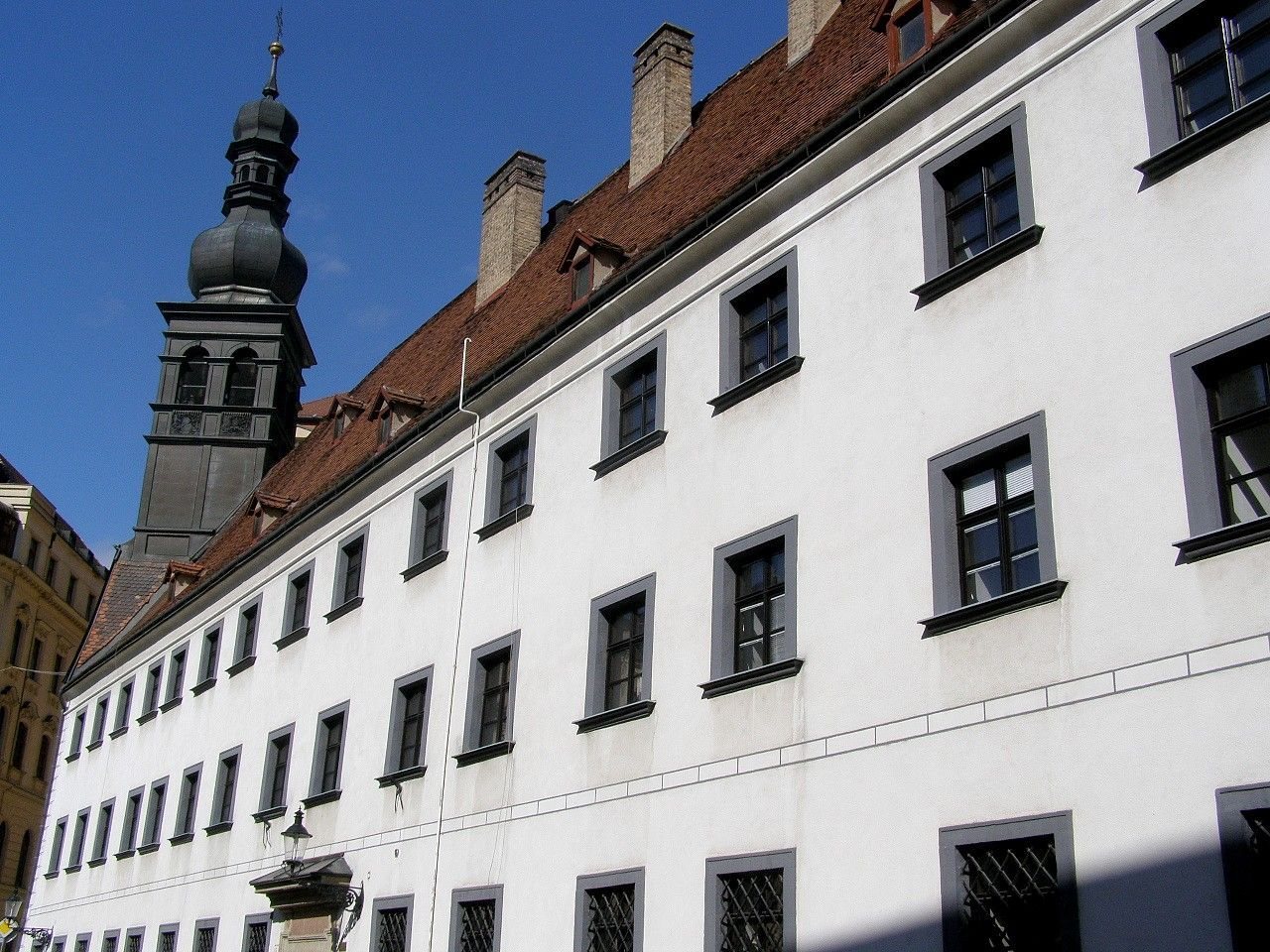
Built at the edge of Bratislava’s historic town, the church stood close to the northern town walls. Its main front faces Uršulínska Street. A wooden, prism-shaped turret containing a belfry rises above the façade, topped by a copper-covered, onion-shaped Baroque roof. An Ursuline monastery building stands behind and adjoins the church.
Interior furnishings
The interior is restrained, with a late-Baroque high altar and wooden side altars whose architecture combines columns, painted color, and gilding.
High altar
The high altar dates to the last quarter of the eighteenth century. Its central niche holds a statue of the Black Madonna, a dark-colored depiction of Mary. Statues of St Barbara, St Ursula, St Catherine of Alexandria, and St Agnes also adorn the altar.
Side altars
The wooden altars of St Anne and St Augustine were made in the last quarter of the eighteenth century. Each has columns and a triangular upper section. The St Anne altar displays a central painting of Anne with the young Mary, a smaller image of St Barbara above, and statues of St Joseph and John the Baptist at the sides. On the St Augustine altar, Augustine appears with his mother, St Monica; a painting of St Agnes is above them, with statues of St Zechariah and St John the Evangelist beside the central image. Martin Speer painted the pictures, probably in 1739, and Peter Brandenthal made the statues.
Pulpit
The pulpit dates to the second quarter of the eighteenth century. Its suspended, rounded preaching platform bears statues of Moses and Aaron. Above it, a canopy is topped by a statue of St Michael the Archangel.
Commemorative relief
A bronze relief of Pope John Paul II, made by Slovak sculptor Ján Bork, was unveiled and consecrated in 2006, ten years after the pope’s visit to Bratislava.