Laurinc Gate in Bratislava, Slovakia: A medieval town gate
Site at a Glance
- Rating
- 4.7
- Popularity
- Very Low
- Country
- Slovakia
- Primary era
- Unclassified
- Eras represented
- Unclassified
- Civilizations
- Unclassified
- Site type
- Military
- Remains
- Gate
History
Laurinc Gate in Bratislava, Slovakia, was a medieval town entrance constructed in the later Middle Ages (commonly dated to the 13th or 14th century) and formed part of the city’s defensive ring. It served as one of the principal gateways protecting the settlement historically known as Pressburg, and it marked the end of Laurinská Street beside a parish church dedicated to Saint Lawrence. The gate appears in surviving records by 1412 and played a continuous role in the town’s fortifications and street pattern until its removal in the late 18th century.
Work on the gate took place in the medieval period and its name derived from the nearby Saint Lawrence parish, a church mentioned in documents from 1311. That church stood outside the city wall and was taken down in the early 1500s (records give 1528 for this action); stone from the church was reused to strengthen sections of the town wall. During the 1400s the city strengthened the gateway with an additional outer defence because of fears prompted by the Hussite conflicts.
The gateway complex comprised a sequence of defensive elements and was sometimes restricted to light traffic only, with a small side door used when the main passage was closed; authorities reopened the main route to general traffic in 1608. In 1631 a severe storm ripped away the gate’s small turret and roof, and the municipal administration had the roof replaced at a stated cost of 25 gulden. In the early 18th century a column topped by a statue of Saint Florian was erected in front of the entrance, the date given as either 1732 or 1741 in different records. Officials ordered the removal of the city’s inner defences in 1778, and the gate was taken down at that time; one narrative attributes the action to an imperial directive by Empress Maria Theresa aimed at allowing the town to expand.
Remains
The gateway occupied a multilayered position in the wall system, consisting of an inner, a middle and an outer gate tower arranged along the street. The principal tower took the form of a solid, roughly square prism with a long ground-level passage through its base. Above the middle gateway there ran a covered shingled walkway, fitted with a roof and decorated with a gilded ball and flags carrying the town’s arms. The middle face of the gateway bore an image of Saint Lawrence and the tower itself was not tall; it was finished with a gilded knob and a flag.
Water defence formed a key part of the design. A moat filled by water from the nearby Danube and the mouth of a stream lay before the entrance and was crossed by a drawbridge. Immediately outside the gate stood a guardhouse used by the town’s guards and mercenaries; this building stored the city’s cannon and also accommodated the unit charged with supplying water to the moats. Within the inner tower there was a gunpowder magazine and a store for stone shot.
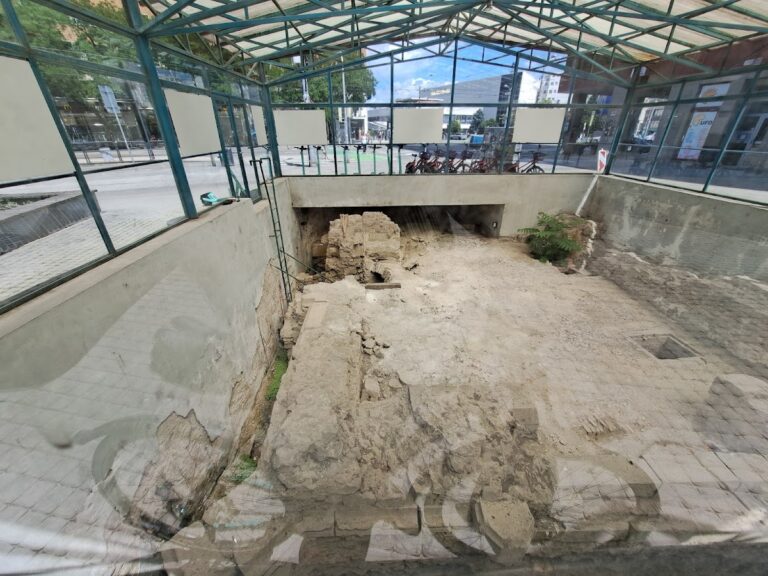
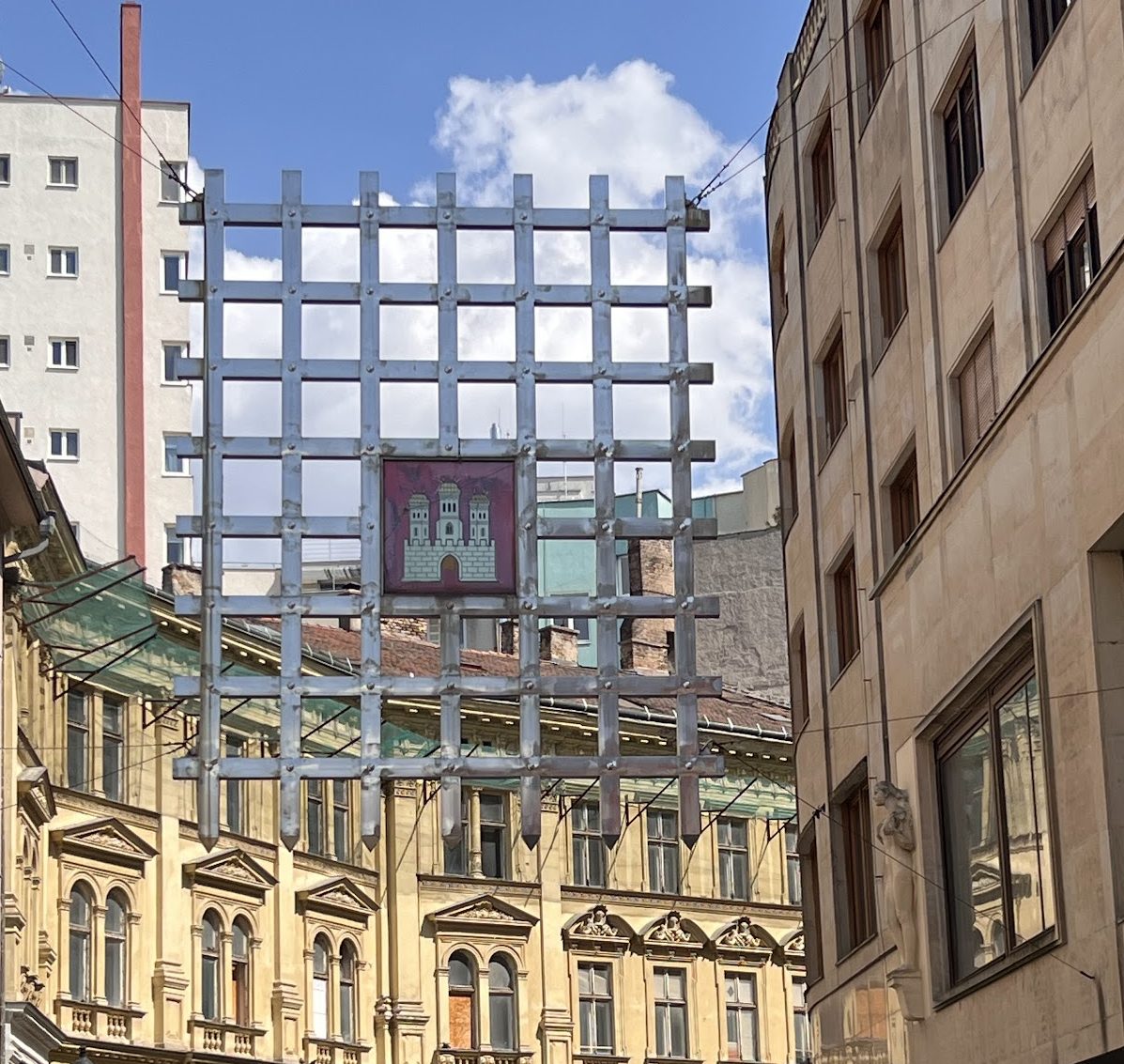
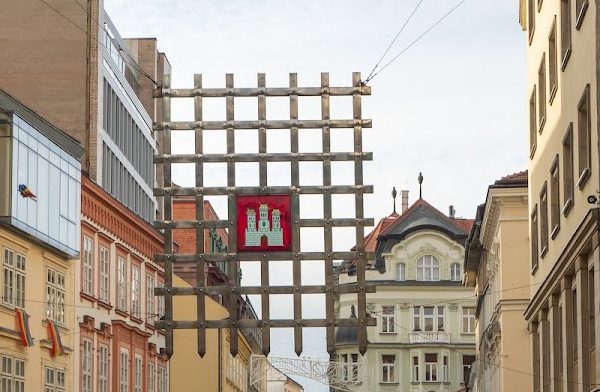
The outer forework, a fortified outer courtyard (barbican) built in the 15th century, and a defended approach that forced a sharp turn protected the gateway. The modern bend in Laurinská Street preserves the line of that turned entry. The gateway occupied the southeast corner sector of the walls and was flanked to the north by the Mäsiarska bastion and to the south by the rounded Pekárska bastion. After the demolition of the fortifications, physical traces were removed, but a symbolic hanging portcullis and a commemorative plaque mark the gate’s former spot, and the municipal theatre now stands on the site.