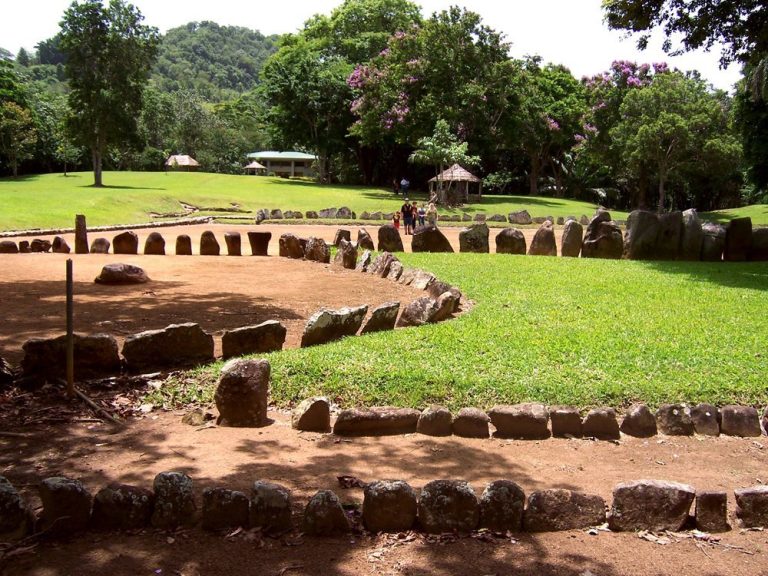
Caparra: Puerto Rico’s First Spanish Settlement
Site at a Glance
- Popularity
- High
- Country
- United States
- Primary era
- Early Modern
- Eras represented
- Early Modern
- Civilizations
- Spanish
- Site type
- City
On this page8 sections
History
Caparra was a Spanish colonial settlement founded in 1508 in present-day Guaynabo, Puerto Rico. It became the island’s first Spanish settlement and is identified as the second capital founded by Spaniards in the Americas, after La Isabela, an early Spanish settlement on Hispaniola established as its capital in 1494. Caparra belonged to the Columbian Viceroyalty, an early Spanish colonial jurisdiction associated with Christopher Columbus and his heirs.
Founding and early administration
In 1508, Caribbean governor Nicolás de Ovando authorized Spanish explorer and conquistador Juan Ponce de León to explore Puerto Rico and establish a settlement. His instructions called for agreements with Indigenous people, protection against abuses, searches for gold, food production, and construction of a fort. The expedition departed from Yuma and reached the island’s south in the territory of Taíno chief Agüeybana. The Taíno were Indigenous peoples of the Caribbean. After exploring with Indigenous people, the expedition founded Caparra and explored the Toa River.
The settlement took its name from the abandoned Roman town of Cáparra in Spain, where Ovando was born. Its settlers also called it Ciudad de Puerto Rico, meaning “City of the Rich Port.” Ponce de León made his residence there his permanent home, and his family joined him in 1509. The house also served as a Casa de Contratación, a Spanish Crown institution managing colonial trade and navigation, as well as an archive and an arsenal.
Gold, conflict, and relocation
In 1510, Ferdinand the Catholic, a monarch of the Spanish kingdoms, ordered ships sailing to Hispaniola to call at the port of San Juan Bautista, encouraging the island’s development. Puerto Rico’s first gold smelting took place at Caparra that year. Ponce de León later lost the governorship after a ruling favored Diego Colón, Christopher Columbus’s son, in disputes over the Columbus family’s colonial rights. His successor, Juan Cerón, founded San Germán in 1511.
In 1513, Carib people attacked Caparra while Ponce de León was exploring Florida and Bimini. San Germán sent aid to the settlement. Caparra’s low, swampy location also created problems for health, defense, supplies, and communication. Mendicant friars urged a move nearer the bay and the sea, pointing to unhealthy air and infant deaths. They favored a higher islet at the bay’s entrance. The relocation was ordered in 1519 and completed by 1521, near the end of Ponce de León’s governorship, after which Caparra was abandoned.
The relocated settlement was officially named San Juan Bautista de Puerto Rico and commonly called Puerto Rico. By the seventeenth century, the island and capital were generally known by exchanged versions of these names: the island as San Juan Bautista and the capital as San Juan.
A tale associated with Caparra
A popular tale set in 1530 concerns Diego Ramos de Orozco and Diego Guilarte de Salazar, friends who sought gold in Puerto Rico. Guilarte is described in the story as a municipal magistrate of San Juan. In one version, each man had forty enslaved Taíno people with him. After they found a large piece of gold they had agreed to share, Orozco tried to deceive Guilarte and keep it. Orozco later fell and was dying when Guilarte returned with help; he confessed and asked forgiveness.
Excavation and recognition
Caparra was surveyed in 1936, and historian Adolfo de Hostos led preliminary excavations in 1936 and 1937. The Puerto Rico government acquired the property in 1948, and a museum was established there in 1958. Archaeological work has continued. Caparra entered the U.S. National Register of Historic Places in 1984 and became a U.S. National Historic Landmark in 1994. Puerto Rico included it among its Historic Sites and Zones in 2000. Its national landmark recognition identifies Caparra as the oldest known European settlement in the United States.
Remains
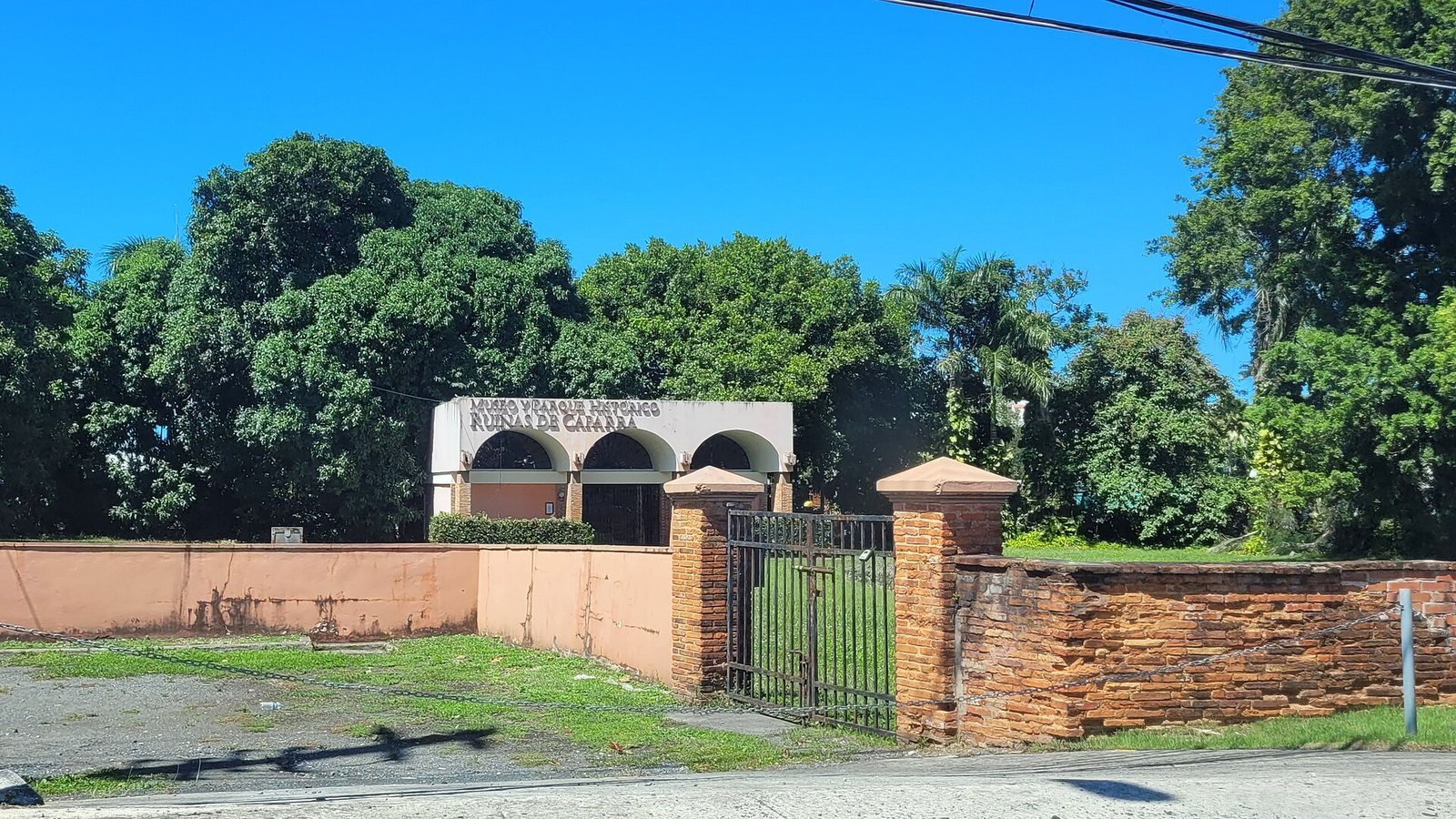
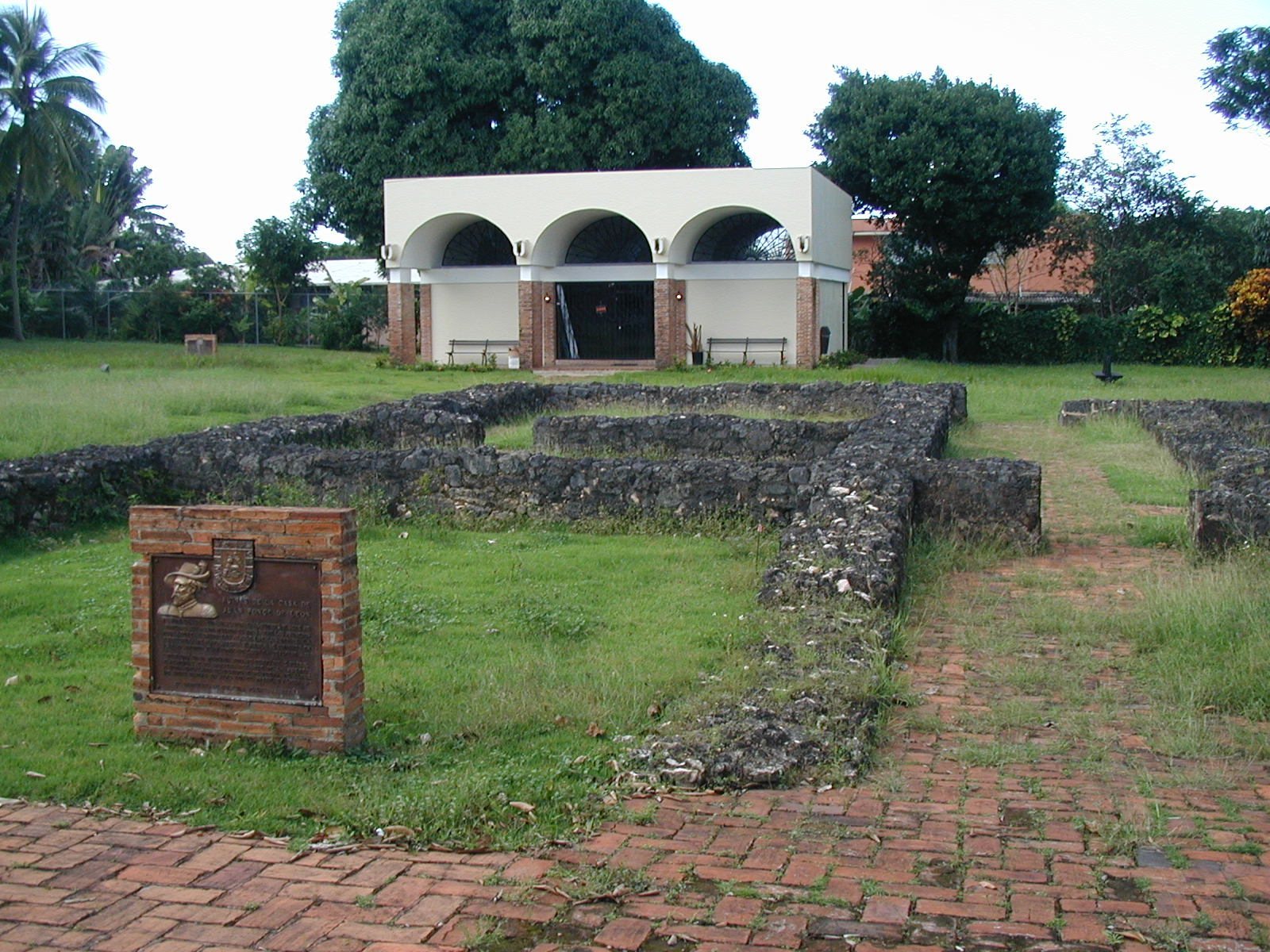
The three-acre archaeological site lies in Pueblo Viejo, Guaynabo, west of San Juan, on the grounds of the Museo y Parque Histórico Ruinas de Caparra. The original settlement occupied low, swampy ground on the south side of San Juan Bay. Its remains are centered on the foundations of Ponce de León’s residence, while excavations have also identified the main plaza and locations of other buildings. A two-lane highway cuts through the house remains.
Residence foundations
The foundations belong to a large residence dated to late 1508. Its walls were built using tapia, a method of compacting earth to form walls. The structure is identified as the settlement’s only non-wooden building and as Ponce de León’s only stone house. Road construction altered the remains: the house’s northern section was moved, and widening work in 1963 destroyed its excavated southern portion.
Plaza and other buildings
Excavations established the location of Caparra’s main plaza and identified sites for a wooden church and a gold-smelting foundry. These features help define the layout of the early settlement around its central residence.