Andone Castrum: A Tenth-Century Aristocratic Residence in France
Site at a Glance
- Popularity
- Low
- Country
- France
- Primary era
- Medieval
- Eras represented
- Medieval
- Civilizations
- Unclassified
- Site type
- Military
- Remains
- Castle
On this page15 sections
History
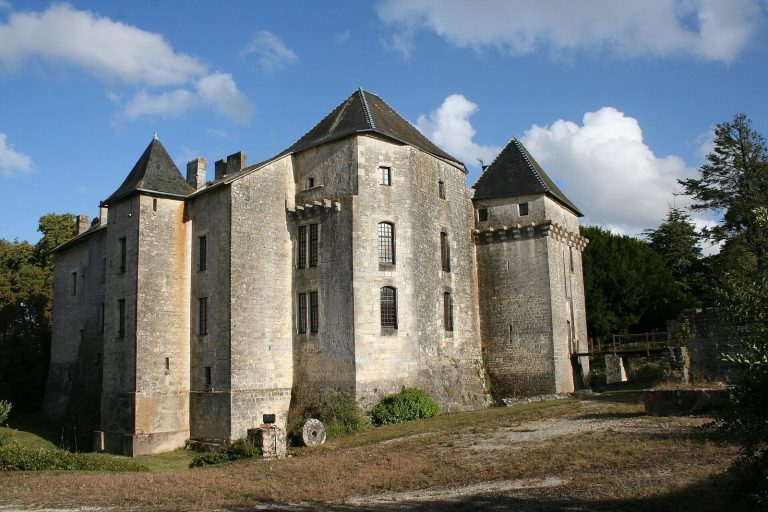
Andone Castrum is a fortified residence on the butte de la Garenne in France. Founded by the ruling family of Angoulême in the second half of the tenth century, it served as an aristocratic home and the centre of a rural estate in a largely cultivated landscape. Its occupation probably began around 970–980 and ended in 1028, after about two generations. The site offers an important intermediate stage between the more open residences of the Carolingian tradition, the Frankish political order associated with Charlemagne and his successors, and the larger castles that developed in the region during the eleventh century.
A residence amid a succession struggle
Around 945, Guillaume II Taillefer relinquished the county of Angoulême and entered monastic life at Saint-Cybard Abbey. His cousin Bernard of Périgord succeeded him. After Bernard died in 962, conflict broke out between Bernard’s sons and Guillaume’s illegitimate son, Arnaud Manzer. Arnaud established himself as count in 975 and probably brought Andone back into use during the struggle.
The conflict between Arnaud and Bishop Hugues de Jarnac helps explain the residence’s strategic value: two of the bishop’s homes could be seen from Andone. The nearby Boixe forest, Saint-Amant Abbey, and an important road also influenced the choice of location.
Transfer and abandonment
Under Arnaud’s son, Guillaume IV, tensions with the bishop eased, and Andone lost some of its strategic value. Between 1020 and 1028, Guillaume and the bishop agreed to move the count’s residence to Montignac on the Charente. A desire for closer ties with the bishop may have played a part. The enclosure’s restricted space and the difficulty of providing it with an internal well may also have influenced the decision. Saint-Amant Abbey moved from Macarine, in the forest, at about the same time, and Andone was then abandoned.
Later use and archaeological investigation
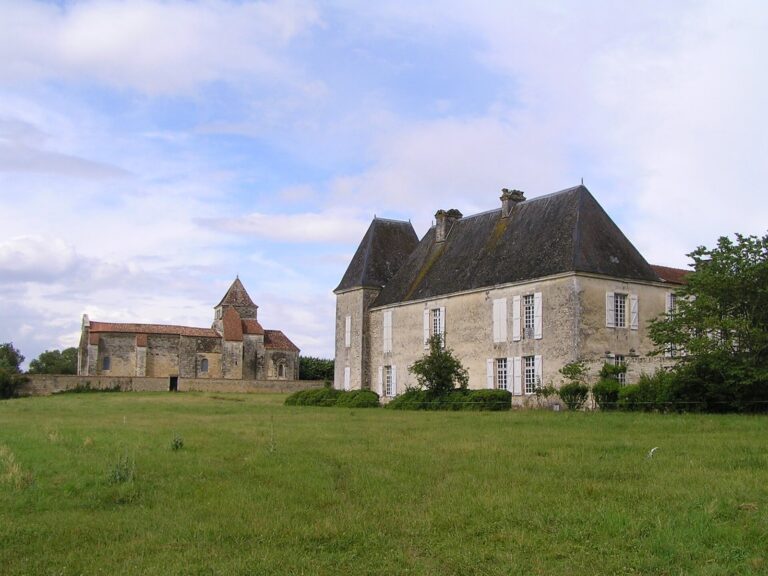
A small rural settlement called Andone existed nearby in the twelfth and thirteenth centuries. It may have occupied the ground later used for the Logis de la Barre, built from the second half of the fifteenth century. The lord of La Motte d’Andone de Labarre turned the former fortress grounds into a rabbit warren. Between the eleventh and fifteenth centuries, stone from the stronghold was reused in nearby buildings, including Saint-Amant-de-Boixe Abbey and the Château de la Barre.
The site was identified in the nineteenth century. André Debord investigated and excavated it from 1971 to 1995, but died in 1996 before publishing his results. Luc Bourgeois led further work in 2004–2005, and a review and reinterpretation of the findings appeared in 2009. Andone has been protected under France’s statutory historic-monument system since 13 August 1986.
Remains
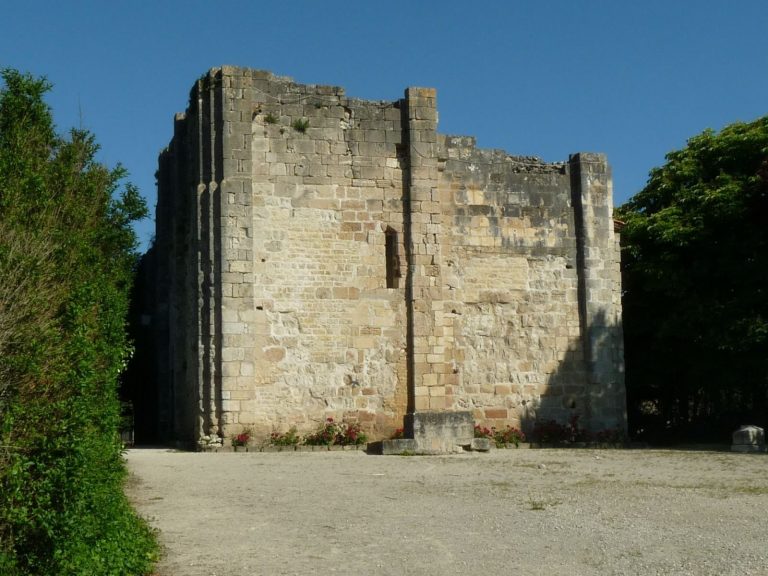
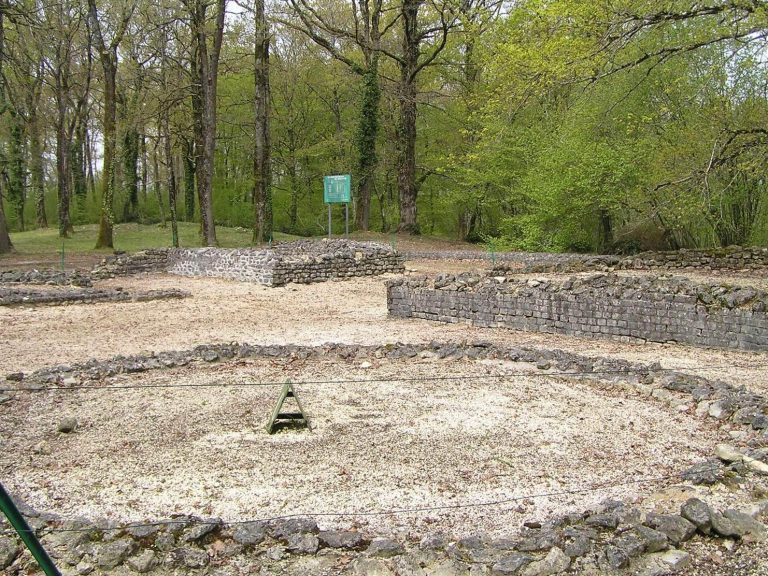
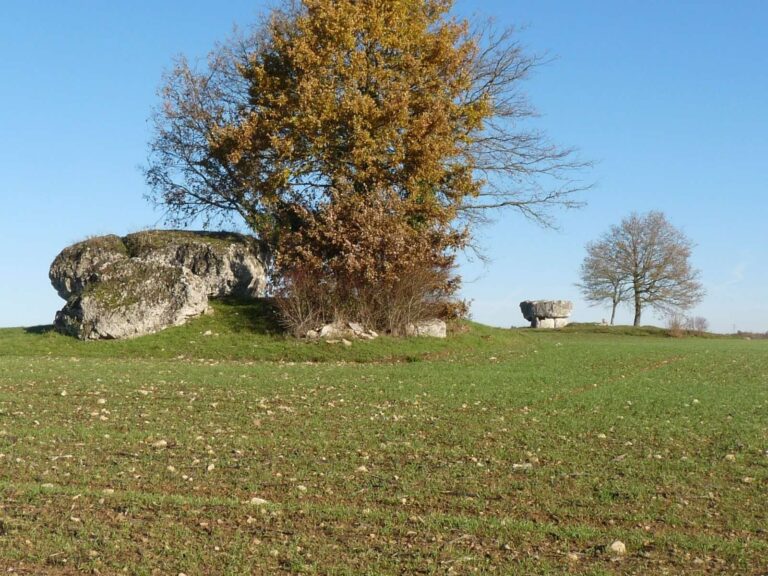
The remains occupy an isolated natural mound overlooking the plain, away from the Charente valley. The medieval enclosure followed the hill’s irregular oval outline and contained seven stone buildings, two courts, and numerous wooden structures. The enclosed area covered about 2,000 square metres, while the site as a whole extended across two hectares.
Setting and enclosure
The mound lies about 400 metres south of the Château de la Barre and three kilometres east of Montignac. The Boixe forest is now about two kilometres away; in the tenth century, its edge lay less than one kilometre from Andone. The Via Agrippa, a Roman road associated with the network developed under Agrippa, passed about 600 metres northwest of the site. Andone also stood north of the major route from Saintes through Limoges to Lyon.
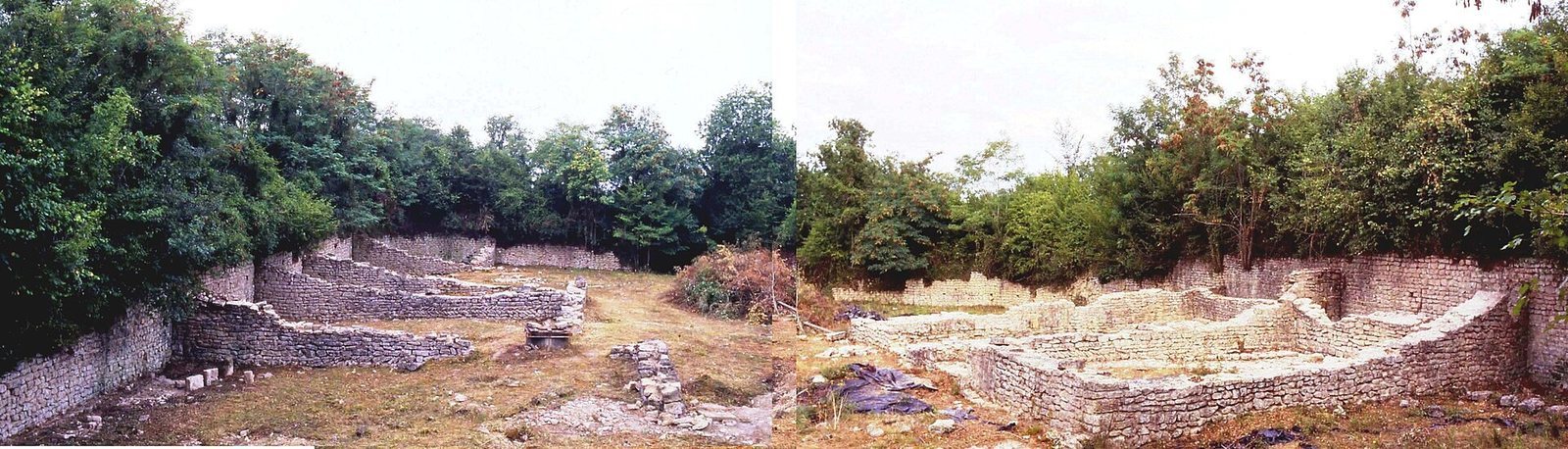
Fourteen adjoining sections of mortared stone wall formed the enclosure. The wall was about two metres thick, and its surviving remains rise no more than four metres above their foundations. Its original height was probably around ten metres. An earth rampart reinforced the outside, while a walkway about 1.5 metres wide ran around the enclosure. A broad clay glacis, or sloping defensive surface, separated it from a large U-shaped ditch that reached 11.3 metres in width. Two wooden bridges crossed the ditch.
An eastern gate and a western postern, a smaller secondary gate, each measured about two to three metres across. Ladders provided access at two points to a crenellated wall-walk, a defended walkway along the top of the wall, probably protected by a parapet.
Buildings and water supply
Northern residence
The northern residential complex was arranged in an L shape around a large reception hall. Glazed windows lit the hall above a darker room below. The hall may have occupied a second storey above a service area, and a possible upper room measured about 20 by 11 metres. It anticipated the inhabited medieval keep, the principal fortified residence of a castle.
Southern buildings
Four buildings stood in the southern sector, three of them sharing a façade. One ground-level building had four rooms used for purposes that included stabling, metalworking, and storage. The functions of smaller spaces are uncertain, but they may have served as workshops, stores, and quarters for the count’s staff. Stone construction was unusual for buildings of this period in France, where most were wooden apart from major royal residences.
Water sources
The occupants could not dig a well within the enclosure. They drew water from an older well outside the western postern and from springs at the foot of the mound. A natural cavity lies beneath the castrum.
Finds and evidence of daily life
Excavated objects and craft
Excavations recovered more than 400,000 objects, of which 116,000 were studied systematically. The finds include coins, tools, weapons, horse fittings, small glass vessels and flat panes, ceramic containers, and furniture made from stone, bone, and wood. The discoverers and the Duboys de Labarre family jointly donated the finds to the Angoulême Museum.
More than 8,000 iron objects, including horseshoes, nails, arrowheads, crossbow bolts, door fittings, and fittings for furniture and chests, point to metalworking in several areas of the site. A small workshop beneath the great hall worked deer antler into crossbow parts, including nuts, the catches that hold a bowstring before release, as well as box inlays and game pieces. Combing and spinning wool, flax, and hemp are also evident.
Animals and hunting
Thousands of horseshoes and other fittings show that horses, mules, and donkeys were used at Andone. The horseshoes reflect developed knowledge of shoeing and animal care, and include the oldest known orthopaedic horseshoes in western Europe. Excavated animal remains include four horses and seven donkeys.
Hunting equipment includes spears, bows, crossbows, arrowheads, bolts, and heavy terracotta horns. Crossbows were appearing in this period. The finds also indicate trained birds of prey and a pack of dogs. Wild animals made up about four per cent of the animal remains: deer were the main game, followed by hare and wild boar, alongside birds. Pigs accounted for about 80 per cent of the animals eaten for meat, with cattle and sheep making up the rest. The remains also include many young animals, peacocks, numerous black rats, and dogs, squirrels, badgers, and cats.
Household life and games
Kitchen pottery consisted mainly of pots and pitchers, with mortars for spices and glazed vessels probably used for sauces. Many drinking glasses were recovered. Furniture finds point to the use of chests and small boxes, as well as objects made from stone, bone, and wood. Terracotta and stone tallow lamps provided light. Courtyard rubbish was buried and covered with clay; layers of rushes across rooms and black-rat remains indicate poor hygiene.
A small group of chess pieces from the residence and its immediate surroundings provides some of the earliest evidence for chess in western Europe. Numerous counters belonged to games in the tables family, which included backgammon-like board games.
Imports and burial
Imported objects include mantle clasps from Germanic and Anglo-Saxon regions, Islamic tableware, lead-glass beads made at Danish trading posts in northern England, and a Near Eastern bowl imitating Chinese celadon, a ceramic glaze associated with East Asian wares. Together, these objects show the broad trading connections of the counts of the Taillefer dynasty.
About 100 metres from the castrum, a grave separate from other burials contained four men placed one above another. Their bones bear marks of fatal weapon blows, including those made by axes or swords. Finds from an earlier burial ground on the mound, dating to the First Iron Age, include an axe, a long sword, and pottery, now preserved at the Angoulême Museum. A small rural settlement from Roman-era Gaul, shaped by Roman rule, also occupied the mound and continued until the fourth century.
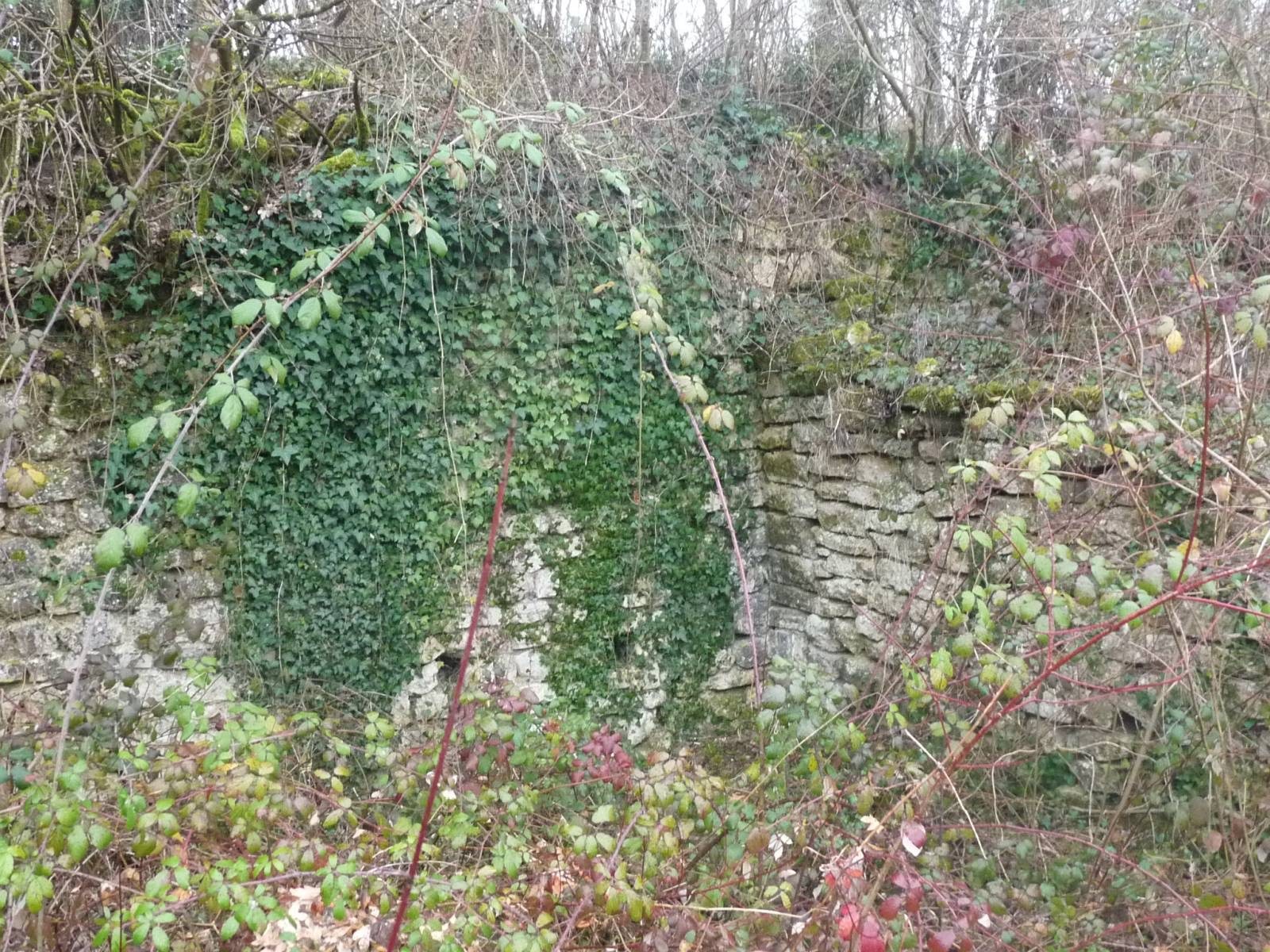
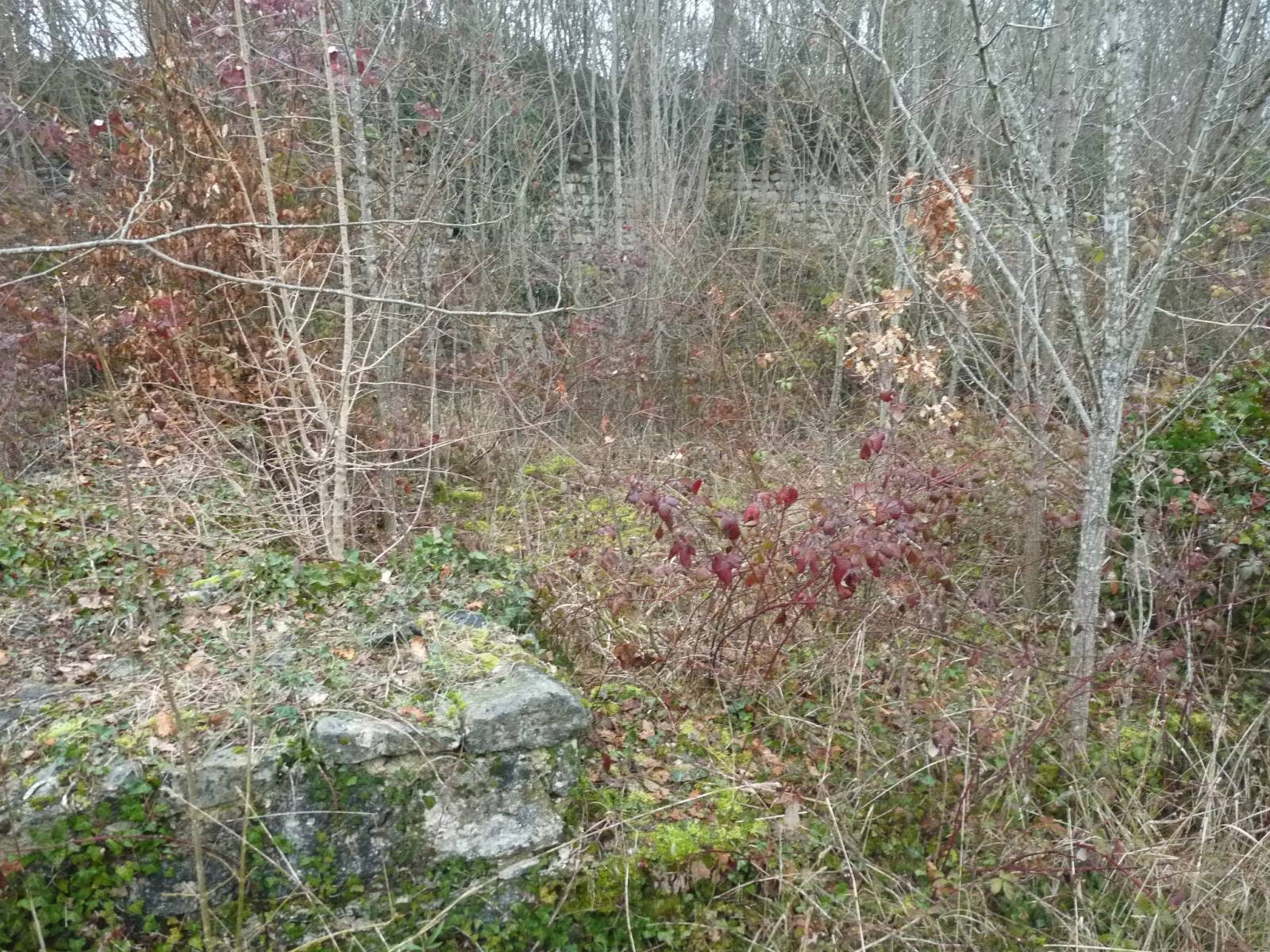
Vegetation has again overgrown the remains.