Yoshida Kofun: An Octagonal Seventh-Century Burial Mound in Japan
Site at a Glance
- Popularity
- Low
- Country
- Japan
- Primary era
- Medieval
- Eras represented
- Medieval
- Civilizations
- Yamato
- Site type
- Burial
- Remains
- Burial Mound
On this page7 sections
History
Construction and discovery
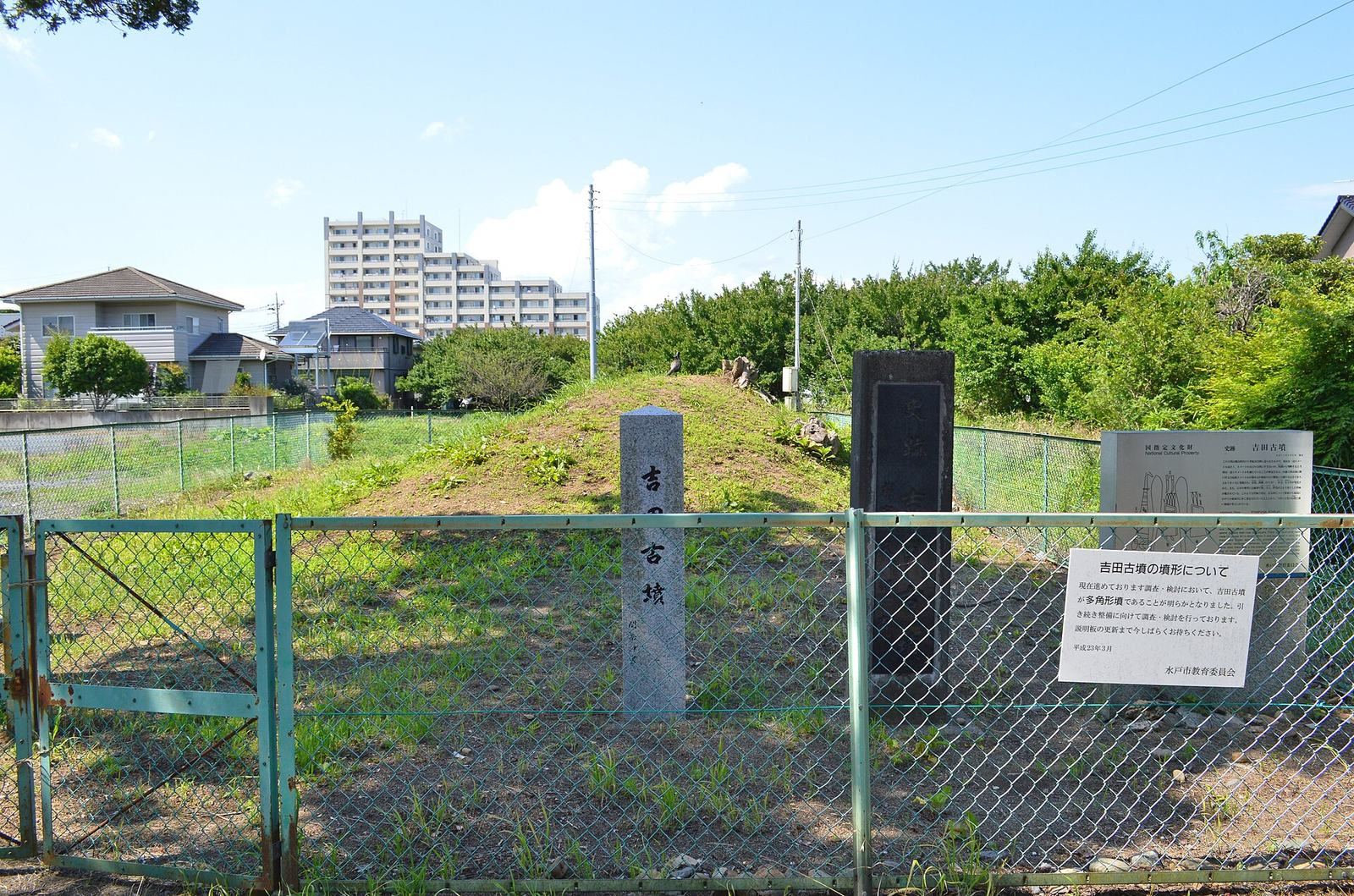
Yoshida Kofun is a monumental burial mound in Mito, Ibaraki, Japan, constructed around the middle of the seventh century, in the final phase of the Kofun period. This early Japanese historical period, roughly the third through seventh centuries CE, takes its name from large burial mounds. Yoshida Kofun’s octagonal shape, also used for imperial tombs, has been interpreted as a sign of the distinctive character of a local elite.
In 1914, a local resident uncovered the burial chamber while extracting soil. The chamber’s decorated walls made the tomb the first decorated kofun discovered in the Kantō region of eastern Japan. Tokyo Imperial University investigated the site in 1916, and archaeologist Torii Ryūzō was among those who studied it later.
Investigation and protection
Yoshida Kofun became a National Historic Site in 1922, and its protected area was extended in 2010 and 2012. The Ibaraki Prefectural Educational Reference Museum, where finds from the tomb had been displayed, burned during an air raid in 1945.
Work to investigate and preserve the site included a mound survey and restoration of the stone chamber in 1972. Four investigations of the mound followed from 2005 to 2008 as part of a historic-site development plan. In 2010, a sixth investigation examined the chamber.
Remains
Mound and setting
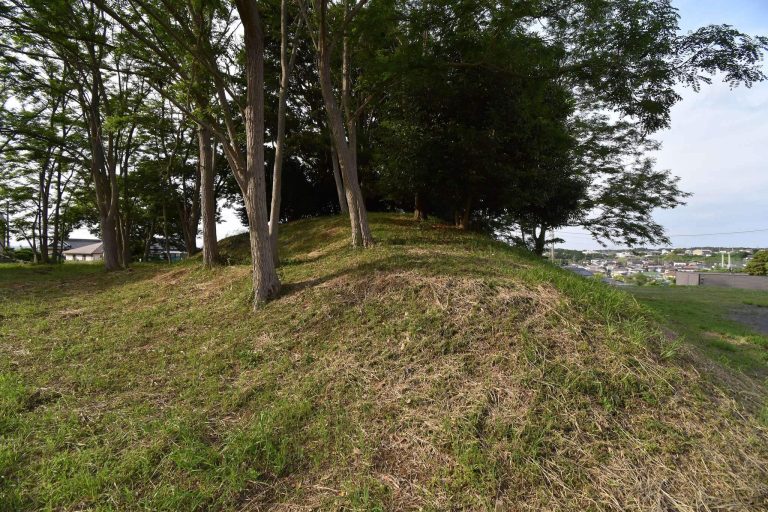
Yoshida Kofun is one of several tombs in the Yoshida Kofun group. It lies on the northern edge of Yoshida Plateau, on the eastern side of the Mito Plateau. The mound has been substantially reduced and now stands about 1.6 m high. Although it was first thought to be square, it is understood to have eight sides, with about 26 m between opposite sides. An octagonal ditch surrounds the mound, and an outer bank measures about 35 m between opposite sides.
Burial chamber and imagery
The burial chamber is partly underground, has no side extensions, and is entered from the south. It measures about 3.3 m long and 1.7 m high, with a width of about 1.4 m at the rear wall (1.32 to 1.46 m). Its walls are built from cut slabs of soft tuff, a rock formed from consolidated volcanic ash. The rear wall is trapezoidal, with sloping sides, and carries images cut into the stone. A quiver is at their center, accompanied by depictions of a small knife, a spear, and an iron sword. The chamber is regarded as the only known example in Japan of an octagonal kofun with incised wall images. It has been filled in again to preserve it.
Burial finds
Objects associated with the burial include rings identified as silver, though they were formerly described as gold, as well as iron arrowheads, fragments of swords and plate armor, and magatama, curved comma-shaped beads used in ancient Japan. A replica of the chamber’s carved imagery and excavated finds are exhibited at the Mito City Buried Cultural Properties Center.