St Martin’s Church: Canterbury’s Early Christian Parish Church
Site at a Glance
- Popularity
- Very High
- Country
- United Kingdom
- Primary era
- Medieval
- Eras represented
- Classical, Medieval
- Civilizations
- Anglo-Saxon, English, Roman
- Site type
- Religious
- Remains
- Church
On this page10 sections
History
St Martin’s Church is an Anglican parish church in Canterbury, England, in the United Kingdom. Its foundation date is uncertain, but it existed before Augustine of Canterbury arrived in AD 597. It is described as Britain’s oldest continuously operating parish church and the oldest English church building still in ecclesiastical use.
Bertha’s chapel and the early church
Bertha, a Frankish princess who became queen of Kent, used the church as a private chapel. Her husband, Æthelberht, an Anglo-Saxon king of Kent, permitted her to worship as a Christian and had a Romano-British building renovated around AD 580. Bertha had come from Frankish territory with her chaplain, Bishop Liudhard. Bede, an Anglo-Saxon monk and historian, connected the church’s dedication to Martin of Tours, a fourth-century Christian bishop, with Bertha’s upbringing near Tours.
Bede also described Christian worship in the building during the late Roman period, followed by a period of disuse. Modern scholarship questions whether the building itself was a Roman-period church, and considers it instead a sixth-century construction modeled on Roman architecture.
Augustine’s mission
After arriving in AD 597, Augustine, a missionary from Rome who became the first archbishop of Canterbury, enlarged the church and used it as the center of his mission. Æthelberht was baptized there soon afterward. The establishment of Canterbury Cathedral and St Augustine’s Abbey around AD 598 reduced the church’s prestige, although it remained historically important.
Parish life and heritage
The church belongs to the Church of England’s Diocese of Canterbury, an area under a bishop’s authority, and has been part of the benefice of St Martin and St Paul, a church unit served by a priest, since the seventeenth century. Its continuing tradition of choral and church music is associated with Augustine’s time and the monks of St Augustine. St Martin’s received Grade I listing in 1952, the highest listed-building category in England, and since 1988 has formed part of the UNESCO World Heritage property shared with Canterbury Cathedral and St Augustine’s Abbey.
Remains
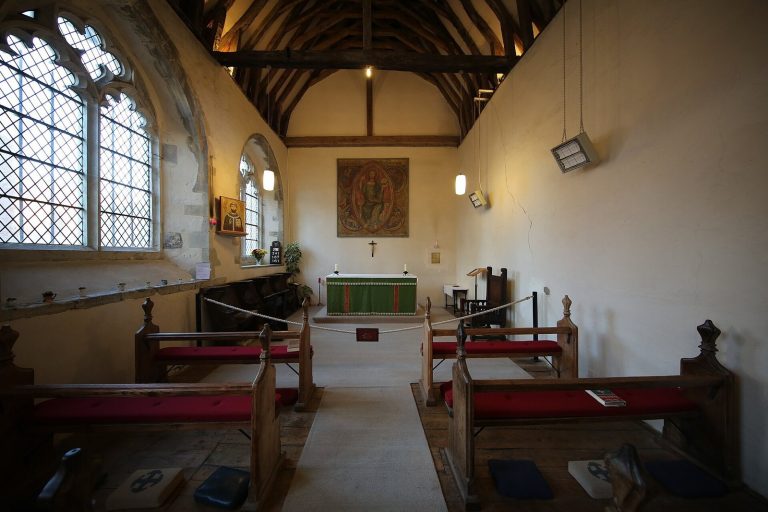
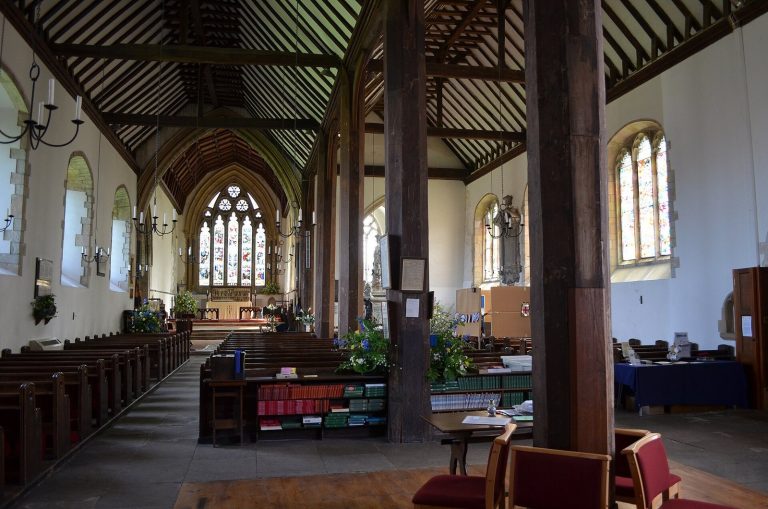
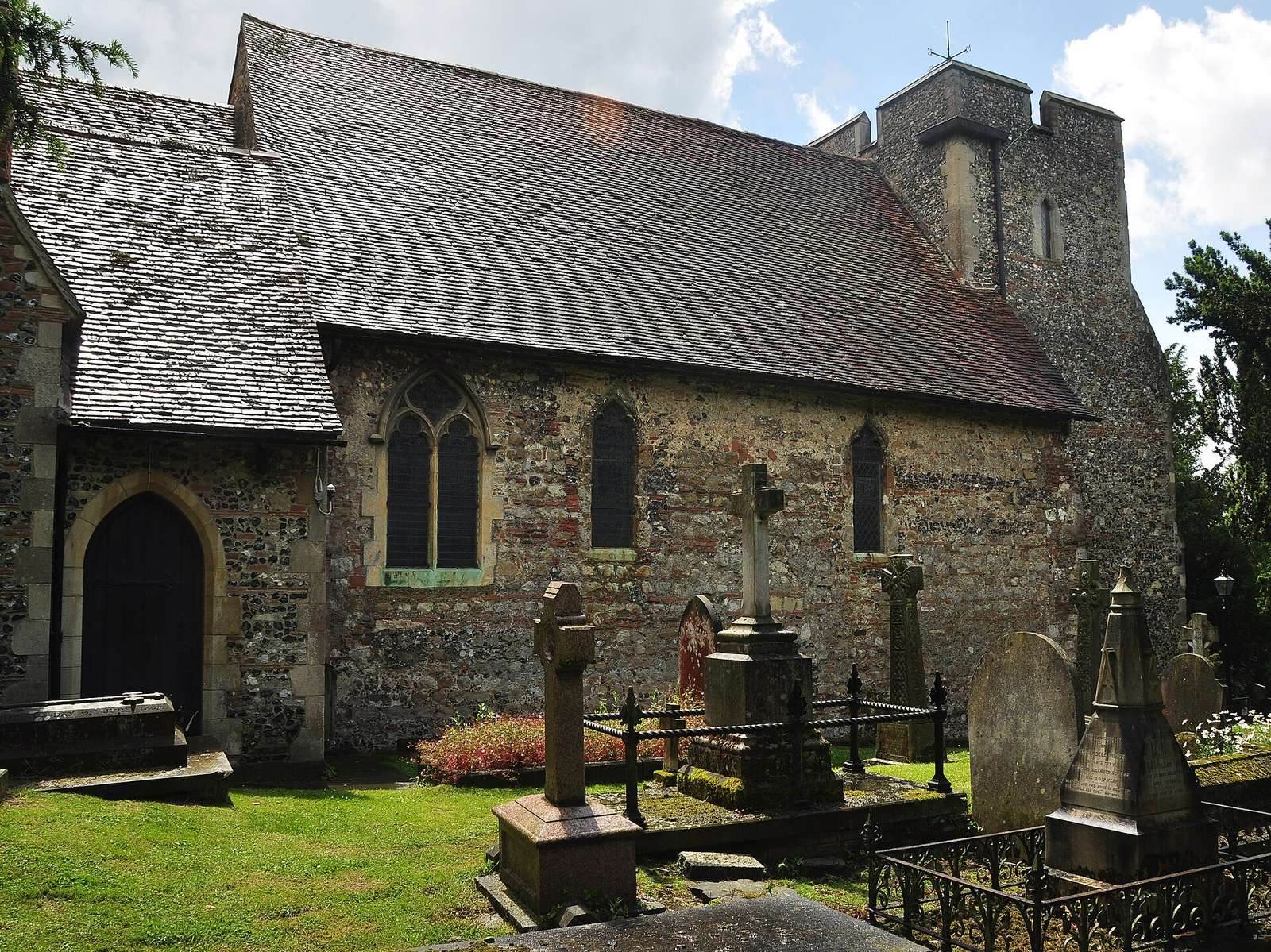
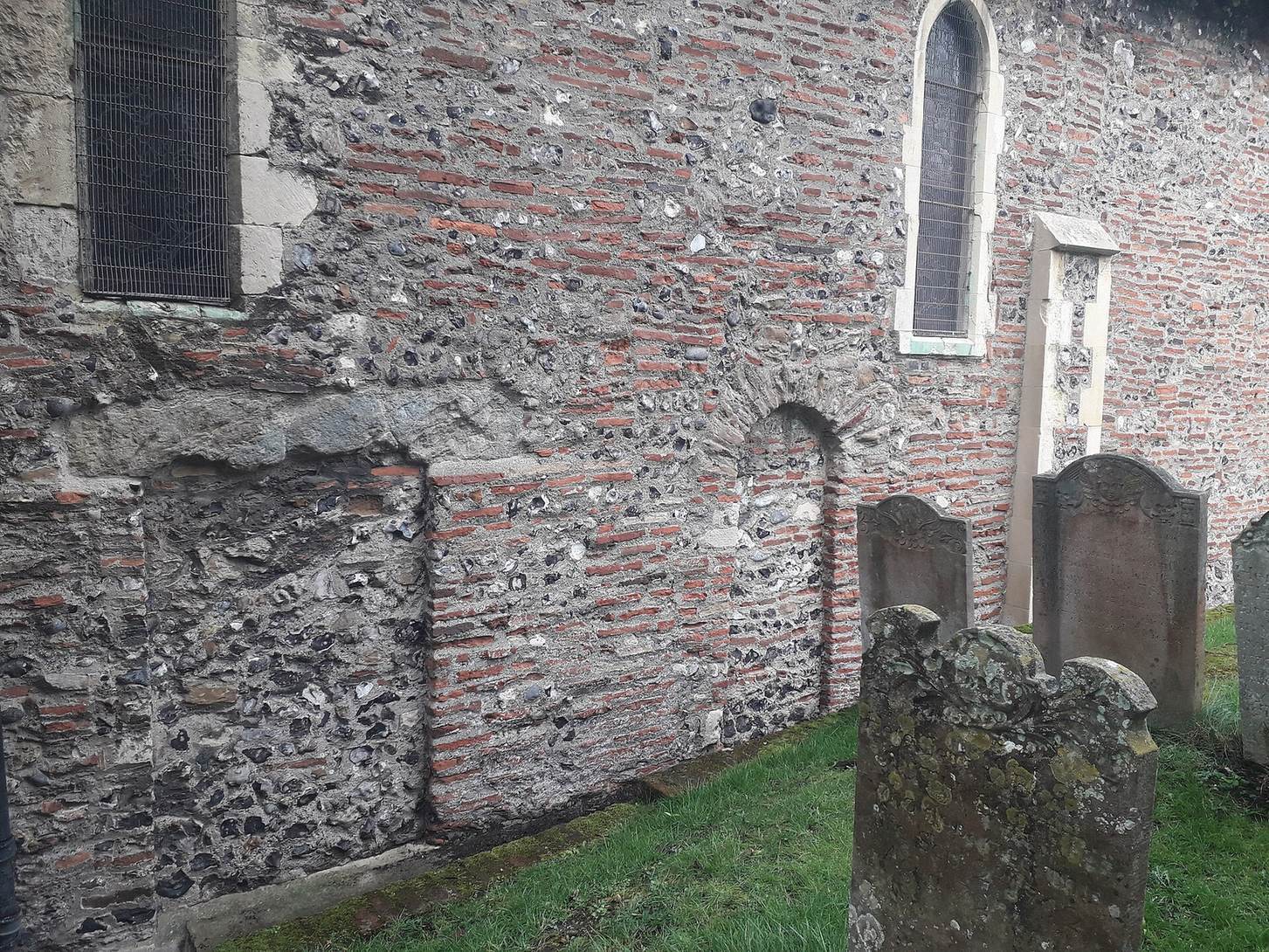
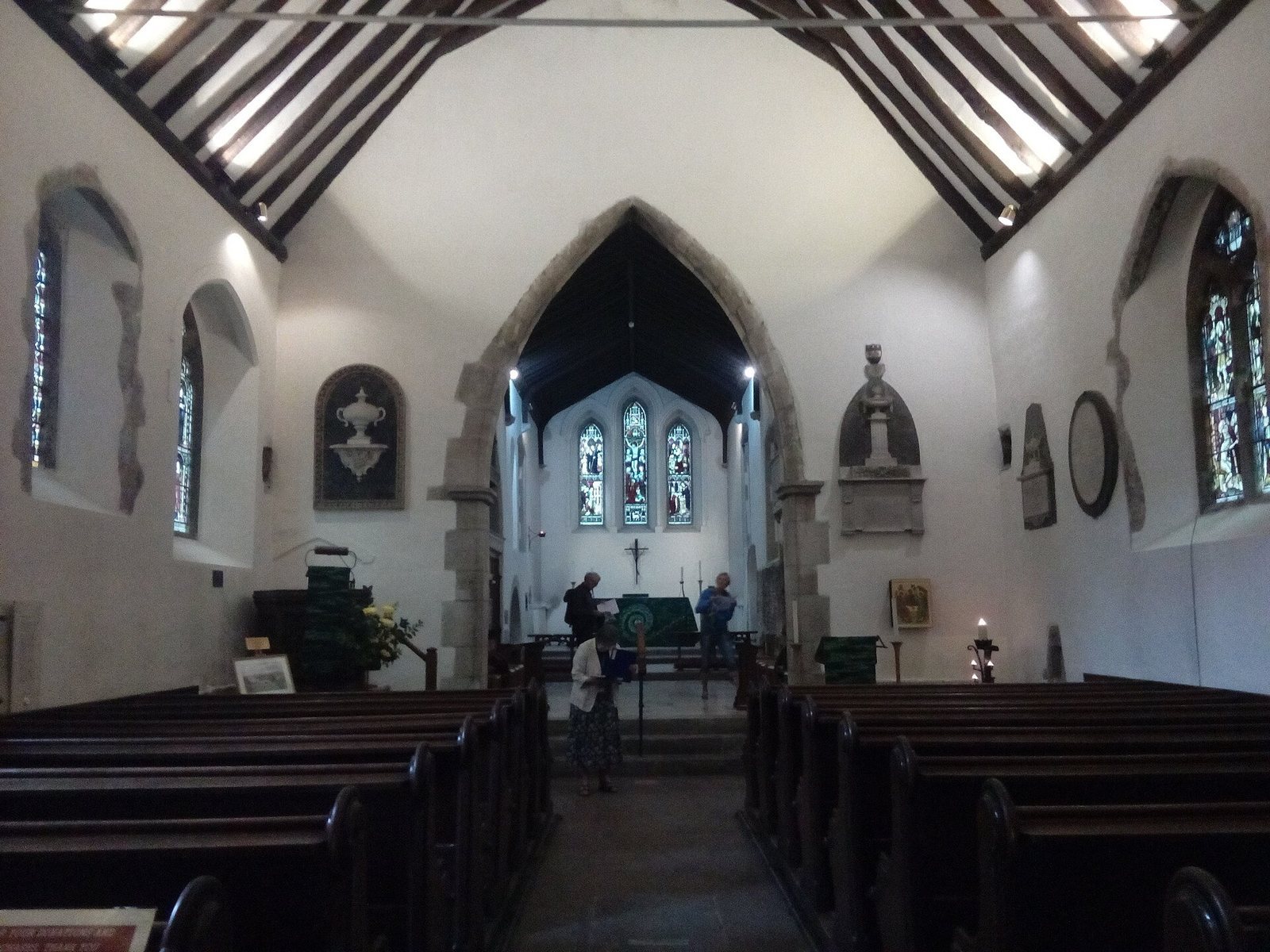
The single-nave church stands within an ancient cemetery about 1 km east of Canterbury’s historic center and roughly 1 km from the cathedral. Its fabric combines Roman, medieval, Anglo-Saxon, and English Gothic features. Dressed stone, flint, reused Roman bricks and tiles, and flat roof tiles form part of the building; inside, pointed-arch vaults and an exposed timber ceiling contribute to its varied construction.
Early fabric and plan
Substantial stretches of the walls are built from Roman tiles, and a Roman-brick tomb is incorporated into the church’s core. A blocked, square-headed opening in the chancel may once have opened into Bertha’s chapel. Other early wall sections, including most of the nave, date to the seventh or eighth century. The church’s original eastern apse, a recessed end to the building, has been removed.
Gothic alterations and tower
Later Gothic alterations include stained-glass windows. The tower is in the Perpendicular style of English Gothic, known for its emphasis on vertical lines. Its crenellated tower-porch is a fortified addition dating to the fourteenth century. The bell chamber contains three bells, sounded by levers; the tenor bell is in B-flat and weighs about 330 kg.
Font and statue
The date of the baptismal font is unknown, and it may incorporate stone fragments from earlier Christian places of worship. Its decoration includes interlaced stone rings, circles, semicircles, and overlapping arches, with forms resembling the vesica piscis, a pointed oval made by intersecting circles; a trilobe, a three-lobed shape; a triquetra, a three-part interlaced design; and Borromean rings, linked rings that separate if one is removed. A wooden statue of St Bertha stands by the south wall.
Churchyard and graves
The churchyard contains graves of local families and notable people, including the churchman and theologian Henry Alford, nineteenth-century evangelist Canon William Cadman, artist Thomas Sidney Cooper, and Mary Tourtel, creator of Rupert Bear. A grave there is identified for Mary and Herbert Tourtel. The cemetery also contains the graves of eleven Commonwealth service personnel who served in the two World Wars.
Coin hoard
A hoard of gold coins, possibly dating to the late sixth century, was found in the churchyard shortly before 1844. It included the Liudhard medalet, a small coin-like object bearing a diademed figure and an inscription referring to Liudhard. The figure has traditionally been identified as the bishop.