Church of San Ildefonso, Toledo: A Jesuit Church Dedicated to the City’s Patron Saint
Site at a Glance
- Popularity
- High
- Country
- Spain
- Primary era
- Early Modern
- Eras represented
- Early Modern
- Civilizations
- Crown of Castile, Spanish
- Site type
- Religious
- Remains
- Church
On this page13 sections
History
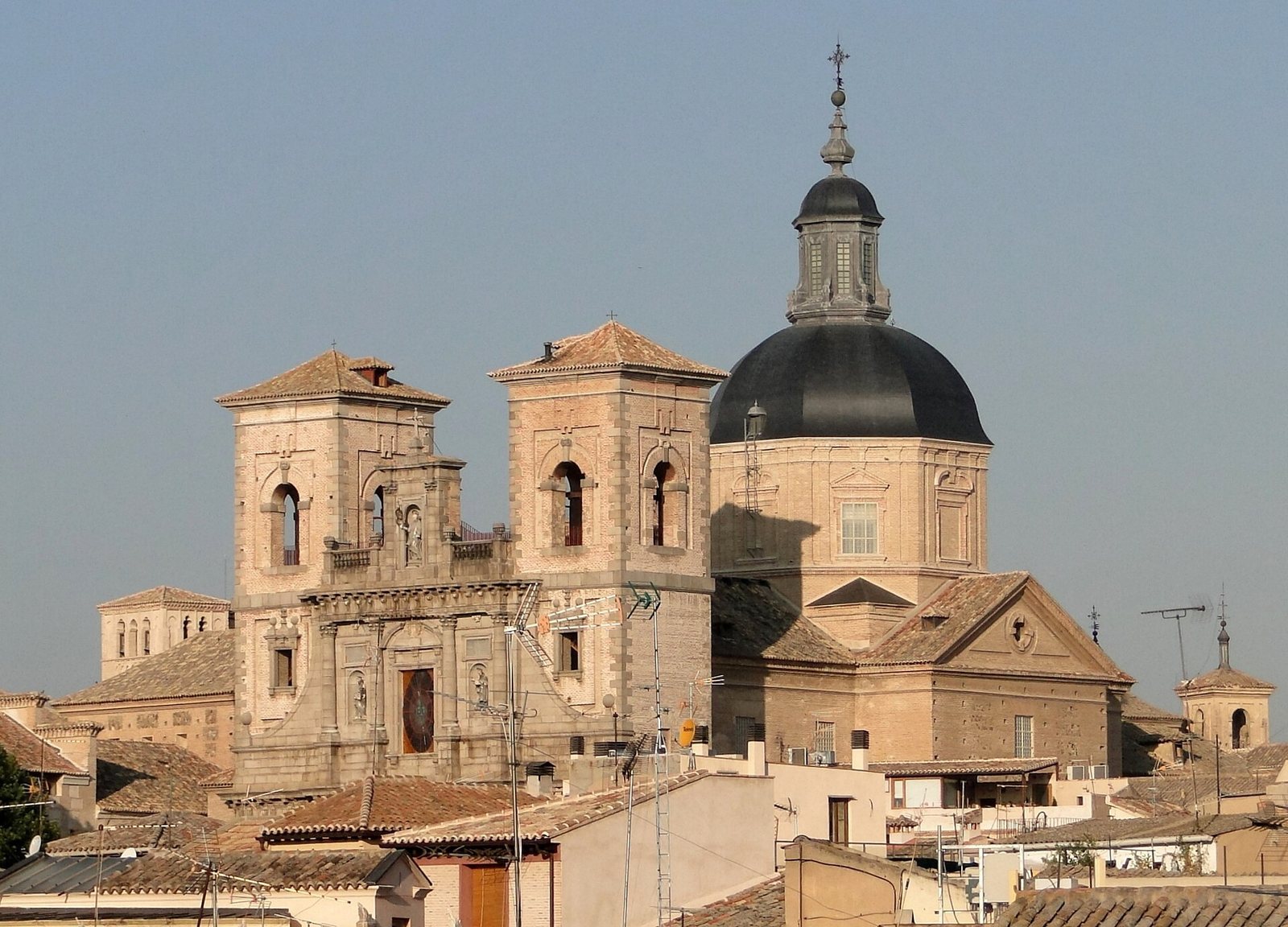
The Church of San Ildefonso is a Roman Catholic church in Toledo, Spain, built for the Jesuits in a Baroque style. Construction began in 1629 and was completed in 1765. The church honors Saint Ildefonso of Toledo, a seventh-century archbishop and theologian later venerated as a saint and counted among the influential early Christian writers known as the Church Fathers. Toledo’s patron saint, he also gives the church its name. The building formed part of the Jesuit professed house, a residence for members of the Society of Jesus, a Catholic religious order founded by Ignatius of Loyola, who had taken their final vows.
Jesuit foundation and construction
The Jesuits acquired the site in 1569. It included houses belonging to Juan Hurtado de Mendoza Rojas y Guzmán, Count of Orgaz, and local tradition held that Saint Ildefonso had been born there. Castilian nobles Pedro and Estefanía Manrique supported the church’s foundation. Its founding documents required that it be dedicated to the saint and that his image occupy the central place on the high altar.
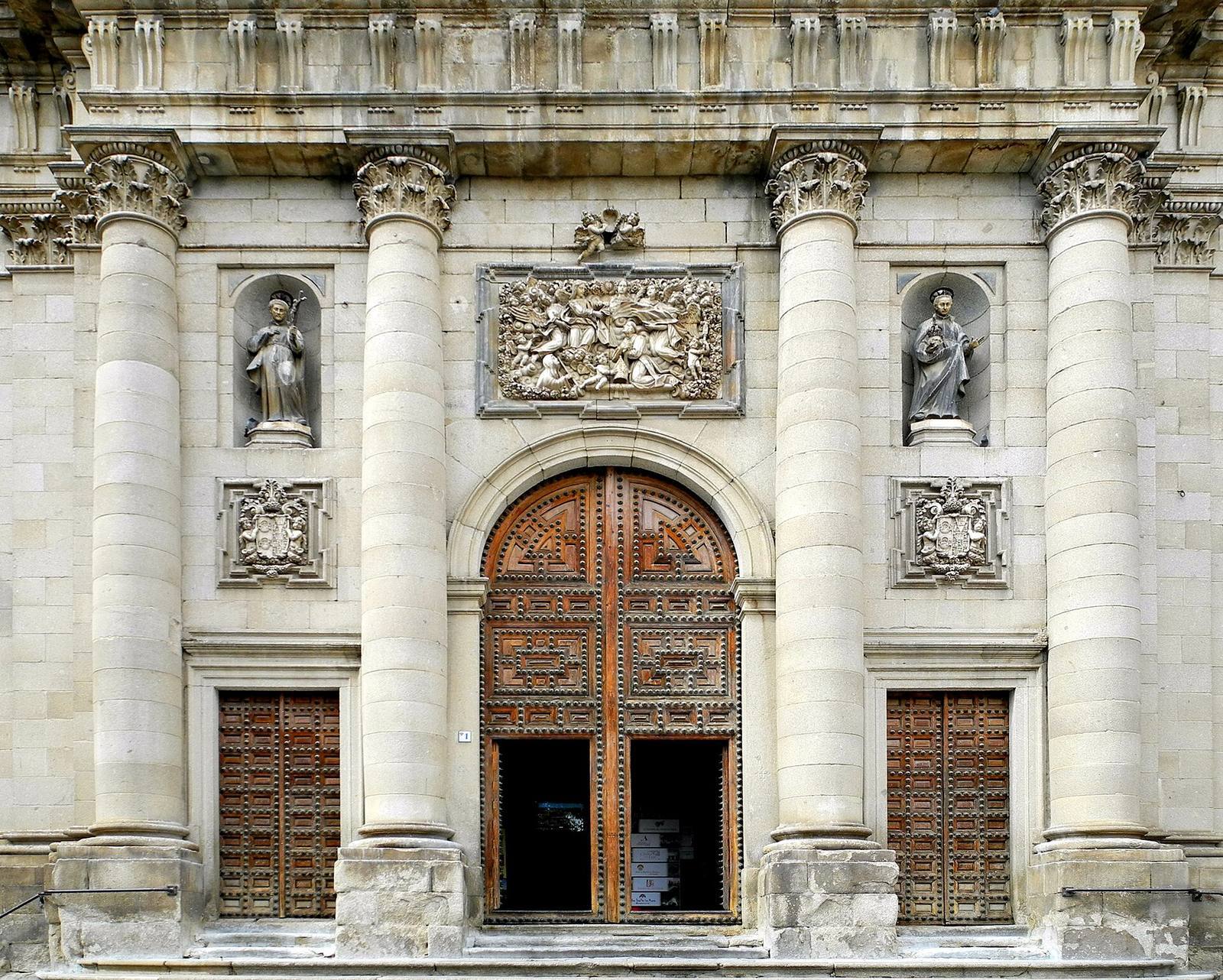
The design is attributed to Juan Bautista Monegro, then master builder of Toledo Cathedral. Pedro Sánchez, a Jesuit brother and architect, directed the early work, revising the original plans, including the façade and sanctuary end. After Sánchez’s death in 1633, Francisco Bautista took charge and designed the Baroque façade as an altarpiece-like composition. Bartolomé Zumbigo assumed direction in 1669 and completed the façade and towers. The church was consecrated in 1718, though the sacristy, main chapel, and octagonal relic chapel were still unfinished. Work ended in 1765 under José Hernández Sierra, an architect from Salamanca.
Expulsion and later history
In 1767, two years after construction was complete, King Charles III ordered the Jesuits expelled from Spain. The order followed accusations that they had helped instigate the Esquilache Riots, an uprising in Spain in 1766 during Charles’s reign as a Bourbon king. The Society of Jesus did not regain the church until the twentieth century.
Restoration work took place during the 1990s. In 1994 the church received Spain’s Asset of Cultural Interest designation, a legal status protecting cultural heritage.
Remains
The church combines a brick structure with a carefully cut stone façade and a stucco-covered interior. Its cross-shaped plan centers on a vaulted nave, crossed by two arms and accompanied by eight side chapels.
Exterior
Façade
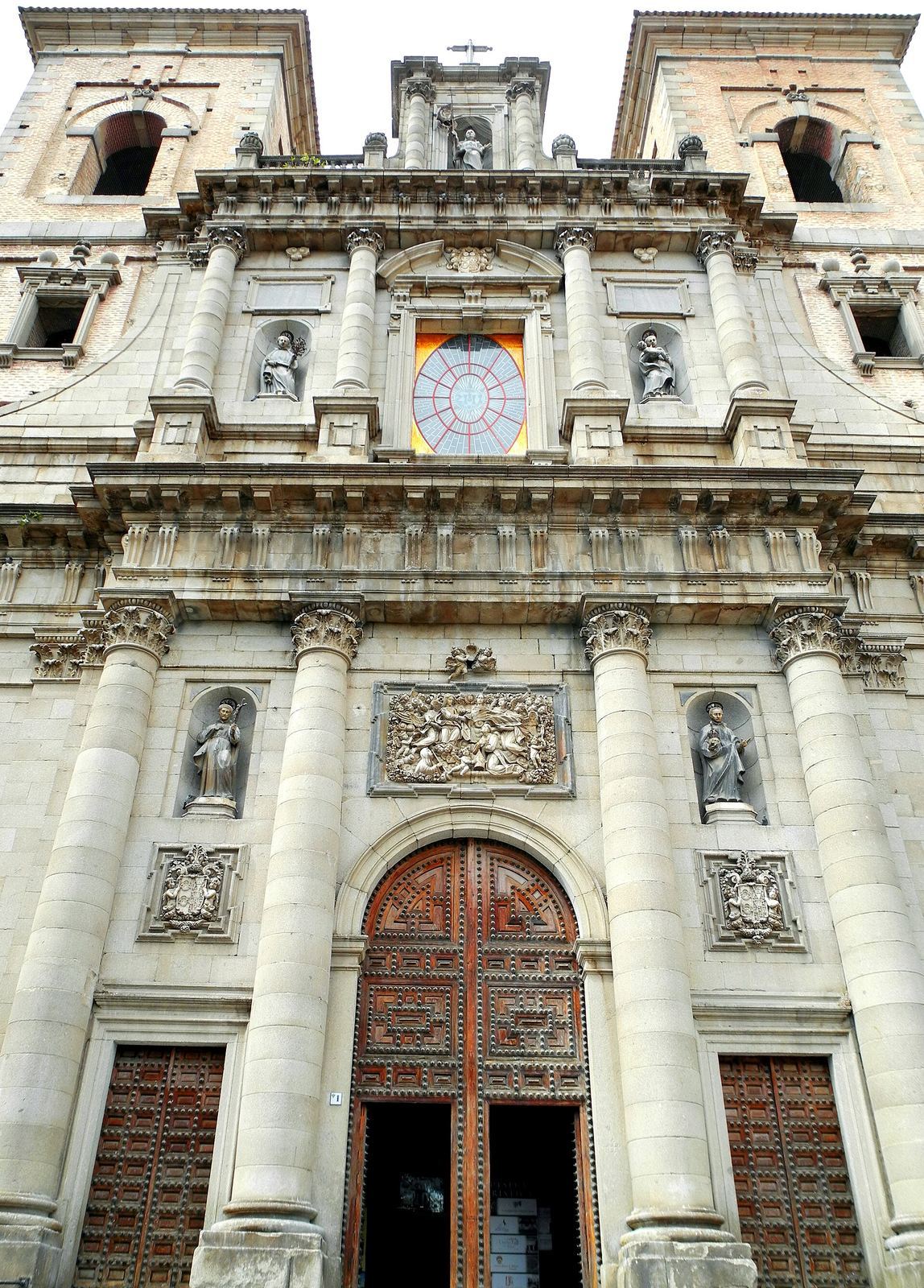
The church stands between San Román and Alfonso XII streets, on a northwest-to-southwest axis, with its façade facing Toledo Cathedral. The two-storey front has eight projecting columns in two tiers, alongside numerous niches and relief panels. Its sculptural ornament is more elaborate than that of Rome’s Gesù, the principal Jesuit church. Above the original main entrance, a carved relief by Diego Rodríguez de Luna shows the Virgin descending to Saint Ildefonso; a stained-glass window sits above it. Five statues by Mattia Carmannini and Félix Bambi occupy façade niches, and the front also bears the Manrique family coat of arms. A figure of Ignatius of Loyola stands in a niche-like feature on the upper level, flanked by balustrades.
Towers
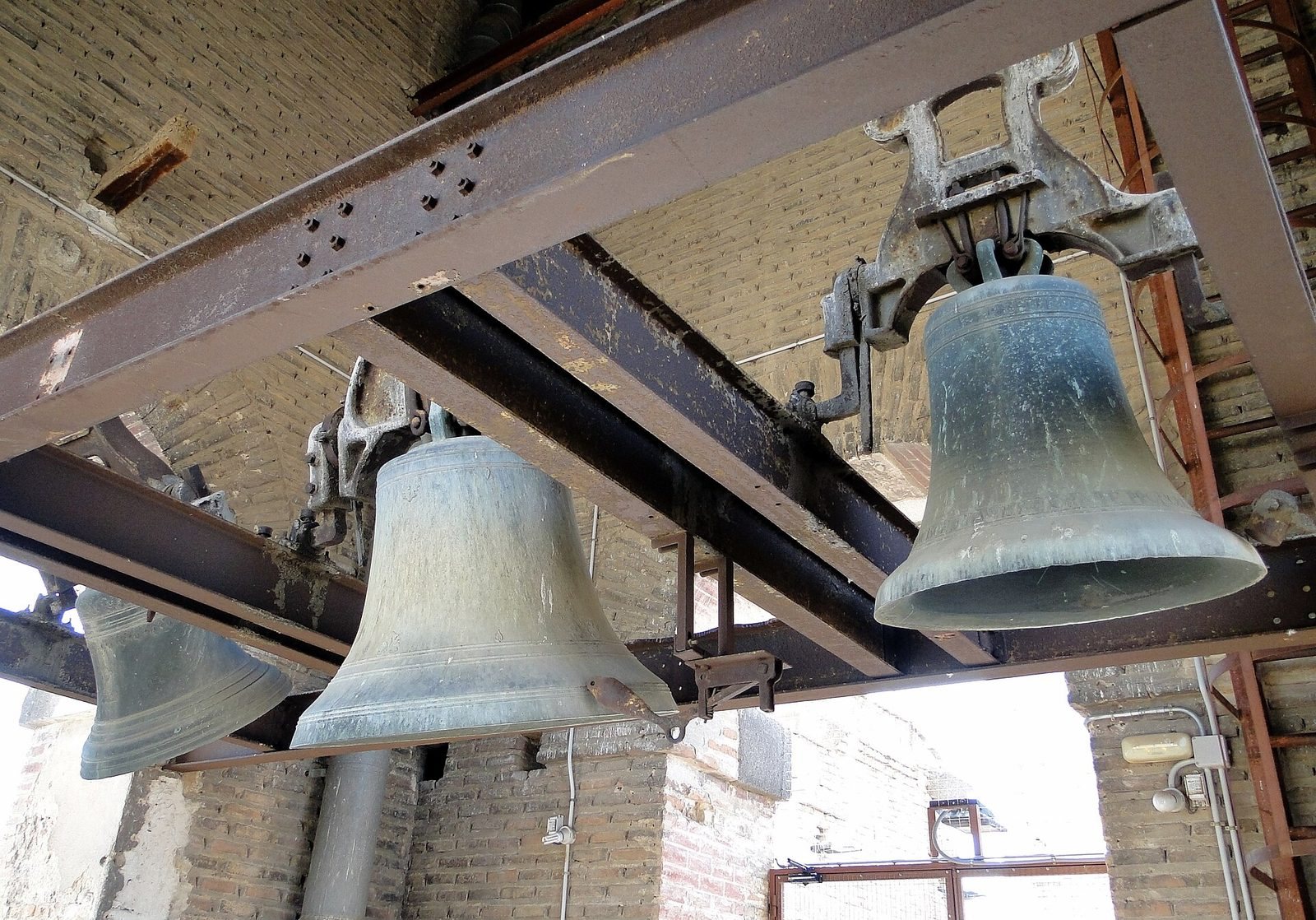
Two brick towers rise from the lower sides of the façade. One holds three bronze bells.
Interior
Dome and nave
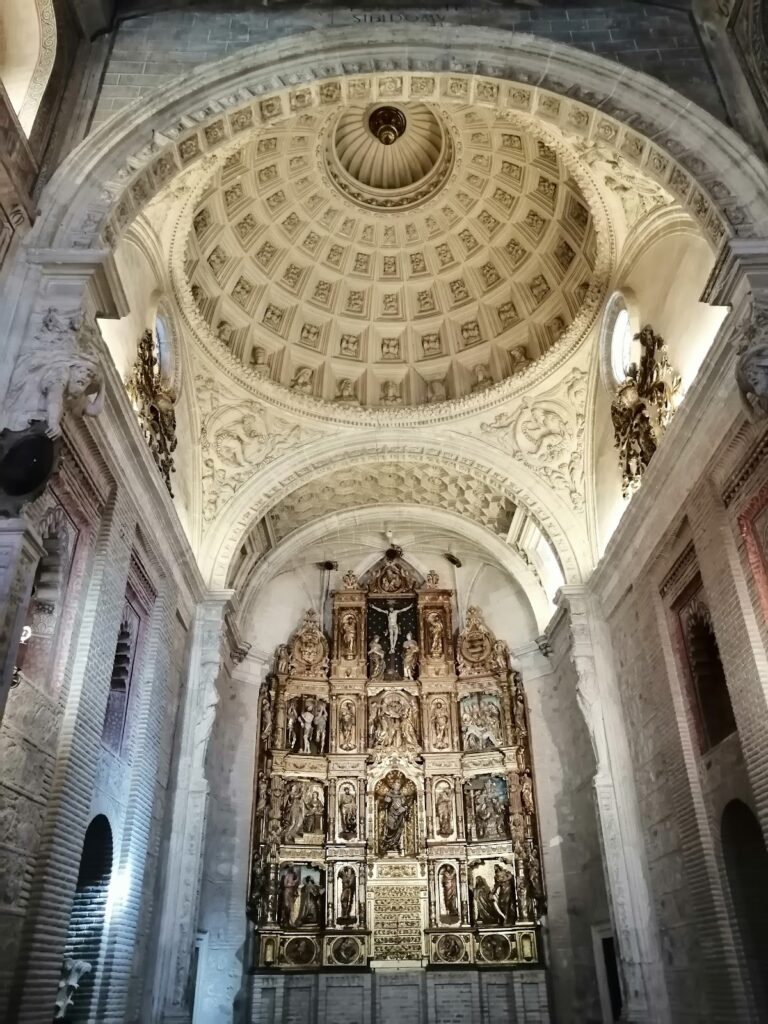
A high dome crowns the point where the nave and transept arms meet. Four curved supports carry it above a windowed circular base, with a small lantern at its top. The dome ranks among Toledo’s highest points alongside the cathedral and the Alcázar, and offers views of both. Fourteen statues, principally of apostles and sculpted by Germán López Mejía, are placed along the nave.
Side chapels
The eight chapels form two connected rows of four, with balconies above them. On the northeast side, starting at the transept, their dedications are Our Lady of Fátima, a title for Mary associated with reported apparitions in Portugal; Saint Francis Xavier, a Jesuit missionary active in Asia; the Crucified Christ; and Saint Francis Borgia, a Jesuit leader who became the order’s third superior general. On the southwest side, in the same order, are the Immaculate Conception, the Catholic doctrine that Mary was preserved from original sin from the moment of her conception; Our Lady of Sorrows, a devotional title for Mary; Saint Ignatius of Loyola; and Christ of the Martyrs, a devotional title for Christ. The chapels have rich Baroque and Rococo decoration, and several contain eighteenth-century altarpieces in the Churrigueresque style, an ornate form of Spanish Baroque decoration.
Transept altarpieces
Two large Baroque altarpieces in the transept came from the now-vanished Church of Saint John the Baptist. One, by Germán López Mejía, depicts Saint Joseph the Worker with the Child; this is a devotional title for Joseph, Mary’s husband and Jesus’ foster father. The other is The Baptism of Christ, painted by Alonso de Arco in 1702.
Sanctuary and high altar
At the sanctuary end, painted architectural forms create an illusion of depth around a large rectangular wall painting by Alejandro and Luis González Velázquez. It shows the Virgin giving a bishop’s vestment to Saint Ildefonso. A circular panel above depicts him in episcopal robes, while two black-clad Jesuit brothers appear below between columns. A canopy-like altar structure, flanked by two gilded angels, covers much of the central painting. Behind the main altar stands a gilded wooden tabernacle, a container for the reserved Eucharist, carved with a Crucifixion.
The Ochavo
An octagonal chapel in one corner of the church, known as the Ochavo, is dedicated to the church’s relics. It has dark red walls and a small dome. Inside is Germán López Mejía’s statue of Our Lady of Succour, a devotional title for Mary. The chapel also holds the remains of Juan de Mariana, a Jesuit historian and theologian, and Jerónimo de Ripalda, a Jesuit priest and author of a widely used catechism. Their remains were transferred from the former College of San Eugenio.