Points Cave: A Decorated Upper Paleolithic Cave in Aiguèze, France
Site at a Glance
- Popularity
- Medium
- Country
- France
- Primary era
- Stone Age
- Eras represented
- Stone Age
- Civilizations
- Unclassified
- Site type
- Civic
- Remains
- Rock Art
On this page8 sections
History
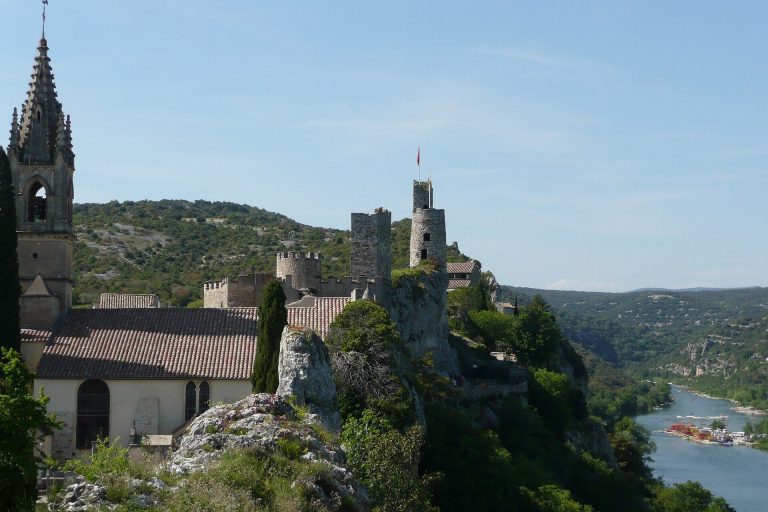
Points Cave is a decorated Upper Paleolithic cave in Aiguèze, France, associated with human activity during the Gravettian, one of the Upper Paleolithic cultures of western Europe. On 7 November 1993, during a cave survey, Éliette Brunel, Jean-Marie Chauvet, and Christian Hillaire recognized painted signs in its deeper passages. Their discovery preceded the discovery of the Chauvet Cave paintings in December 1994; Chauvet Cave lies about 7.6 km away in a straight line.
Later use and modern investigation
The cave’s entrance porch served as a shepherd’s shelter. From the late sixteenth through the nineteenth century, sediment was extracted from the cave, probably for use as fertilizer on nearby fields.
The cave was known as Grotte Yves until 1993, and its earliest excavation dates to 1967. French prehistorian Jean Clottes, a specialist in prehistoric cave art, authenticated the paintings in 1995. France listed the cave as a Historic Monument on 29 May 1995. A classification order dated 18 November 2024 replaced that listing. In France, listing and classification are distinct legal statuses for protected historic monuments.
Since 2011, the Project for Dating Decorated Caves, led by decorated-cave researcher Julien Monney in collaboration with the Eberhard Karls University of Tübingen, has investigated the cave.
Remains
Cave form and layout
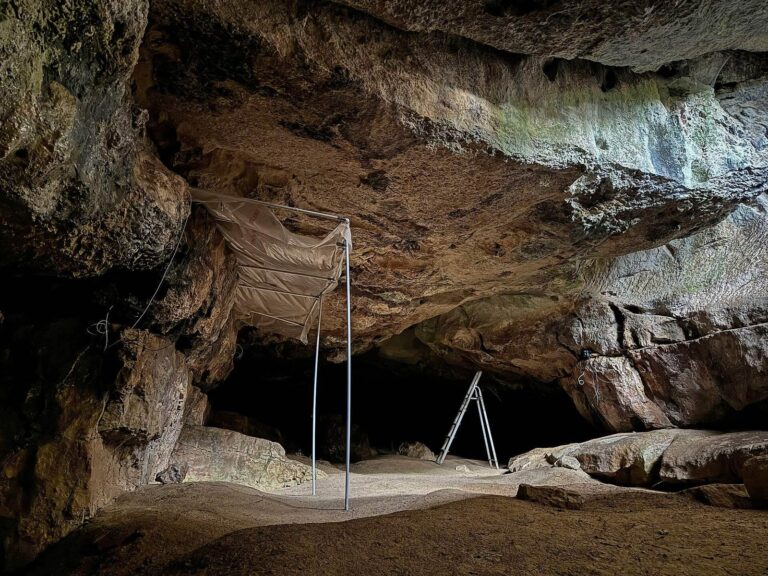
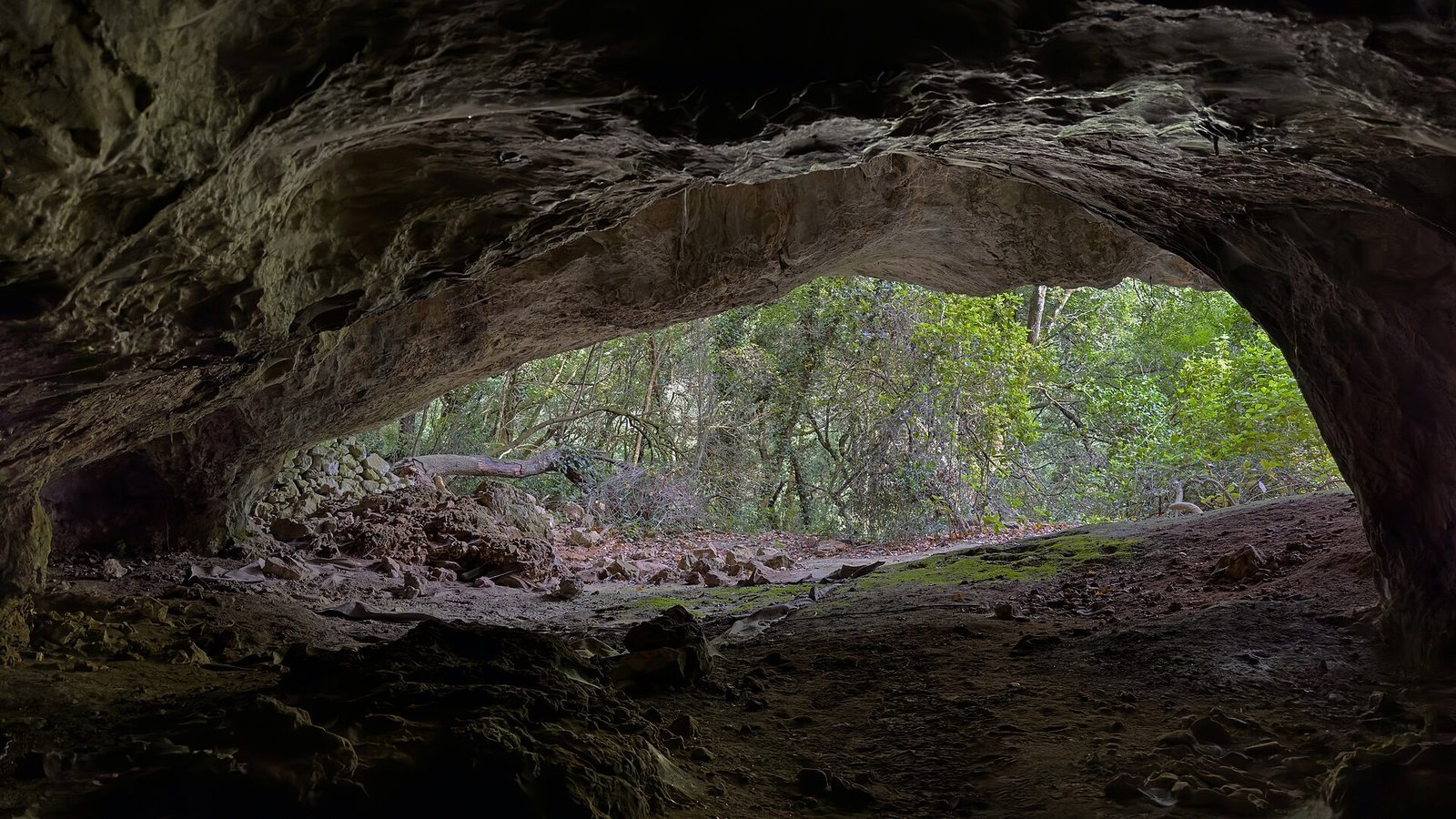
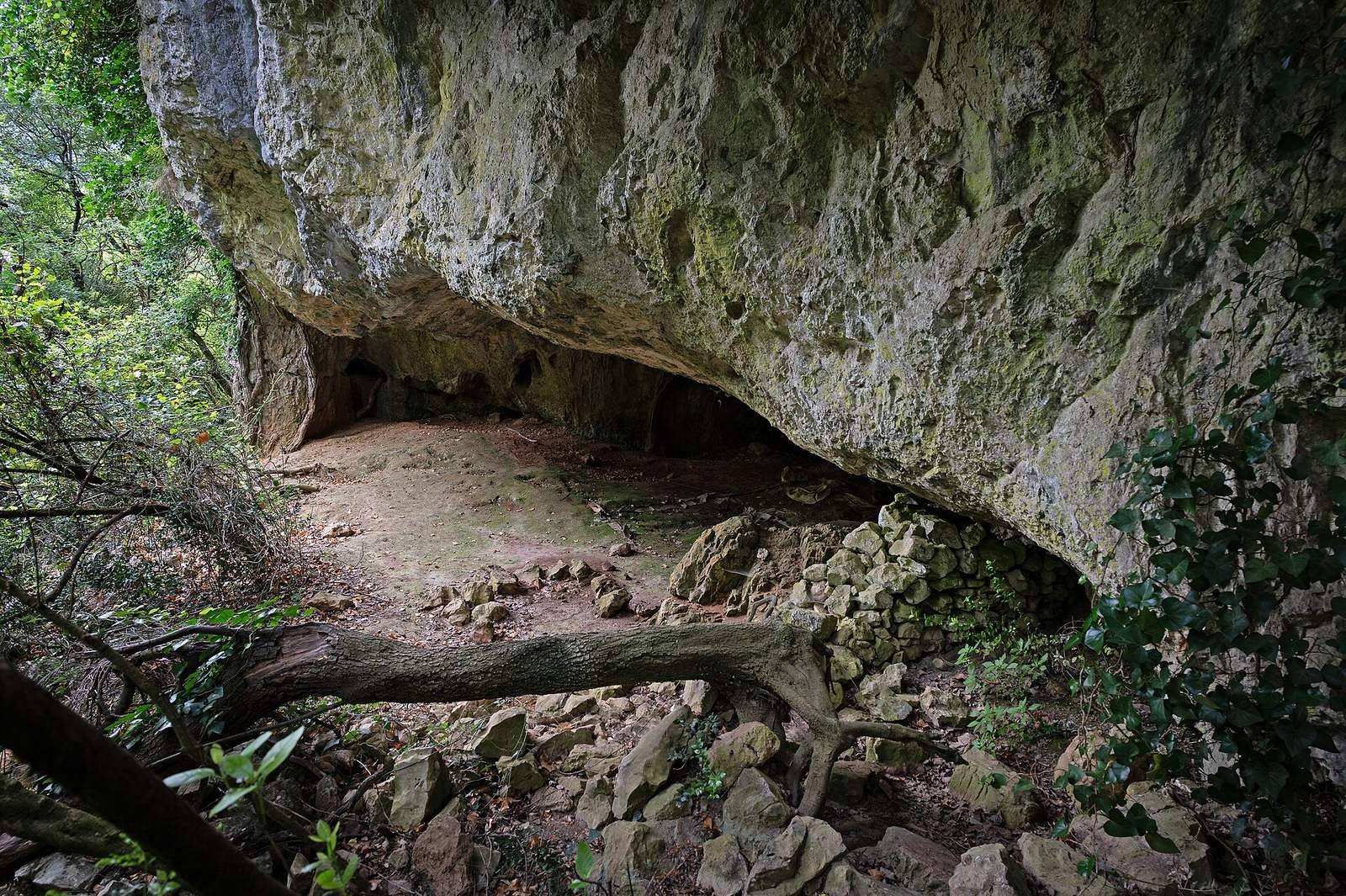
Points Cave is a horizontal cave formed in limestone through dissolution, extending about 110 m beneath a limestone overhang on the southern bank of the Ardèche Gorge. Its north-facing entrance is 13 m wide and 3 m high, at 95 m above sea level and about 50 m above the present river; trees partly obscure it. The cave lies almost opposite the rock spire called Rocher de la Cathédrale. Inside, the passage runs north to south before turning almost at a right angle west near its midpoint. It is generally 4–8.5 m wide, with a ceiling reaching 6.5 m. A wall that reaches the ceiling and has a barred door blocks the passage about 30 m inside. Sediment extraction left substantial piles and embankments along the route and altered the cave’s earlier contours. A low dry-stone wall remains at the entrance. Frost damage and mineral deposits also affected the prehistoric floor, whose earlier form researchers have reconstructed.
Prehistoric evidence
Excavated finds and engravings
Excavations across 8 m² in the twilight zone, the entrance area that receives some daylight, recovered about 500 stone artifacts. Most are attributed to the Middle and Late Gravettian on the basis of their technology and form. A smaller group is assigned to the Solutrean, a later Upper Paleolithic culture particularly associated with finely worked stone tools. Numerous rock engravings in the cave are also attributed to Solutrean activity.
Rotunda paintings
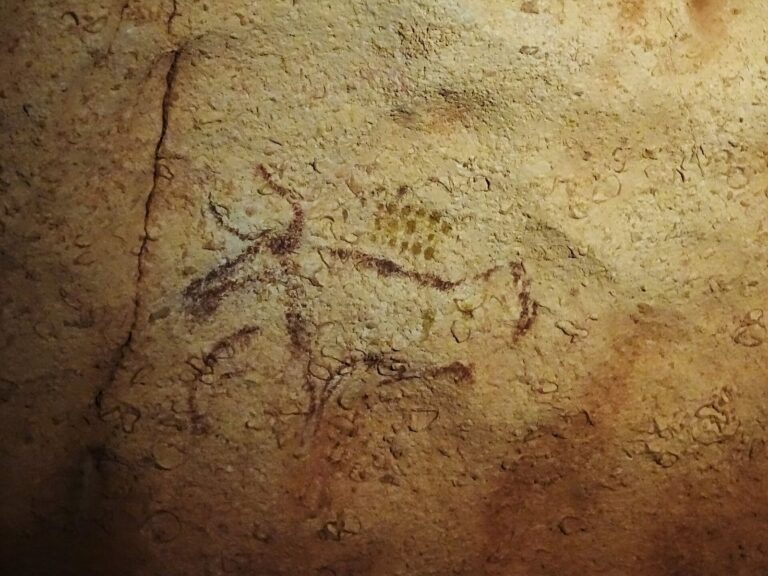
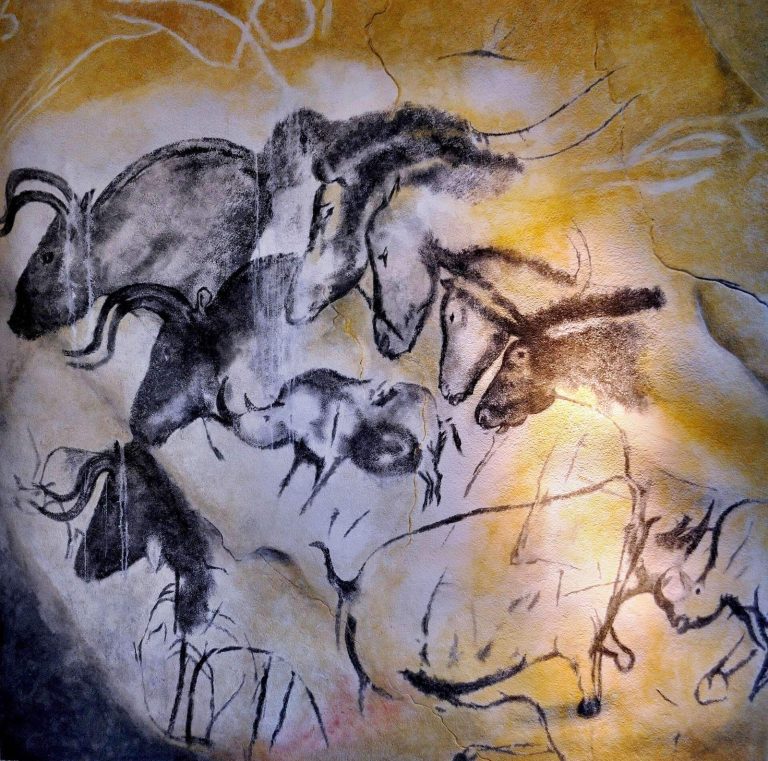
The cave’s broadest and highest passage section, known as the Rotunda, begins about 70 m inside and extends for 10 m. On its southern wall, three ibexes appear in black and red strokes, with a horse and a bison in a similar style above them. Two large, solid-red signs with two lobes are nearby. They may represent a mushroom and a bird or winged insect; much of the second image has flaked away. Red is the predominant color across the decorative scheme.
Gallery and Niche of the Points
The north wall bears the Gallery of the Points, facing the Niche of the Points. Together, they hold 59 red palm impressions arranged in cloudlike clusters. Some overlap, apparently where pigment was applied again with the hand in a changed position. Raised skin ridges remain visible on many impressions. Those ridges reveal the handedness of 28 impressions, all made with the right hand. A panel of palm impressions in the niche measures 90 × 110 cm and is made with red ochre on limestone.