Castellón Alto: An Argaric Bronze Age Settlement in Spain
Site at a Glance
- Popularity
- Medium
- Country
- Spain
- Primary era
- Bronze Age
- Eras represented
- Bronze Age
- Civilizations
- Unclassified
- Site type
- Military
- Remains
- Fortified Town
On this page10 sections
History
Castellón Alto is a Bronze Age settlement of the Argaric culture, an archaeological culture of southeastern Iberia, in Galera, Granada, Spain. Occupied around 1900–1600 BCE, it was a medium-sized agricultural community within a regional network of settlements. These sites were arranged at similar intervals to support the use of local resources and a defensive system. Cerro de la Virgen, another prehistoric settlement in Granada province, served as the network’s center, with other communities dependent on it.
Residents cultivated cereals and legumes, and grew flax for making textiles. They kept mainly goats and sheep, fished in the river, and hunted deer, wild boar, and rabbits. Woodland supplied food, fuel, building materials, and medicinal plants. Animals were sheltered within the settlement. Horses and cattle carried heavy loads and were slaughtered for meat as adults, while dogs guarded livestock.
Trade and exchange brought valued goods to the community, including copper and silver items placed in graves. Social differences shaped the settlement’s organization, although kinship could also influence how households were arranged. Larger homes and richer burial goods were associated with higher-ranking families.
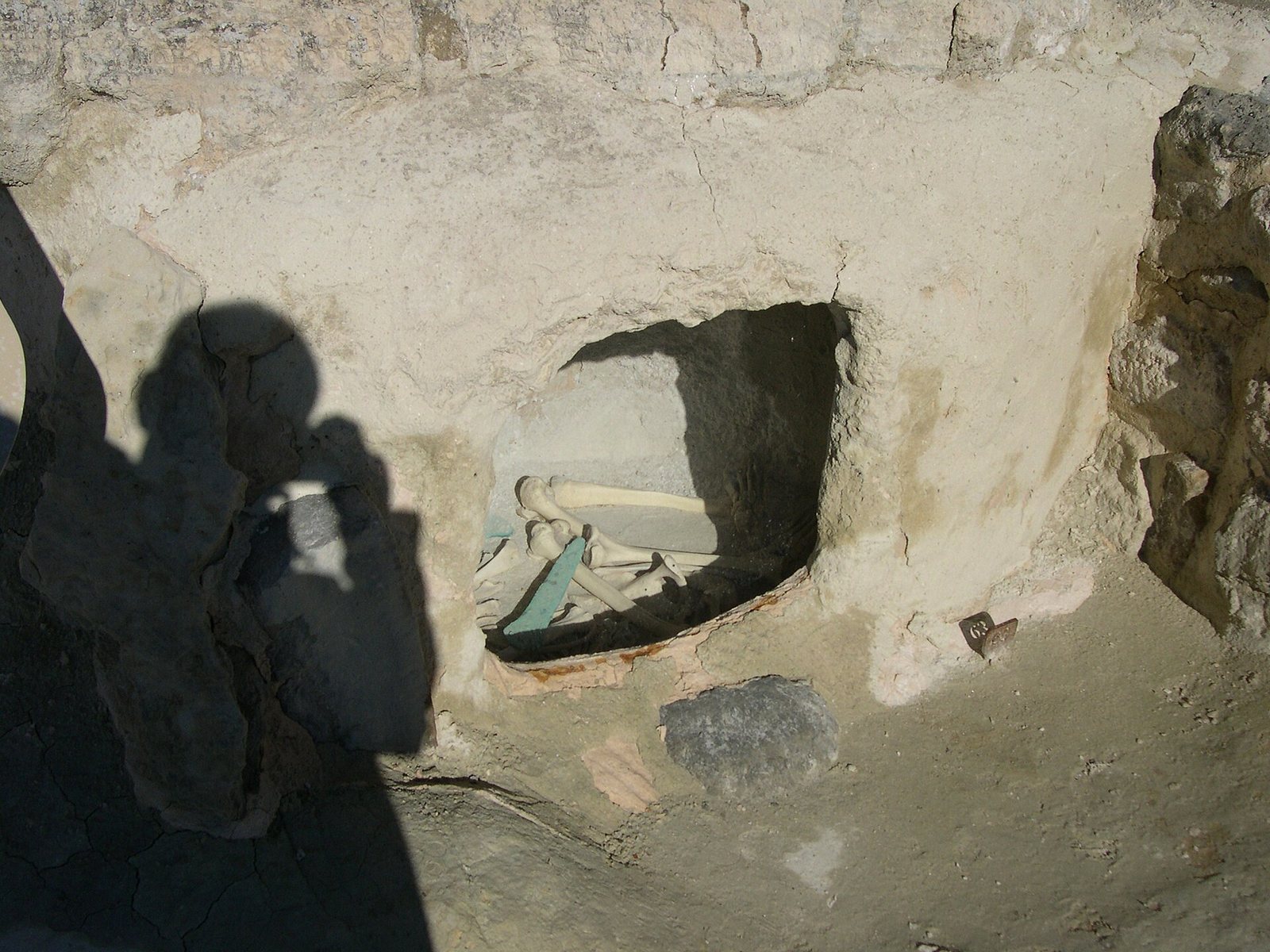
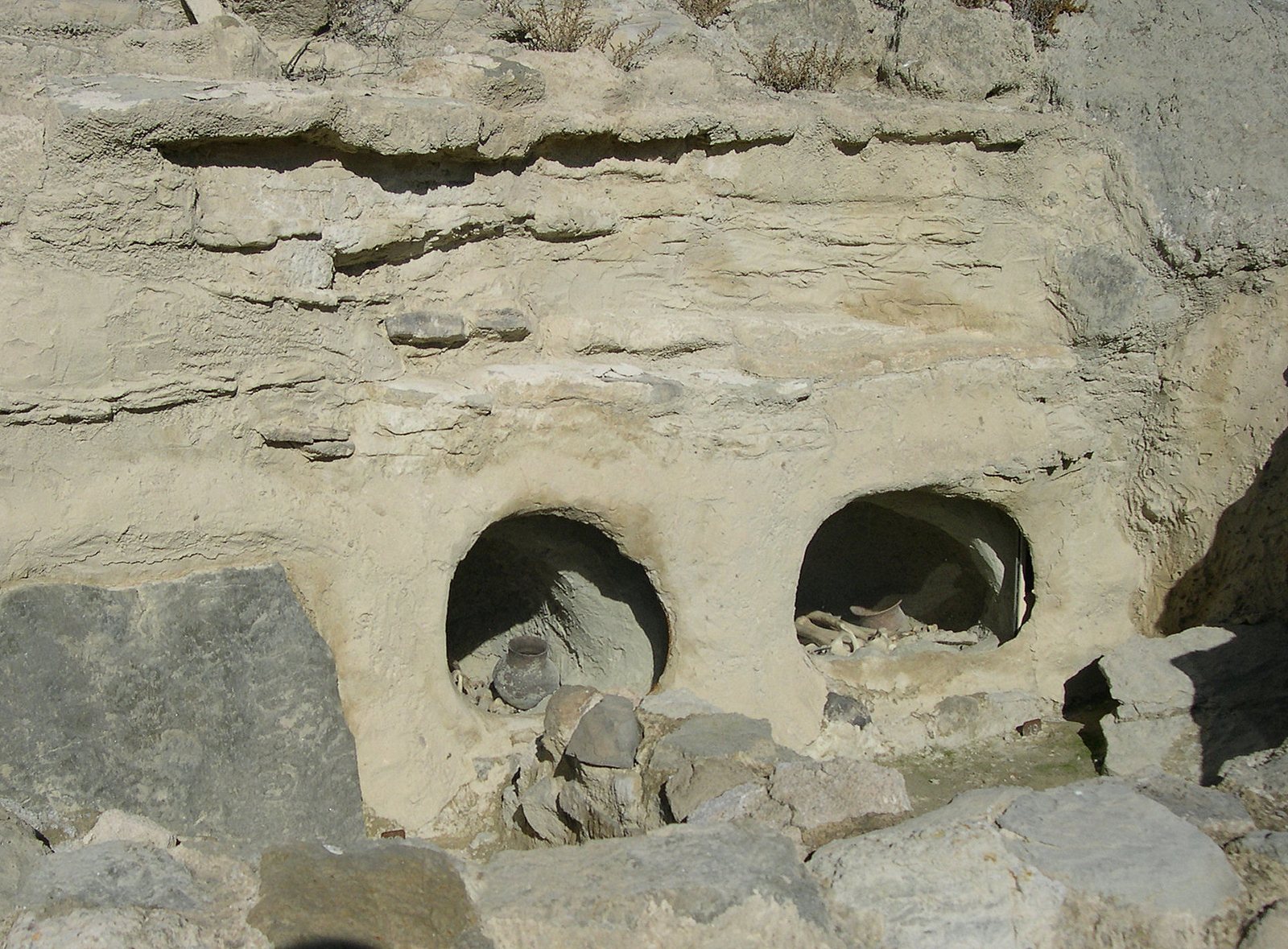
About 130 graves are represented at Castellón Alto. Children could be buried in pottery vessels, while other burials were placed in pits or chambers cut into rock beside the back walls of houses. The dead were wrapped in shrouds and laid in a fetal position, alone, in pairs, or with family members. Weapons and tools of bone, stone, or metal, as well as food in ceramic vessels, accompanied some burials.
Human remains indicate an average life expectancy at birth of about 23 years, alongside high infant mortality. Men more often had shoulder and spinal injuries associated with strenuous work such as carrying loads. Women more often showed injuries to the elbows and lower back, linked to grinding grain. The remains also point to differences in diet among people in the settlement.
The University of Granada excavated Castellón Alto from June to July and again from September to November 1983. A campaign in November 2002 uncovered grave 121 on the lower terrace, containing partly mummified human remains. On 12 March 1996, Spain declared the archaeological zone an Asset of Cultural Interest, the country’s formal designation for protected cultural heritage.
Remains
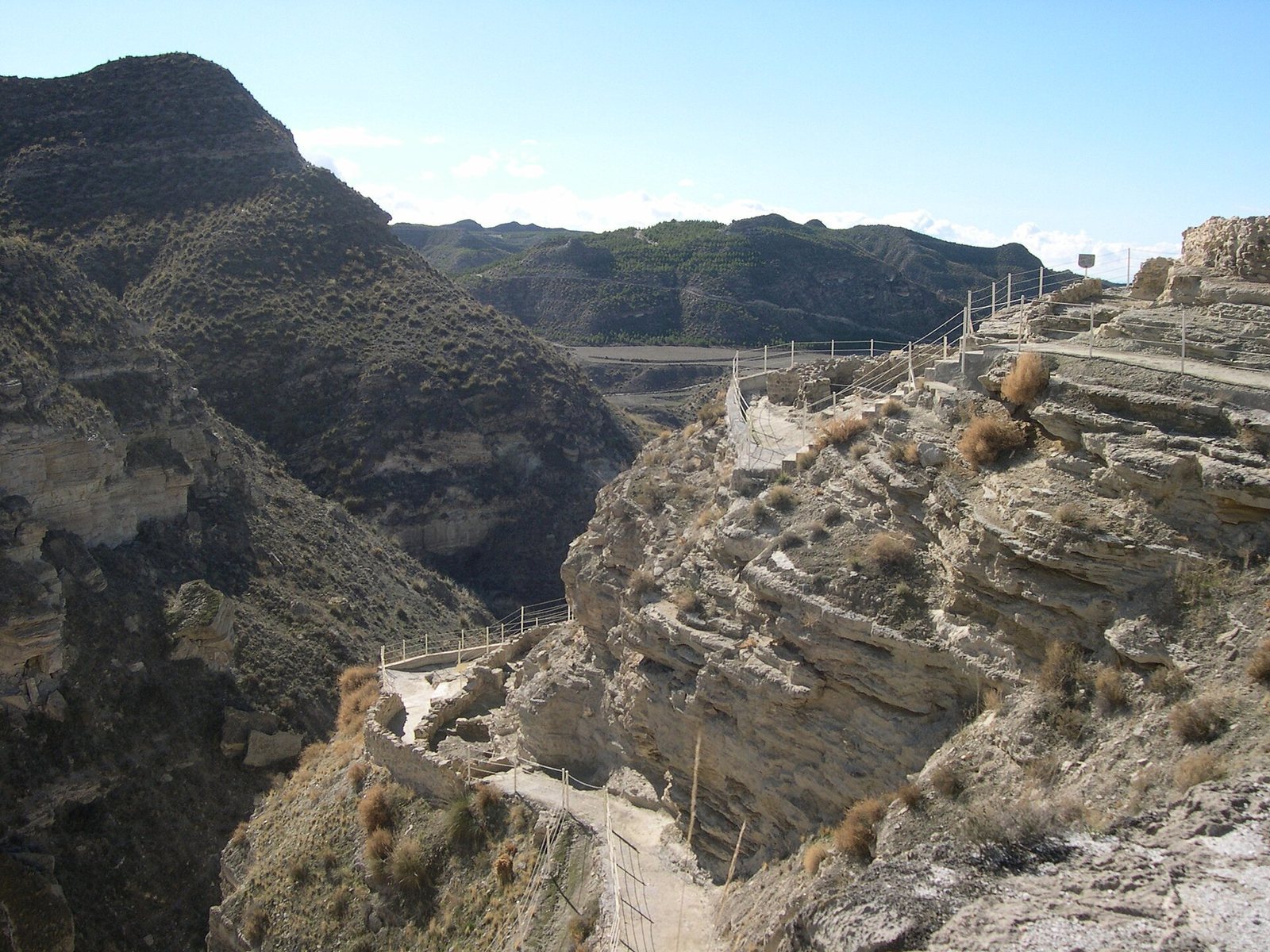
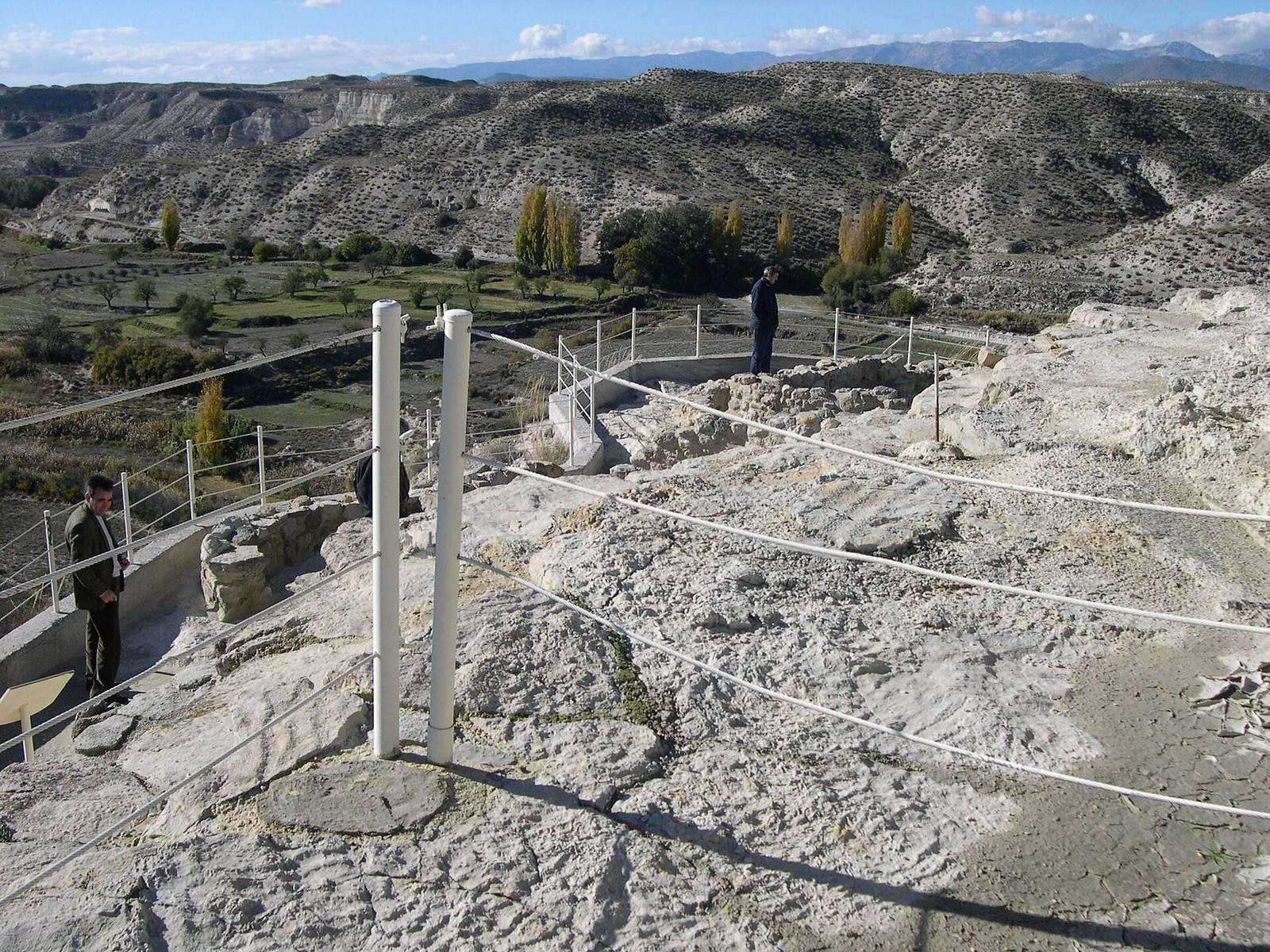
The settlement occupies a raised promontory above the Galera River valley. Its inhabited area extends across a spur-shaped hill and an adjoining slope, with walls reinforcing its stepped, fortified form.
Layout and defenses
The hill has three natural terraces. The upper terrace held the acropolis (the elevated, fortified part of a settlement), while the middle and lower terraces followed a more regular layout. Four artificial terraces extend across the adjoining slope. A perimeter wall divided the upper terrace from the rest of the settlement, and narrow streets, some paved, organized the houses. The upper area contained a cistern, and its houses were larger than those elsewhere.
Houses and household crafts
Houses and animal shelters
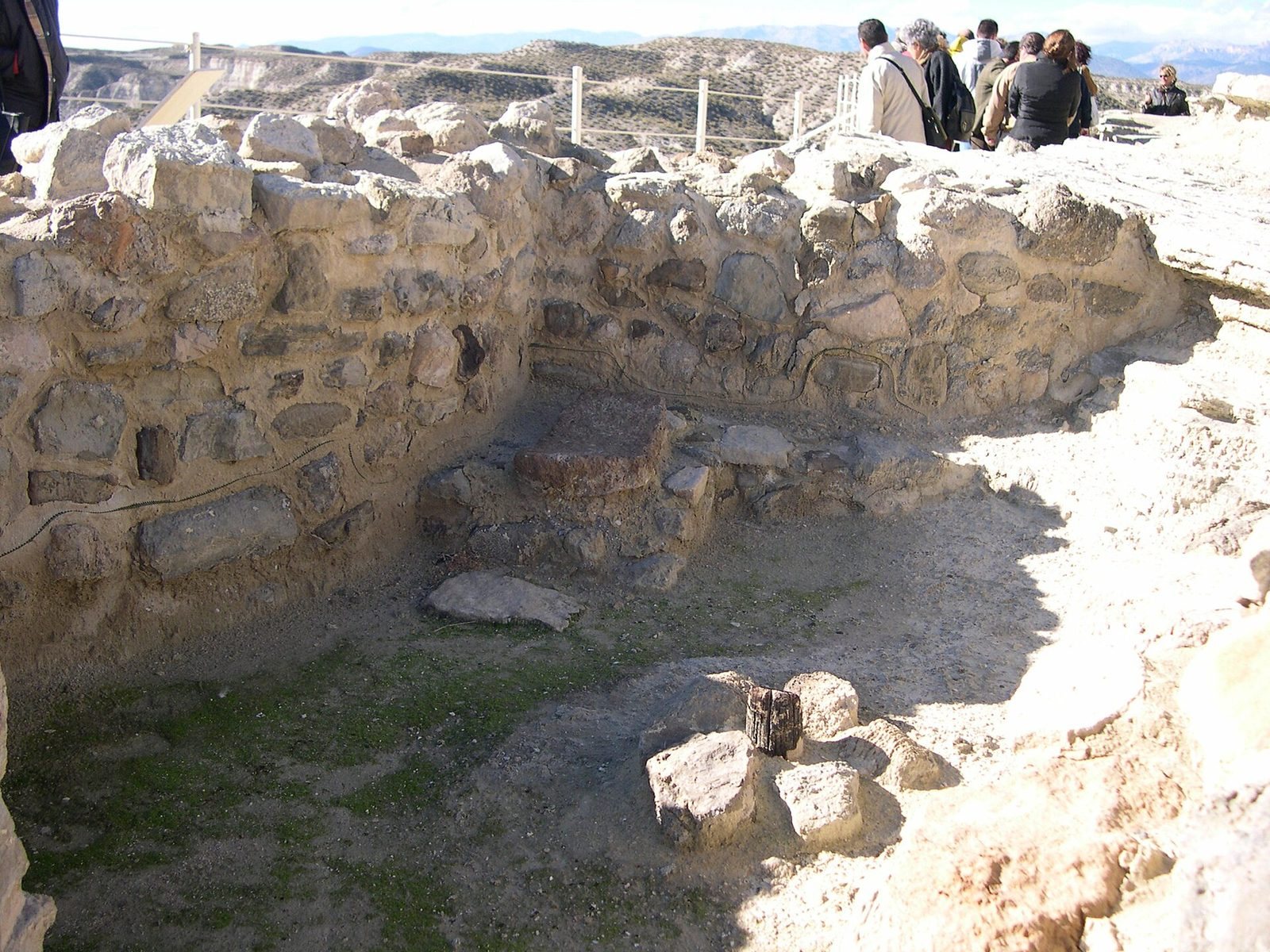
Houses had stone-masonry foundations supporting walls made from branches coated with mud and reinforced by pine beams. Interwoven branches covered with mud formed waterproof roofs, while interiors were arranged for different domestic activities. Shelters for livestock stood within the settlement. Nearby stone supplied building material and stone for making tools.
Pottery, textiles, and tools
Pottery included cups and vessels with angled shoulders. The vessels were undecorated but carefully finished. Residents wove linen and wool on upright looms, and made sandals, baskets, ropes, and mats from esparto grass. Animal bones were fashioned into needles, awls, and buttons. Ground conditions helped preserve organic materials, including textiles, basketry, and wood.
Grave 121
Chamber and adult burial
Grave 121 is a chamber cut into the slope of the lower terrace. Squared black-pine planks covered with mud closed the chamber, with a masonry wall in front. The tight seal and dry conditions helped preserve the bodies through dehydration. The adult was a man aged about 27–29 and approximately 1.60 metres tall. His remains retained body tissue, long dark hair arranged in two side braids and a central ponytail, and traces of beard and body hair attached to the skin. Linen and wool fragments survived, along with linen impressions on bones, including the finger bones.
Child burial
The child, about four years old, had died earlier and was moved from an initial grave to be buried with the adult. The bones lay in a disordered bundle at the chamber’s front right. The child was partly mummified when transferred and retained soft tissue and short, dark hair combed forward into a fringe. Finds included linen fragments and remains of a possible woven wool cap covered with leather.
Funerary objects
The grave contained four ceramic vessels, including a cup, as well as copper bracelets, silver rings, a copper dagger with traces of its leather sheath, and a copper axe. The axe retained its complete oak handle and traces of binding fibres; its hafting shows that it served as an adze, a tool for shaping wood. The child wore a bronze bracelet on each forearm and had three necklace beads. Remains of a very young sheep lay beside the child’s bones.
A small museum in Galera displays prehistoric material, including the Galera mummy found at Castellón Alto.