Déserts Gallery Grave: A Late Neolithic Collective Tomb in France
Site at a Glance
- Popularity
- Low
- Country
- France
- Primary era
- Stone Age
- Eras represented
- Stone Age
- Civilizations
- Unclassified
- Site type
- Burial
- Remains
- Tomb
On this page10 sections
History
Late Neolithic burial
The Déserts Gallery Grave is a collective tomb from the Late Neolithic, the later part of a prehistoric period associated with farming and settled communities, at Argenteuil, France. It belongs to the megalithic tradition of building large stone monuments and is also known as the Butte-Vachon Gallery Grave.
The monument was used for collective burial. During its period of use, part of the chamber’s western rear section collapsed and disrupted the original arrangement of the burials. Louis Leguay, who later led excavations, thought the bodies had been placed sitting against a wall; one child’s skeleton was found upright. The total number of people buried there is unknown, though it may have been several dozen or even hundreds. Eleven skulls were recovered.
Rediscovery and protection
In the early nineteenth century, the site was an uncultivated patch among cultivated fields, a circumstance that gave rise to the name “Déserts.” Erosion exposed part of the tomb, and people quarried it for stone. In January 1867, a foreman named Guédon reported finding human bones and flint objects. Excavations followed under Leguay, president of the Parisian Society of Archaeology and History. Further excavations took place in 1943 and 1973.
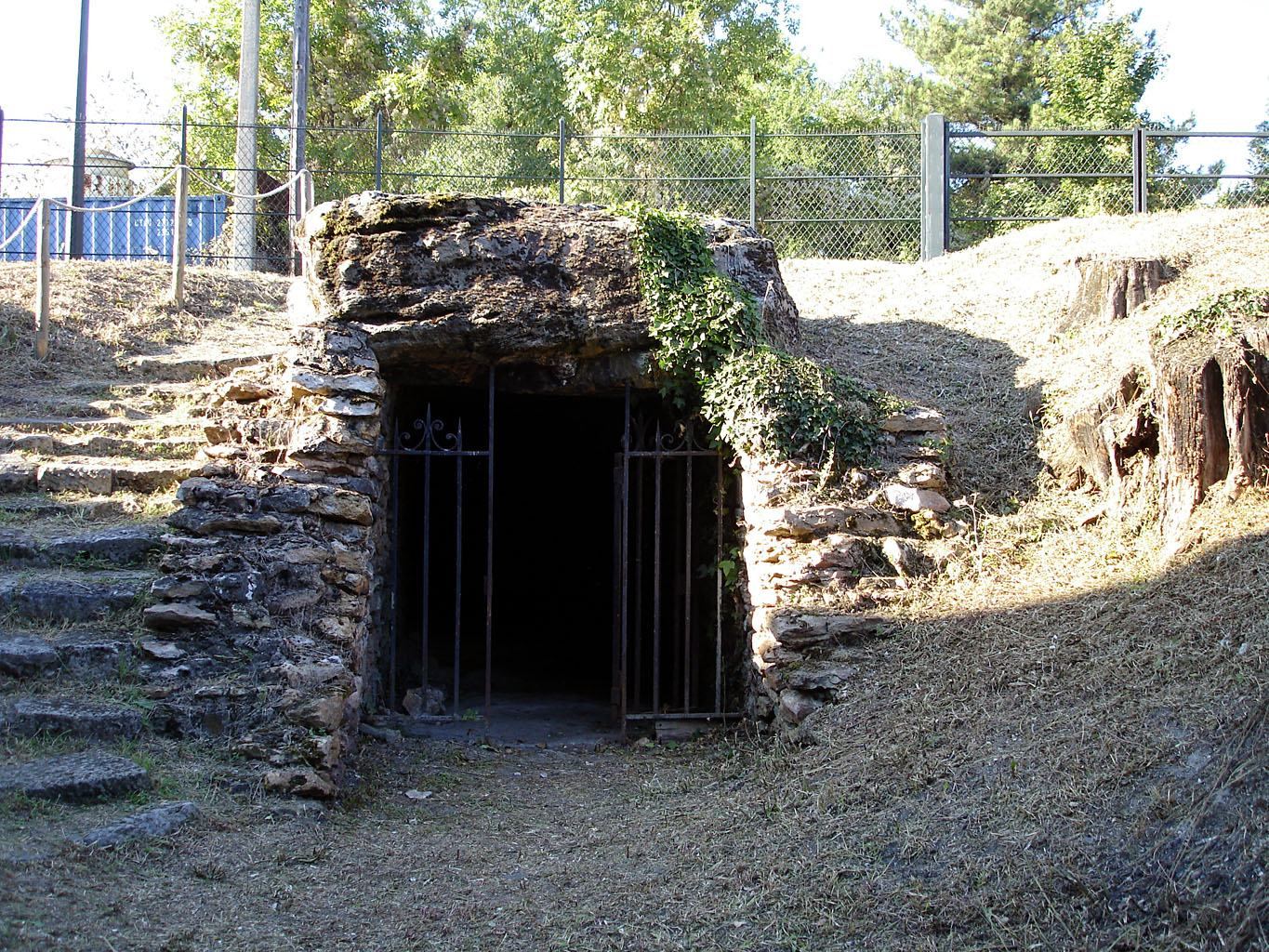
After the first excavation, the French Society of Numismatics and Archaeology restored the tomb. Before 1899, the municipality of Argenteuil enclosed it with a locked grille. The tomb received France’s Historic Monument classification in 1943, a formal heritage-protection status. It was initially owned by the Ministry of Culture; an agreement dated 29 June 2007 transferred ownership to the municipality of Argenteuil.
Remains
Chamber and mound
Burial chamber
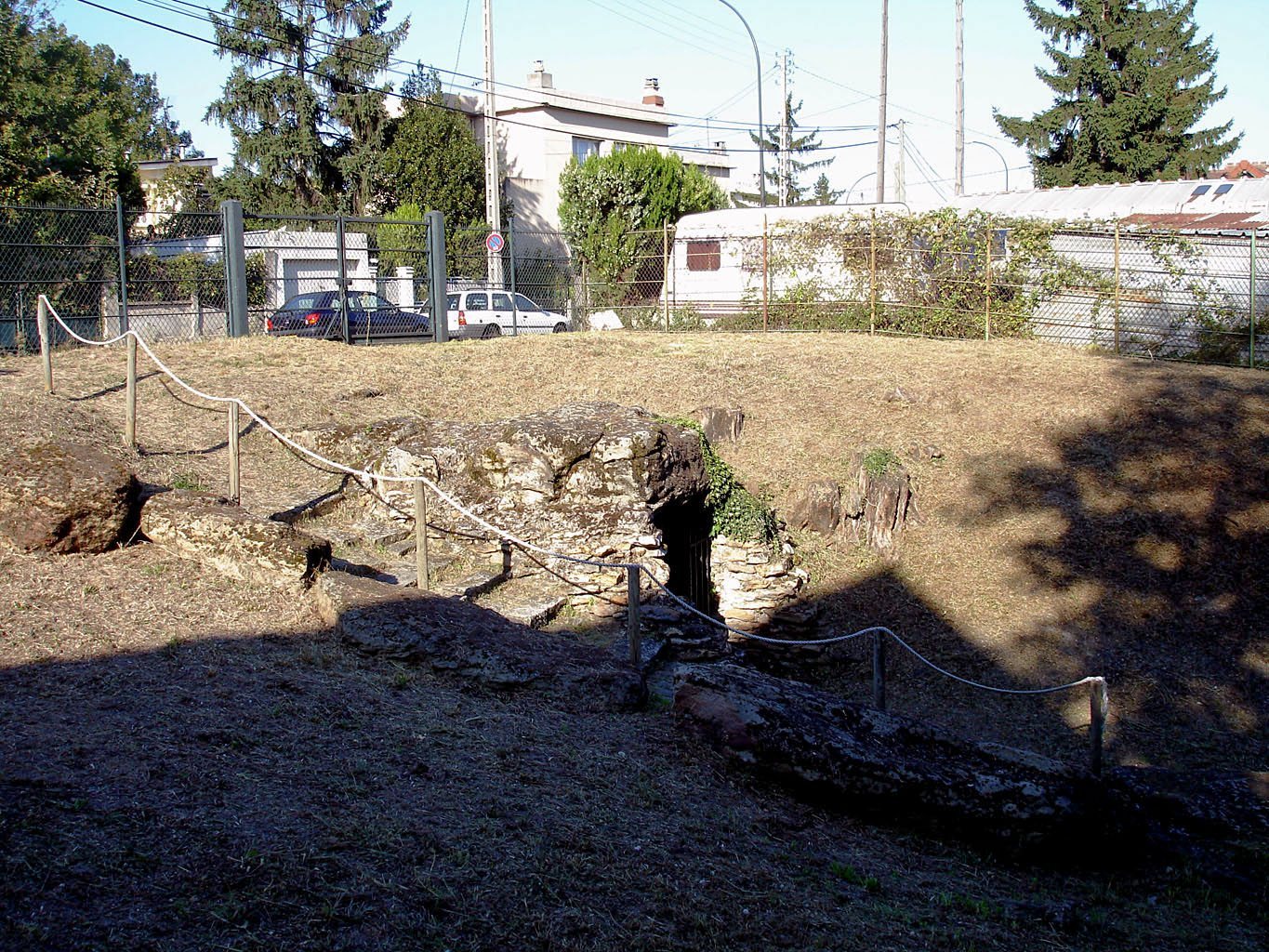
The partly underground tomb stands on a hillside 55 metres above sea level, about 100 metres from the Seine. Its axis runs from north-northwest to south-southeast, toward the river. At the time of Leguay’s excavations, the chamber was 9.30 metres long, 1.90 metres wide, and 1.90 metres high. The paved floor extends more than 3.70 metres beyond the measured chamber, indicating an original structure at least 13 metres long.
The chamber has a square cross-section, with millstone and limestone slabs stacked without mortar directly on the ground. Their arrangement forms even interior walls. A slab 2.10 metres wide, leaning slightly inward and resting on both side walls, closes one end. Small slabs pave the floor.
Roof and mound
Leguay’s plan shows five sandstone slabs covering the chamber; the slab nearest the closed end was broken in two. Over the roof was a cairn, a mound made of overlapping limestone slabs, which was covered with soil. This earthen mound was known as the Butte Vachon.
Burial objects and animal remains
Tools and pottery
Objects recovered from the tomb include flint tools and arrowheads, worked flint, daggers, bone awls, and polished axes. Some axes remained fitted into deer-antler sleeves. The finds also include a jadeite axe from Mont Viso and hard-stone axe amulets. Pottery vessels and fragments belong to the Seine-Oise-Marne culture, a prehistoric archaeological culture of northern France. The assemblage dates to the Late Neolithic.
Ornaments and animal bones
Personal ornaments include mother-of-pearl beads, a slate pendant, and two perforated pieces, one cut from a wild-boar tusk and the other from a turtle shell. Animal bones from badgers, beavers, wild boar, horses, and deer were also found. Some objects recovered from the tomb are held at the Museum of National Antiquities in Saint-Germain-en-Laye.