Oleiros Castle: A Frontier Fortress in Portugal
Site at a Glance
- Popularity
- Low
- Country
- Portugal
- Primary era
- Medieval
- Eras represented
- Iron Age, Medieval
- Civilizations
- Kingdom of Asturias
- Site type
- Military
- Remains
- Castle
On this page4 sections
History
Frontier fortress and settlement
Oleiros Castle is an archaeological site in Portugal containing the remains of a ninth-century frontier fortress. Built during the Reconquista, the centuries-long expansion of Christian-ruled territories across the Iberian Peninsula, it began as a watchtower that reused the ruins of a prehistoric hillfort. Vímara Peres, a ninth-century noble and military leader associated with the early County of Portugal, is named as its architect.
In the tenth century, Mendo I Gonçalves, a count of the County of Portugal, is believed to have raised the castle’s lord to baron because of the site’s frontier importance and its character as a fortified settlement. The community grew under the fortress’s protection, supported by abundant nearby fields, and gave rise to Urrós. In 1182, Afonso I, Portugal’s first king, granted Urrós a charter.
Abandonment and later history
After the 1297 Treaty of Alcañices, an agreement between Portugal and Castile concerning their frontier, residents gradually left the fortified settlement. Its lands were assigned to hereditary tenants for free cultivation, while remaining under the Lordship of Algoso, a jurisdiction in which a lord governed lands and dependent communities. A population register from 1527 lists the castle village as uninhabited. A 1538 boundary description places another hill called Oleiros Castle on the Castilian side, opposite the Portuguese castle. Both were in ruins, and rye was grown on their lands for bread.
By 1684, the castle was ruined and no longer had a military function. In 1718, King John V consolidated Urrós’s autonomy with a new charter. Spanish forces almost completely destroyed the castle remains during the Seven Years’ War, a major international conflict of the mid-eighteenth century.
Oleiros Castle received Portugal’s Property of Public Interest designation in 1990, with the decree published on 17 July. Conservation work began in 2020.
Remains
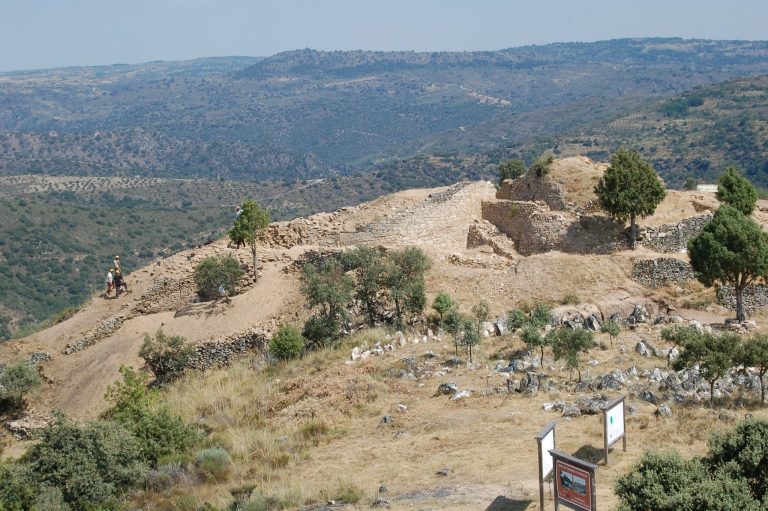
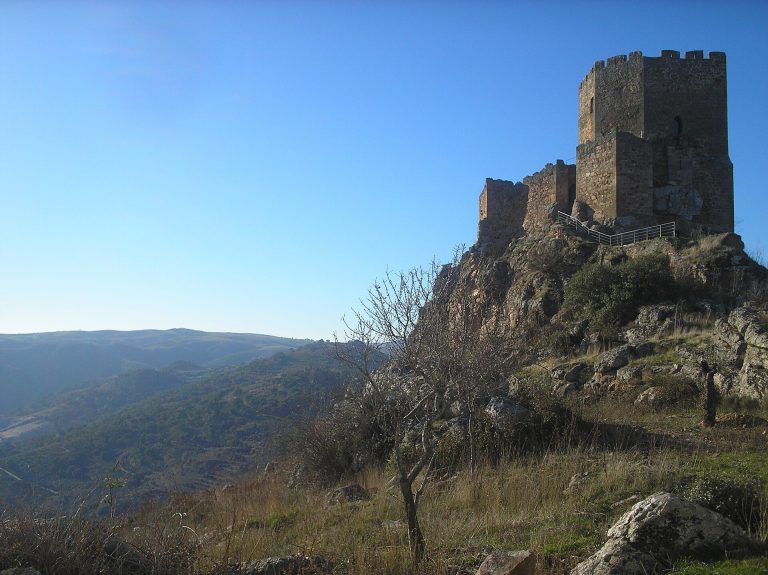
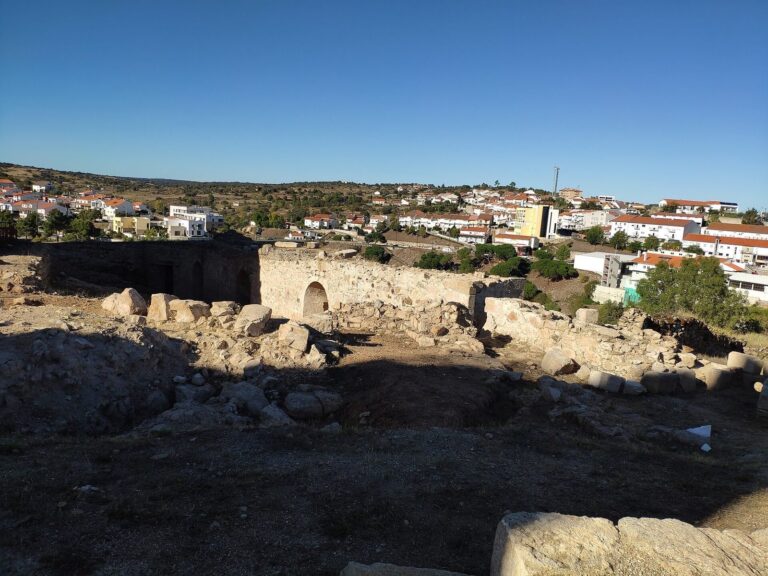
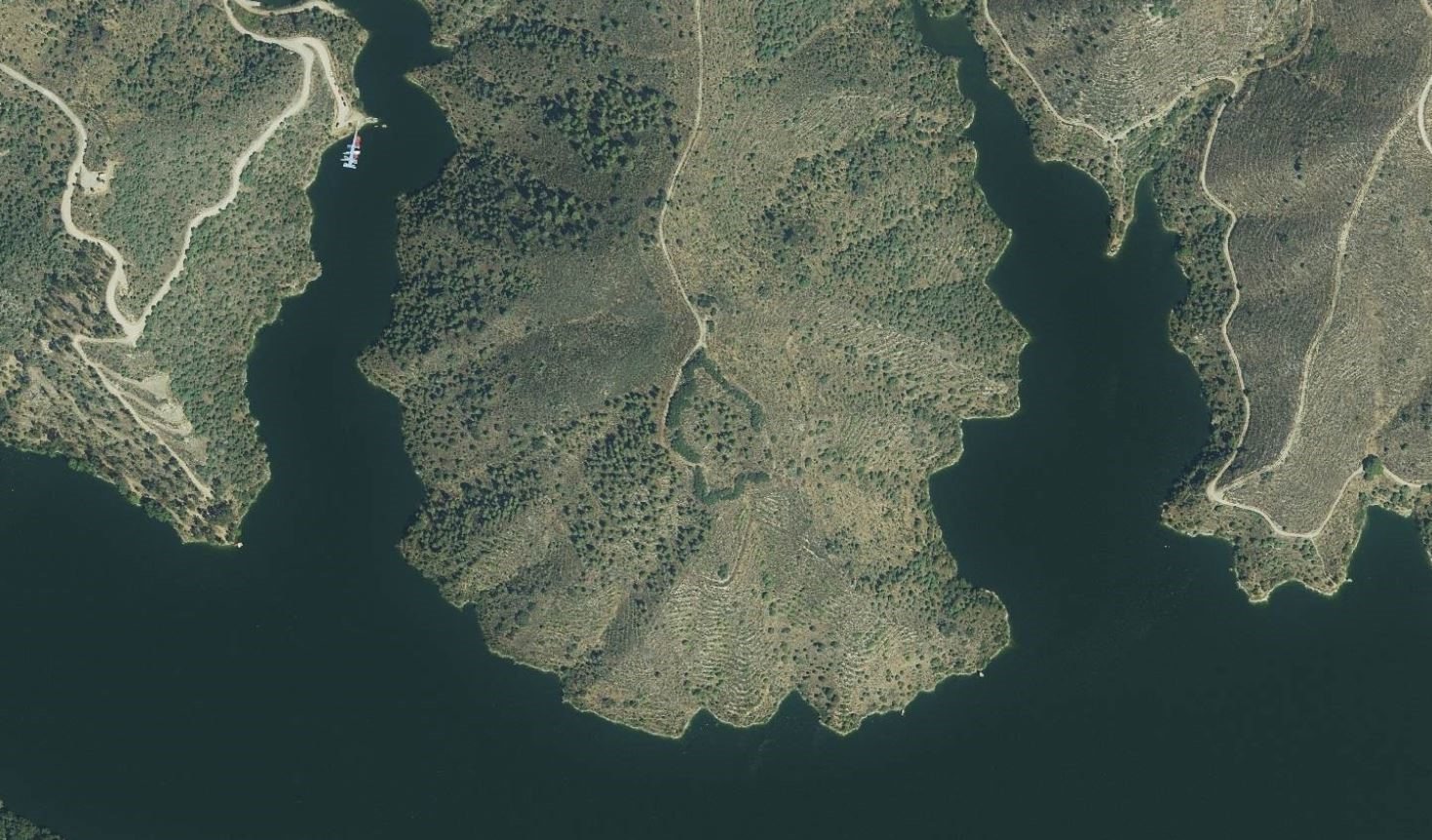
The castle occupies a gorge on the Douro River, on a high riverbank about 482 metres above sea level. A bend in the river restricted the passage of people and livestock and formed a natural boundary. The enclosure has an approximately rectangular footprint, measuring about 130 metres by 40 metres. Its stone walls stand about two metres high and follow a polygonal arrangement, unlike wall forms commonly found in northeastern Trás-os-Montes and Alto Douro.
Remains of dwellings lie within the enclosure, sometimes accompanied by fragments of wells. The castle remains also incorporate ruins of the earlier Lusitanian hillfort, associated with the ancient people of the western Iberian Peninsula.