Hen Gwrt Medieval Moated Site: A Medieval Manor and Hunting Lodge
Site at a Glance
- Popularity
- Low
- Country
- United Kingdom
- Primary era
- Medieval
- Eras represented
- Medieval, Modern
- Civilizations
- Unclassified
- Site type
- Domestic
- Remains
- Manor House
On this page9 sections
History
Hen Gwrt Medieval Moated Site is a medieval manor complex in Llantilio Crossenny, Wales, United Kingdom. The Bishops of Llandaff built its substantial manor house in the thirteenth century, probably in timber, and a moat was added in the fourteenth century.
Episcopal manor and deer park
During the Middle Ages, ownership of Llantilio Crossenny parish was divided between the Crown and the Bishops of Llandaff, who administered their portion from Hen Gwrt. By the reign of Henry VI, the manor had been leased to William ap Thomas. He had bought the manor of Raglan in 1432 and begun expanding Raglan Castle.
William ap Thomas, or possibly his son William Herbert, enclosed a deer park of about 250 hectares at Llantilio Crossenny. John Speed’s 1610 map of Monmouthshire’s deer parks shows one centered at Hen Gwrt.
A hunting lodge and its destruction
In the sixteenth century, while the estate belonged to the Herberts of Raglan, the manor was rebuilt in stone as a hunting lodge within the family’s extensive hunting grounds. Tradition identifies Hen Gwrt as the home of Dafydd Gam, a Welsh noble and military figure who opposed Owain Glyndŵr’s rebellion against English rule and supported the English king Henry V. William Herbert was Dafydd Gam’s grandson through his father’s second marriage to Gwladys ferch Dafydd Gam. This family connection may have given rise to the tradition, but no documentary evidence connects Dafydd Gam to Hen Gwrt.
In 1646, during the English Civil War between supporters of the Crown and Parliament, Henry Somerset, 1st Marquess of Worcester, surrendered Raglan Castle after a three-month siege to Parliamentary forces led by Thomas Fairfax. The castle was then deliberately damaged and partly demolished, ending Hen Gwrt’s use as a hunting lodge. The manor and lodge were later destroyed.
Investigation and protection
In the 1820s, stone was taken from the site for road surfacing as the building foundations were uncovered and mapped. Some of the stone may instead have been used to build Llantilio Court. Changes to the road layout also removed the enclosure’s southern corner.
Sir William Jackson bought the site in 1873. In 1941, his grandson Sir Henry Mather Jackson transferred its guardianship to the Ministry of Public Building and Works, the government department responsible for public buildings and historic sites. Hen Gwrt was also designated a scheduled monument that year, giving it legal protection as an archaeological site.
Excavations led by O. E. Craster and J. M. Lewis in the 1950s were the site’s most detailed investigations, and their findings were published in 1963. By 2000, Hen Gwrt was regarded as one of the few thoroughly examined moated sites. Cadw, the Welsh government’s historic environment service, considers it to retain considerable archaeological potential and now cares for the site.
Remains
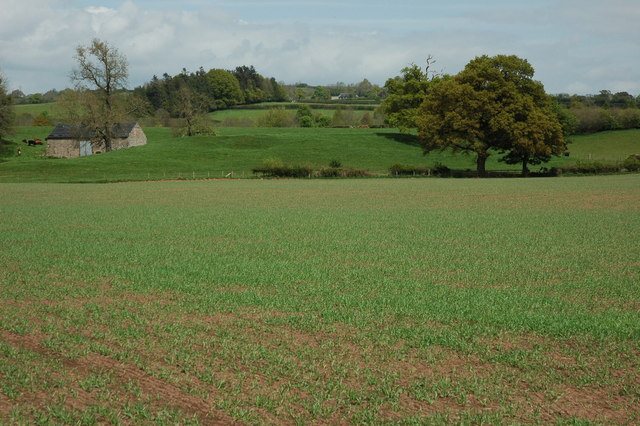
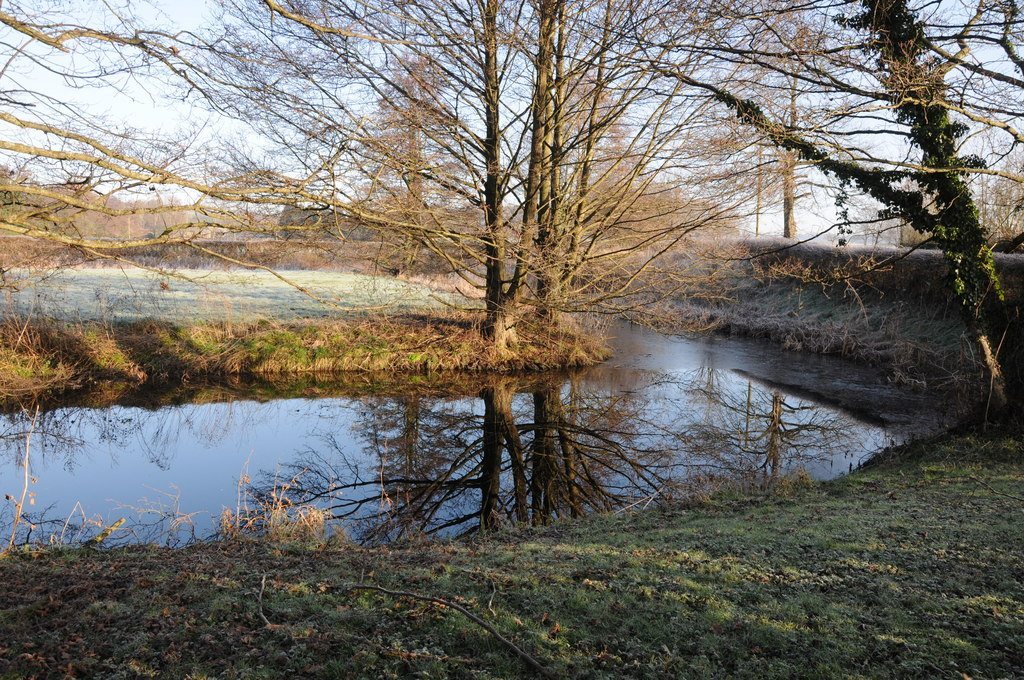
The site is arranged around a rectangular island measuring 39 by 45 metres, completely encircled by a moat. The island and moat together measure 72.5 by 76 metres. Evidence for the manor’s successive timber-framed and stone forms comes from an early plan and later excavations.
Moat and island
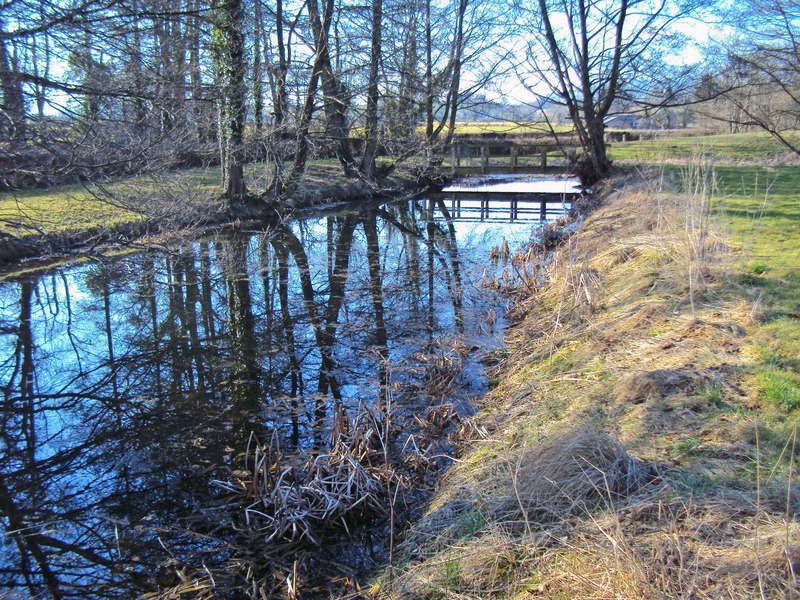
The site has no natural defences, and the island inside the moat was not raised. These features suggest that the moat was not intended as a serious defensive work.
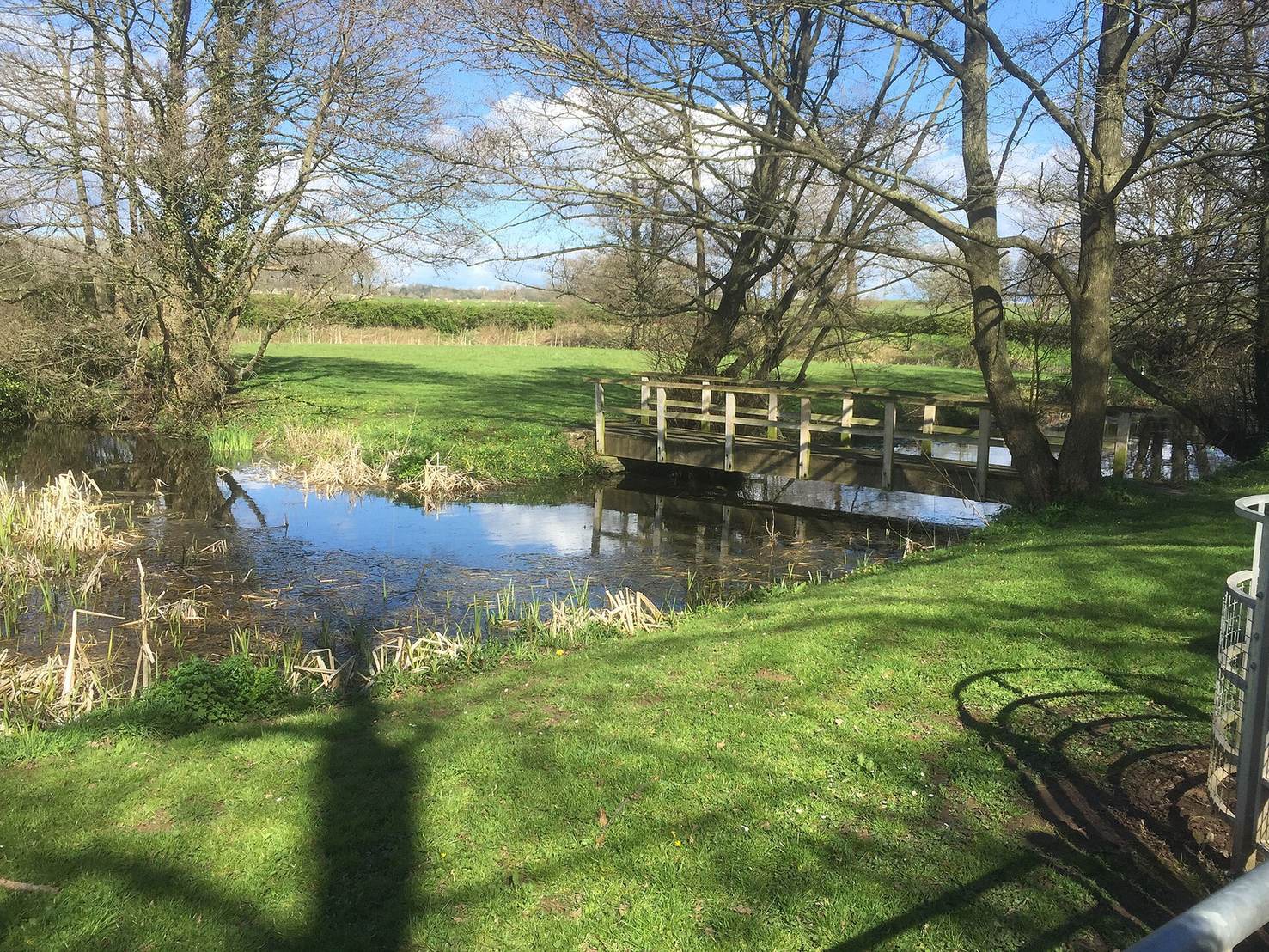
A modern bridge crosses the moat, and a beam from the original bridge survives. In 2016, bulrushes grew thickly in the moat, while the enclosed ground was open and grassy.
Buildings and ecclesiastical setting
Manor and hunting lodge
A plan made when foundations were uncovered in the 1820s shows a rectangular stone building and a stone wall following the moat’s inner edge. The building contained one large chamber, one smaller chamber and two rooms thought to have been latrines. Excavations in the 1950s also revealed evidence of the earlier timber-framed manor.
St Teilo’s parish church
St Teilo’s parish church stands a little south of Hen Gwrt. Its exceptional scale and unusual grandeur have been attributed to the Bishops of Llandaff’s presence at the manor.