Dolmen del Alto de la Huesera: A Prehistoric Tomb in Álava, Spain
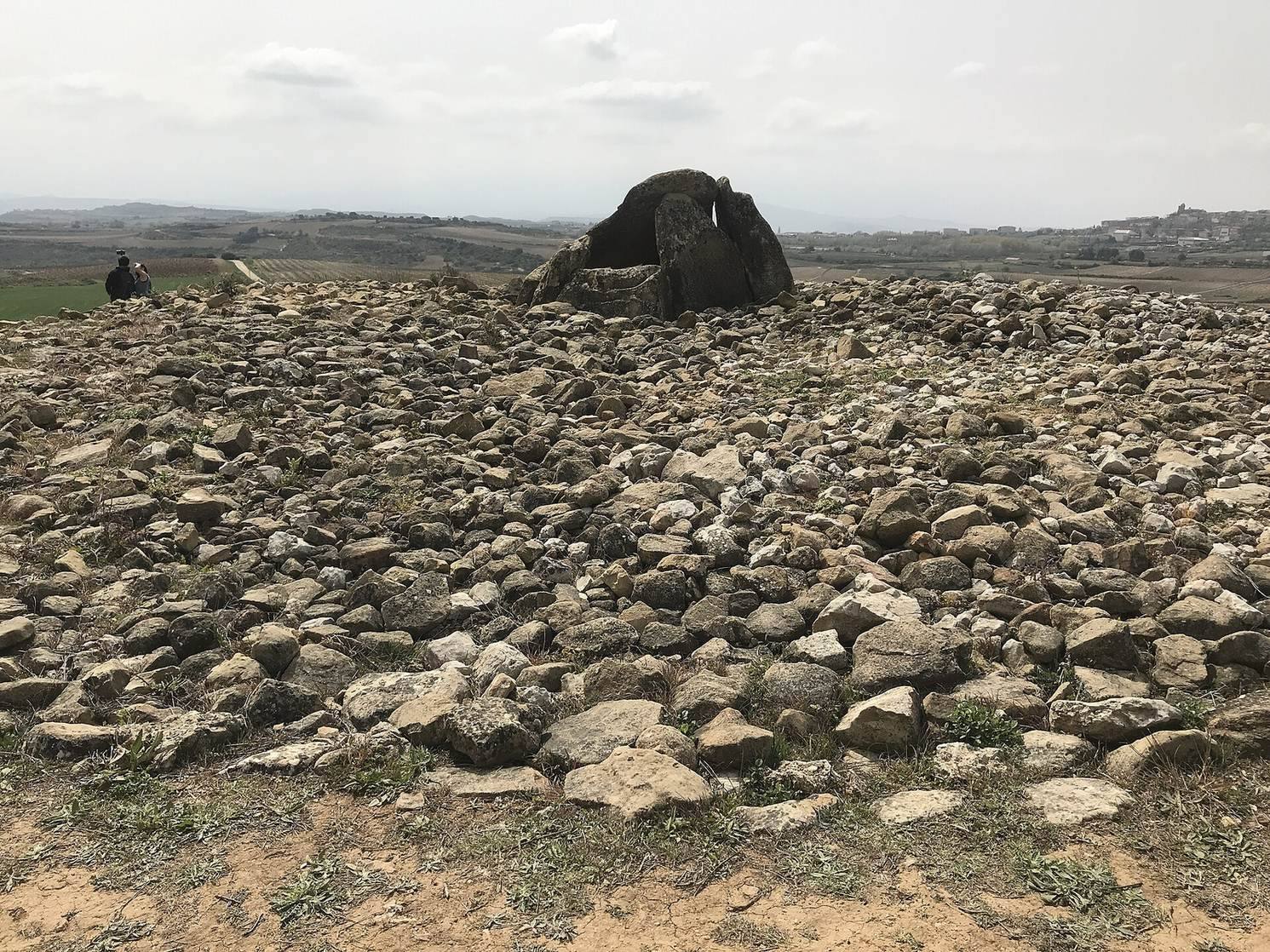
Site at a Glance
- Popularity
- Low
- Country
- Spain
- Primary era
- Bronze Age
- Eras represented
- Stone Age, Bronze Age, Modern
- Civilizations
- Unclassified
- Site type
- Burial
- Remains
- Tomb
On this page9 sections
History
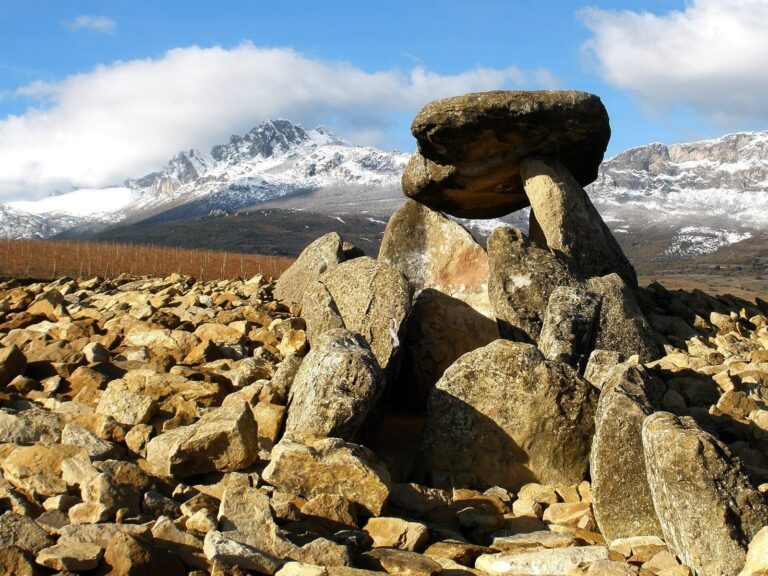
Dolmen del Alto de la Huesera is a prehistoric megalithic tomb at Laguardia in Álava, Spain. It dates to the Chalcolithic, or Copper Age, and the Bronze Age, and is among the largest dolmens in Rioja Alavesa. Radiocarbon measurements on human remains indicate prolonged use between 4,520 ± 30 and 3,550 ± 30 BP, a dating convention counted from 1950. These ages span a late Neolithic phase and the early Chalcolithic through the advanced Bronze Age.
Prehistoric Use
The tomb’s use is understood in two phases. The first ran from its establishment until the chamber collapsed. In a later phase, the chamber was altered and the corridor closed, after which the monument continued in use as a simpler dolmen until it was finally abandoned. One possible rebuilding involved opening a new entrance on the chamber’s eastern side while blocking the corridor. Burials increased markedly around 4,460–4,450 calibrated BP, meaning radiocarbon dates adjusted to calendar years.
The surrounding area was occupied from the Early Neolithic through the Roman period. The sandstone stela found at the dolmen may have been made during one of its alterations.
Discovery and Modern Work
Domingo Fernández de Medrano discovered the dolmen in 1947 and excavated it the following year. From 2010 to 2014, the Álava Provincial Council’s Museums and Archaeology Service directed further excavation, study, and reconstruction, assigning the work to University of the Basque Country professors Javier Fernández Eraso and José Antonio Mujika Alustiza. Restoration took place in two phases, the first from July 2010 to April 2011 and the second from 2014 to 2015. Participants in the research criticized the later phase for disregarding their recommendations and preventing them from completing work on the mound, leaving its full dimensions uncertain.
A decree of 26 July 2011 included Alto de la Huesera among the lowland dolmens of Álava designated as cultural property in the monument-ensemble category, with qualified protection.
Remains
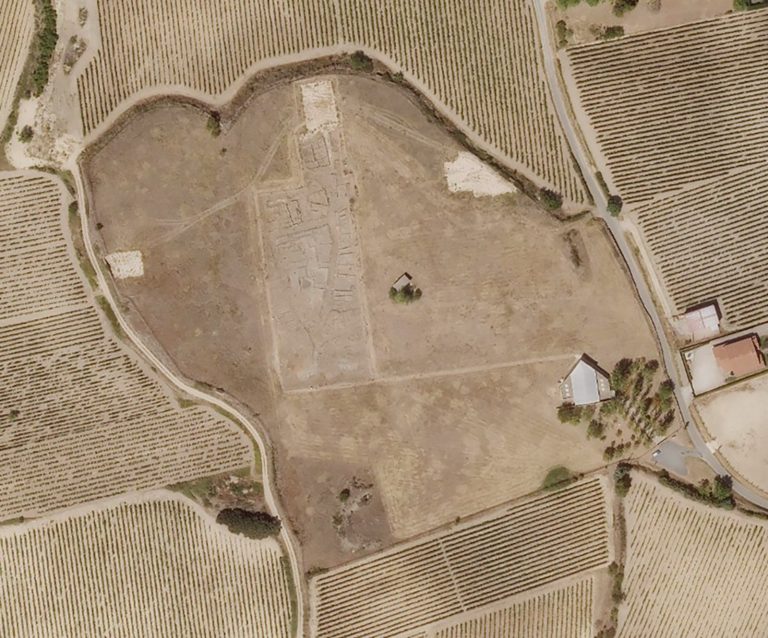
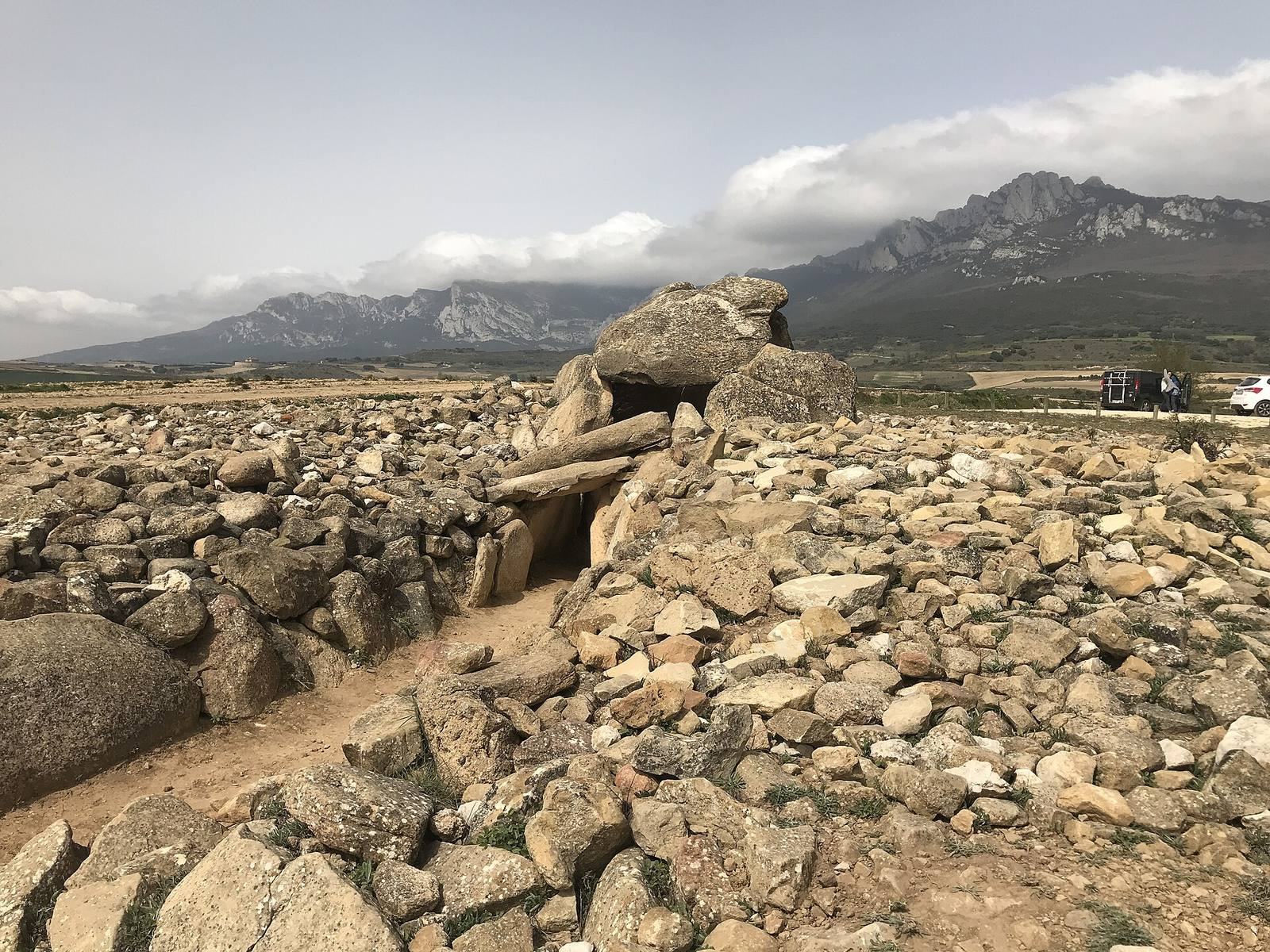
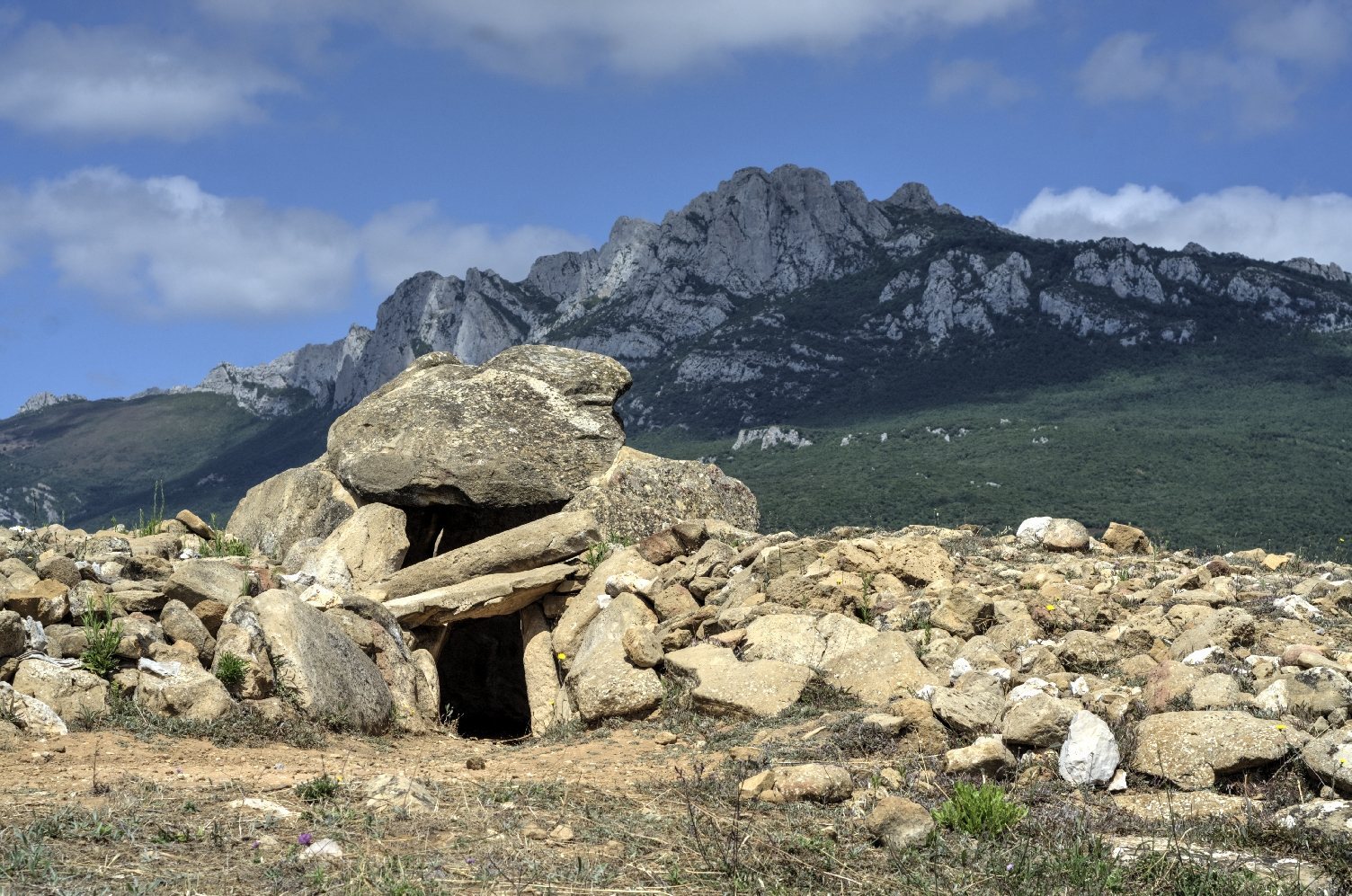
The monument combines a polygonal burial chamber and a long corridor enclosed by a stone mound. It stands on Alto de la Huesera, on Gancho hill between Elvillar and Laguardia, in Rioja Alavesa. The region lies between the Codés and Cantabria ranges within the Ebro depression. The surrounding terrain rises in sloping levels with hillocks at about 580–690 metres above sea level, while lower ground lies around 430 metres.
Burial Architecture
Chamber and Corridor
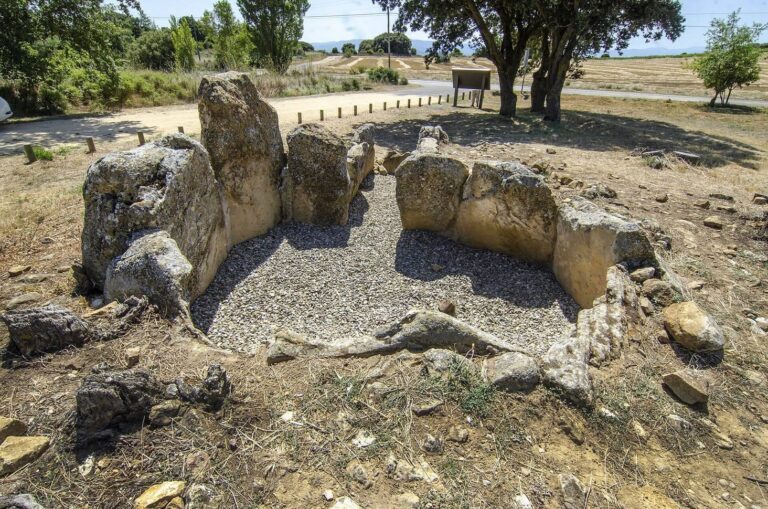
The chamber is 2.65 metres across and bounded by six upright sandstone slabs that lean inward. A larger slab found fallen inside may have served as the chamber’s roof; it was returned to its original position during restoration. While fallen, it sheltered the burial deposit and helped preserve it undisturbed.
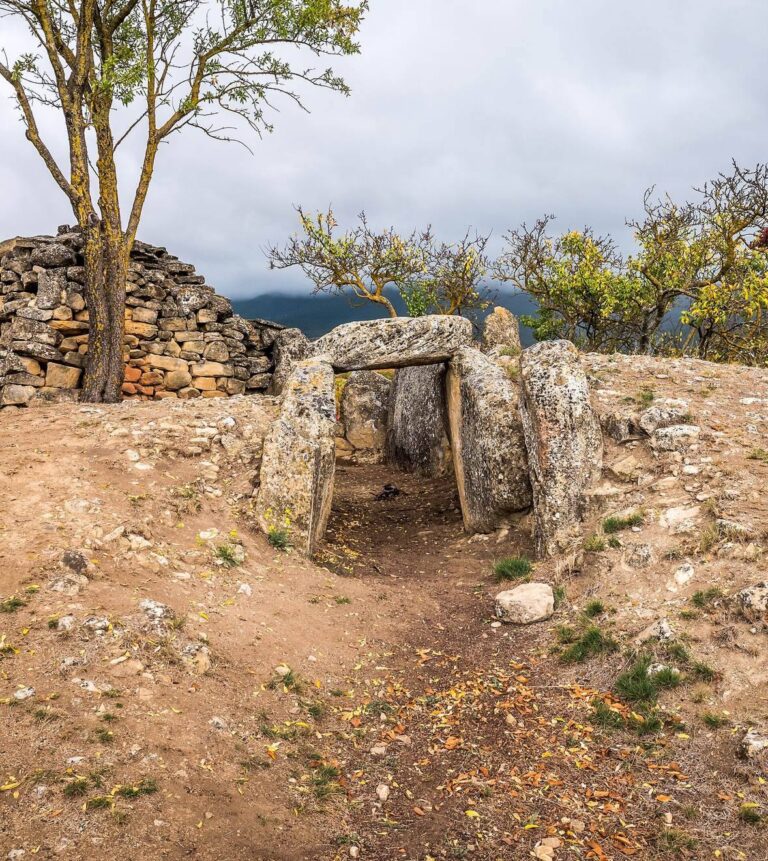
The corridor measures about 8 metres long and 1–1.2 metres wide. It has two sections: one roofed by a horizontal stone, and another set within the mound. Some of its roof slabs remain, including a covering stone.
Mound
Excavation trenches indicate that the mound had a circular plan, about 20 metres in diameter. It was made from sandstone and covered with lighter limestone, with the stones originally fitted together. The later reconstruction changed its construction by piling material around it and enclosing it with an edge of large stones.
Burials and Grave Goods
Excavations reaching about 40 centimetres deep recovered human remains representing at least 106 individuals. The tomb is estimated to have held the remains of as many as 135 people. Associated finds include ten arrowheads of several types, a trapezoid-shaped piece with steeply worked edges, three complete sickle blades, three fragments from the middle of blades, and a scraper.
Personal ornaments include beveled, washer-shaped bone beads, barrel-shaped beads made from different stones, and a pierced shell. Other finds include pottery from the Bell Beaker and Corded Ware traditions, the latter associated with cord-impressed decoration, as well as a bronze awl and a bronze arrowhead with a tang and barbs.
Carved Stela
A sandstone stela, an upright stone monument, was found on the surface of the original mound outside the corridor’s fifth and sixth upright slabs. It is unique in the Basque region and measures up to 47.5 centimetres high and 43.5 centimetres wide, with an average thickness of 14 centimetres. Its carvings have been interpreted as a human figure with a hand, a halberd, or pole weapon, and two daggers.
Five diverging lines at the bottom form a bell-shaped pattern interpreted as a hand. The lines were made with repeated blows, leaving deep grooves 4–20 millimetres wide. Above them are an asymmetrical triangle, 14.5 by 7.5 centimetres, and a smaller diamond, 5.5 by 2.5 centimetres. Both have tentatively been read as daggers with tangs, the narrow blade extensions that fit into handles. The triangular design combines shallow incisions with impact-made grooves; its fine lines may have outlined the shape before it was completed. The diamond consists of shallow strokes, and small hollows occur beside a raised area on the stone.
The raised area may have been incorporated into the imagery. The stela’s present outline is considered likely to be original, since its carvings are positioned at similar distances from the edges. It may once have stood above the corridor on top of the mound, adding to the monument’s appearance. The carving date remains uncertain: estimates range from about 5,310 to 3,720 calibrated BP, with a narrower proposal of about 5,050–4,450 calibrated BP placing it in the Late Chalcolithic. That narrower estimate draws on the geometric designs and comparisons with nearby sites.