Dolmen of San Martín: A Neolithic Burial Monument in Álava
Site at a Glance
- Popularity
- Low
- Country
- Spain
- Primary era
- Stone Age
- Eras represented
- Stone Age
- Civilizations
- Unclassified
- Site type
- Burial
- Remains
- Tomb
On this page12 sections
History
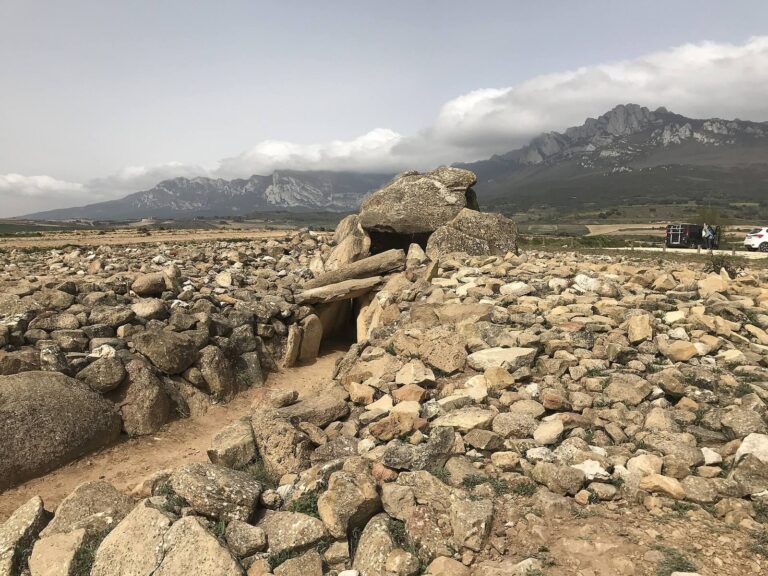
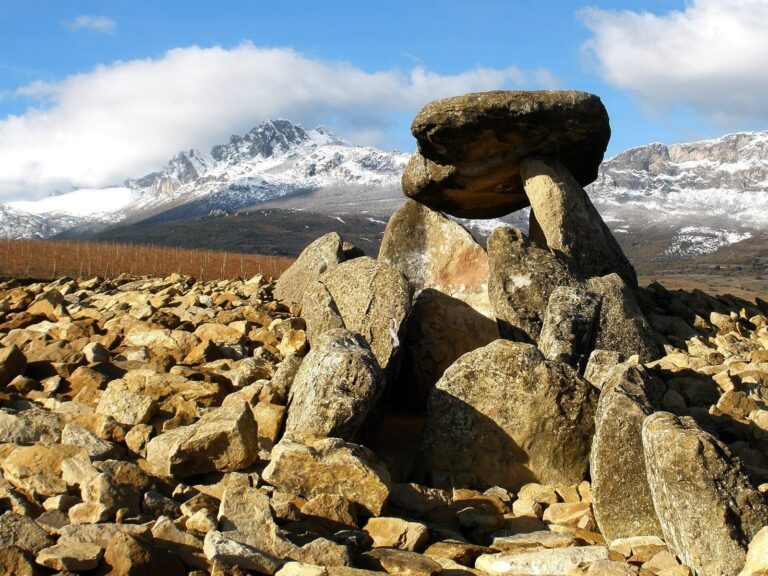
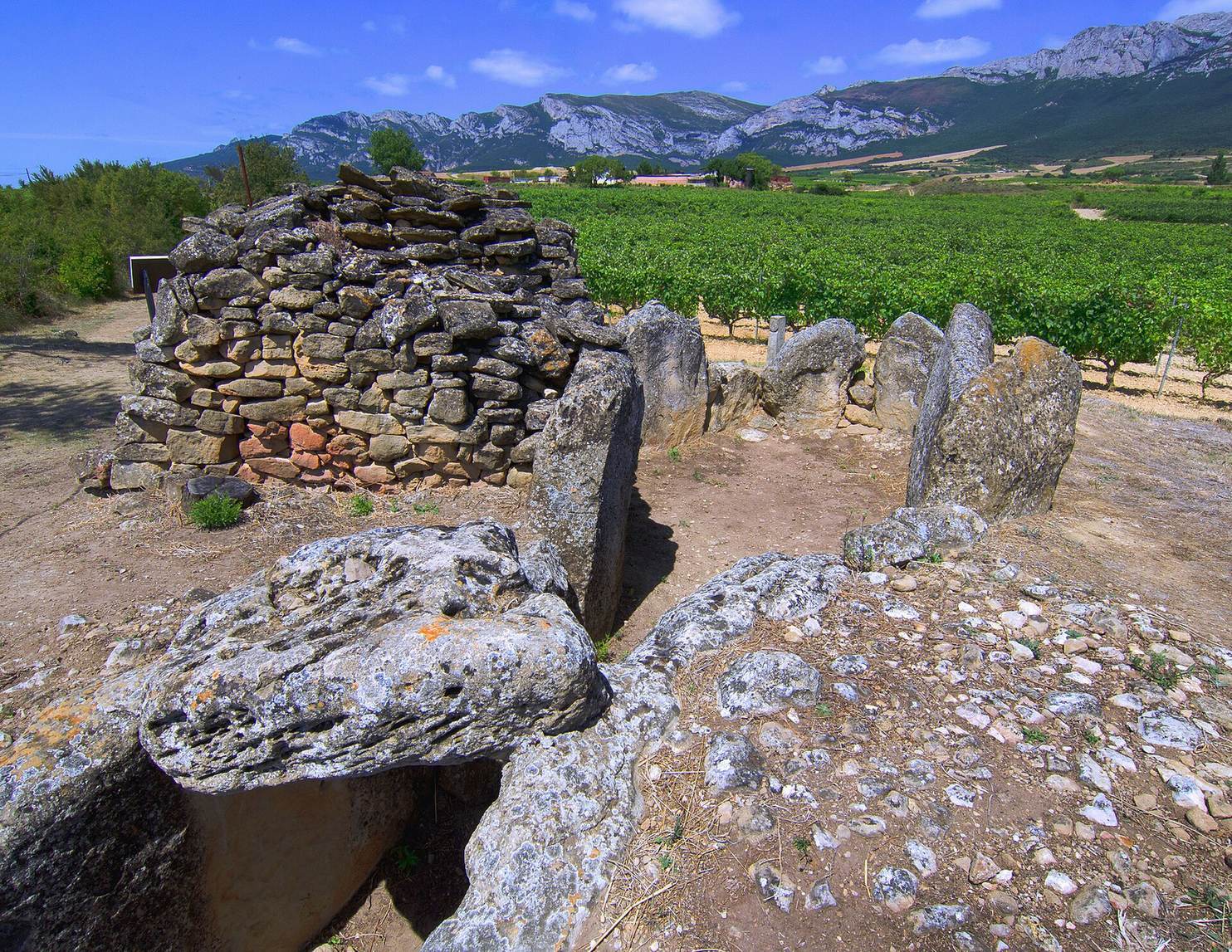
The Dolmen of San Martín is a late Neolithic stone tomb with a passage leading to its burial chamber, at Páganos, in Laguardia, Álava, Spain. A prehistoric community built it on a small hill regarded as sacred, and used it as a burial place during the late Neolithic, when farming and settled communities had become widespread.
Neolithic and later use
Two fallen chamber slabs are associated with distinct phases of use, one Neolithic and another Chalcolithic, or Copper Age. They fell around the transition from the late Neolithic to the early Copper Age. Burial use continued into the late Chalcolithic or early Bronze Age, and the monument retained its sacred character for the community.
Discovery, excavation, and recognition
José Miguel de Barandiarán and Domingo Fernández Medrano discovered the dolmen in April 1956. Barandiarán, Fernández Medrano, and Juan María Apellániz excavated it in July and August 1964. The layers they identified drew considerable attention among Spanish archaeologists. Radiocarbon analysis placed human remains from the monument at about 4,900 years ago.
A decree dated 26 July 2011 classified San Martín among Álava’s lowland dolmens as a Monumental Ensemble, a heritage category for a group of related monuments. The ensemble extends across the Álava Plain, chiefly Rioja Alavesa, and into parts of Lantarón and Kuartango. Its dolmens are considered comparable in structure, chronology, and materials to those of the Iberian Peninsula’s plateaus.
Remains
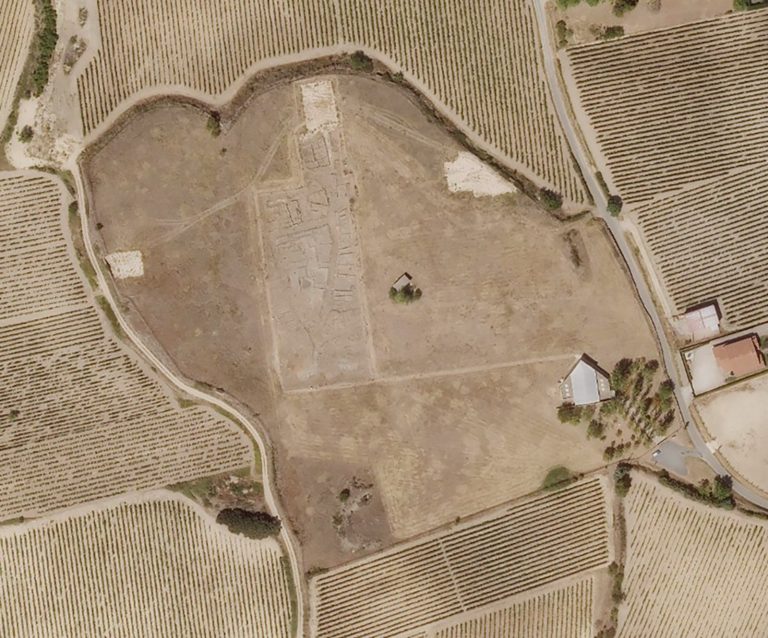
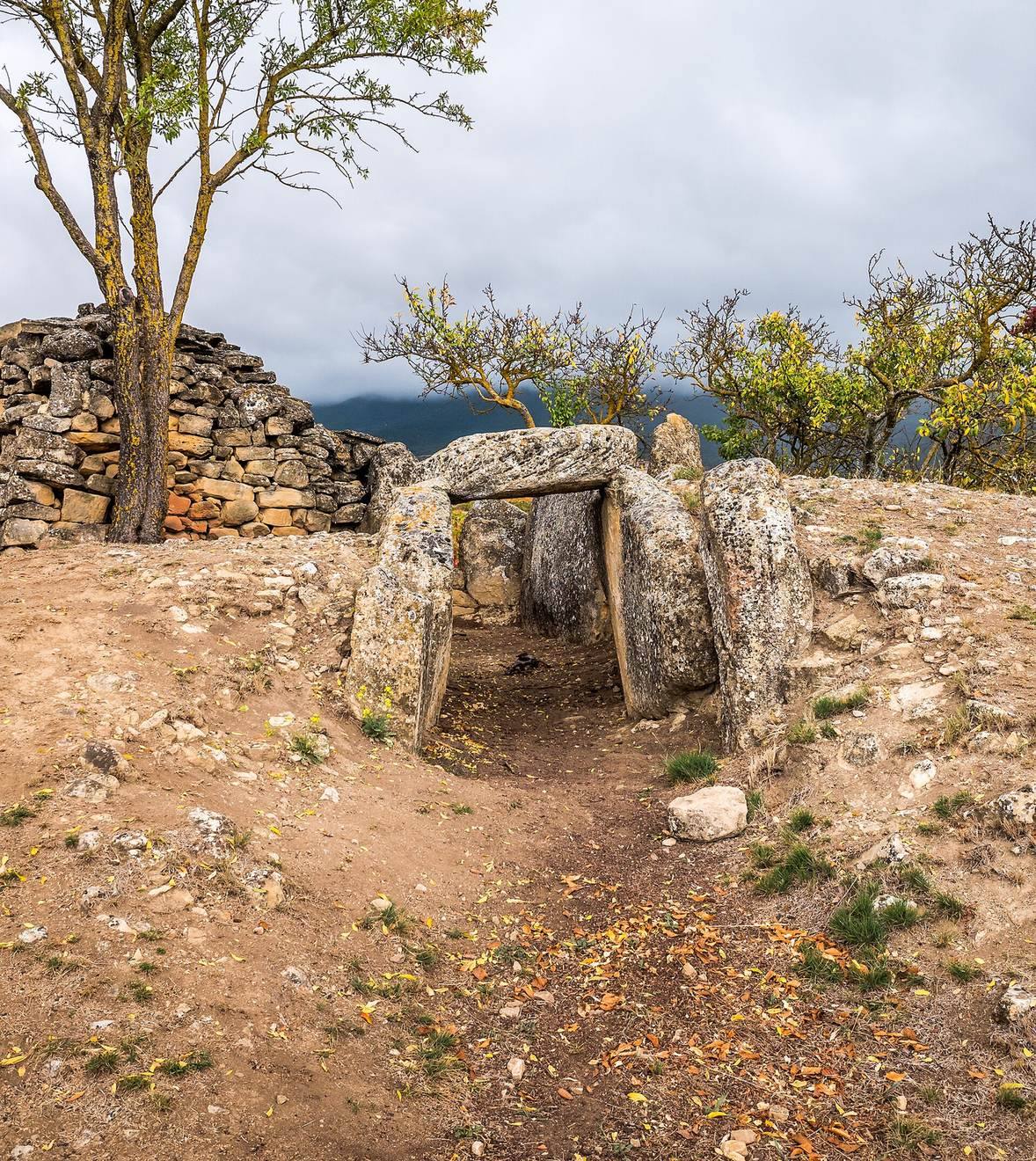
The monument is arranged around a polygonal burial chamber and a passage, enclosed by an earth-and-stone mound. Sandstone slabs form the chamber and passage, while the mound and a small vineyard hut above it have both been affected by later activity and alteration.
Chamber, passage, and mound
Burial chamber
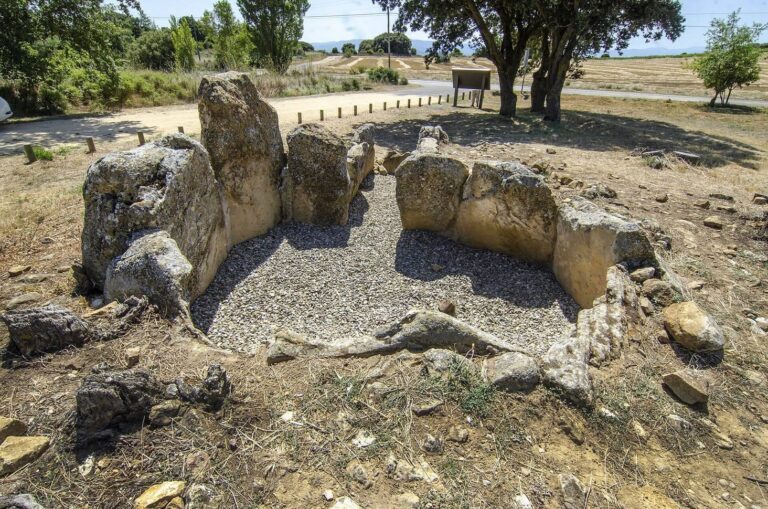
Ten large sandstone slabs form the polygonal chamber, which measures 5.75 by 3.10 metres and reaches a maximum height of 1.90 metres. Fallen chamber slabs are associated with the monument’s separate Neolithic and Copper Age phases. Restoration work returned the fallen slabs to position and placed mortar between the upright stones.
Passage
Five slabs form the passage, which is about 5 metres long, 1.20 metres wide, and 1.30 metres high. Flat slabs served as its roof, and one can still be seen from inside. The western slab supports the roof and bears numerous cup-shaped hollows, interpreted as a form of megalithic artistic expression. Restoration also secured the roof-supporting slab that remained in its original position.
Mound and vineyard hut
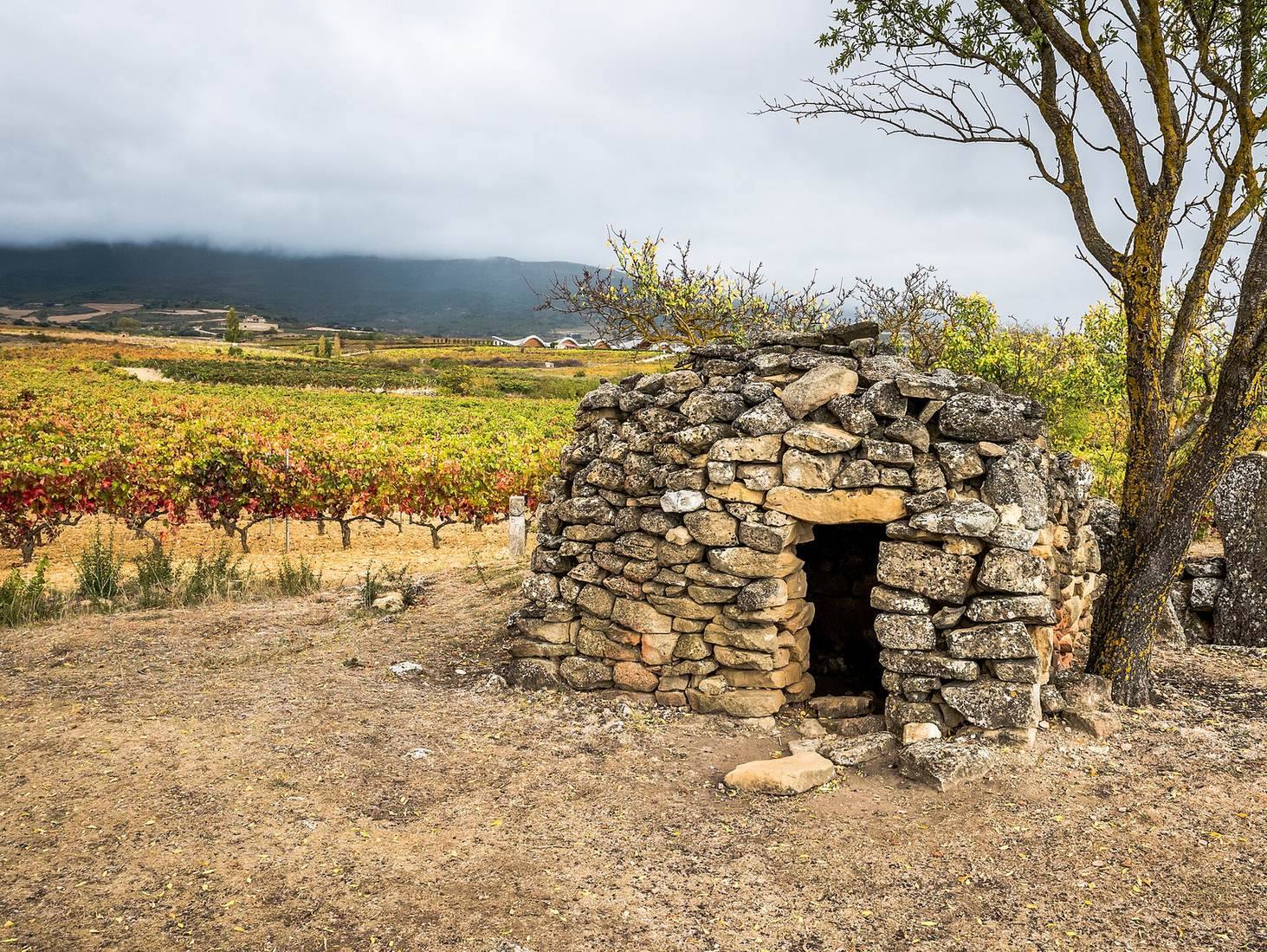
The earth-and-stone mound measures 26 by 14 metres and is 2.15 metres high. Vineyard cultivation has heavily damaged and reduced it. A white limestone surface has been proposed; limestone pieces survive in the mound and in the hut built above the dolmen. The stone may have come from the nearby Sierra de Cantabria. The hut uses stones from the mound and rests on the chamber’s northwestern slabs, which form its rear wall.
Burials and associated finds
First burial level
Excavation beneath fallen chamber slabs in the first level, a deposit 1.90 metres deep, recovered the remains of 21 people. Finds included two knives, two blades, 32 flakes, 16 triangles, 16 trapezoids, two scrapers, five notched tools, a piercing tool, and a side scraper. A large piece of carved rock crystal took the form of a hoof-shaped scraper. The assemblage also included five polished axes and chisels, two axe fragments, another piece of rock crystal, a bead, plain pottery, a fragment with band decoration, and six decorated bone pieces belonging to four spatula-shaped objects known as spatula idols.
Second burial level
The second level contained the remains of one person. Its stone tools included three plain blades, two small blades, two points with worked edges, three stemmed and barbed arrowheads and the base of another, three triangles, two scrapers, four notched tools, a sphere, and 34 flint flakes. Other finds comprised a polished axe, an ochre bar, a pyrite vessel, a bead, a fragment of a white-stone ring, 14 rounded bone buttons with V-shaped perforations, a bronze sheet, and a dagger. Seven fragments of Ciempozuelos-style Bell Beaker pottery, a type of Iberian pottery, were also recovered; one was incised and the rest were plain.
Stone markers and dating
Three upright sandstone markers were found beneath a fallen chamber slab. They may have stood side by side in a line running south to north, marking a place where the dead were laid during the monument’s first phase. Each is about 0.60 metres wide, 0.65 metres high, and 0.15 metres thick.
Two spatula idols yielded radiocarbon dates of about 5,920 plus or minus 40 and 5,380 plus or minus 40 years before 1950. Some of the objects could not be dated because they lacked collagen. An awl produced a date of about 4,650 plus or minus 30 years before 1950. The older dates for the idols prompted several explanations: they may have been kept for centuries before burial, made from old bone, or deposited with earlier burials. The last explanation was considered the most plausible, with the monument continuing in use afterward.