Santa Lucia in Selci: A Baroque Church in Rome
Site at a Glance
- Popularity
- Medium
- Country
- Italy
- Primary era
- Early Modern
- Eras represented
- Medieval, Early Modern, Modern
- Civilizations
- Papal States
- Site type
- Religious
- Remains
- Church
On this page12 sections
History
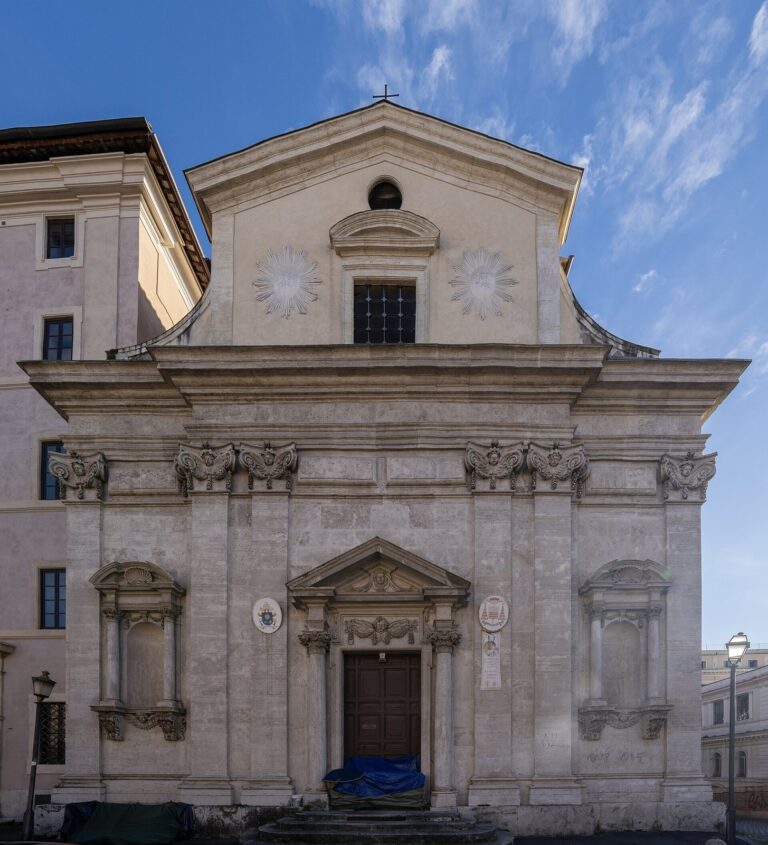
Santa Lucia in Selci is a Roman Catholic church in Rome, Italy, dedicated to Saint Lucy, a fourth-century Christian martyr venerated in Catholic tradition. Its Baroque remodelling was completed in 1638, and the church existed by the eighth century at the latest.
Early church and deaconry
Tradition attributes the first church on this site to Pope Symmachus, who held office from 498 to 514, but the attribution is not supported by unambiguous historical evidence. An ecclesiastical district or church entrusted to a deacon, known as a deaconry, was associated with Saint Lucy and dated to around 300. Pope Sylvester I confirmed it around 314, and it was counted among Rome’s seven original deaconries. Pope Honorius I restored the church around 630; around 678, Pope Agatho assigned the deaconry to one of the city’s seven deacons.
In the ninth century, Pope Leo III restored the church and gave donations to the deaconry, as noted in the papal biographical collection Liber Pontificalis. After the tenth century, the church was known as Santa Lucia in Silice or Santa Lucia in Selci. Its earlier designation, Santa Lucia in Orfea, referred to the nearby ancient fountain Lacus Orphei. The deaconry remained vacant from 1577 until Pope Sixtus V suppressed it in 1587.
Monastery and Baroque transformation
A monastery enclosing the church was established in the thirteenth century. It was granted to the Carthusians, a Catholic monastic order, in 1370, passed to the Benedictines in 1534, and was given to the Augustinians by Pope Pius V in 1568. Augustinians continue to serve the church.
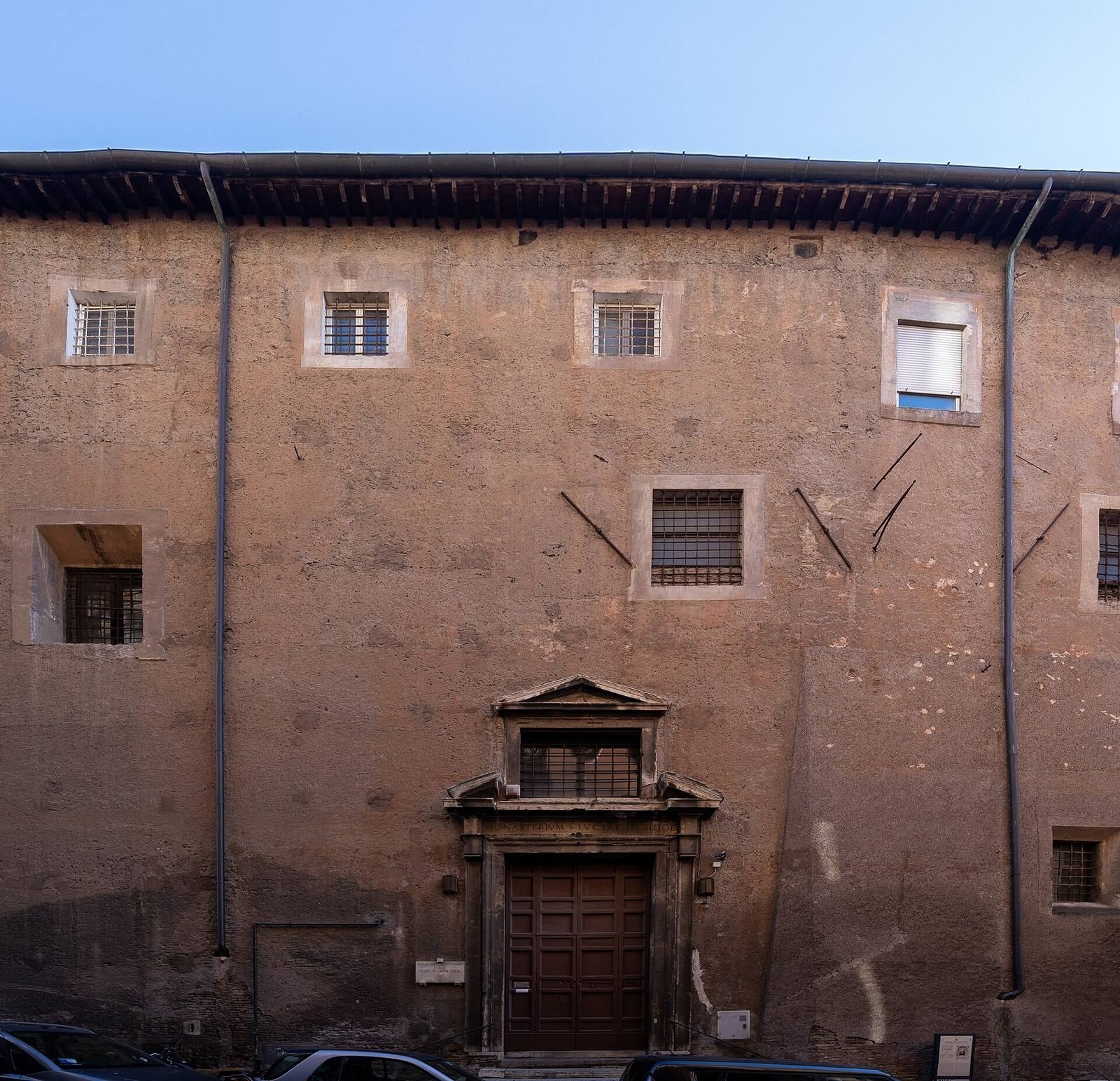
The monastery was enlarged in 1603 to a design by Bartolomeo Bassi. In 1624, Pope Urban VIII further altered and expanded it, dividing it among the Augustinians, Dominican friars, and Poor Clares, a contemplative order of Franciscan nuns. After the Italian state expropriated the Poor Clares’ convent beside San Lorenzo in Panisperna in 1878, the nuns moved to the monastery at Santa Lucia.
Carlo Maderno reconstructed the church in 1604. Francesco Borromini worked on its restoration in 1637–1638, and the church’s Baroque remodelling was completed in 1638. Prioress Vittoria Landi commissioned the Landi Chapel.
Remains
Plan and monastic fabric
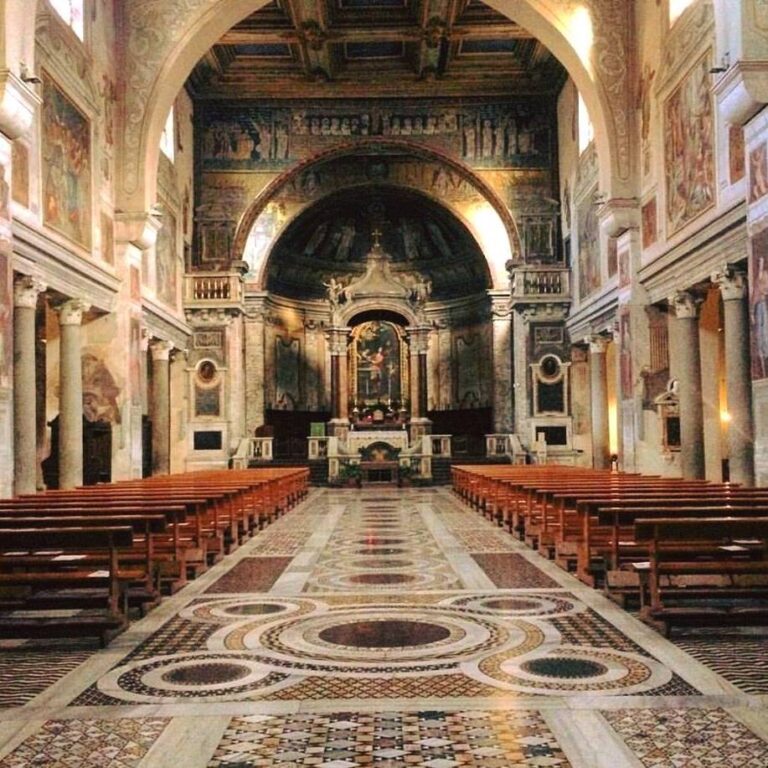
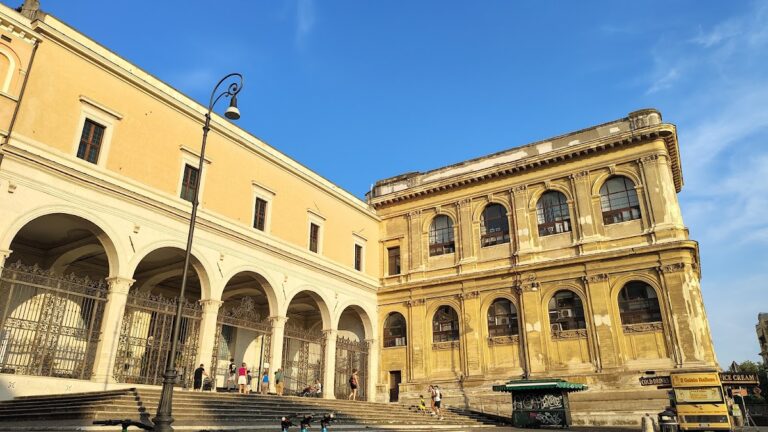
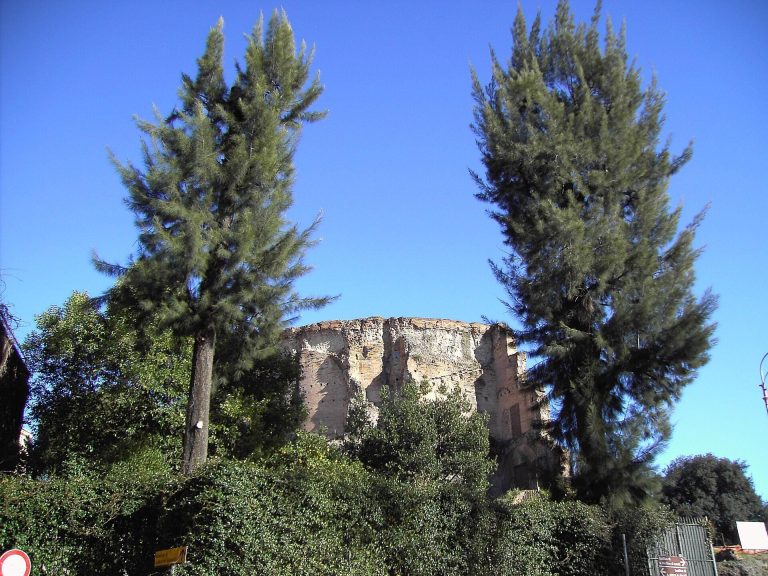
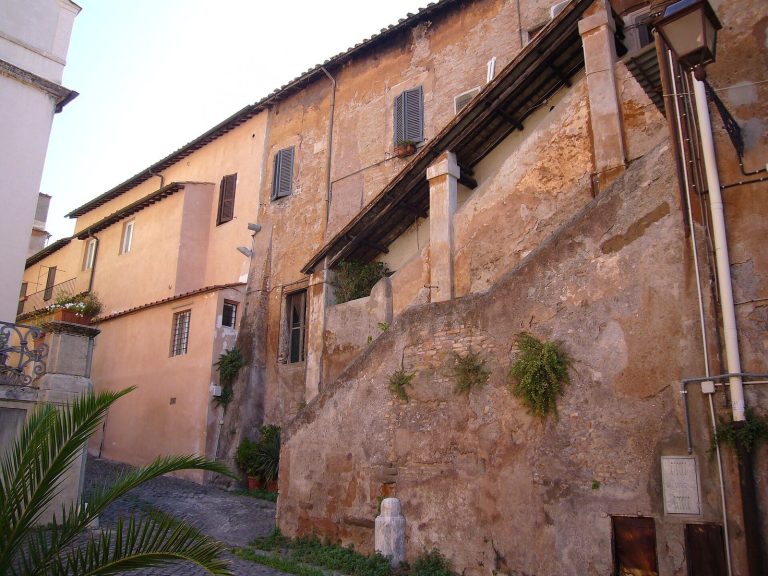
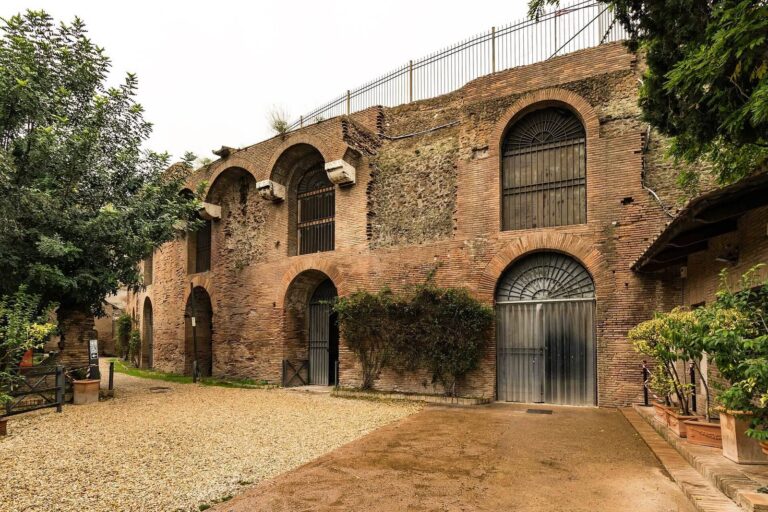
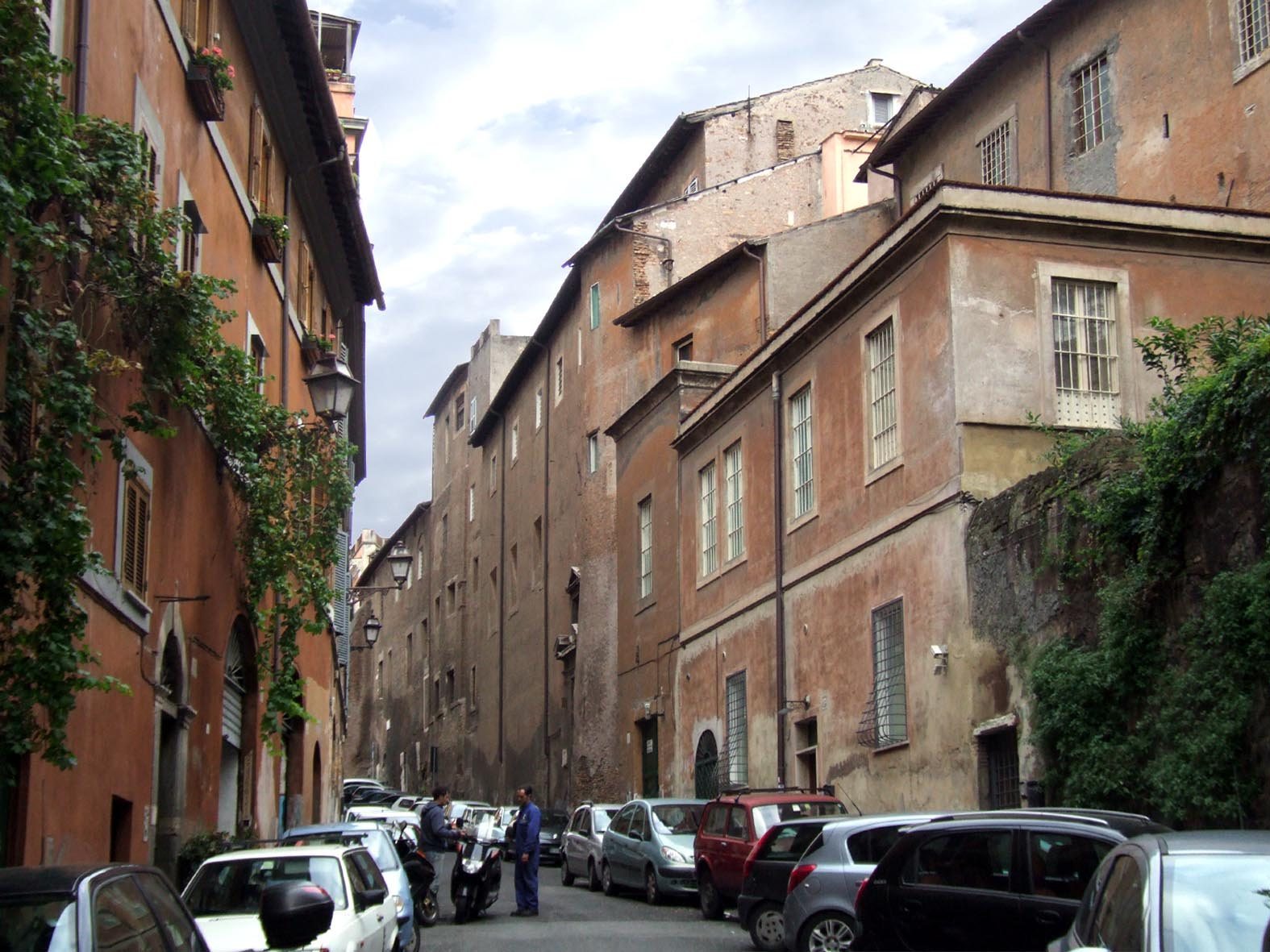
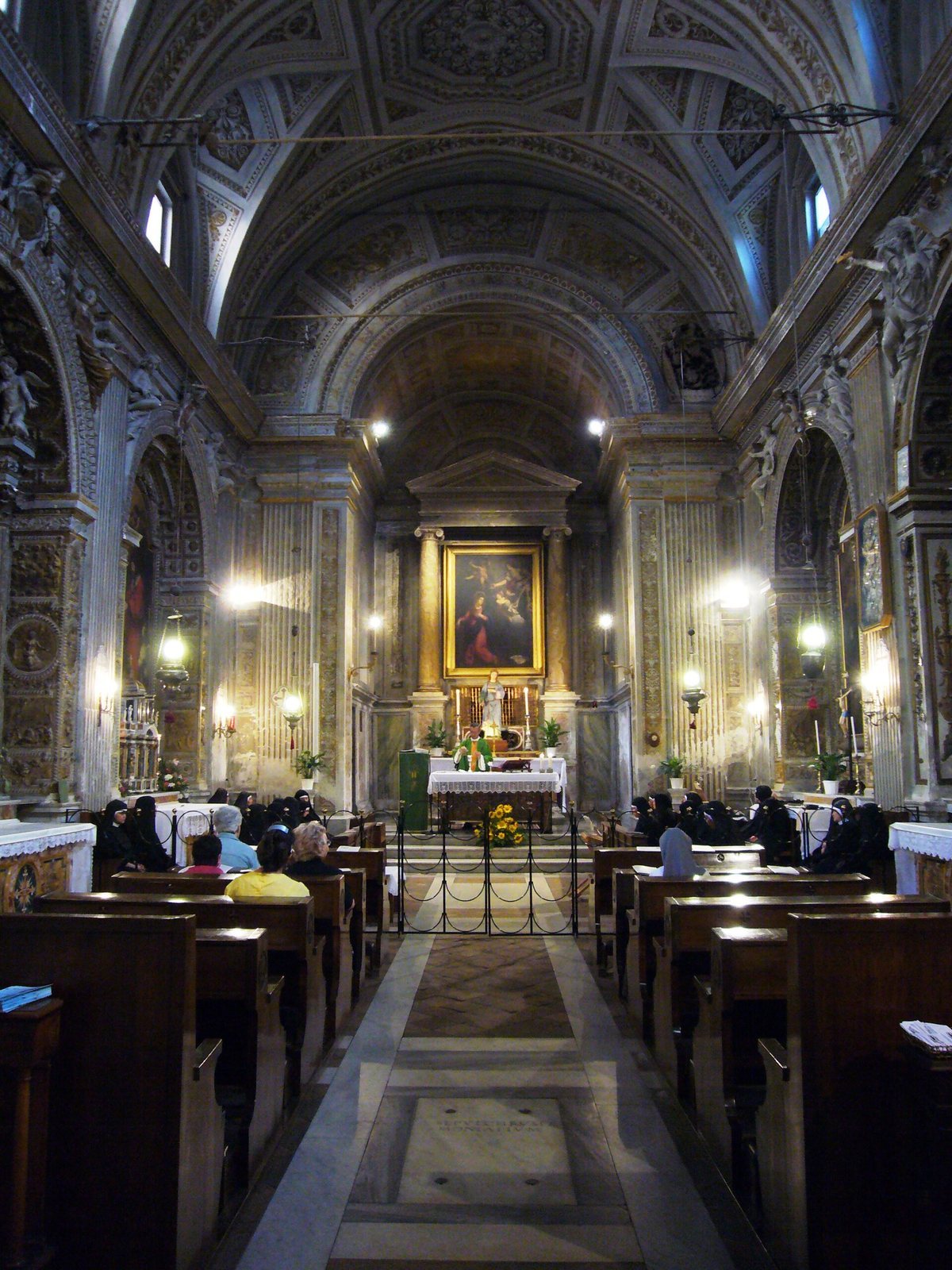
The church has a rectangular plan, a single nave, a barrel vault, meaning a continuous arched ceiling, and three shallow chapels on each side. It occupies the site of the ruins of the Roman Portico of Livia, a colonnaded structure. The ancient fountain Lacus Orphei stood nearby and had a statue of Orpheus, the musician and poet of Greek myth. Via in Selci follows the route of the ancient Clivus Suburanus, a road paved with flint; large flint stones were also used in the church’s decoration. The monastery’s exterior portal survives from its 1603 enlargement.
Interior decoration and furnishings
Fresco and counter-façade
A nineteenth-century fresco depicting the Glory of Saint Lucy covers an earlier fresco of the same subject by Giovanni Antonio Lelli. The counter-façade, the interior wall opposite the main entrance, bears a painting of God the Father by Cavaliere d’Arpino.
High altar
The nineteenth-century high altar replaced an earlier altar made by Borromini. Above it is an Annunciation by the Florentine painter Anastasio Fontebuoni.
Landi Chapel
The Landi Chapel is the first chapel on the left and was decorated by Borromini. Its altarpiece by Cavaliere d’Arpino depicts the Holy Trinity, the Christian belief in one God in three persons, with Saint Augustine of Hippo, a Christian theologian and bishop, and his mother, Saint Monica. Borromini’s work on the decoration of the Trinity Chapel dates to 1628–1639.
Chapel of the Blessed Sacrament
The second chapel on the left is dedicated to the Blessed Sacrament, the consecrated Eucharist in Catholic worship. It contains a tabernacle, a container for the Eucharist, made of multicolored marble and gilt bronze, as well as alabaster statues. These works are attributed to Maderno.
Right-hand altars
The painting at the first altar on the right, by Giovanni Lanfranco, shows the Martyrdom of Saint Lucy. Andrea Camassei’s Vision of Saint Augustine is at the second altar on that side.
Organ gallery and choir
The raised gallery for the church organ is attributed to Borromini. The choir is also attributed to him and displays several paintings by Baccio Ciarpi.