Cimburk: A Prehistoric and Early Medieval Hillfort in Kutná Hora
Site at a Glance
- Popularity
- Medium
- Country
- Czechia
- Primary era
- Stone Age
- Eras represented
- Stone Age, Bronze Age, Iron Age, Medieval
- Civilizations
- Hallstatt culture
- Site type
- Military
- Remains
- Fort
On this page7 sections
History
Cimburk is a prehistoric and early medieval hillfort on the southern edge of Kutná Hora, Czechia, first occupied and fortified in the Eneolithic by people of the Funnel Beaker culture. Its name comes from a former mill, which was named after an earlier castle.
Prehistoric occupation
The site was occupied and defended during the Eneolithic. Settlement continued in the Bronze Age and the Hallstatt period, an early Iron Age period in Central Europe, when the promontory was fortified again.
Cimburk’s latest fortification belongs to the Hillfort period, an early medieval phase in Czech archaeology named for its fortified settlements.
Early medieval role
In the early Middle Ages, Cimburk lay beyond the main territory of the Přemyslids, Bohemia’s medieval ruling dynasty. In its older phase, it belonged to the Kolín-Kouřim region. It was not an administrative or economic center, but served at times as a settlement and refuge.
The hillfort may also have been connected with the Kutná Hora ore-bearing belt. The Přemyslids probably exploited the belt from the first half of the tenth century.
Emanuel Leminger led the first archaeological investigation in the 1880s, in connection with the creation of a military shooting range in the outer ward. The work involved extensive changes to the ground. Eva Lehečková investigated the site in 1968–1969; Milan Zápotocký and Marie Zápotocká examined it in 1989–1990.
Remains
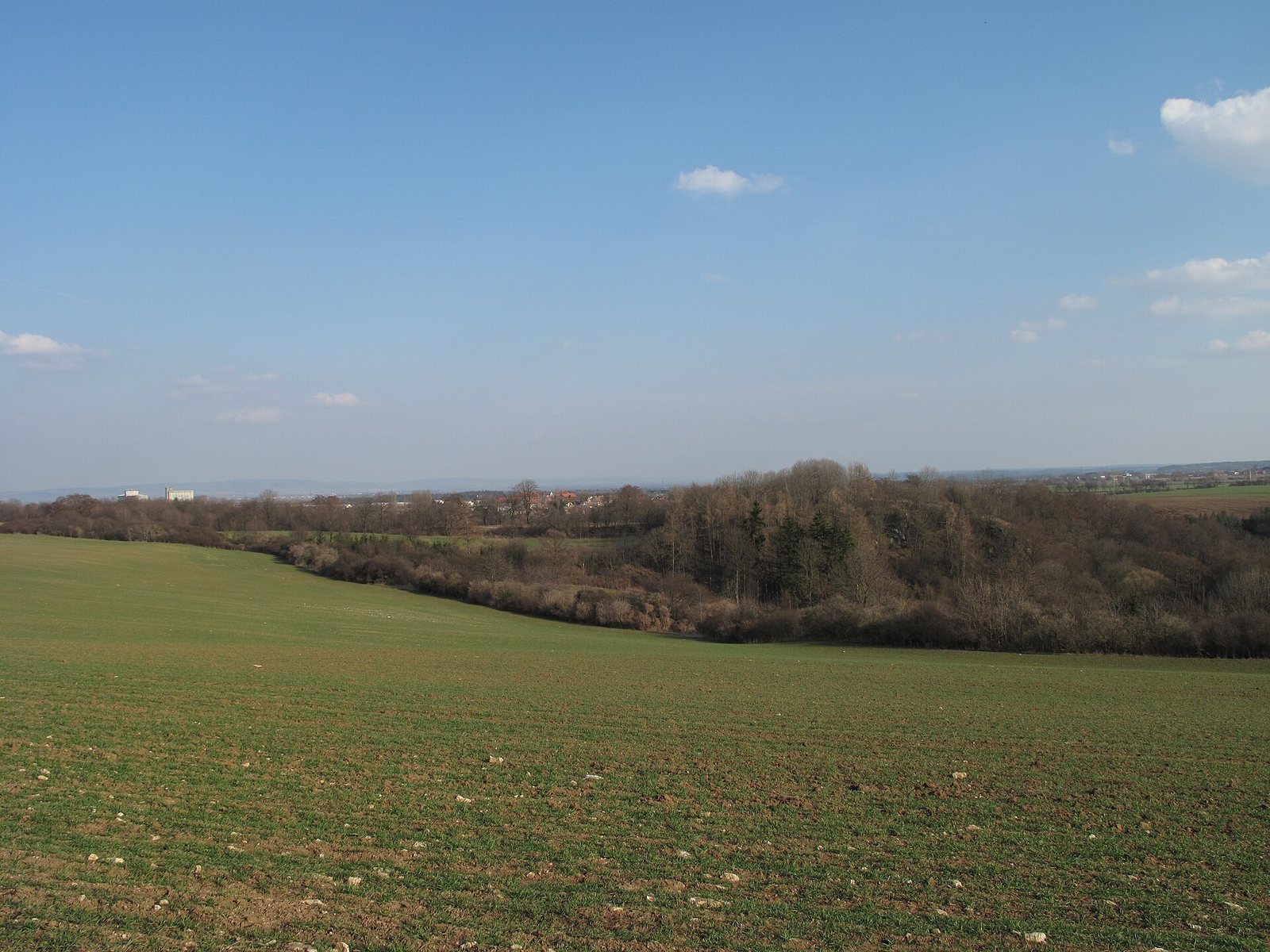
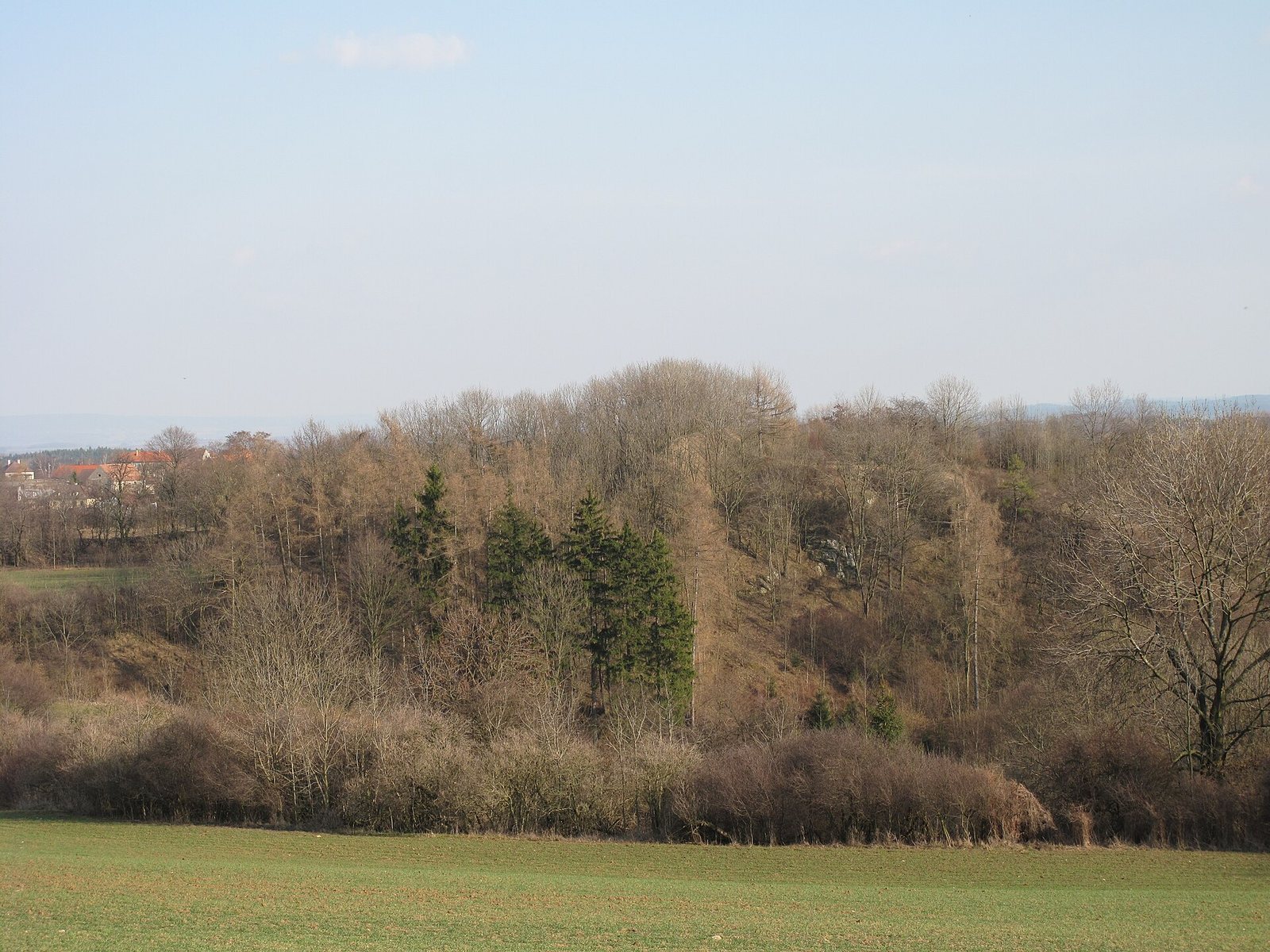
Cimburk occupies the Homole plateau on a promontory above the Vrchlice River’s left bank, between the Vrchlice valley and the Bylanka stream. The promontory is about 450 m long and 70–200 m wide, with rocky, very steep slopes toward the river. In its latest fortified phase, the hillfort had two parts. Its earthworks preserve evidence of defenses from several periods.
Eneolithic defenses
During the Baalberg phase, an Eneolithic phase of the Funnel Beaker culture, the hillfort was enclosed by two ramparts, or defensive earthen banks, and two ditches with sloping sides and flat bottoms. The ditches lay 5.5–7 m apart, measured 4–5 m across, and reached up to 2 m deep. A passage 5.7–6.5 m wide interrupted both ditches and allowed entry. Soil dug from the ditches was used to raise the banks, which were reinforced with stones. The defensive line curved about 30 m from the foot of the acropolis, the principal elevated fortified area, enclosing roughly 2 hectares.
Hallstatt defenses
At the Střelnice locality, a defensive line uncovered in 1969 consisted of a ditch, a berm, meaning a strip of ground between a ditch and a bank, and a rampart topped by a palisade, a barrier of upright stakes.
Bronze Age acropolis
On the acropolis, investigation identified a rampart associated with the Bronze Age Štítary culture. It used chamber construction, a method that divides a bank into structural compartments. A tower or projecting defensive structure occupied the excavated section of one corner.