Raitenhaslach Cistercian Abbey: A Medieval Monastery in Germany
Site at a Glance
- Popularity
- High
- Country
- Germany
- Primary era
- Early Modern
- Eras represented
- Medieval, Early Modern
- Civilizations
- Duchy of Bavaria, Electorate of Bavaria, Holy Roman Empire
- Site type
- Religious
- Remains
- Monastery
On this page9 sections
History
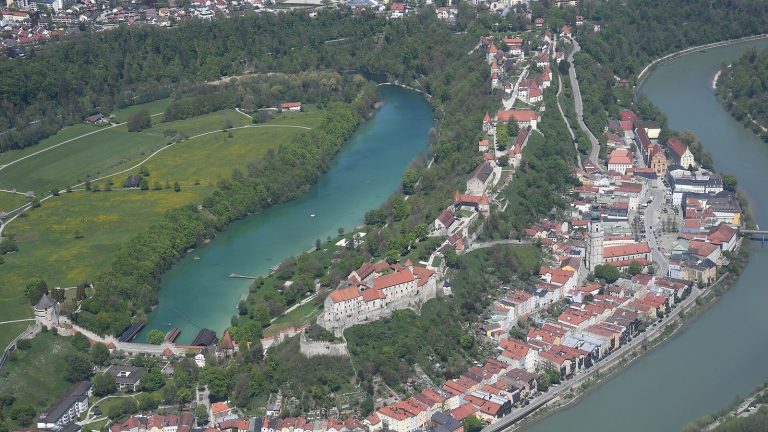
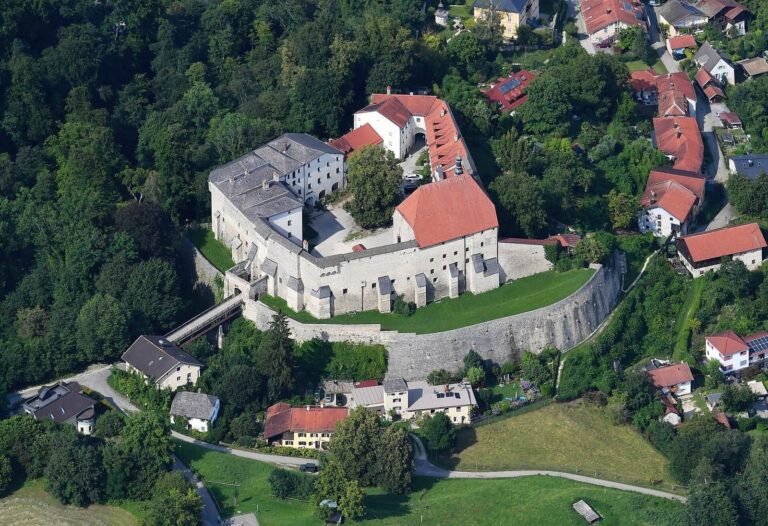
Raitenhaslach Cistercian Abbey is a former Cistercian monastery in Raitenhaslach near Burghausen, Germany, founded in 1143 and transferred from its first site at Schützing to Raitenhaslach in 1146. Its church preserves a Romanesque core and was transformed in the Baroque period. Founded by Count Wolfker de Tegerwac and his wife Hemma, the abbey grew into a landholder and religious institution situated between Salzburg church territory and the expanding power of Bavaria.
Foundation and growth
Wolfker and Hemma donated the land for the monastery. The community first settled at Schützing on the Alz, then moved to Raitenhaslach. The site had been listed in 788 as property of the Diocese of Salzburg in the Notitia Arnonis, an early medieval record of Salzburg church possessions. The relocation was probably connected chiefly with the strategic monastic policy of Salzburg’s Bishop Konrad I.
The first monks came from Salem Abbey, which served as Raitenhaslach’s parent monastery. Raitenhaslach was probably Salem’s first daughter house, a monastery founded in relationship to a parent abbey, following its brief initial period at Schützing. Morimond was one of the Cistercian order’s principal abbeys, and Raitenhaslach also belonged to the Upper German Cistercian Congregation, a regional association of monasteries. Gero, a monk from Salem, became the first abbot, or head of the monastery, and led the community for 30 years. Abbots of Salem visited the new foundation regularly. The abbey’s patron saint was St. Pancras, while its church was dedicated to St. George.
Water-rich surroundings supported the monks’ farming, including fish-farming and specialized cultivation. Fish was important to their meat-free diet, so dependable water and fish production also supported the abbey’s economy. Donations and purchases expanded its holdings to include villages that paid dues, a wine estate in what is now Lower Austria, and a large part of the Weilhart Forest across the Salzach River in what is now Upper Austria. The abbey also held several churches near Altötting and the parishes of Burghausen, Halsbach, Niederbergkirchen, Hadersdorf am Kamp, and Ostermiething.
Salzburg and Wittelsbach influence
From about the mid-13th century, the Wittelsbach dukes of Bavaria increasingly displaced Salzburg’s influence over the abbey. The Wittelsbachs, a ruling dynasty with extensive power in Bavaria, resided at nearby Burghausen Castle and became the monastery’s patrons and protectors. In 1258 the abbey received the rights of a Hofmark, a Bavarian lordship with authority over an estate and its dependent territory, bringing it more closely under Wittelsbach rule.
In the 15th century, the abbey church became the burial place of the ducal family of Burghausen. From the late 15th into the early 16th century, Duke Ludwig IX, known as “the Rich,” supported the abbey against reform movements. He was a duke of Bavaria-Landshut. The abbey’s position near the boundary between Wittelsbach lands and Salzburg’s ecclesiastical territory shaped its changing political connections.
Building, dissolution, and reuse
The monastery was repeatedly enlarged and altered, with especially intensive construction during the first half of the 18th century. Bavaria’s secularization in 1803, the transfer of church property to secular authority, brought the abbey to an end. The extensive complex proved difficult to sell, even after repeated price reductions. Profitable sections, including the brewery, were sold, while much of the complex was demolished. Most of the remaining buildings and the abbey’s inventory passed to buyers. Nearly all the books, except for a few, were sold by weight to wastepaper dealers; furniture and artworks went to wealthy citizens and nobles, and agricultural equipment to local farmers.
The church became a parish church in 1806. The surviving monastery buildings were subsequently used as a parish residence, school, brewery, inn, and private homes. Brewing at the abbey is recorded from 1313; the brewery was among the profitable assets sold after dissolution, and brewing on the site later ended.
Wartime storage and restoration
From 1943 the abbey was used to store cultural property looted by the Nazis. Paintings from Munich’s Pinakotheken were first kept in the Prelate’s Wing, named for a senior church official. From May 1943, the site was used mainly for books, musical scores, gramophone records, and instruments seized by the Nazi Special Staff Music from Jewish property classified as “ownerless,” mostly in France. At the end of the Second World War, U.S. Army Monuments Men, personnel assigned to locate and protect cultural property, moved the objects to Munich. They were returned to Paris in April 1949. The German Federal Archives in Koblenz hold 162 index cards listing cultural objects secured at Raitenhaslach.
The city of Burghausen bought the protected former abbey buildings in 2003, and restoration took place from 2010 to 2017. In 2016, the Technical University of Munich opened its Raitenhaslach Academy Center in the Prelate’s Wing.
Remains
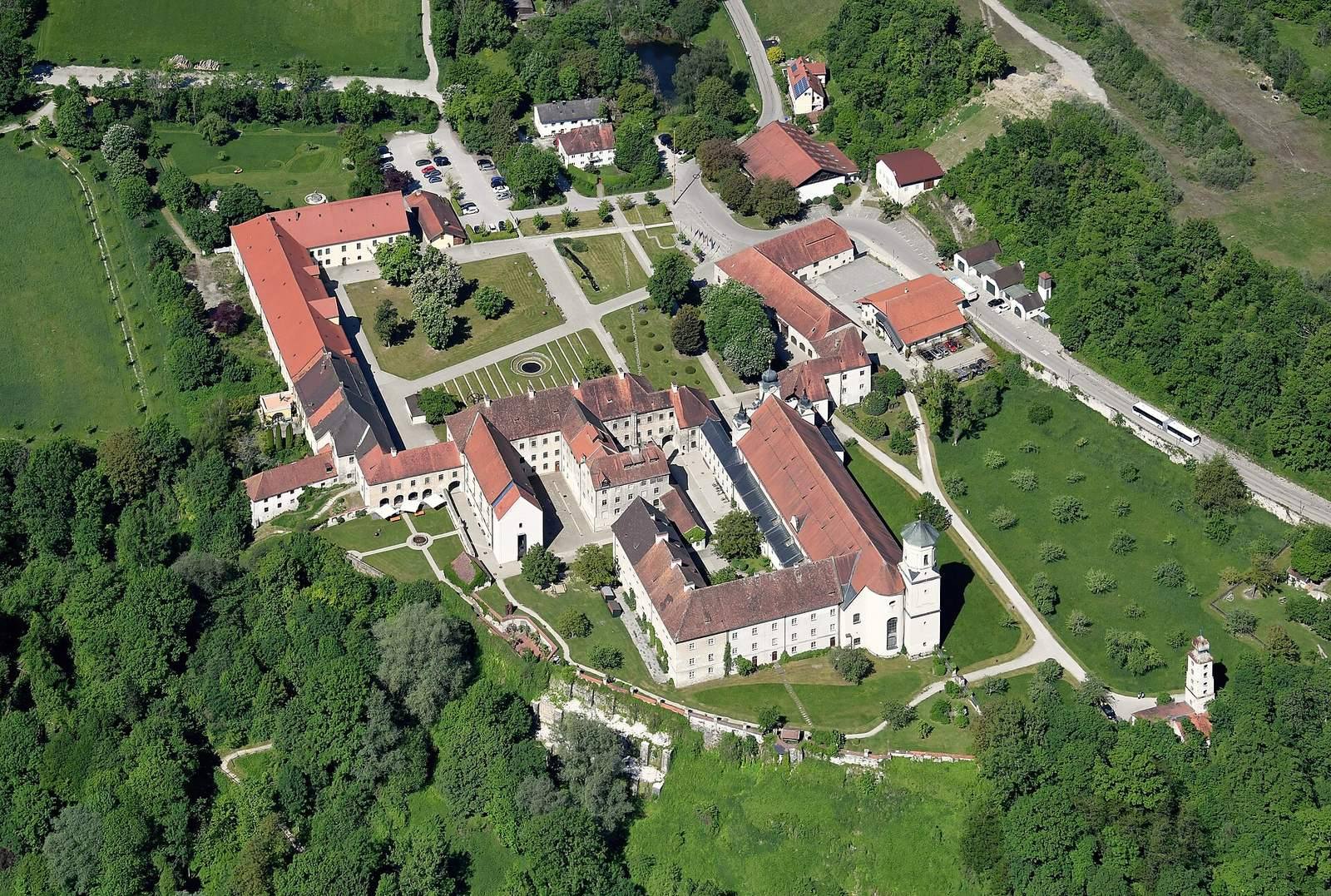
Monastery complex
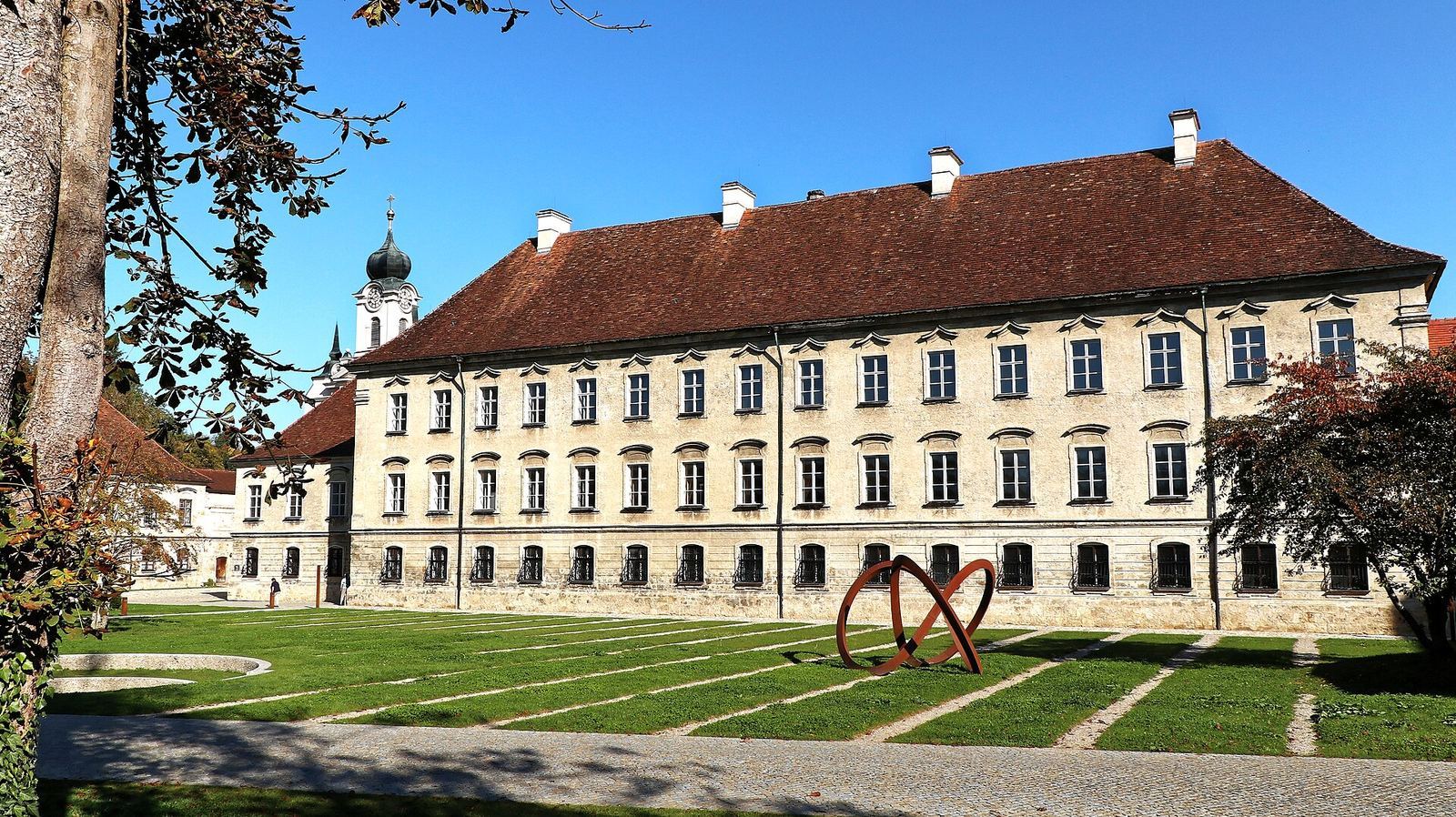
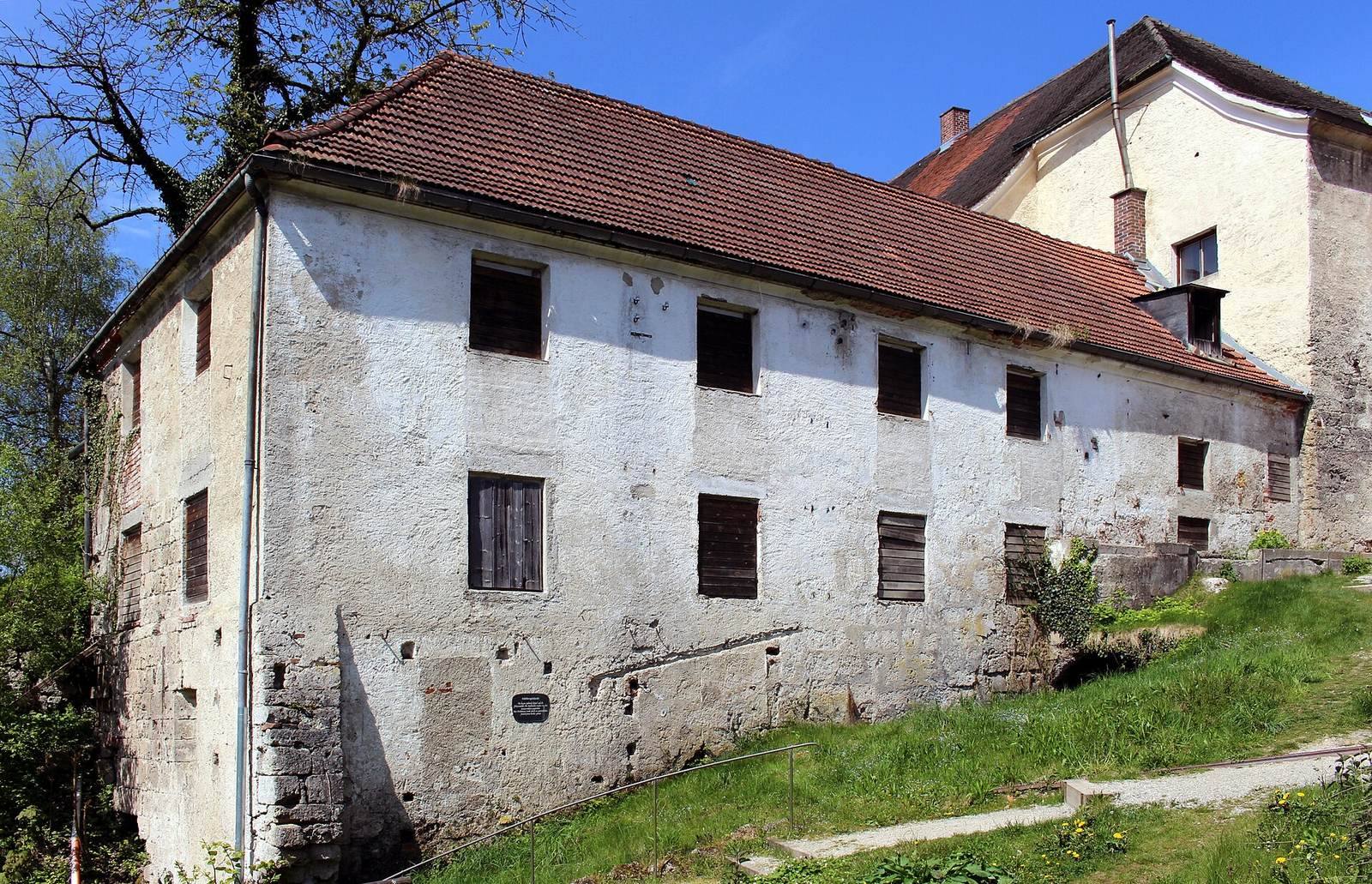
Less than half of the former building stock survives. Despite centuries of additions and alterations, the complex retained the characteristic overall form of a Cistercian abbey until the early 19th century. Surviving spaces include the room known as the Pope’s Room, the Stone Hall, and the Prelate’s Wing. The library building, completed in 1785, the refectory, and the structure called the Mathematical Tower were among the buildings demolished after the abbey’s dissolution.
Abbey church
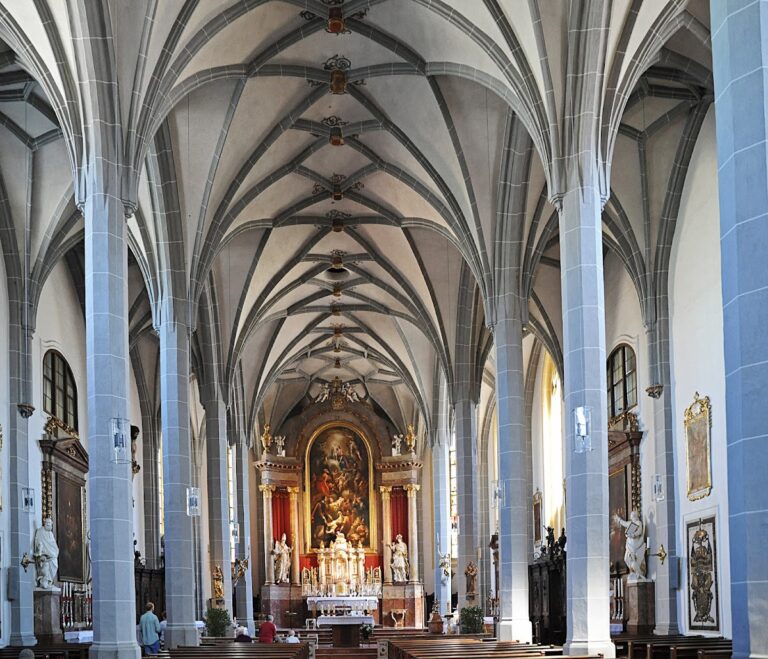
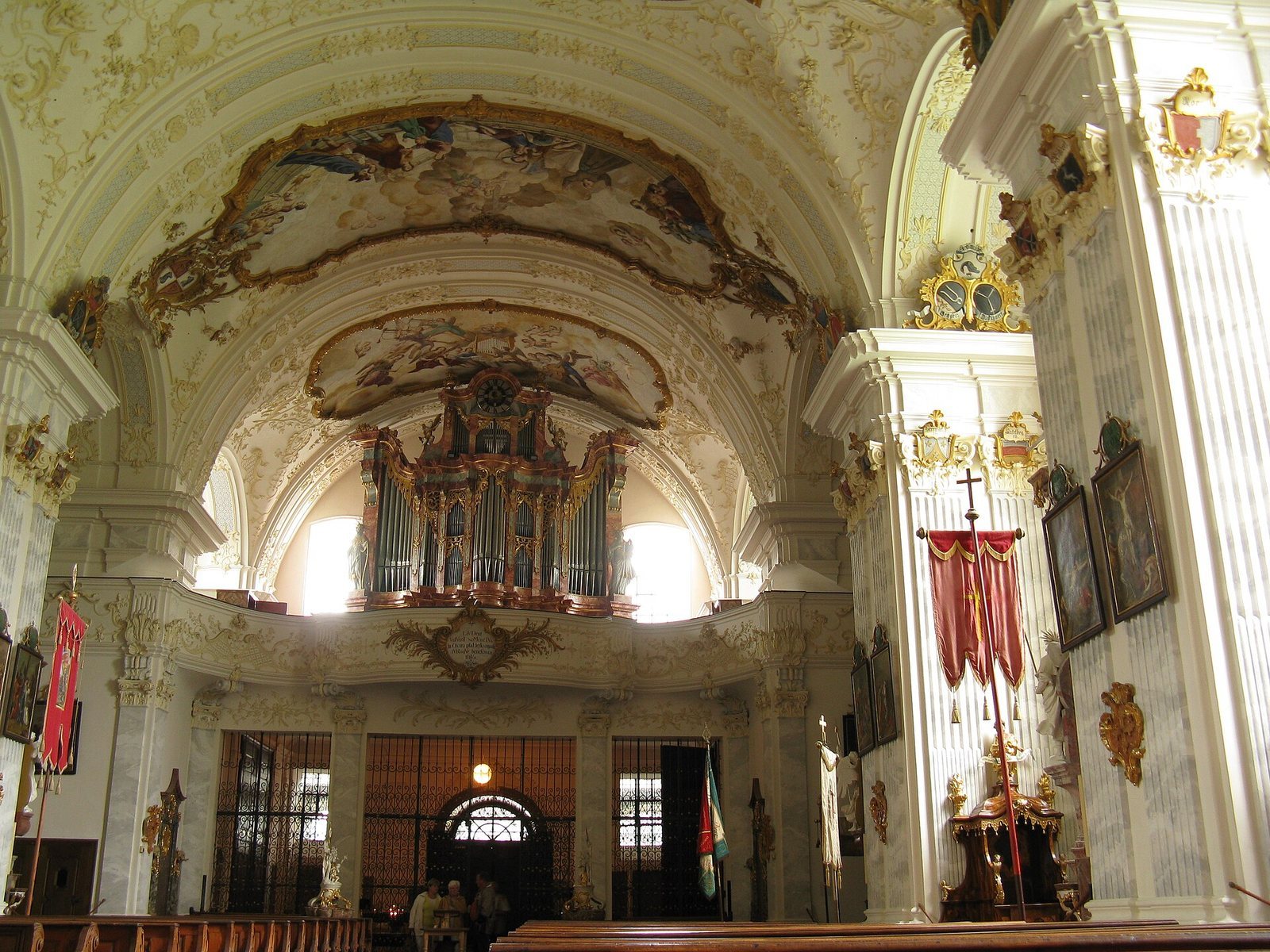
The church of St. George began as a Romanesque building supported by piers, then was transformed into a Baroque church with substantial supports projecting from its interior walls to carry the vaulting. Master builder Franz Alois Mayr added a new façade in 1751–1752. Ceiling paintings, an altar, and an organ are among its interior features.
Fishponds
Several ponds created for the abbey’s fish-farming remain in the surrounding area, preserving part of the landscape associated with the monastery’s agricultural production.