Chapel of the Visitation of Mary: A Marian Devotional Chapel in Pfronten-Meilingen
Site at a Glance
- Popularity
- Very Low
- Country
- Germany
- Primary era
- Medieval
- Eras represented
- Medieval, Early Modern, Modern
- Civilizations
- Holy Roman Empire, Kingdom of Bavaria
- Site type
- Religious
- Remains
- Chapel
On this page8 sections
History
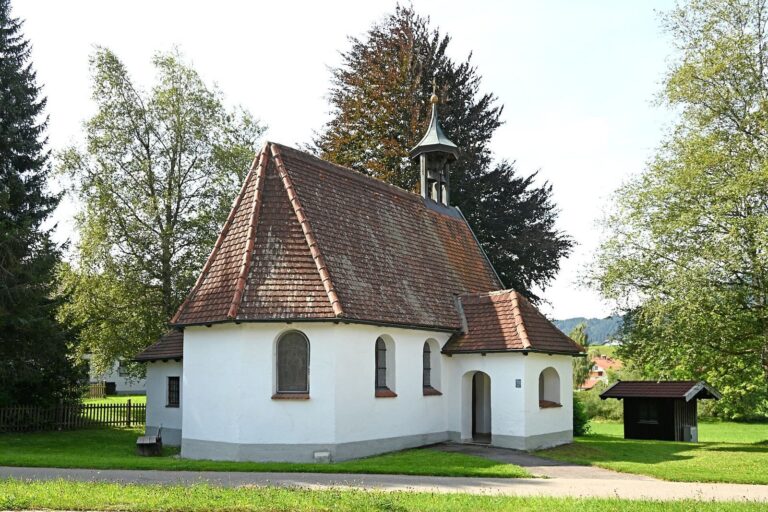
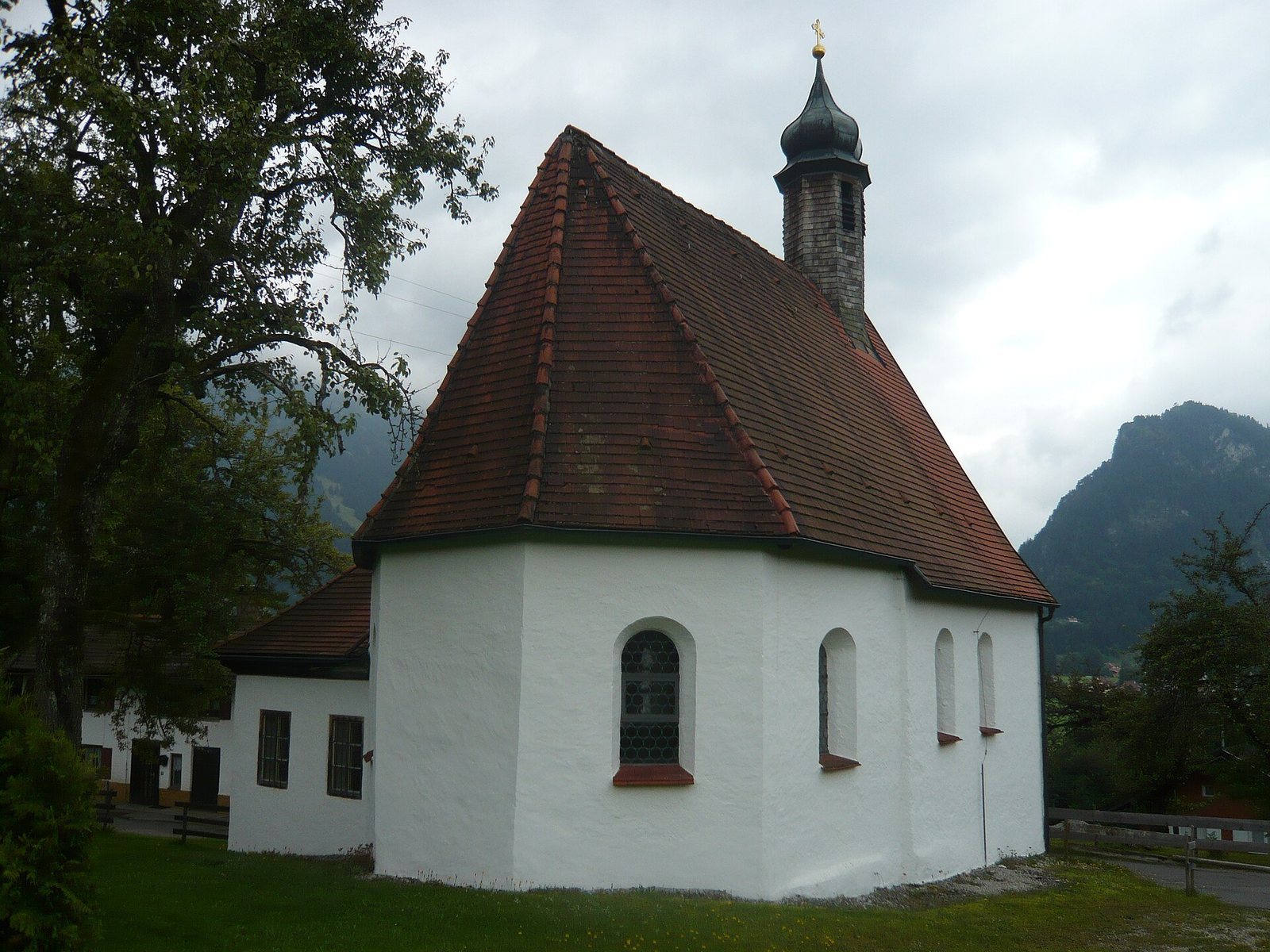
The Chapel of the Visitation of Mary stands on Burgweg in Meilingen, a district of Pfronten in Germany. It is affiliated with the parish church of St Nicholas in Pfronten-Berg, named for an early Christian bishop. The chapel’s dedication recalls the Christian episode in which Mary visits Elizabeth.
Meilingen probably developed around 1290, when a road was built to the new Falkenstein Castle. The chapel may have originated in the same period. A report to diocesan authorities mentions it in 1658, and a description from 1664 calls it very old.
The chapel was first known as Our Lady in Burgweg. Its later popular name, Mary Help, is a devotional title for Mary and probably grew from a local custom. In 1738, pregnant women came to pray before the Virgin’s image for a safe birth.
Remains
Building and interior
The chapel has a rectangular main hall with two window sections and a slightly narrower sanctuary, which ends in three sides and has one window section. A sacristy and porch extend from the south side of the original building. A small bell, cast in 1644, hangs in an eight-sided roof turret. It was recast after 1945, having cracked when returned from wartime requisition. Inside, a broad arch separates the main hall from the sanctuary. A raised gallery occupies the west end, and the main hall has a flat ceiling with a curved transition to the walls. The sanctuary ceiling is decorated with early Baroque raised stucco patterns by Jakob Miller, an artist associated with the Wessobrunn tradition of southern German decorative stucco work. The chapel’s last major renovation was completed in 1973.
Altars and devotional works
The three altars were carved by Nikolaus Babel in 1686 and painted by Johann Rudolf Bösinger. They follow the High Baroque style, an ornate phase of Baroque art and architecture.
High altar
The upper part of the high altar contains a half-length figure of God the Father, flanked by Saint Joachim and Saint Anne with Mary and the Christ Child. Joachim and Anne are traditionally regarded as Mary’s parents. Figures of angels stand on the altar’s gables, while angel heads decorate its columns and capitals. Karl Keller (1823 to 1904) painted the present central image in the Nazarene style, a 19th-century religious art movement inspired by earlier Christian art.
Left side altar
A figure of Saint Joseph with the Christ Child on the left side altar is attributed to the Pfronten sculptor Mang Anton Stapf (1701 to 1772).
Right side altar
In 1686, an older, probably smaller Madonna on the right side altar was dressed with taffeta, trimmings, and ribbons. In 1801, the Pfronten-Kreuzegg carpenter Joseph Anton Münz altered the altar, enlarged its shell-shaped recess, and placed a new Madonna image there. Alois Kögel of Pfronten painted the image. The Madonna and Christ Child were traditionally clothed, and both figures underwent thorough restoration in 1980.
Stations of the Cross
The 14 Stations of the Cross, a devotional sequence showing episodes from Jesus’s Passion, are oil paintings from the mid-18th century. They were painted on canvas and mounted on wooden panels.